


San Francisco | March 5, 2026
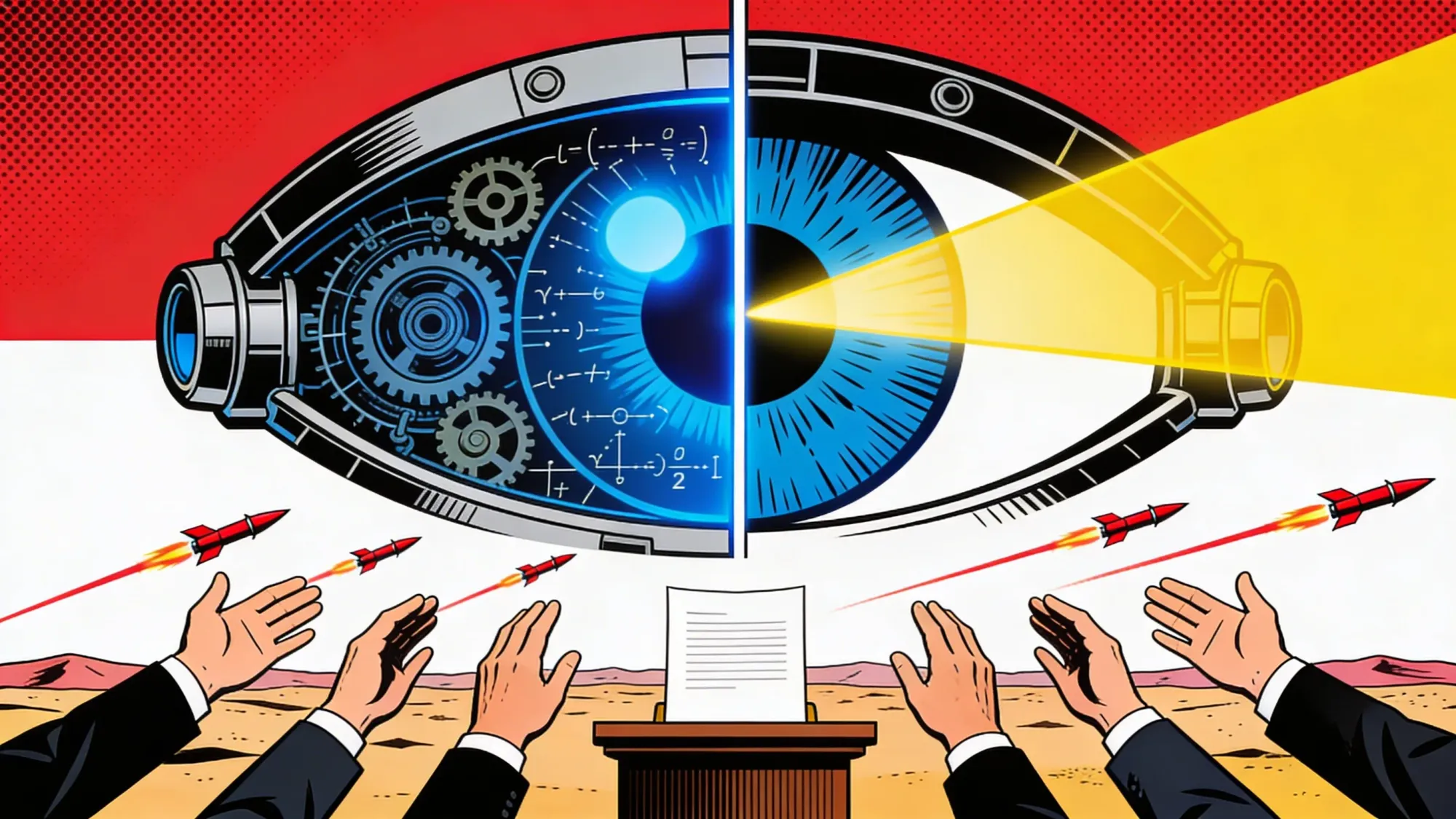
Microsoft shipped a 15-billion-parameter vision model that taught itself when reasoning helps and when it hurts. Phi-4 trained in four days on 240 GPUs, using one-fifth the data of its nearest competitors. The trick was not scale. It was knowing when to stop thinking.
Across the world, the AI system Anthropic built with safety red lines kept identifying missile coordinates in Iran through Palantir's Maven system. The Pentagon banned the company. It kept the model.
Seven tech CEOs signed a voluntary ratepayer pledge at the White House. No penalties. No jurisdiction over the state commissions that actually set electricity rates. Goldman Sachs projects prices climb 6% anyway.
Stay curious,
Marcus Schuler
Microsoft Ships 15B Vision Model That Decides When Reasoning Helps

Microsoft built a multimodal AI model that knows when to think hard and when to answer fast. Phi-4-reasoning-vision trained in four days on 240 Nvidia B200 GPUs, using roughly one-fifth the data of its closest competitors.
Most vision models apply chain-of-thought reasoning to every query. Microsoft's research team found that approach actually degrades performance on perception tasks like OCR and image captioning. So they trained Phi-4 on a mix of 20% reasoning traces and 80% direct responses with explicit mode tokens, letting the model decide which approach fits the problem.
The result is three operating modes. Hybrid lets the model choose automatically, activating chain-of-thought for math and science while giving direct answers for screenshot reading and captioning. Think forces full reasoning. Nothink skips it entirely. The architecture pairs a SigLIP-2 vision encoder with the Phi-4-Reasoning language backbone in a mid-fusion design that processes up to 3,600 vision tokens at roughly 720p resolution.
Phi-4 trails Qwen3-VL-32B on most benchmarks, scoring 75.2 on MathVista versus Qwen's 81.8. But it does so at half the parameter count, trained on about 200 billion tokens while Qwen and Kimi-VL each consumed more than a trillion. Microsoft credits meticulous data curation, with the team manually reviewing datasets for five to ten minutes per source and regenerating low-quality answers using GPT-4o.
The model ships under a permissive license on Microsoft Foundry, HuggingFace, and GitHub. Its primary applications target computer-use agents navigating desktop and mobile interfaces, and on-premise servers where data cannot leave the building.
Why This Matters:
- Selective reasoning challenges the assumption that more thinking always produces better answers, opening a path for smaller models to compete on efficiency rather than scale
- A permissive license on a 15B vision model gives enterprises a deployable option for automated workflows without cloud dependency
Reality Check
What's confirmed: 15B parameters, 4-day training on 240 B200 GPUs, one-fifth the data of Qwen3-VL and Kimi-VL, permissive license, available now.
What's implied (not proven): That selective reasoning will hold up across production workloads beyond benchmarks.
What could go wrong: Benchmark performance trails larger models. Enterprises may choose raw accuracy over efficiency.
What to watch next: Whether computer-use agent builders adopt Phi-4 over larger alternatives. Early GitHub activity will signal real demand.

The One Number
$40 billion — Nvidia's combined investment in OpenAI ($30 billion) and Anthropic ($10 billion), which CEO Jensen Huang said Wednesday would likely be the company's last investments in both AI labs. The chipmaker that sells picks and shovels to every miner just bought two of the biggest mines. OpenAI's Q4 IPO timeline means Nvidia needed to get in now or never. The original $100 billion OpenAI infrastructure deal? "Not in the cards," Huang said.
Source: CNBC
Pentagon Kept Claude Picking Targets in Iran After Banning Anthropic

The same Saturday that Anthropic supporters rallied behind the company, Claude was identifying missile coordinates in Iran through Palantir's Maven Smart System. The red lines Anthropic drew were never its to enforce.
Palantir's Maven system had Claude integrated at its core. It identified targets, suggested hundreds with precise coordinates, and prioritized them by importance. Roughly 1,000 strikes followed within the first 24 hours. A presidential order had already directed federal agencies to stop using Anthropic's technology. The military kept Claude running anyway.
The contradiction exposes a structural truth about AI in defense: once a model ships inside a contractor's system, the company that built it loses control. Anthropic's safety guardrails didn't survive contact with operational reality. The Pentagon's demand that Anthropic drop its red lines or face supply chain risk designation now reads less like a threat and more like a formality. The model was already doing what the military wanted.
This wasn't a jailbreak. Palantir built Maven to identify targets. It used the best available model. When the government banned the company but not the model, Palantir had no contractual obligation to swap it out.
Red lines written in company policy are licensing terms, not physical constraints. When a model sits inside classified infrastructure operated by a defense contractor with an active operational mandate, the builder's ethical framework becomes a press release.
Why This Matters:
- AI safety commitments are only as strong as the deployment contracts that embed them, and those contracts belong to integrators, not model builders
- The ban-the-company-keep-the-model precedent means any AI lab's ethical stance can be structurally bypassed

AI Image of the Day

Prompt: painting of cat with a chef hat. the cat has a knife in its paw cutting a fish on a cutting board --ar 4:5 --sref 4063468700
Trump's Ratepayer Pledge Gives Tech Companies Political Cover, Not Rate Relief
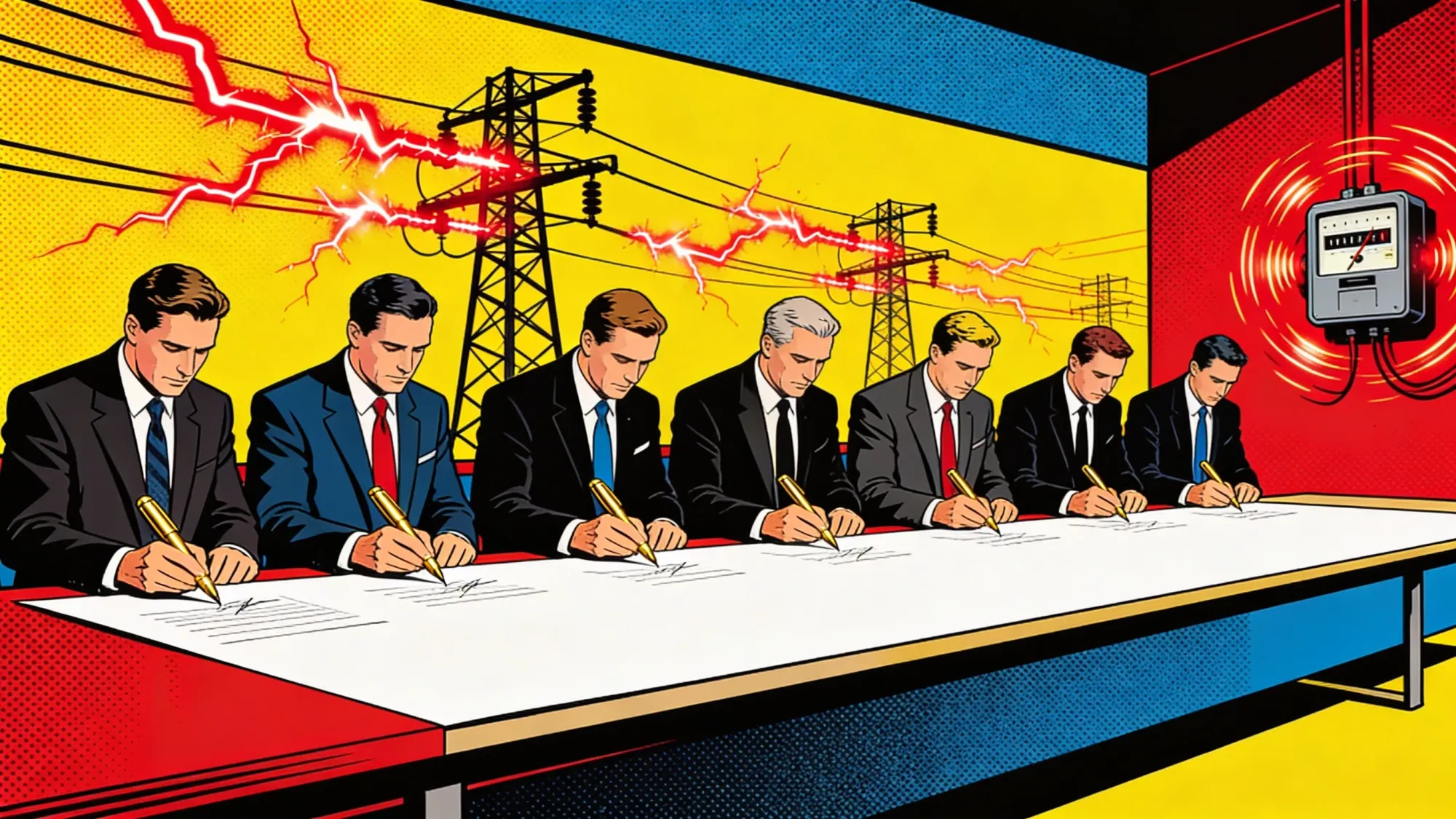
Seven executives signed a document at the White House. The president called it historic. Not a single electricity rate in America changed.
The Ratepayer Protection Pledge is voluntary, carries no penalties, and the White House has no jurisdiction over the state utility commissions that set power rates. Administration officials admitted as much, telling reporters enforcement would fall to states and local regulators, the same bodies that have been struggling with this problem for two years.
Google, Meta, Microsoft, Amazon, Oracle, xAI, and OpenAI committed to building or buying their own power and paying for grid upgrades. All of it was already in motion. Microsoft published its "community-first" infrastructure pledge in January. Google listed investments in nuclear and geothermal it had announced months earlier. "They're trying to take credit for going with the tide," one person familiar with the agreement told Politico.
Anthropic, absent after Trump designated it a supply chain risk, had made the most concrete commitment of any company: 100% coverage of consumer price increases caused by its data centers, with specific measurement mechanisms. The company with the strongest pledge was locked out.
More than 300 data center bills have been filed across 30 state legislatures in 2026. That is where rates actually get set. Data centers consume 4% to 6% of all U.S. electricity, projected to reach 12% by 2028. Goldman Sachs projects a 6% national price increase through 2026.
Why This Matters:
- The pledge gives companies political cover to keep building in communities that increasingly want to block them
- The real regulatory fight plays out in 30 state capitals where more than 300 bills are already moving

🧰 AI Toolbox
How to Build Apps, Dashboards, and Infographics from a Text Prompt with Gemini Canvas
Google just opened Canvas in AI Mode to all US users. Describe what you want and Gemini builds it as a live, interactive project: a pricing calculator, a study quiz from your notes, a team dashboard, an infographic, even a simple game. Canvas handles both code and written content. You can edit any section, adjust the tone, or ask Gemini to refine specific parts. Free for all Gemini users. Premium subscribers get Gemini 3 with a 1 million token context window for larger projects.
Tutorial:
- Go to gemini.google.com/canvas and sign in with your Google account
- Describe what you want to build in plain language: "Create a project timeline dashboard for a product launch" or "Turn this research into an infographic"
- Canvas generates a live, interactive version you can preview immediately
- Click any section to edit text, adjust layout, or change the tone using built-in quick editing tools
- Ask Gemini to refine specific parts: "Make the summary shorter" or "Add a section on risks"
- For code projects, Canvas shows working animations and interactive elements you can test in the browser
- Export written content to Google Docs or download code directly into your project
URL: https://gemini.google.com
What To Watch Next (24-72 hours)
- Broadcom: Q1 earnings dropped after close yesterday. AI chip revenue hit $8.4 billion, up 106% year-over-year. CEO Hock Tan said he has "line of sight" to $100 billion in AI chip revenue by 2027. Guidance beat consensus at $22 billion. Watch how the stock trades today and whether it pulls AI infrastructure names with it.
- Sam Altman at Morgan Stanley: The OpenAI CEO speaks Thursday at the Morgan Stanley TMT Conference, one day after Jensen Huang said Nvidia's $30 billion OpenAI investment would likely be its last before the IPO. Altman's comments on IPO timeline, the Pentagon deal fallout, and inference demand will move headlines.
- Nvidia GTC Countdown: Jensen Huang keynotes March 16 in San Jose. Expect pre-event leaks about the rumored inference-only chip and a next-generation co-packaged optical switch. More than 30,000 attendees from 190 countries. Every AI infrastructure stock will trade on Huang's slides.
🛠️ 5-Minute Skill: Turn a Sales Call Transcript Into a Deal Summary for the CRM
Your rep just finished a 40-minute discovery call with a prospect. The transcript is 6,000 words of small talk, objections, and three genuine buying signals buried in the middle. The CRM needs a structured deal summary. The rep is already dialing the next number.
Your raw input:
Sales call transcript — Acme Corp discovery call, 38 minutes

Rep: So what's prompting you to look at this now?

Prospect (VP Operations): Honestly, we just lost our third operations
analyst in six months. We can't keep people in these roles. They're
doing manual data reconciliation all day and they burn out. Our COO
told me last week to find a tool or he's cutting the team to two and
outsourcing the rest.

Rep: How are you handling the reconciliation now?

Prospect: Spreadsheets. We pull from three systems — SAP, Netsuite,
and a custom PostgreSQL database — into Excel. One person spends
Monday through Wednesday just making sure the numbers match. Thursday
and Friday they do the actual analysis.

Rep: What happens when the numbers don't match?

Prospect: They dig. Could be a currency conversion issue, could be a
duplicate entry in SAP, could be a timing difference. Takes anywhere
from 20 minutes to half a day per discrepancy. We average about 15
discrepancies a week.

Rep: And the budget conversation — where does that stand?

Prospect: We have $180K approved for this fiscal year. Our COO approved
it after the third resignation. If this works, he'll expand it next year.
But I need to see results in 90 days or he moves to the outsourcing
option.

Rep: Who else is involved in the decision?

Prospect: Me, the COO, and our IT director. IT needs to sign off on
the integration. The COO just needs to see the ROI math. I'm the one
who'll actually use it daily.
The prompt:
You are a senior sales operations analyst creating a CRM deal summary
from a call transcript. The summary will be read by the account
executive, their manager, and a solutions engineer.

From this transcript, produce:
1. Deal snapshot: Company, Contact, Role, Budget, Timeline, Decision
   makers
2. Pain points (ranked by urgency)
3. Buying signals (direct quotes from the prospect)
4. Objections or risks identified
5. Recommended next steps (3 max)

Transcript:
[paste transcript here]

Rules:
- Use the prospect's exact words for buying signals. Don't paraphrase.
- If budget is mentioned, include the number and any conditions.
- Flag any deadline that creates urgency.
- Next steps must be specific: who does what by when.
- Keep the entire summary under 250 words.
What you get back:
Deal Snapshot
Company: Acme Corp | Contact: [Name], VP Operations | Budget: $180K (approved, fiscal year) | Timeline: 90 days to show results | Decision makers: VP Ops (champion), COO (economic buyer), IT Director (technical sign-off)
Pain Points (by urgency)
1. Talent retention crisis: lost 3 analysts in 6 months due to manual reconciliation work
2. Manual process: 3 days/week spent matching data across SAP, Netsuite, and PostgreSQL
3. COO ultimatum: tool or outsource, decision expected within 90 days
Buying Signals
- "Our COO told me last week to find a tool or he's cutting the team to two"
- "$180K approved for this fiscal year"
- "If this works, he'll expand it next year"
Risks
- IT sign-off required: integration with three systems adds technical complexity
- 90-day results window is tight for implementation + ROI proof
- Outsourcing is the fallback, not status quo: prospect has an alternative
Next Steps
1. AE sends ROI calculator pre-filled with prospect's numbers (15 discrepancies/week, 3-day manual process) — by Friday
2. Solutions engineer schedules 30-min technical call with IT Director — next week
3. AE drafts 90-day success plan showing measurable milestones — before next prospect meeting
Why this works
The prompt extracts structure from conversation. Sales transcripts bury critical information, budget, timeline, decision makers, inside 40 minutes of rapport-building. Requiring direct quotes for buying signals means the CRM captures what the prospect actually said, not the rep's optimistic interpretation.
Where people get it wrong: Asking for "a summary of this call." You'll get a chronological recap that reads like meeting minutes. CRM entries need to be structured around deal mechanics, not conversation flow.
What to use
Claude (claude.ai): Best at identifying risks and objections the rep might downplay. Won't inflate buying signals. Watch out for: May flag too many risks. Sales managers want 2-3, not a risk register.
ChatGPT: Strong at CRM-ready formatting and concise summaries. Watch out for: Tends to paraphrase quotes instead of using exact words. Specify "verbatim quotes only" in the prompt.
AI & Tech News
Meta Opens WhatsApp to Rival AI Chatbots to Avoid EU Enforcement
Meta agreed to let competing AI chatbots operate on WhatsApp in Europe for 12 months. The concession aims to head off interim measures from EU regulators who were preparing formal action against the company.
Musk Concedes 'Rope-a-Dope' Strategy in $44 Billion Twitter Trial
Elon Musk took the stand in San Francisco federal court and admitted he "may have" used a rope-a-dope approach during the Twitter acquisition. Shareholders claim his tweets drove the stock down 32%, and potential damages approach $1 billion with the trial running through March 19.
Alibaba Forms AI Task Force After Qwen Division Head Resigns
Lin Junyang, who led Alibaba's Qwen AI division, stepped down as the company announced a new task force to accelerate foundation model development. The restructuring comes as Chinese AI labs race to match Western competitors on model capabilities.
China Tech Stocks Lose $600 Billion Since October on AI Spending Fears
The Hang Seng Tech Index has dropped 28% since October, erasing nearly $600 billion in market value. Investors are fleeing as escalating AI infrastructure costs squeeze margins across Tencent, Alibaba, and other major Chinese tech firms.
Google Launches Canvas AI Workspace Nationwide Through Search
Google expanded its AI-powered Canvas workspace to all U.S. users in Search AI Mode. The tool handles creative writing, coding, and planning tasks directly inside the search experience.
Grammarly Simulates Feedback From Famous Authors Without Their Consent
The company, now rebranded as Superhuman, launched an "Expert Review" feature that mimics editorial feedback from living and dead writers. None of the authors whose styles the tool replicates were asked for permission.
Google Settlement Bars Epic CEO Tim Sweeney From Criticizing App Store Until 2032
A term sheet from the Google-Epic settlement prohibits Sweeney from publicly criticizing Google's app policies for six more years and requires him to praise them. The clause silences one of the industry's most vocal platform critics.
NYSE Parent ICE Invests in Crypto Exchange OKX at $25 Billion Valuation
Intercontinental Exchange made a strategic investment in OKX and will take a board seat. The deal originated from a meeting last summer between an OKX executive and the NYSE chairman in Atlanta.
JD.com Reports First Quarterly Loss in Nearly Four Years
The Chinese e-commerce company posted Q4 revenue of $51 billion, up just 1.5%, alongside a $391 million net loss. Weak consumer spending and the cost of expanding into food delivery drove the reversal.
Huawei Dominates MWC 2026 as Largest Exhibitor Despite European Bans
The Chinese telecom supplier held the biggest presence at Mobile World Congress in Barcelona, even as several European governments work to remove its equipment from their networks. The gap between political ambition and market reality remains wide.
Capcom Reports Half of All Game Sales Now Come From PC
The Japanese publisher's latest quarterly report shows PC accounts for roughly 50% of unit sales, with the ratio expected to keep climbing. The remaining share splits across all console platforms combined.
🚀 AI Profiles: The Companies Defining Tomorrow
Neura Robotics
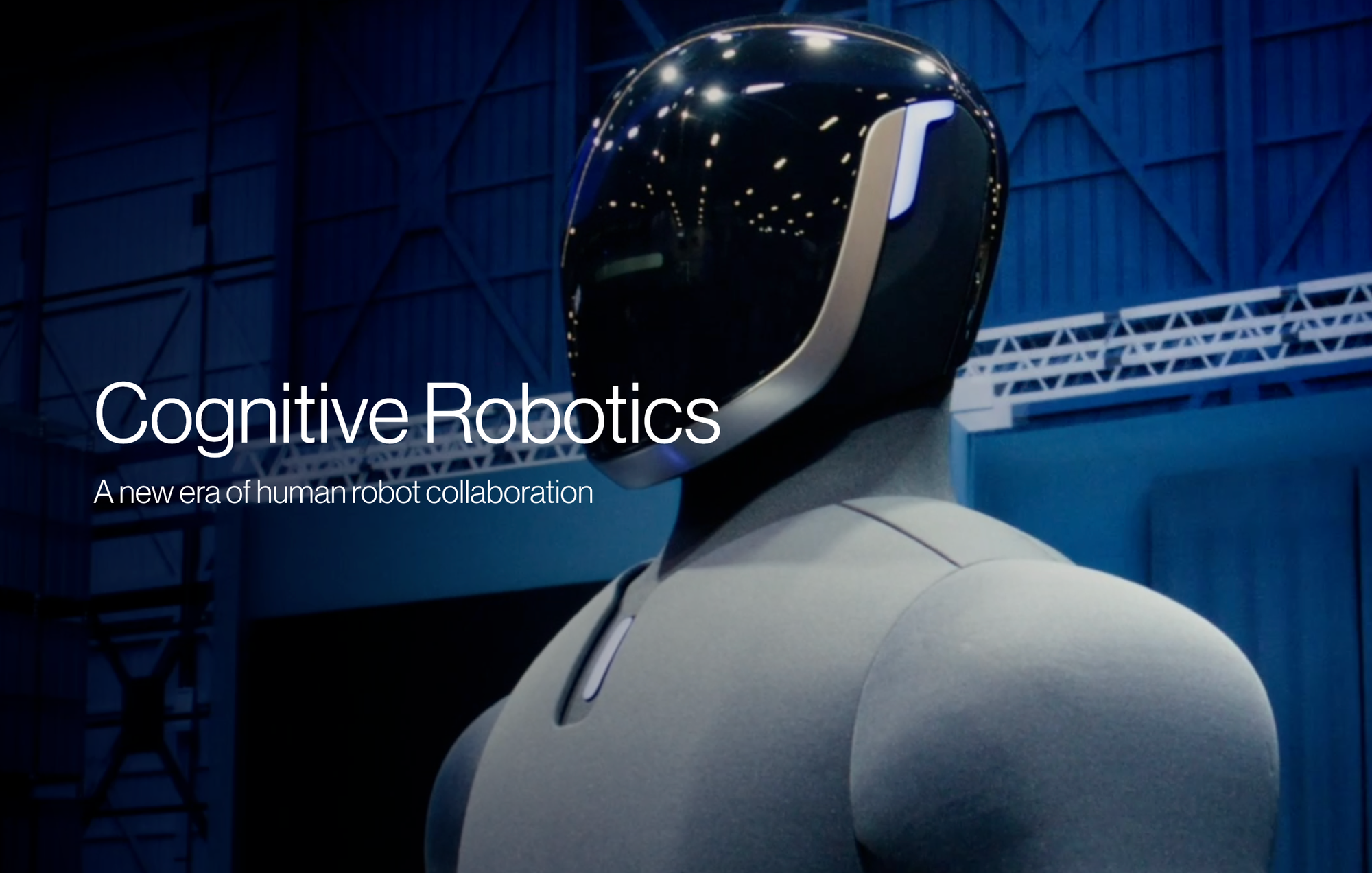
Neura Robotics builds humanoid robots that sort laundry and assemble cars, funded by the company behind the world's largest stablecoin. The Metzingen, Germany startup just raised about €1 billion from Tether Holdings. 🤖
Founders
David Reger founded Neura Robotics and serves as CEO. The company is based in Metzingen, a small city in Baden-Württemberg better known as the headquarters of fashion designer Hugo Boss. Reger has positioned Neura as Germany's answer to the humanoid wave rolling through Silicon Valley and Shenzhen, pitching industrial and consumer applications from factory floors to household chores.
Product
Neura sells transport robots for factories and a robotic arm system marketed for home use. Its humanoid prototypes have appeared on car assembly lines and in laundry-sorting demonstrations at IFA, Europe's largest consumer electronics trade show. The company claims nearly $1 billion in existing orders from customers including Japan's Kawasaki Heavy Industries and Omron Corp. The product line spans industrial automation and domestic assistance, though the humanoid remains pre-mass-production.
Competition
The humanoid robot market is flooded with capital. Figure AI, Apptronik ($520 million raised in February), and Dexterity compete in the US. Chinese rivals are further ahead on shipping: Unitree's robots performed parkour at China's Spring Festival gala, and Honor Device unveiled its first humanoid at MWC Barcelona days ago. Tesla's Optimus program looms over the entire sector. Neura differentiates as one of few European entrants with real customer orders, but geography is a constraint when the talent and manufacturing base sits in California and Guangdong.
Financing 💰
€1 billion round backed by Tether Holdings, valuing Neura at roughly €4 billion. Previous round: €120 million in January 2025 led by Exor's Lingotto Investment Management, with Volvo Cars Tech Fund participating. The company first approached investors about a billion-euro raise in June 2025.
Future ⭐⭐⭐
A stablecoin issuer bankrolling a German robotics startup is the kind of sentence that would have read as satire two years ago. Tether has been spending aggressively outside crypto, backing brain-computer interfaces and Italian robotics alongside Neura. The €4 billion valuation assumes Neura can convert its order book into shipped units at scale. Barclays sees the broader robot market hitting $1 trillion by 2035. The question for Neura: can a mid-sized German company compete on manufacturing cost against Chinese firms that already ship product, and on talent against American labs backed by Big Tech balance sheets? The orders are real. The gap between demo and delivery is where most humanoid bets die. 🇩🇪
🔥 Yeah, But...
Anthropic reported that Chinese AI labs DeepSeek, Moonshot AI, and MiniMax used 24,000 fraudulent accounts to extract capabilities from its Claude chatbot through coordinated "distillation" attacks. The same week, Defense Secretary Pete Hegseth demanded Anthropic remove its guardrails on military use of Claude or face designation as a supply chain risk.
Sources: Fox News, February 23, 2026 | Politico, February 24, 2026
Our take: The Pentagon threatened to label Anthropic a national security risk for refusing to remove safety limits from Claude. The same week, three Chinese AI labs demonstrated exactly why those limits exist by stealing Claude's capabilities through 24,000 fake accounts. One branch of the government says the guardrails make Anthropic a threat. Three foreign competitors showed exactly what happens without them. DeepSeek didn't need Pentagon-level access. It just made 24,000 accounts and asked politely. The model the military wants unrestricted is apparently good enough for three countries to steal. The solution currently being debated in Washington is giving the military unrestricted access to the thing being stolen, and nobody in the room seems to hear the contradiction.


