IMPLICATOR
San Francisco | Thursday, July 2, 2026
Weeks after the biggest IPO on record, SpaceX has a hardware question it will not answer cleanly. The Wall Street Journal says investors were shown a slim AI handset running xAI software on a Qualcomm chip. Elon Musk called the report "utterly false," the same move he made in February when a Starlink phone surfaced. The market is left weighing a sourced account against a founder's flat denial.
Wall Street liked the other two better. Meta rose 9.3% on a Bloomberg report that it plans to rent out AI compute, sinking CoreWeave and Nebius.
Palantir climbed about the same while Alex Karp called the AI industry "effing insane" on CNBC, then pitched Washington a Nvidia engine it can own outright.
Stay curious,
Marcus Schuler
SpaceX Showed Investors an AI Handset Prototype as Musk Denies the Report

Weeks after the largest IPO on record, SpaceX showed some investors a slim AI handset tied to xAI, the Wall Street Journal reported Wednesday. Hours later, Elon Musk called the account "utterly false."
The Journal described a device thinner than an iPhone, running a proprietary operating system and xAI software, with some sources citing a Qualcomm Snapdragon chip. SpaceX reportedly told investors the project was early and might never ship. Reuters said neither SpaceX nor Qualcomm answered requests for comment.
It is the second phone denial this year, after Musk brushed off a reported Starlink handset in February. The IPO only sharpened the question of what a company holding launch, Starlink and xAI does at the consumer edge.
Why This Matters:
- Investors priced launch, Starlink and AI as one bet; a consumer handset would add hardware risk the prospectus never named.
- A SpaceX phone would drop xAI onto Android-class silicon, opening a distribution fight with Apple, Google and OpenAI's own device effort.
Reality Check
What's confirmed: The Journal reported July 1 that SpaceX showed investors a slim, xAI-tied handset prototype; Musk publicly called it "utterly false." SpaceX priced its IPO at $135 a share for about $75 billion gross.
What's implied (not proven): That SpaceX is on a path to ship a consumer phone that puts xAI directly in users' hands.
What could go wrong: An early prototype shown to investors is a demo, not a commitment; SpaceX reportedly said it might never be built, so the denial can be literally true about a product plan.
What to watch next: An FCC device authorization, a Qualcomm supply deal, or a filing that names hardware would turn a prototype into a program.

The One Number
$1.15 billion - Together AI's annual bookings last quarter, the company said Wednesday as it raised an $800 million Series C at an $8.3 billion valuation. The figure is more than double its early-2025 valuation in bookings alone. Open-weight AI is becoming infrastructure spend, not a lab experiment.
Source: Business Wire, July 1, 2026
💰 Fresh Funding
💰 Fresh Funding
Raises $800M: Together AI scales open-weight infrastructure
Business Wire said Wednesday that Together AI raised an $800 million Series C led by Aramco Ventures at an $8.3 billion post-money valuation, with Nvidia, Vista Equity Partners, General Catalyst, Emergence Capital, March Capital and others participating. The San Francisco company says annual bookings crossed $1.15 billion last quarter as customers including Cursor, Cognition and Decagon run open-weight models through its inference, fine-tuning and GPU clusters.
Visit Together AI →Raises $100M: TwelveLabs builds AI for video archives
TwelveLabs said Wednesday it raised $100 million in Series B funding co-led by NEA and NAVER Ventures, with Amazon, Radical Ventures, Korea Investment Partners, Index Ventures, Quadrille Capital and Red Bull Ventures participating. The San Francisco video-intelligence company is scaling models that search and reason over large video archives, with distribution through its own API and Amazon Bedrock.
Visit TwelveLabs →Raises $65M: Venice AI sells private, crypto-native AI
The Block reported Wednesday that Venice AI raised a $65 million Series A led by Dragonfly at a $1 billion equity valuation, with North Island Ventures, Coinbase Ventures, F-Prime, Archetype, Liquid2 Ventures and Morgan Creek joining. The privacy-focused AI app says it does not store prompts on its own systems, and the raise funds capacity as it pushes private chat, image, code and agent tools beyond crypto-native users.
Visit Venice AI →Meta Plans to Rent Out AI Compute, Sending Its Stock Up 9.3%

Meta is building a cloud business to sell outside customers AI compute and hosted models, Bloomberg reported Wednesday. The stock jumped 9.3% to $615.55. CoreWeave and Nebius went the other way.
Two routes are on the table: hosted model access resembling AWS Bedrock, and raw capacity like CoreWeave's. The effort sits inside Meta Compute, run by Santosh Janardhan, Daniel Gross and Dina Powell McCormick. CoreWeave fell as much as 14% on the report; Nebius as much as 17%.
The scale comes from capex. Meta lifted 2026 guidance to $125 billion to $145 billion, and Zuckerberg has said outside buyers keep asking. What is missing is the part that makes a cloud business real: named customers, prices and a launch date.

AI Image of the Day

Prompt:
A graceful woman practicing Pilates with her happy dog in a lush green meadow surrounded by nature, both moving together in harmony, side view composition, joyful interaction between owner and dog, wellness lifestyle, natural movement, elegant posture, peaceful outdoor environment, warm morning sunlight with soft diffused lighting, gentle breeze, organic aesthetic, earthy color palette, premium wellness branding, Scandinavian minimalism, cinematic photography, ultra realistic, highly detailed fur and fabric texture, shallow depth of field, soft bokeh, editorial lifestyle photography, luxury health campaign, 85mm lens, natural colors, photorealistic, 8K stylize 250 calm energy, mindful lifestyle, holistic wellness, healthy bonding, premium lifestyle magazine, luxury yoga retreat, emotional storytelling, clean composition, airy atmosphere
Palantir's Karp Blasts AI Rivals While Pitching a Nvidia Engine, Stock Up 9%
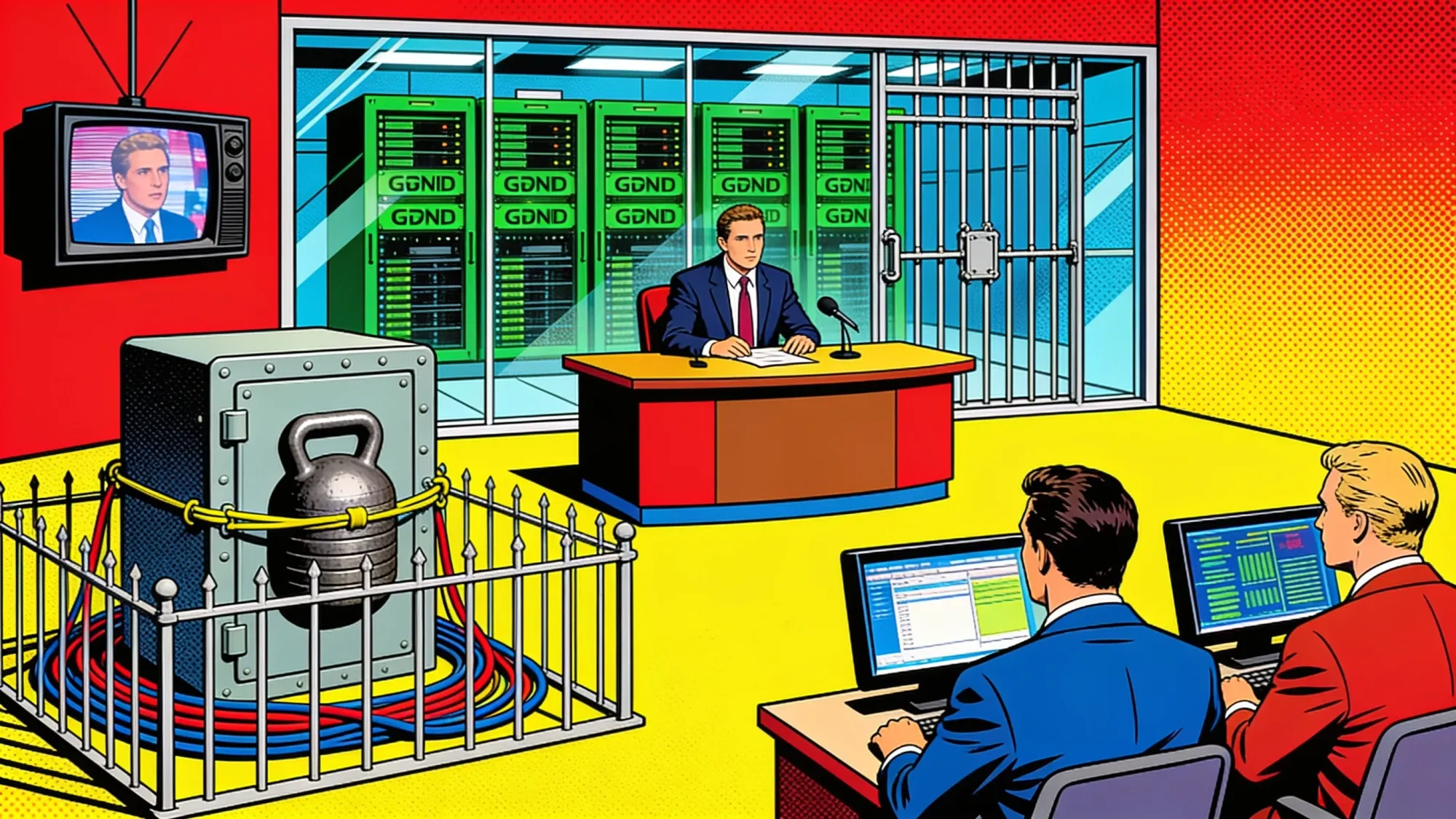
Palantir shares rose more than 9% Wednesday as Alex Karp used CNBC to attack how rival AI firms sell models, then promoted a Nvidia-backed engine for U.S. agencies. His pitch was narrower than his anger.
Karp said chief executives are "livid," accused model providers of a "wealth tax" of high fees plus data harvesting, and asked whether the country should "outsource the battlefield" to Silicon Valley consensus. That, he said, would be "effing insane."
Underneath the noise, the product is specific: Palantir will run Nvidia's Nemotron open models in air-gapped government environments, letting agencies train on their own data and keep the resulting weights. Nvidia pegged the market at roughly 3 million federal civilian workers. Neither company named an agency customer or a contract value.
🧰 AI Toolbox
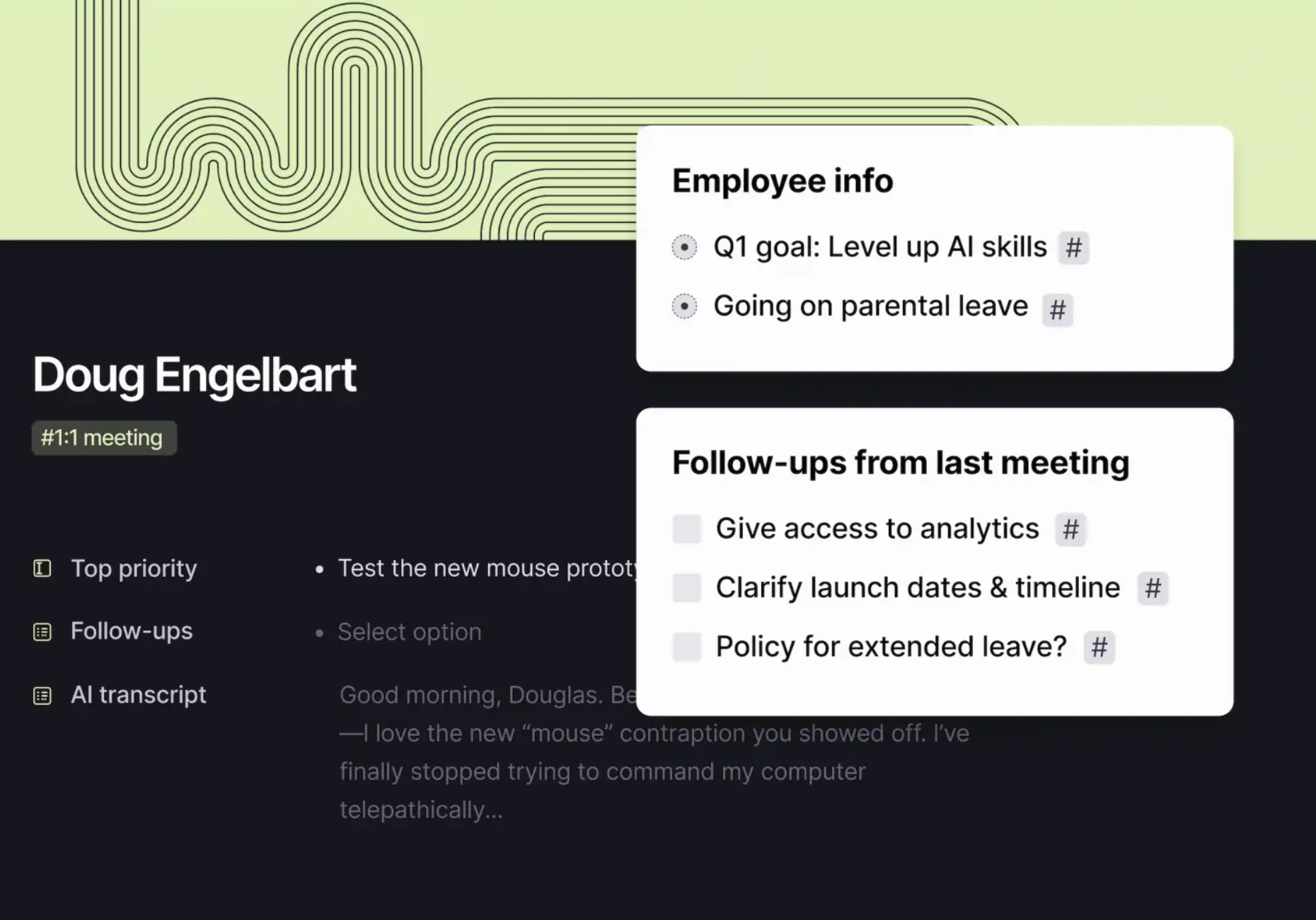
How to Turn Meetings into Structured Actions and a Self-Building Knowledge Graph with Tana
Tana sends an AI agent into your video calls that does more than transcribe. It extracts action items, decisions, and key entities, then links everything to a shared knowledge graph that grows with every conversation. Ask a question six months later and Tana surfaces the meeting where the decision was made, who was there, and what happened next. The graph compounds automatically, so context that took hours to reconstruct now takes seconds. Free tier available with 500 AI credits per month.
Tutorial:
- Sign up free at outliner.tana.inc and connect your Google Calendar
- Open an upcoming meeting and click "Add Meeting Agent" to attach the AI bot
- Start the call on Zoom, Google Meet, or Microsoft Teams. The Tana agent joins automatically, transcribes with speaker labels, and works in over 60 languages
- After the call, open Tana to find structured notes with extracted action items, decisions, and tagged participants
- Click any person or project name to see every meeting where they appeared, with linked context and prior decisions
- Route action items to external tools: send tasks to Linear, post summaries to Slack, or create GitHub issues directly from the meeting output
- Run a natural language query across all past meetings: "What did we decide about the pricing model in March?" and get a sourced answer from the graph
URL: https://outliner.tana.inc
What To Watch Next
|
||
|
||
|
||
|
||
|
💡 5-Minute Skill: Turn a Conference Agenda Into Five Meetings That Actually Matter
Thursday, 8:10 a.m. You are staring at a conference agenda with three stages, two receptions and 400 sponsors. Before the loudest keynote decides the trip, make the model turn the program into a meeting plan.
Your raw input:
Role: head of partnerships at a B2B AI company. Event: ICML in Seoul plus nearby side events. Goals: find three research partners, two enterprise design partners, and one GPU cloud contact. Constraints: two days on site, no booth, budget for six dinners. Current targets: universities, video AI teams, robotics labs, Korean cloud providers. Need: who to meet and what to ask.
The prompt:
Act like a conference operator with limited time. Turn this agenda into a ranked meeting plan. Output five targets, why each matters, the exact ask, best venue or session to catch them, and one sentence I can send as an intro. Cut anything that is only interesting content.
The output:
Priority list: 1) invited talks on efficient inference, ask speakers for enterprise collaborators; 2) poster authors with industry co-authors, book 15-minute coffees; 3) Korean cloud sponsors, ask for GPU availability and latency terms; 4) robotics side event, look for design partners with messy video data; 5) one dinner with three targets instead of three separate meals. Skip panels unless a target is speaking.
Why this works:
Conferences punish vague curiosity. This prompt turns the agenda into routing, asks for the meeting reason before the meeting request, and forces the model to cut sessions that do not support the trip.
What to use:
Claude is best when you paste a long agenda, sponsor list and LinkedIn notes. ChatGPT is fine for writing the short outreach lines. Keep the phrase "cut anything that is only interesting content," or the model fills the plan with panels.
📖 AI Alphabet
|
O
|
📖 AI Alphabet OCR OCR stands for optical character recognition. It converts text inside images, scans, or PDFs into machine-readable text that software can search and process. |
AI & Tech News
Apple Pushes to Buy Chinese Memory Chips From Blacklisted Suppliers
Apple is negotiating to source memory from China's CXMT and YMTC, both on the Pentagon's blacklist, for devices sold inside China. Bloomberg reported the talks alongside a lobbying push to loosen U.S. export controls.
Alibaba and AUS Agree to Pay $600 Million to Settle U.S. Illegal-Sales Case
Alibaba and its payments affiliate AUS Merchant Services will pay a combined $600 million to resolve Justice Department allegations they failed to block illegal sales, including controlled substances. The DOJ said the platforms ignored repeated red flags from third-party merchants.
White House Nears Voluntary AI Safety Rules With Anthropic and OpenAI
The White House is close to voluntary safety standards and staggered release timelines for frontier models, the Financial Times reported, with an announcement expected within days. The talks follow a recent intervention that paused rollouts of specific high-risk models.
SoftBank Revives $10 Billion Loan Backed by Its OpenAI Stake
SoftBank restarted talks for a $10 billion loan secured against its OpenAI shares, Reuters reported, and offered to personally guarantee repayment if the collateral falls short. The concession signals how much liquidity SoftBank wants ahead of its next moves.
Bending Spoons Pops 40% in U.S. Debut at a $25.7 Billion Valuation
The Italian owner of Vimeo and AOL jumped 40% on its first Nasdaq day after pricing at $31 and closing at $43.40. The $1.68 billion offering values Bending Spoons at $25.7 billion.
Uber-Backed Lime Raises $174 Million in Nasdaq IPO as Shares Rise 4%
Micromobility firm Lime listed on Nasdaq on July 1, raising about $174 million and closing up 4% for a roughly $1.7 billion valuation. Uber's backing anchored investor demand.
Higharc Raises $95 Million to Scale AI Homebuilding Software
Durham-based Higharc raised a $95 million Series C led by Insight Partners, pushing total funding past $170 million. The company sells AI design and construction tools to homebuilders facing labor shortages.
Amazon and Google Emissions Climb as AI Data Centers Expand
Amazon's emissions rose more than 16% in 2025 and Google's ambition-based Scope 1 and 2 emissions climbed 18%, Bloomberg reported, driven by AI-linked buildout. Both firms still claim long-term net-zero targets.
Apple Plans Redesigned iPad Pro and Entry MacBook Pro for Early 2027
Apple is preparing updated iPad Pro models and a redesigned 14-inch MacBook Pro for the first half of 2027, Bloomberg's Mark Gurman reported. The refresh lines up with Apple's move toward touch-screen laptops.
Microsoft Tests Disc-to-Digital Conversion for Xbox Libraries
Microsoft is building a feature that lets Xbox owners turn physical discs into digital copies, The Verge reported. The option would match Sony's approach and ease library management before the next console generation.
🚀 AI Profiles: The Companies Defining Tomorrow
Lithosquare wants AI to find the minerals needed for every battery, grid upgrade and AI data center before the bottleneck becomes political panic. The Paris startup raised $25 million to speed up exploration for copper, rare earths and lithium with geology-specific AI. ⛏️
Founders
Founded in 2024 by mining engineer Aymeric Préveral-Etcheverry, with Simon Leclair joining as founding chief operating officer. Préveral-Etcheverry built the company around a blunt constraint: the energy and digital transitions need more metal than current discovery timelines can supply. That is a mining problem before it is a software market.
Product
Lithosquare combines AI models, maps, reports, surveys, geophysical readings and in-house geology work to rank mineral targets. The company says its model can reason about deposit formation, fluid movement and structural traps rather than only matching known patterns in old mining districts. It works with exploration and mining companies through outcome-based agreements instead of only selling seats.
Competition
KoBold Metals is the obvious heavyweight in AI-assisted mineral discovery. Earth AI, Fleet Space, SensOre-style exploration analytics and the internal teams at mining majors all chase pieces of the same problem. Lithosquare's bet is that European climate capital plus frontier-region partnerships can open targets faster than legacy exploration teams.
Financing 💰
$25 million equity seed round co-led by World Fund and Kindred Capital, with Daphni, Omnes Capital and Ovni Capital participating. Sifted reported the round on May 5, 2026; Tech Funding News reported the same raise and said the company plans to expand in the US, Europe, Africa and Latin America. Sources: Sifted, May 5, 2026; Tech Funding News, May 5, 2026.
Future ⭐⭐⭐
The need is real. The sales cycle is not kind. Mining discoveries still require permits, drilling, field teams and patience that venture timelines rarely enjoy. Lithosquare becomes important if its AI changes where companies drill, not just how nice the target maps look. The prize is upstream control of the electrification supply chain. 🪨
🤨 Yeah, But...
The Wall Street Journal reported Wednesday that SpaceX showed some investors a slim AI handset tied to xAI and running on a Qualcomm chip, weeks after its record IPO. By nightfall, Elon Musk had called the account "utterly false" on X, with no further detail. (WSJ, July 1, 2026; Reuters, July 1, 2026)
Our take: A denial like that holds right up until the people who saw the demo start comparing notes. What Musk cannot delete is his own earlier review of the hardware business: "The idea of making a phone makes me want to die. But if we have to make a phone, we will." That is not a man ruling out a phone. It is a founder negotiating with himself in public, and losing. So the prototype goes back in the drawer, slimmer than an iPhone, and waits for the mood to move from utterly false to quietly for sale. The label rarely survives the next earnings call.
Free AI briefing · Weekdays
The AI stories that matter, sourced and explained.
Join the Morning Briefing. It goes out every weekday at 4:45 a.m. Pacific, with later sends for the East Coast, Berlin and Tokyo.
Free when you sign up: The Paperclip Compendium, our tested guide to running AI agents.
Free. Unsubscribe in one click.

Marcus Schuler
Editor-in-Chief and founder of Implicator.ai. Former ARD correspondent and senior broadcast journalist with 10+ years covering tech. Writes daily briefings on policy and market developments. Based in San Francisco. E-mail: editor@implicator.ai