


San Francisco | January 19, 2026
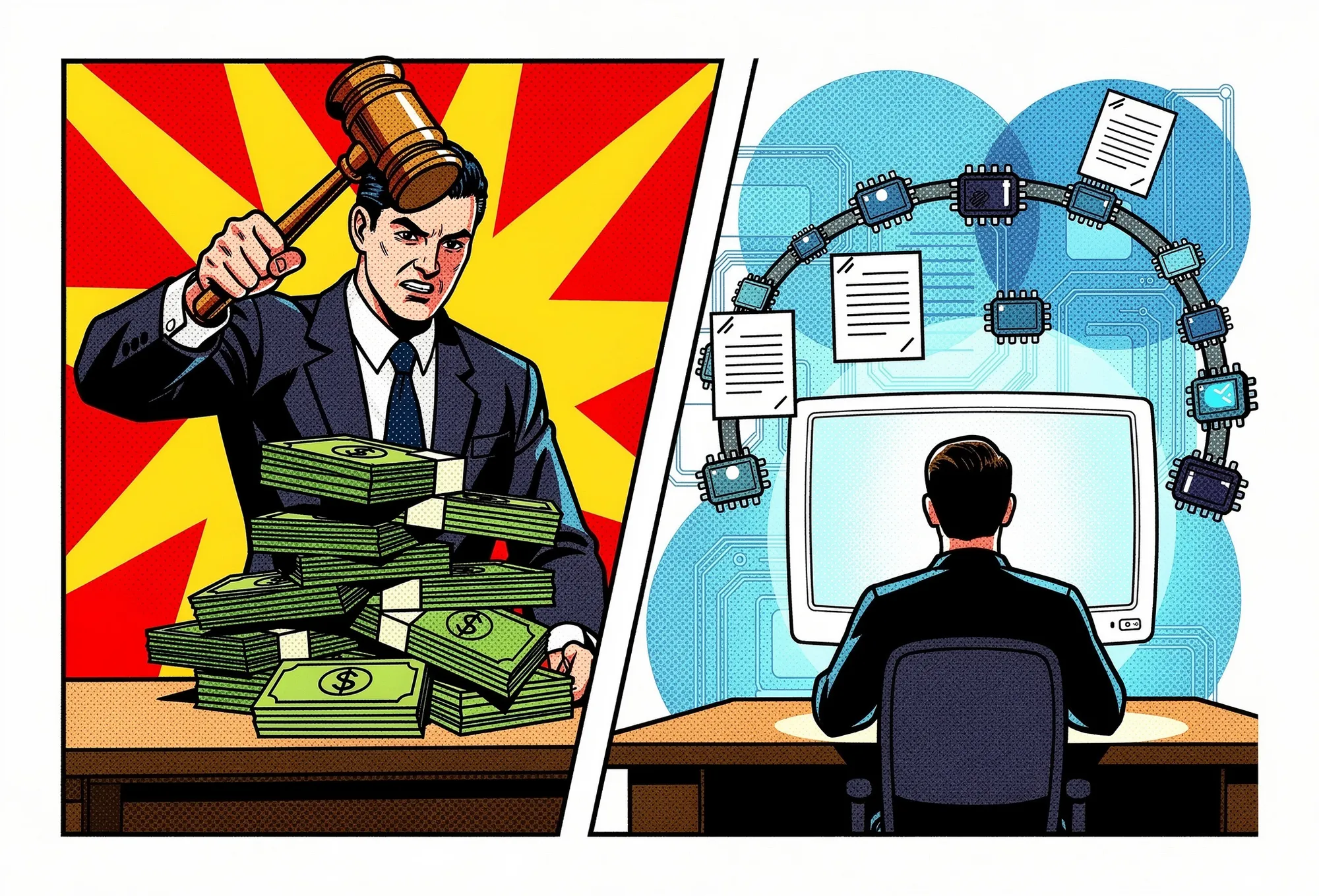
Elon Musk's OpenAI lawsuit goes to trial in April. The ask: $134 billion for a $38 million donation. That's a 3,500x return on what was supposed to be charity. The real prize isn't cash. It's the internal documents, the Brockman journal entries, the receipts that show who promised what to whom. Discovery will be brutal for everyone involved.
Meanwhile, a former Spotify engineer named Joshua Pham spent three years building what the giants haven't: a memory layer that actually works. Enzyme connects Claude to your Obsidian vault. No VC. No team. Just one person solving the problem that Apple and Microsoft keep punting on.
The lawsuit is about control. The tool is about clarity. Both bets land this spring.
Stay curious,
Marcus Schuler
Musk's $134 Billion OpenAI Lawsuit Is About Control, Not Cash
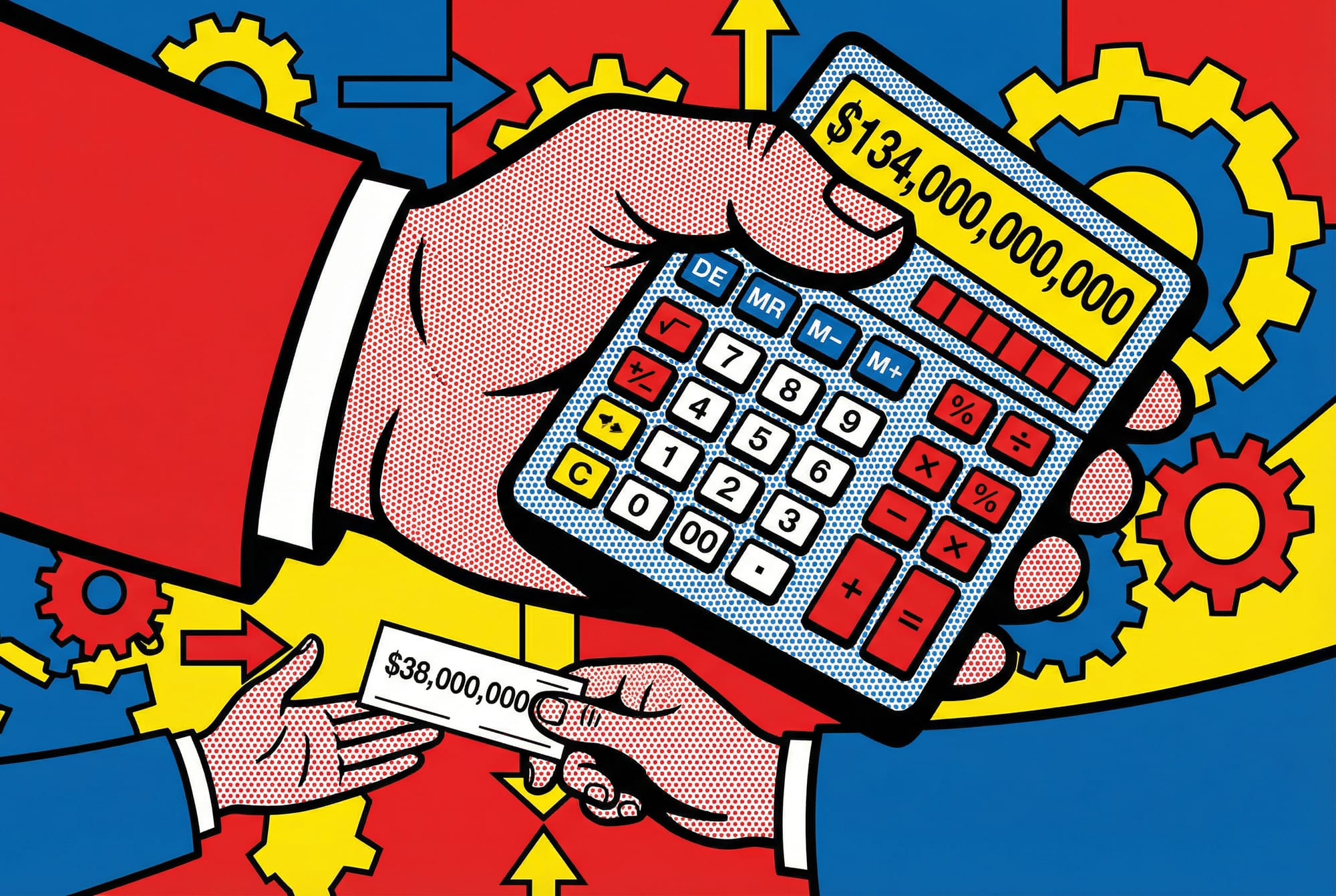
Elon Musk is suing OpenAI and Microsoft for up to $134 billion. His original contribution: $38 million between 2016 and 2020. The math works out to a 3,500x return on a charitable donation.
Trial begins April 27 in Oakland federal court. Judge Yvonne Gonzalez Rogers rejected dismissal motions from both defendants. Microsoft faces "aiding and abetting" claims that could cost them $13-25 billion if Musk prevails.
The real action is discovery. Greg Brockman's 2017 journal entries will go public. One line already leaked: "Cannot say that we are committed to the non-profit. Don't want to say that we're committed." OpenAI published a dedicated webpage cataloging what it calls Musk's "harassment." Neither side will emerge clean.
Musk's lawyers argue he was promised OpenAI would stay nonprofit. OpenAI says he demanded majority control and they refused. Both claims have documentation. Both will be tested under oath.
Why This Matters:
- OpenAI's $500 billion valuation and nonprofit governance structure face their first serious legal stress test, with $130 billion in foundation equity on the line
- Discovery will expose internal communications that reshape the public narrative around AI's most influential company, regardless of verdict
✅ Reality Check
What's confirmed: Trial starts April 27 in Oakland. Judge rejected dismissal. Brockman journal entries exist and will be introduced as evidence.
What's implied (not proven): Musk was specifically promised nonprofit permanence in exchange for his contributions, rather than simply assuming it.
What could go wrong: A Musk win could trigger regulatory scrutiny of every nonprofit-to-commercial AI transition, freezing deal structures industry-wide.
What to watch next: Pre-trial motions through March, and whether OpenAI attempts settlement before discovery goes public.
The Memory Problem Nobody Solved Until Now
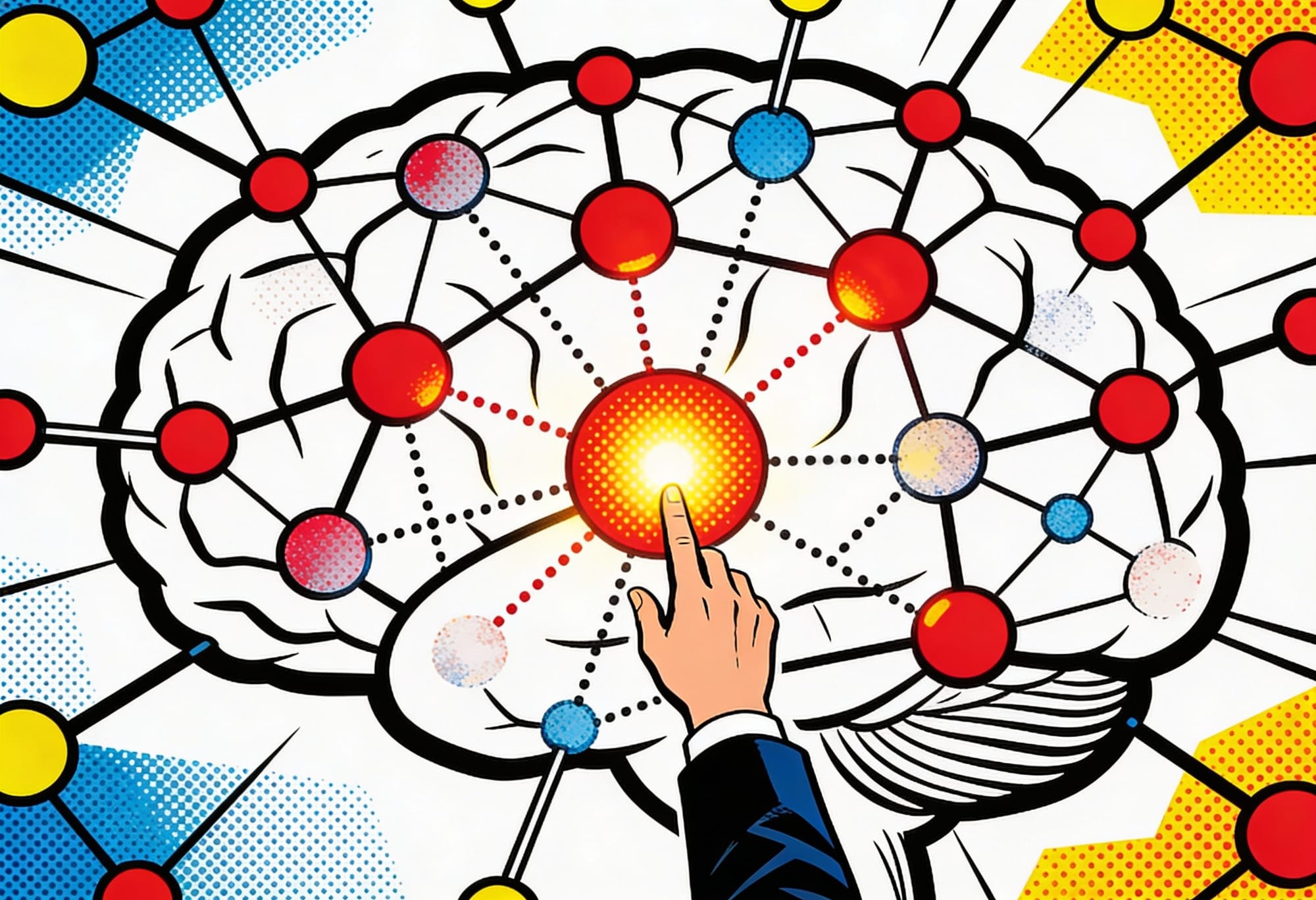
Joshua Pham spent three years building what Apple and Microsoft keep promising but never ship: a memory layer that actually works. His tool, Enzyme, connects Claude to your Obsidian vault. He has no investors, no team, no office. Just working code.
Pham left Spotify to solve a problem he kept running into: AI assistants are brilliant but forgetful. Every conversation starts from zero. Enzyme fixes this by indexing your notes, tags, and folder structures, then feeding that context to Claude when you ask questions.
The technical trick is compression. Enzyme achieves 2-12x token reduction versus keyword search. Instead of dumping your entire vault into the context window, it figures out where to look. "Most important knowledge is directional," Pham says. "You need a memory that tells Claude where to look, as opposed to where the answers are."
The timing is deliberate. Local-only AI inference is getting cheap enough for consumer hardware. Pham built a version running on Qwen 7B that never sends data to the cloud. He hasn't released it yet, but the option exists.
Why This Matters:
- Privacy-conscious knowledge workers get a working alternative to platform-controlled memory, with their data staying on local machines
- If Enzyme gains traction before Apple or Microsoft ships competing features, it proves the indie developer window in AI tooling hasn't closed yet
AI Image of the Day

Prompt: A high-fashion editorial portrait of a woman sitting on the floor in a relaxed yet confident pose, legs folded asymmetrically, arms resting casually. She wears a black minimalist dress, vivid green tights, and glossy red high-heeled shoes. Natural makeup with bold red lipstick, short brown hair with soft bangs. The background is a solid deep red studio backdrop. Clean composition, strong color contrast between red, green, and black, retro-modern aesthetic, editorial fashion photography, soft but directional studio lighting, sharp focus, realistic skin texture, cinematic color grading, magazine-quality styling.
What To Watch Next (24-72 hours)
- World Economic Forum: Davos is underway with AI dominating the agenda. Expect announcements from tech CEOs jockeying for regulatory goodwill through Wednesday. The "responsible AI" messaging will be thick, the lobbying thicker.
- AAAI 2026 Conference: The premier academic AI conference opens today in Singapore. Watch for papers on reasoning breakthroughs and benchmark-beating results that filter into products six months later.
- Netflix Earnings: First major tech earnings of the season drops today after market close. Subscriber growth and ad-tier performance will signal whether streaming's AI personalization bets are paying off.
The One Number
$2.52 trillion — Global AI spending projected for 2026, up 44% from last year's $1.65 trillion. Gartner released the forecast this week, just as Davos convenes to discuss AI governance. The money is moving faster than the rules.
Source: Gartner
🧩 Workflow of the Day
Workflow of the Day: "Catch earnings call red flags before the stock moves"
Who: Investor, analyst, or portfolio manager tracking 8-12 companies per quarter.
Problem: Listening to every earnings call takes 40+ hours. You miss the tells buried in management tone shifts.
Workflow (with Claude + earnings transcripts):
- Download transcripts from company IR pages or services like Seeking Alpha.
- Upload 2-3 quarters of transcripts to Claude with: "Compare management language across quarters. Flag: guidance changes, hedging words, confidence shifts, analyst pushback."
- Review flagged sections with timestamps or paragraph references.
- Ask Claude to summarize the three biggest concerns and three most confident claims.
- Cross-reference with stock price on those dates. Did the market catch what you caught?
- Add findings to your investment thesis doc with specific quotes.
Payoff: Catch management anxiety 1-2 quarters before the miss. Research time drops from 40 hours to 4.
Gotcha: Claude may over-flag normal hedging. Calibrate by comparing to competitors in the same quarter.
Tools: Claude | Seeking Alpha
Better Prompting... Today: Strategic Decision Analysis
Good decisions need more than pros and cons. They need the questions you forgot to ask.
The Regret Minimizer
"I'm deciding between [Option A] and [Option B]. Fast forward 2 years. For each option, describe the scenario where I most regret choosing it. Be specific: what happened, what did I miss, what was I overconfident about? Now, which regret is more recoverable?"
Best on: Claude (scenario depth and reasoning) or ChatGPT (good at generating plausible futures)
The Stakeholder X-Ray
"This decision affects [list stakeholders]. For each one, tell me: what they'll say they want, what they actually want, what they're afraid of, and what would make them a champion instead of a critic. Don't assume alignment."
Best on: Claude (psychological nuance and stakeholder modeling)
The Reversal Test
"I'm leaning toward [decision]. Argue the opposite. Not a weak strawman, your strongest case for the other path. Include one piece of evidence I'm probably underweighting and one risk I'm probably rationalizing away."
Best on: Claude (most willing to genuinely argue against your position) or ChatGPT (good at adversarial framing)
Decisions fail in the space between what you analyzed and what you assumed.
🧰 AI Toolbox

How to Generate Consistent AI Images with Ideogram Canvas
Ideogram Canvas lets you create and edit AI images with precise text rendering and style consistency. Unlike other generators, it handles typography reliably and lets you iterate on specific regions.
Tutorial:
- Visit ideogram.ai and sign up for free
- Start with a text prompt describing your image and any text you want included
- Use the "Magic Prompt" feature to enhance your description automatically
- Generate images and select one as your base
- Open in Canvas mode to make targeted edits to specific areas
- Use inpainting to modify regions while keeping the rest intact
- Download in high resolution or continue iterating
URL: https://ideogram.ai
AI & Tech News
Anthropic Pursues $25 Billion Mega-Round
Anthropic is targeting a fundraise exceeding $25 billion, with Sequoia joining GIC and Coatue as major backers. GIC and Coatue are each committing $1.5 billion. This marks Sequoia's first investment in Anthropic following its recent leadership shakeup.
OpenAI Reports Tenfold Revenue Growth to $20 Billion
OpenAI's annualized revenue jumped from $2 billion in 2023 to over $20 billion in 2025, CFO Sarah Friar revealed. The company's compute infrastructure grew at a similar pace, expanding from 0.2 gigawatts to 1.9 gigawatts over the same period.
Claude Web Traffic Doubles Year-Over-Year
Anthropic's Claude more than doubled its web audience in December 2025, driven by developers who spent their holiday breaks intensively using the service. Users are comparing the "Claude Bender" phenomenon to the transformative moment when ChatGPT first launched.
TSMC Expands US Investment Amid $250 Billion Taiwan Trade Deal
Taiwan Semiconductor is pursuing significant expansion in the United States as Taiwan commits to spending more than $250 billion in the US as part of a trade agreement. The move reflects the complex interplay between commercial opportunity and geopolitical strategy.
Memory Shortage Crisis Spreads Beyond RAM
The ongoing memory shortage is now rippling through GPUs, high-capacity SSDs, and hard drives. Micron says the unprecedented shortage will persist beyond 2026. Chinese smartphone makers Xiaomi, Oppo, and Vivo have already slashed 2026 shipment targets by up to 20%.
CISA Leadership Clash Blocks CIO Removal
Political appointees at CISA intervened to prevent Acting Director Madhu Gottumukkala from removing the agency's Chief Information Officer. The internal power struggle raises questions about leadership stability at one of the nation's key cybersecurity agencies.
UBTech Lands Airbus and Texas Instruments Humanoid Deals
Chinese robotics firm UBTech announced supply agreements for its Walker S2 humanoid robots with Airbus and Texas Instruments, sending shares surging. The company targets production of over 10,000 humanoid units in 2026.
AI Cloud Startup RunPod Hits $120 Million ARR
RunPod, an AI hosting platform founded in 2021, has reached $120 million annual revenue run rate after raising a $20 million seed round in May 2024. The company started with a Reddit post and now serves surging demand for AI infrastructure.
SiFive Announces NVIDIA Partnership for NVLink on RISC-V
RISC-V chip IP company SiFive announced a partnership with NVIDIA to bring NVLink Fusion to RISC-V processors. The deal marks a major milestone for the open architecture's adoption in high-performance computing.
🚀 AI Profiles: The Companies Defining Tomorrow

Periodic Labs treats nature as a training signal. The company builds autonomous laboratories where AI proposes hypotheses, robots run experiments, and results feed back into model training. 🔬
Founders
Liam Fedus led research at OpenAI connected to ChatGPT. Ekin Dogus Cubuk ran materials and chemistry efforts at Google Brain and DeepMind, including GNoME. They launched Periodic in 2025 with a critique: text-only AI hits a ceiling because the internet lacks negative results and fresh measurements. Real science requires action.
Product
Autonomous labs that close the loop. AI proposes experiments. Robots execute them. Results train better models that propose better experiments. The company started with superconductors and physical-science targets where experiments yield high signal-to-noise. Each failed experiment teaches the model what not to do, creating proprietary datasets that don't exist elsewhere.
Competition
Small but growing. Future House (AI-for-science nonprofit), Tetsuwan Scientific, materials informatics vendors, and internal R&D teams at chemical giants. The differentiator is execution: can Periodic run labs safely and reliably while producing proprietary data faster than rivals?
Financing 💰
$300M seed in September 2025. Andreessen Horowitz, DST, Nvidia, and Accel backed. Jeff Bezos and Eric Schmidt participated. The unusually large seed reflects cost: autonomous labs need hardware, robotics, lab space, safety protocols, and staff scientists. No valuation disclosed.
Future ⭐⭐⭐⭐
Periodic has pedigree, capital, and a clear philosophy. The biggest risk: scientific breakthroughs take time. Even robots can't force nature to cooperate. The witty twist: the company fights a classic AI problem. It needs new data, not new words. If the robots keep running, the models keep learning. Success may depend less on AI scientists and more on keeping instruments calibrated. 🧪


