IMPLICATOR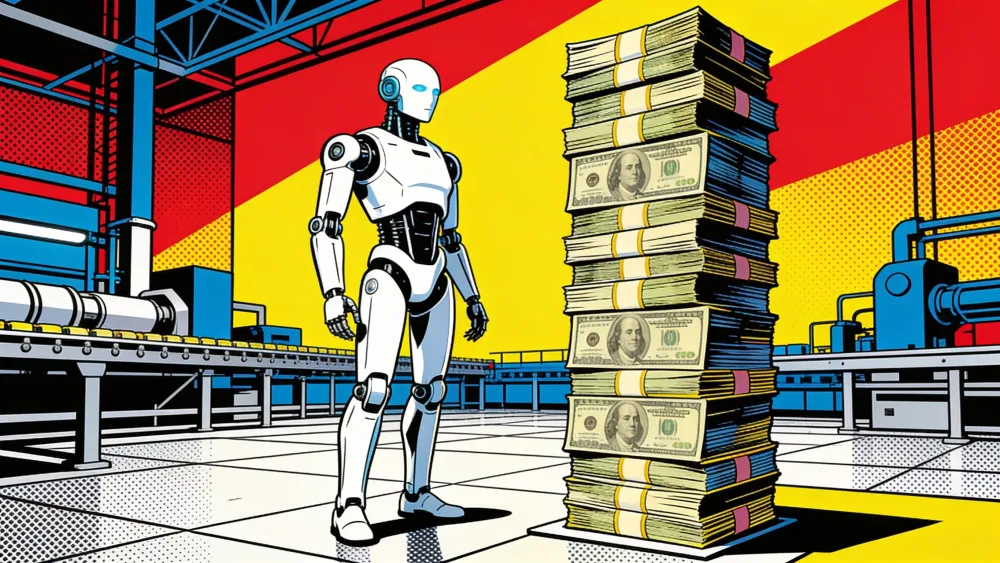
NEURA Robotics said Wednesday it had closed a Series C of up to $1.4 billion. The German company called it the largest round ever raised by a full-stack robotics maker. Tether, the stablecoin issuer, led it, with Amazon, NVIDIA, Qualcomm Technologies, Bosch, Schaeffler and the European Investment Bank joining. The figure makes Metzingen-based NEURA Europe's most-funded humanoid company, a steep climb from the €120 million Series B it closed in January 2025.
The round is a bet on Europe's place in physical AI, and it is being placed years ahead of the robots and the revenue. Humanoid startups drew more than $18 billion in 2026, by HumanoidIntel's count, while the field's largest companies recorded an estimated $340 million in combined 2025 revenue, most of it from pilots and parts rather than fleets of working machines. The announced ceiling alone is just over four times that.
Key Takeaways
- NEURA Robotics said it closed a Series C of up to $1.4 billion, led by Tether, making it Europe's most-funded humanoid maker.
- The round first surfaced in March at a €4 billion valuation; Wednesday's announcement names neither the valuation nor an earlier Qatari backer.
- Humanoid startups drew over $18 billion in 2026 against roughly $340 million in combined 2025 revenue across the field's largest players.
- NEURA's flagship 4NE-1, listed near €98,000, is not expected to ship in volume until late 2026.
AI-generated summary, reviewed by an editor. More on our AI guidelines.
What the March filing showed
Most of this round was reported three months ago. Bloomberg said in early March that NEURA was gathering about €1 billion, then roughly $1.2 billion, backed by Tether at a valuation near €4 billion, and The Implicator covered both the raise and the company's Qualcomm chip partnership that month. A corporate registry record summarized by S&P Capital IQ filled in the detail. The €1 billion was co-led by Tether Investments, Amazon and Prime Capital, a vehicle tied to former Qatari prime minister Sheikh Hamad bin Jassim. NEURA issued common shares at a €4 billion post-money valuation. Wednesday's announcement lists a cleaner roster. It pushes Amazon, NVIDIA and the EIB to the front and mentions neither the valuation nor the Qatari fund. The "up to $1.4 billion" is a ceiling rather than a banked total, and it has risen from the number reported three months earlier.
The major humanoids booked $340 million in 2025
Combined 2025 revenue across the leading humanoid companies came to about $340 million, with Boston Dynamics at $89 million and Agility Robotics at $67 million, HumanoidIntel estimated, against working deployments at fewer than 200 facilities. Valuations have run far ahead of that. Skild AI, which builds robotics foundation models, raised its own $1.4 billion round in January at a $14 billion valuation on $30 million in disclosed revenue, Newcomer reported, and Figure AI holds a $39 billion mark on an estimated 150 robots shipped last year. "We are teaching that perception right now," Matic Robots president Mehul Nariyawala told Newcomer, describing the obstacle-avoidance that still defeats the machines. The €4 billion the March round set was well below those marks, and NEURA disclosed no new valuation on Wednesday.
Get Implicator.ai in your inbox
Strategic AI news from San Francisco. No hype, no "AI will change everything" throat clearing. Just what moved, who won, and why it matters. Daily at 6am PST.
No spam. Unsubscribe anytime.
What Tether is buying
Tether reported roughly $13.4 billion in 2024 profit, most of it interest on the reserves backing its USDT stablecoin, and its interest in NEURA is pointed. Founder David Reger has cast the company's mission in physical terms: "people will not only ask what AI can tell them," he said in the announcement. "They will ask what AI can physically do." Chief executive Paolo Ardoino was more concrete about Tether's stake. Autonomous machines, he said, need to process information locally, make their own decisions and complete transactions without routing through centralized intermediaries; Tether's QVAC supplies that edge intelligence and its WDK the financial layer that lets a robot carry out a task, log the result and operate on its own. The capital arrived fast: founded in 2019, NEURA went from the €120 million Series B it raised in January 2025 to the €1 billion round reported in March, fourteen months later.
The 4NE-1 lists at €98,000
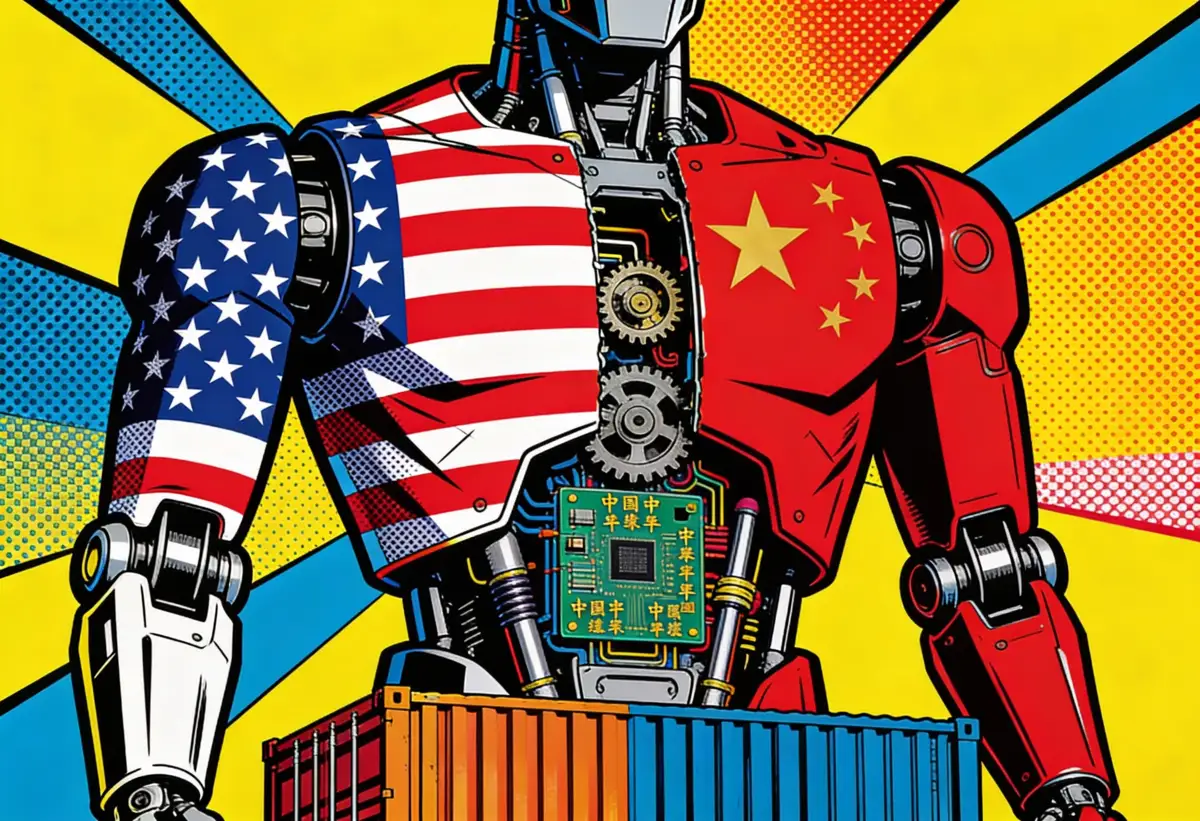
NEURA's flagship 4NE-1, a roughly 180-centimeter humanoid designed with Studio F.A. Porsche and running on NVIDIA's Thor processor, is listed at about €98,000, a price that falls to €60,000 a unit once a buyer commits to 20 or more. Volume shipments are not expected until late this year, and North American distribution is still being built. Its order backlog and deployment pipeline top $1 billion, NEURA says, though both are company figures. Reger framed the round as proof that "the next generation of AI leaders can emerge anywhere" and placed NEURA "on a par with the best from the US and China." Cyril Vancura of the chip fund imec.xpand called it "the leading Physical AI and robotics company in Europe." On the shipment side, Omdia's 2025 humanoid list put Chinese makers in the top six places, led by AgiBot and Unitree; the larger valuations went to Western firms that ship far fewer robots.
The European Investment Bank's stake brings public money into the round. Vice-president Nicola Beer said the bank was deploying its TechEU program to back "European technological autonomy" and to turn research into "globally competitive products and skilled jobs" in Europe. NEURA has set late 2026 for the 4NE-1's first volume shipments and a wider rollout of its NEURA Gyms training sites. Until those units arrive, the $1 billion-plus order book and the deployment pipeline behind it stay company figures.
Frequently Asked Questions
How much did NEURA Robotics raise?
NEURA said it closed a Series C of up to $1.4 billion, which it called the largest round for a full-stack robotics company. The figure is a ceiling rather than a banked total, and it has risen from the roughly $1.2 billion Bloomberg reported when the round first surfaced in March 2026.
Who invested in NEURA Robotics?
The round is led by stablecoin issuer Tether, with Amazon, NVIDIA, Qualcomm Technologies, Bosch, Schaeffler, the European Investment Bank, imec.xpand, Lingotto Horizon and InterAlpen Partners. Filings from the March round also listed Prime Capital, a vehicle tied to former Qatari prime minister Sheikh Hamad bin Jassim, which the June announcement does not name.
What is NEURA's valuation?
NEURA did not disclose a valuation on Wednesday. The March round set a post-money valuation of about €4 billion, according to a corporate registry record summarized by S&P Capital IQ. That sits below US humanoid leaders such as Figure AI, at $39 billion, and the robot-software firm Skild AI, at $14 billion.
When will NEURA's humanoid robot ship?
NEURA's flagship 4NE-1, designed with Studio F.A. Porsche, is not expected to ship in volume until late 2026, with North American distribution still being built. The company lists the robot at about €98,000, falling to €60,000 a unit on fleet orders of 20 or more.
Why is a stablecoin company investing in robots?
Tether, which reported roughly $13.4 billion in 2024 profit, is backing robots that can act on their own. Chief executive Paolo Ardoino said autonomous machines need to process information, make decisions and complete transactions without centralized intermediaries, using Tether's QVAC edge-intelligence and WDK financial tools.
AI-generated summary, reviewed by an editor. More on our AI guidelines.

Free AI briefing · Weekdays
The AI stories that matter, sourced and explained.
Join the Morning Briefing. It goes out every weekday at 4:45 a.m. Pacific, with later sends for the East Coast, Berlin and Tokyo.
Free when you sign up: The Paperclip Compendium, our tested guide to running AI agents.
Free. Unsubscribe in one click.

Marcus Schuler
Editor-in-Chief and founder of Implicator.ai. Former ARD correspondent and senior broadcast journalist with 10+ years covering tech. Writes daily briefings on policy and market developments. Based in San Francisco. E-mail: editor@implicator.ai