IMPLICATOR
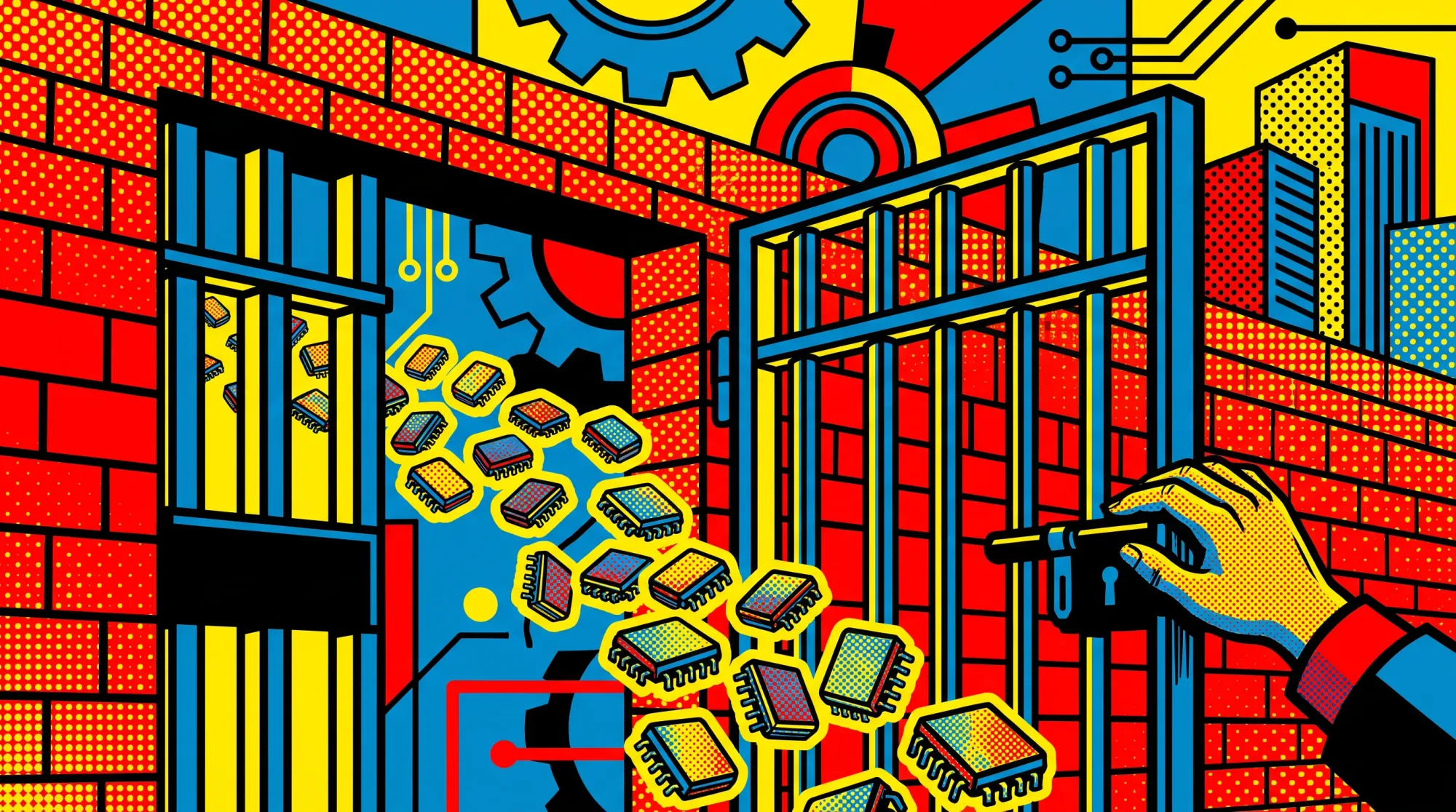
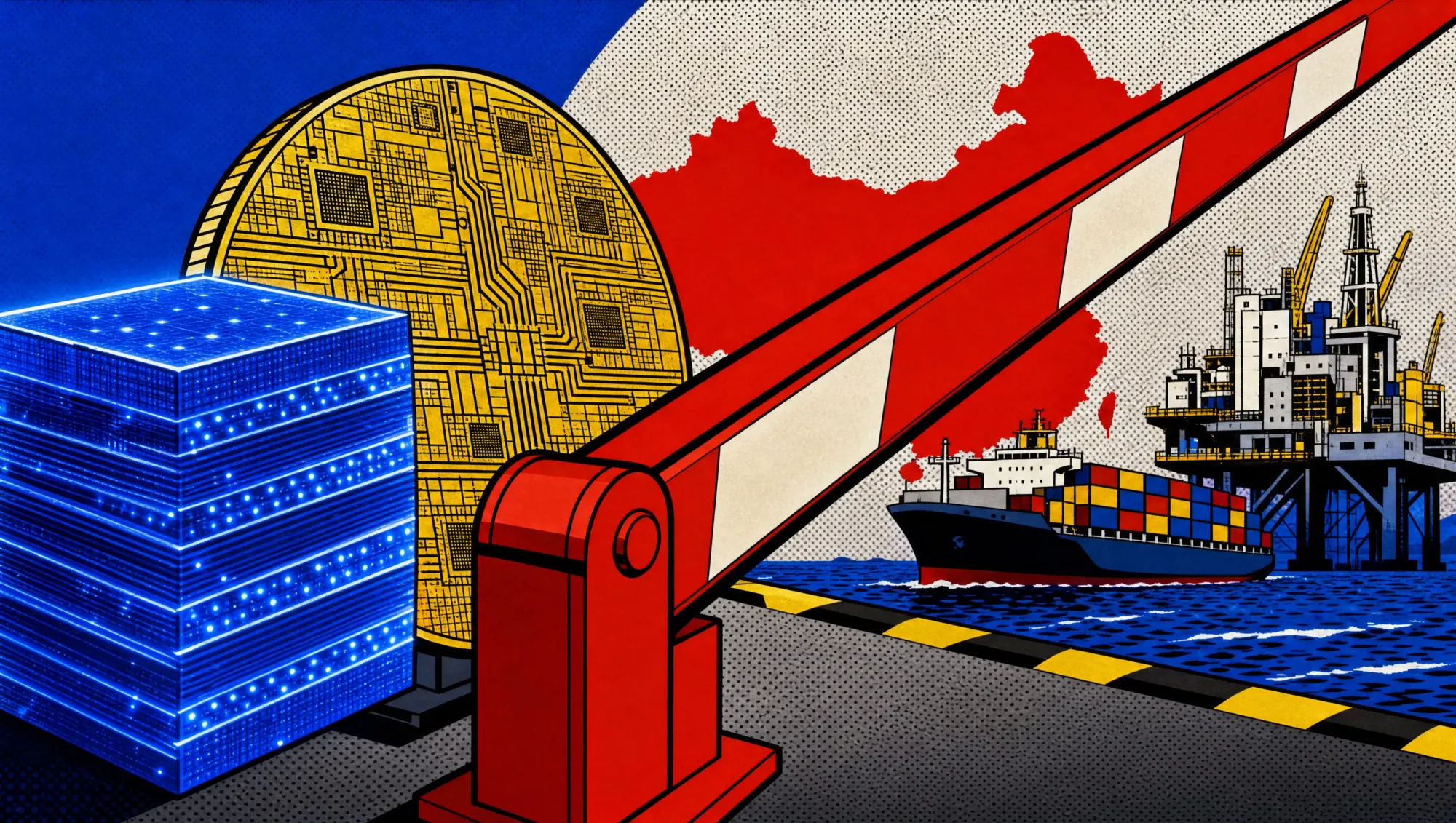
OpenAI and Anthropic have lobbied Washington regulators to restrict Chinese open-weight AI models, five people close to the discussions told The New York Times on Saturday. According to the same reporting, U.S. officials appear more likely to review individual Chinese models as national security cases than to impose a blanket prohibition. The report was published after OpenAI joined an industry letter it had initially sat out, one that urges policymakers to avoid premature restrictions on open-weight AI models. Google backed it on Saturday, leaving Anthropic as the only major American AI company outside the public show of support.
What Changed
- OpenAI and Anthropic have lobbied Washington regulators to restrict Chinese open-weight AI models, five people close to the discussions told The New York Times on Saturday.
- OpenAI's name appeared on the industry letter it had initially sat out by Friday evening, bringing the published list to 32 signatories. Google backed it Saturday, leaving Anthropic as the only major American AI company outside it.
- Arena AI ranks Moonshot's Kimi K3 first on web-development tasks and fourth on agentic tasks. Artificial Analysis places it third on its intelligence index.
- Four people with knowledge of the policy talks described an administration leaning toward case-by-case national security action on individual Chinese models rather than a blanket prohibition, although officials had not reached a decision.
AI-generated summary, reviewed by an editor. More on our AI guidelines.
OpenAI's Friday signature
OpenAI's name appeared on the letter by Friday evening, bringing the published list to 32 companies, organizations and platforms, Business Insider reported. Earlier Friday, Chief Executive Sam Altman wrote on X, "i want the US to win in AI both in open source and proprietary models." A community note under his post still claimed that OpenAI had refused to sign after the company had been added.
Google Chief Executive Sundar Pichai followed on Saturday with his own post. "Very happy to support this on behalf of Google," he wrote. Anthropic had not joined. Hugging Face CEO Clement Delangue posted "Open models for the win!" and planned a San Francisco march for Saturday.
Washington's private meetings
Executives from OpenAI and Anthropic, along with investors in the companies, made their case privately to regulators, three people familiar with the discussions told the Times. OpenAI has also publicly urged the Trump administration to require government-supervised security evaluations for new models. The company wrote last month that it was "encouraged" by its work with the administration on that proposal.
Anthropic has framed Chinese distillation as a security threat. Sarah Heck, its head of public policy, wrote Wednesday that "illicit, adversarial distillation is IP theft and industrial espionage that supports adversary military and intelligence capabilities." Last month, Anthropic told the Senate Banking Committee that Alibaba had carried out the largest known distillation attack against it.
Treasury Secretary Scott Bessent stated Wednesday that "open source is not open season on American IP." Michael Kratsios, director of the White House Office of Science and Technology Policy, alleged the administration had information that Moonshot AI used Anthropic's Fable model to develop Kimi K3. Moonshot did not respond to a request for comment. Four people with knowledge of the policy talks described an administration leaning toward case-by-case action, although officials had not reached a decision.
Kimi K3's benchmark scores
The models at issue can be downloaded and operated on a customer's own computers because their trained parameters are published. Their source code and training data may remain private, which is why the industry commonly calls them open-weight rather than fully open source.
Two external rankings place Kimi K3 near American proprietary models. Arena AI, a crowdsourced evaluation platform, ranks the Moonshot model first on web-development tasks and fourth on agentic tasks, behind Anthropic's Fable and Opus 4.8 and OpenAI's GPT 5.6. Artificial Analysis places K3 third on its intelligence index.
Nathan Lambert, an independent AI researcher in Seattle who recently visited Moonshot's office, told WIRED that Anthropic had "overhyped the risks, or described risks that are coming soon but do not currently proliferate." Pedro Domingos, a University of Washington professor emeritus, offered the opposing view in Saturday's reporting. American companies spend heavily on models that travel to China and lose their value there, Domingos argued, adding that their anger was justified.
Get Implicator.ai in your inbox
Strategic AI news from San Francisco. No hype, no "AI will change everything" throat clearing. Just what moved, who won, and why it matters. Daily at 6am PST.
No spam. Unsubscribe anytime.
Dean Ball, OpenAI's head of strategic futures and a former White House AI adviser, called K3 "a very good model" but wrote that it seemed "very token-hungry." He noted that lower per-token prices might not make the system cheaper to operate when it uses more tokens to solve the same problem.
K3 followed Z.ai's GLM 5.2 release in June and preceded Alibaba's Qwen 3.8 launch on Monday. Moonshot released a K3 preview on July 16 and temporarily restricted new signups after demand exceeded its inference capacity.
Know someone who'd find this useful? ✉️ Email it to a friend in one click, or they can subscribe free here.
Europe's June shutdown
Reuters reported from Paris on June 22 that Siemens, Renault, Orange and ChapsVision already mix U.S., Chinese and European models. ChapsVision described backup choices as necessary for continuity when providers cut access. According to Orange, its infrastructure can run Chinese open-source systems on premises without sending data abroad, like buying a painting in China and bringing it home. OVHcloud CEO Octave Klaba told the news service that European open models were "not impressive" and American suppliers had moved toward closed systems, leaving Chinese models as the open option.
Earlier that month, a Commerce Department order barred foreign nationals from Anthropic's Fable 5 and Mythos 5. Anthropic disabled both worldwide because shared clouds could not verify nationality. The European Commission responded that the restrictions "should not be discriminatory." EU tech chief Henna Virkkunen told the Financial Times on July 21 that AI had become a geopolitical weapon and Brussels feared being "dependent on third countries." Brussels was pursuing bilateral talks with Washington over continued access to advanced systems.
September's U.S.-China talks
The Little Tech Association sent letters from 179 American technology companies to President Donald Trump, Commerce Secretary Howard Lutnick and other officials, according to documents seen by Politico. Suhail Doshi, founder of Particle, told the publication that under a blanket ban "there'll be hundreds of companies that instantly die."
Venture capitalist Bill Gurley described the dispute as one between people who want OpenAI and Anthropic "to own everything" and everyone else, including customers. In a Tuesday interview with Fox Business, Bessent said the government could sanction overseas companies found to have stolen from American providers. During the same interview, he claimed officials were finding U.S. model watermarks in Chinese systems and said officials would examine the watermark claims in the coming days or weeks.
U.S.-China AI talks are planned for September. Bessent will represent the United States at those discussions, according to a Reuters report cited by CNBC. As of Saturday, officials were still weighing individual national security actions, and the administration had announced no blanket restriction.
Frequently Asked Questions
What are open-weight AI models?
Models whose trained parameters are published, so they can be downloaded and operated on a customer's own computers. Their source code and training data may remain private, which is why the industry commonly calls them open-weight rather than fully open source.
Who has signed the open-weight letter, and who has not?
The published list reached 32 companies, organizations and platforms by Friday evening, when OpenAI's name was added. Google Chief Executive Sundar Pichai backed it on Saturday. Anthropic had not joined.
What is Washington actually considering?
Four people with knowledge of the policy talks described an administration leaning toward reviewing individual Chinese models as national security cases rather than imposing a blanket prohibition. Officials had not reached a decision as of Saturday.
Why is distillation central to the dispute?
Michael Kratsios, director of the White House Office of Science and Technology Policy, alleged the administration had information that Moonshot AI used Anthropic's Fable model to develop Kimi K3. Anthropic told the Senate Banking Committee last month that Alibaba had carried out the largest known distillation attack against it. Moonshot did not respond to a request for comment.
What would restrictions mean for European companies?
Reuters reported from Paris on June 22 that Siemens, Renault, Orange and ChapsVision already mix U.S., Chinese and European models. OVHcloud CEO Octave Klaba said European open models were not impressive and that American suppliers had moved toward closed systems, leaving Chinese models as the open option.
AI-generated summary, reviewed by an editor. More on our AI guidelines.

Free AI briefing · Weekdays
The AI stories that matter, sourced and explained.
Join the Morning Briefing. It goes out every weekday at 4:45 a.m. Pacific, with later sends for the East Coast, Berlin and Tokyo.
Free when you sign up: The Paperclip Compendium, our tested guide to running AI agents.
Free. Unsubscribe in one click.

Marcus Schuler
Editor-in-Chief and founder of Implicator.ai. Former ARD correspondent and senior broadcast journalist with 10+ years covering tech. Writes daily briefings on policy and market developments. Based in San Francisco. E-mail: editor@implicator.ai