 IMPLICATOR

From San Francisco
1 |
The Editorial |
Good morning.
AI's bills reach from Nvidia's customer list to Xreal's $1,099 glasses.
Alice Huang sat beside Jensen Huang around Computex 2024. Officials concluded the Megaspeed executive was a Chinese intelligence asset; Nvidia says it is confident the government would flag a threat.
Amazon spent $77.3 billion on capital expenditures in the third quarter, more than double a year earlier. AWS growth gives Andy Jassy something to point to while the cash heads out.
Google and Xreal have cut Aura's price before its mid-November shipments. Buyers get glasses attached to a pocket puck, with the discount arriving ahead of the hardware.
Stay curious,
Marcus Schuler
2 |
THE BIG STORY |
Alice Huang, a Megaspeed executive close to Jensen Huang, was a Chinese intelligence asset passing commercial information to Beijing, US officials concluded in findings reported Oct. 29.
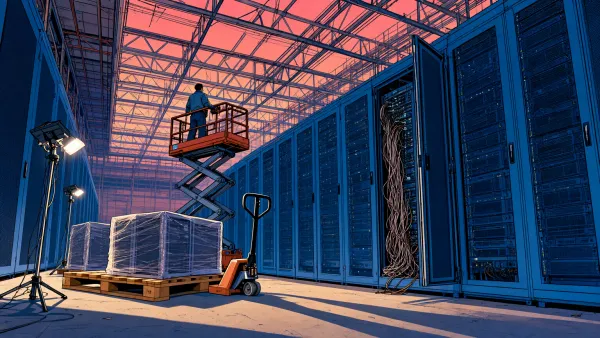
Commerce officials found Megaspeed's ordered Nvidia equipment boxed at its Malaysian data center. Suspicions of chip smuggling prompted surveillance that revealed her relationship with Jensen Huang.
Trump learned the findings a year ago and chose no action. Nvidia said diversion allegations were investigated and debunked last year. The New York Times report relies on unnamed people briefed on the intelligence.
Why This Matters:
- Alice Huang faces counterintelligence scrutiny after surveillance revealed her close relationship with Nvidia's CEO, whom officials believe knows nothing of her intelligence activities.
- Continued surveillance leaves a warning to Jensen Huang unresolved; briefing him could alert Alice Huang to the investigation.
3 |
ALSO TODAY |
Amazon reported a $42.4 billion free cash outflow for the twelve months through Sept. 30, versus a $14.8 billion inflow a year earlier.
AI investments drove increased property and equipment purchases, the main cause of the shortfall. Third-quarter capital spending reached $77.3 billion against $58.7 billion expected. AWS sales rose 39% to $45.98 billion, leaving Amazon funding expansion as cash flows out.
4 |
The Outside Read |
DeepMind Institute's Oct. 29 essay separates two thresholds that determine AI's economic effects: competence and coordination.
AI matching a skill pushes its wages toward compute costs, while human coordinators can earn more as complementary teams retain an advantage. At the essay's "supercooperative" threshold, adding agents makes each more productive, allowing AI firms to outcompete human organizations in deep, standardized markets; niches with bounded demand are spared.
5 |
The One Number |
6 |
Today's Headlines |
- Thrive Holdings agreed Oct. 29 to buy ADT for $10 per share in cash, a 45.6% premium to its Oct. 27 close.
- Deepgram announced Oct. 29 it is acquiring Daily, maker of Pipecat; CEO Scott Stephenson said the framework stays "open source and vendor-neutral forever."
- Microsoft disclosed Azure's dollar revenue for the first time Oct. 28: $33.2 billion for July through September, up 48% from a year earlier.
- Mistral released trillion-parameter Mistral Large 4's weights Oct. 29; Artificial Analysis ranks it second among open-weight coding agents, one point behind GLM-5.3.
- Rivian said Oct. 29 its Volkswagen software venture will license elements of its AI voice assistant to VW; fees and vehicles remain undisclosed.
- Amazon added more than 100 Alexa shopping capabilities Oct. 29, including changes to subscription delivery schedules and delivery addresses.
7 |
The 5-Minute Skill |
Rehearse a board question you hope nobody asks.
Board updates often fail at the first skeptical follow-up. Expose weak evidence while there is time to fix the memo.
Your raw input:
The prompt:
Why this works:
One adversarial role keeps the review focused. Requiring a source separates a persuasive sentence from a defensible one.
What to use:
Use ChatGPT or Claude. Gemini is useful when the memo has a long appendix.
8 |
What To Watch Next |
Mon 11/2 |
AfroTech opens its Houston conference, with AI Edge training and expo programming, and runs through Friday. |
Tue 11/3 |
Americans vote in the U.S. general election, with California polls open from 7 a.m. to 8 p.m. PT. |
Tue 11/3 |
The SEMA Show opens its automotive aftermarket exhibition at the Las Vegas Convention Center at 9 a.m. PT. |
Wed 11/4 |
Lithium producer Albemarle reports third-quarter results after the NYSE close, followed by its earnings call Thursday at 8 a.m. ET. |
Fri 11/6 |
The Bureau of Labor Statistics releases its preliminary third-quarter productivity and costs report at 8:30 a.m. ET. |
9 |
The Rausschmeisser* |
Google and Xreal put Aura on sale Oct. 28 with a $1,099 base price through December, cutting the price before mid-November shipping.
Our take: The $1,099 Xreal Aura puts a computer on your face and keeps it on a leash to a puck in your pocket. The cable helps keep the glasses under 95 grams. Your pocket carries the battery and processor, which seems like a demanding arrangement for a device Chi Xu said can be "a tablet or laptop replacement."
Aura has already needed a price cut before a single pair ships. Buyers who paid more get an automatic refund, a courteous rebate for believing early. Xu said everyone is losing money building smart glasses. The base model returns to $1,279 after December.
FREE AI BRIEFING · WEEKDAYS
Free AI briefing · Weekdays
The AI stories that matter, sourced and explained.
Join the Morning Briefing. It goes out every weekday at 4:45 a.m. Pacific, with later sends for the East Coast, Berlin and Tokyo.
Free when you sign up: The Paperclip Compendium, our tested guide to running AI agents.
Free. Unsubscribe in one click.

Marcus Schuler
Editor-in-Chief and founder of Implicator.ai. Former ARD correspondent and senior broadcast journalist with 10+ years covering tech. Writes daily briefings on policy and market developments. Based in San Francisco. E-mail: editor@implicator.ai