Implicator
San Francisco | Tuesday, March 31, 2026
OpenAI shipped a plugin that drops Codex inside Anthropic's Claude Code. Three slash commands, open source, built by one developer named Dominik Kundel. The framing says open ecosystem. The subtext says something else: when your rival's tool runs a $2.5 billion business and yours doesn't, you stop competing from outside and start billing from within.
Newsom signed an executive order requiring AI companies to prove safety before winning California contracts. Independent procurement. No federal approval needed. Sacramento just gave itself a veto Washington doesn't control.
Americans use AI more than ever. They trust it less than ever. Quinnipiac's numbers put the gap in print. Microsoft's answer: let Claude review GPT's homework.
Stay curious,
Marcus Schuler
OpenAI Ships Codex Plugin for Claude Code, Puts Its Agent Inside Rival's Terminal

OpenAI developer Dominik Kundel open-sourced a plugin that runs Codex directly inside Anthropic's Claude Code. Three new slash commands let developers request code reviews, adversarial challenge reviews, and task delegation without switching terminals.
The plugin uses local Codex CLI authentication. Every /codex:review burns OpenAI API tokens, the quiet business model inside the open-source gesture. Claude Code contributes to Anthropic's $2.5 billion annualized run rate and generates 135,000 daily GitHub commits. Codex has tripled to 1.6 million weekly users since GPT-5.3 launched in February, but developer loyalty favors Anthropic.
Developer reactions split cleanly. "This is hilarious," wrote libGDX creator Mario Zechner. Others pointed to genuine utility: different models carry different blind spots, and running one against the other catches errors a single model misses.
The release landed the same day Phantom Labs disclosed a critical Codex vulnerability allowing command injection through manipulated branch names, raising questions about wiring multiple agents' credentials together.
Why This Matters:
- OpenAI acknowledged Claude Code's developer dominance by building into it rather than against it, a competitive concession that doubles as a billing channel
- If cross-agent plugin architectures become standard, the tool that hosts the most plugins captures the ecosystem regardless of which company's model runs underneath
Reality Check
What's confirmed: OpenAI open-sourced the plugin. Kundel built it. Three slash commands ship today. A same-day Codex vulnerability was disclosed and patched.
What's implied (not proven): That this represents a strategic competitive pivot rather than one developer's side project.
What could go wrong: Shared authentication between competing agents creates a single point of compromise if either platform has a vulnerability.
What to watch next: Whether Anthropic promotes, tolerates, or quietly restricts the plugin in Claude Code's marketplace.
The One Number
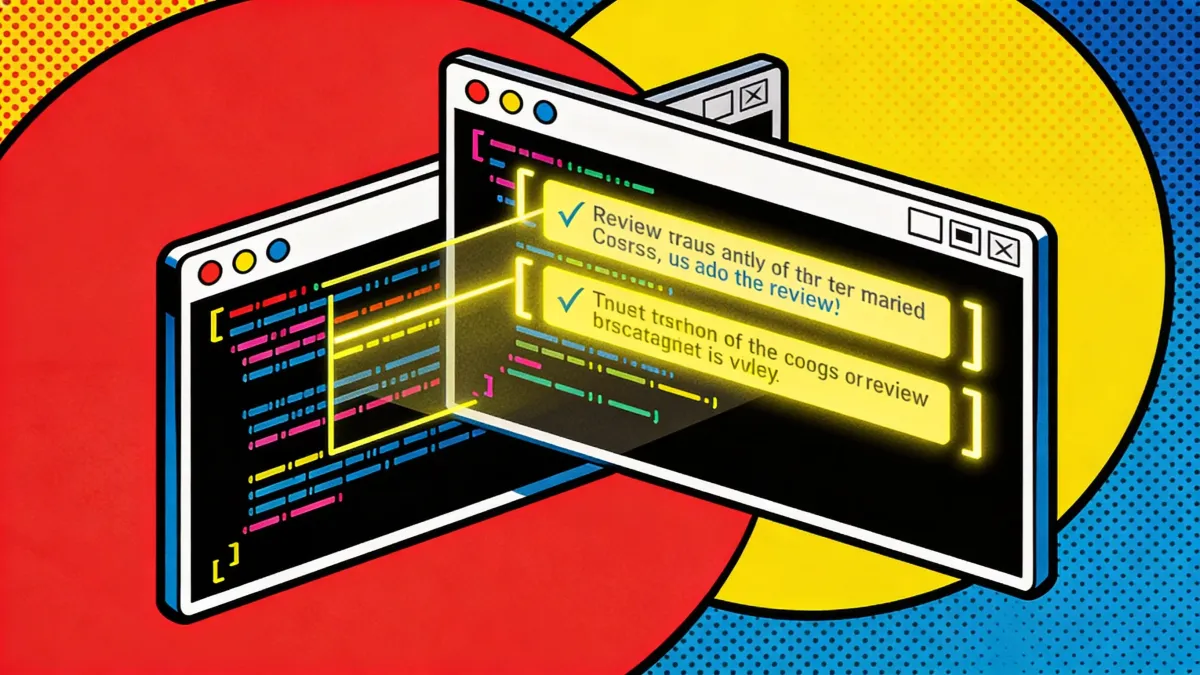
$2.5 billion — Claude Code's annualized revenue run rate, reached nine months after its public launch in May 2025. Business subscriptions quadrupled in the first six weeks of 2026 alone. A separate analysis found 4% of all public GitHub commits worldwide are now authored by Claude Code, double the share from one month earlier. No standalone software product has reached this revenue threshold faster.
Source: Anthropic Series G Announcement
Newsom Orders AI Safety Compliance for California State Contracts, Defying Trump

California Governor Newsom signed an executive order requiring AI companies to demonstrate safety and privacy protections before winning state contracts. The order lets Sacramento conduct independent supply-chain risk assessments, ignoring federal determinations.
The provision carries real weight now. After the Pentagon cut Anthropic over its refusal to allow autonomous lethal warfare, California built procurement rules that let it keep contracting with any vendor Washington freezes out over policy disputes. Anthropic goes unmentioned in the order. The intent is obvious.
States have passed more than 100 AI-related laws despite Trump's December executive order directing the Justice Department to sue states over AI regulation. California hosts 33 of the top 50 AI companies and captured 51% of all U.S. startup funding in the past year. The state signed its first frontier AI safety law last September. Walking away is not realistic math.
Why This Matters:
- California's purchasing power can force safety compliance that federal courts and legislation have not, given the state hosts a quarter of America's AI economy
- Independent procurement assessments create a template other states can follow to ignore federal AI vendor designations

AI Image of the Day

Prompt: A top-angle portrait of a woman standing on a colorful basketball court with a turquoise ball tucked against her side, her face tilted slightly up toward the camera. From above, the geometric shapes and painted lines of the court become more graphic, while the ball color contrasts strongly with her muted shirt. The scene feels modern, sporty, and visually clean, blending portrait energy with athletic design.
Americans' AI Usage Surges 14 Points as Trust Falls to 21 Percent

Fifty-one percent of Americans now use AI for research, up 14 points in a year. Only 21 percent trust the results. Every sentiment metric in the Quinnipiac poll moved against the industry since April 2025.
Gen Z uses AI more than any generation and fears it the most. Eighty-one percent expect job losses, 15 points above Baby Boomers. A Wharton study found 79 percent of young adults say AI makes people lazier. They keep using it anyway.
The political consequences are arriving. Over 1,500 AI-related bills hit state legislatures in 2026. Three in four Quinnipiac respondents said the federal government fails to regulate AI enough. The demand cuts across party lines, making it harder for the industry to lobby its way out.
Why This Matters:
- The gap between AI adoption and trust widens faster than social media's version, which took a decade to produce political consequences
- Gen Z's combination of highest usage and deepest pessimism signals that exposure does not build confidence, it erodes it

Microsoft Opens Copilot Cowork to Enterprise Customers, Uses Claude to Review GPT
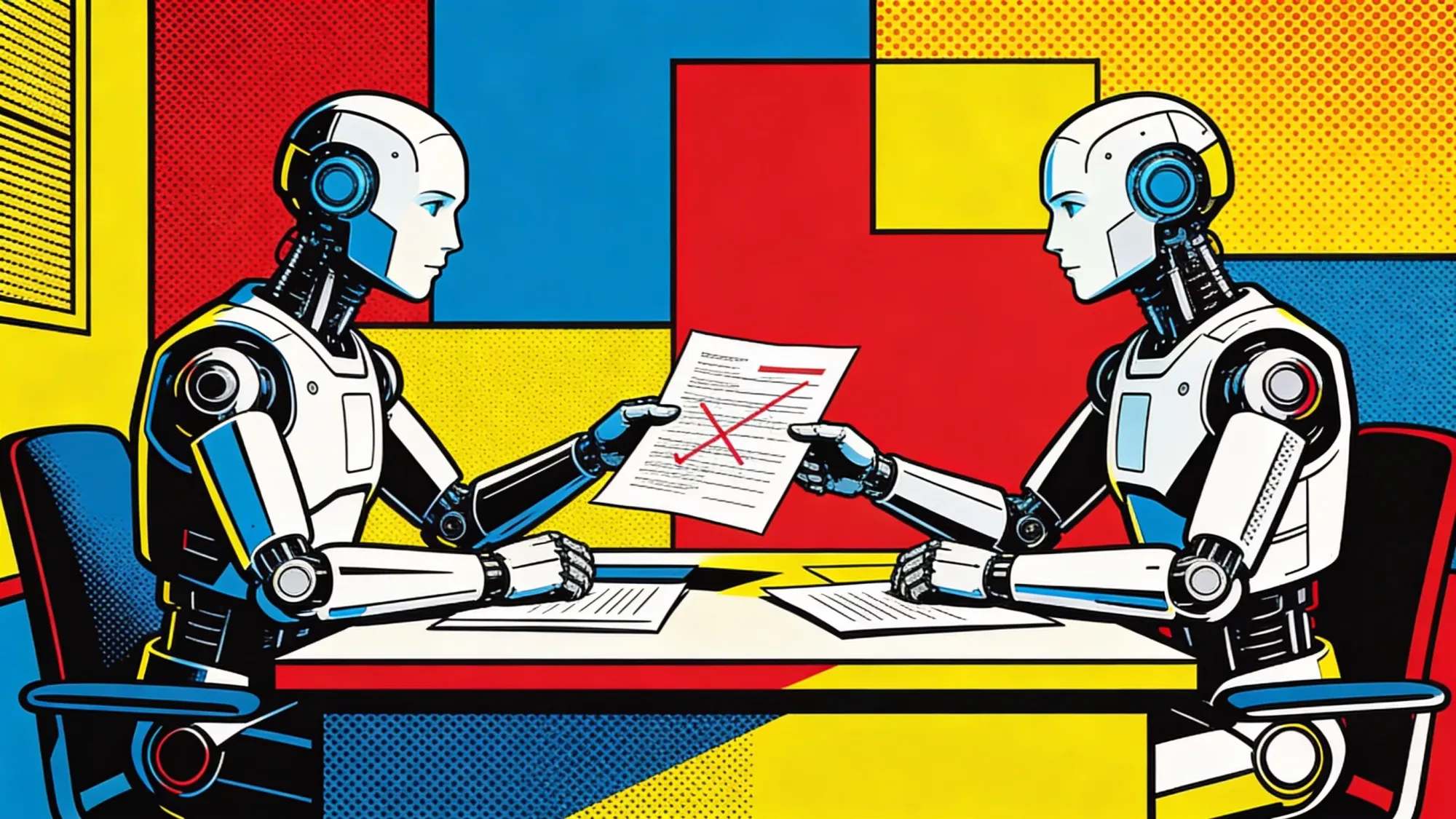
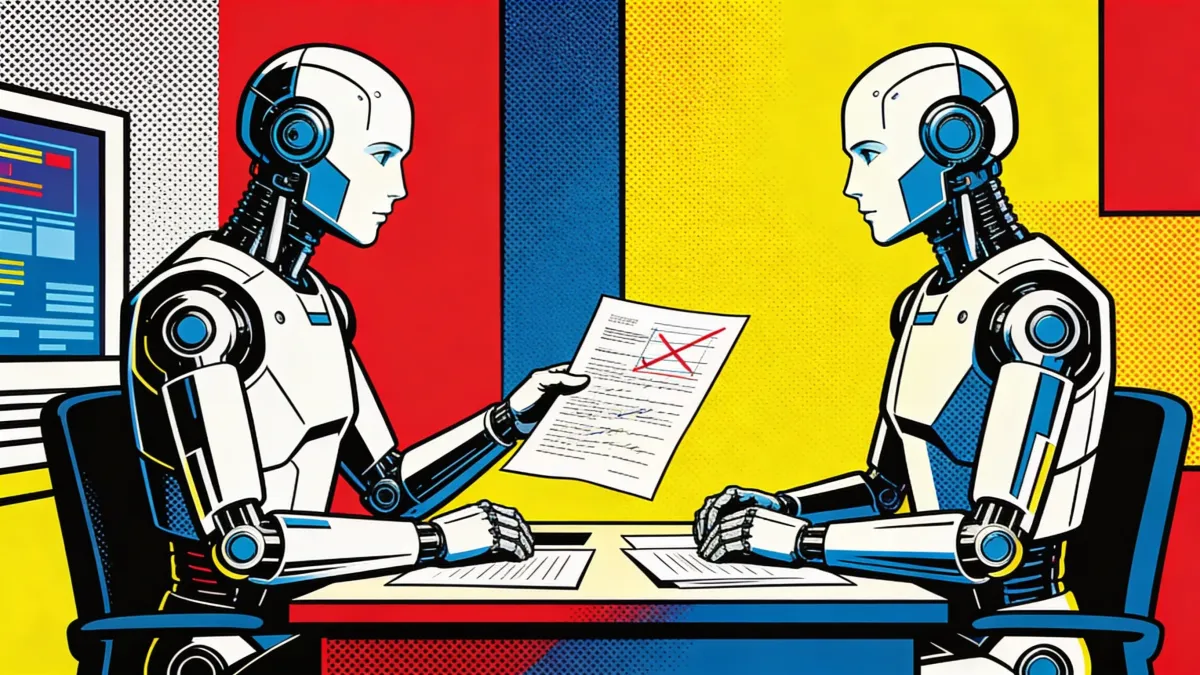
Microsoft made Copilot Cowork available to Frontier program customers, expanding the Anthropic-powered agent for multi-step task delegation across Microsoft 365. A new Critique feature pairs Claude and GPT to cross-check research accuracy.
One model drafts. The other reviews for factual accuracy and citation quality. Microsoft says the dual-model Critique layer pushed its DRACO benchmark score up 13.8%. The company also shipped Model Council, feeding the same question to both models and laying the results side by side.
Copilot Cowork heads for Microsoft 365 E7, launching May 1 at $99 per user per month. Microsoft's share price dropped more than 14% since Anthropic debuted Claude Cowork in January. The E7 bundle bets that embedding agentic AI inside enterprise apps makes the platform stickier, not more expendable.
Why This Matters:
- Microsoft built Copilot entirely on OpenAI's models but now pitches model diversity as the selling point, a strategic pivot away from single-vendor dependence
- The $99/user E7 tier is Microsoft's first new enterprise license in a decade, pricing AI agents as a must-have rather than an add-on
🧰 AI Toolbox
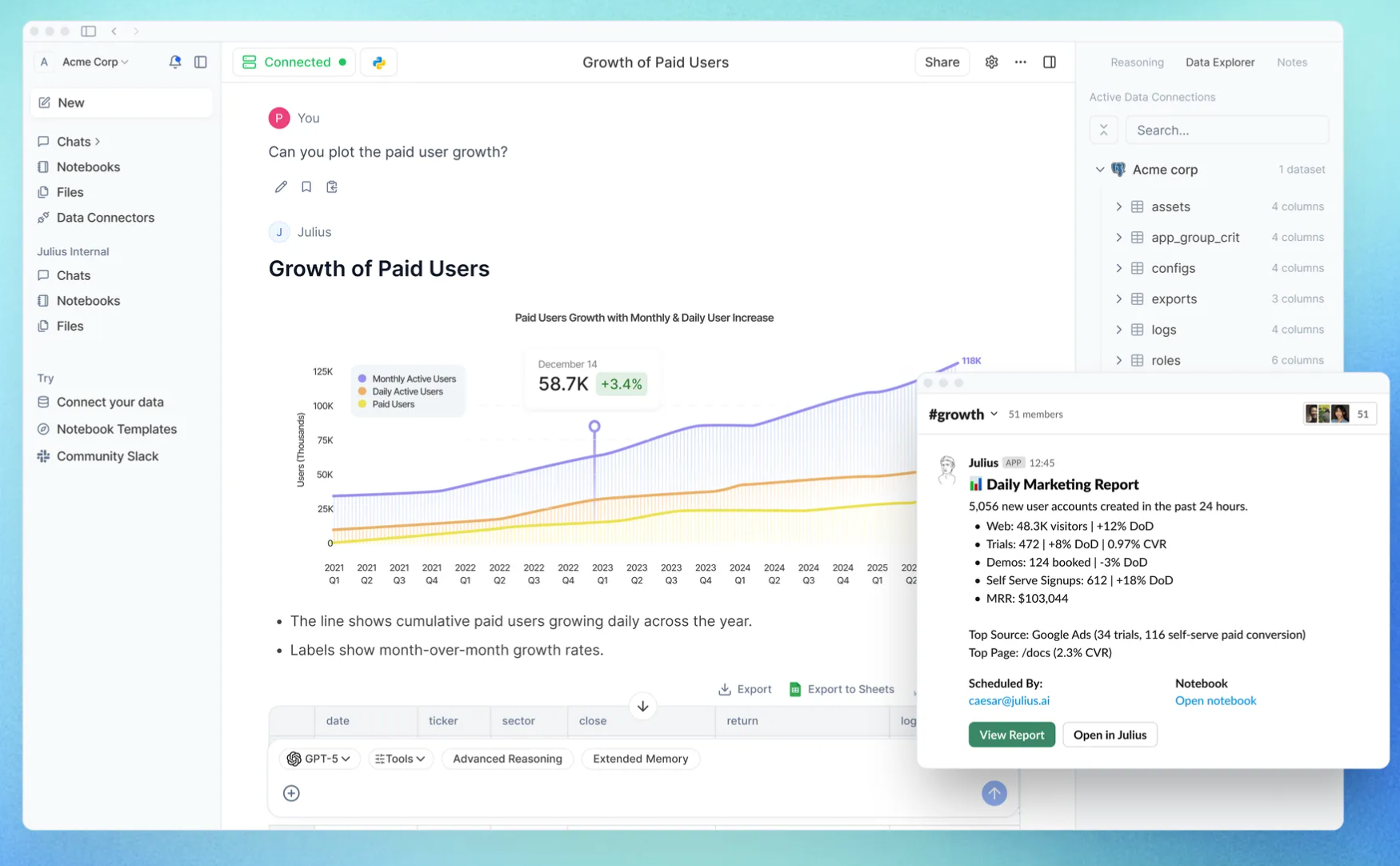
How to Turn Any Spreadsheet into Charts and Insights with Julius AI
Julius AI is a data analysis tool that lets you upload a spreadsheet and ask questions about it in plain English. Drop in a CSV or Excel file, type "show me monthly revenue trends" or "which product category grew fastest," and Julius writes the code, runs the analysis, and returns interactive charts in seconds. It handles forecasting, regression, and statistical tests without requiring you to write a single formula. Free tier includes 15 messages per month.
Tutorial:
- Go to julius.ai and create a free account
- Drag a CSV, Excel, or JSON file into the chat window to upload your dataset
- Ask a question in plain English: "What is the average sales by region?" and Julius generates the answer with supporting code
- Request a visualization: "Create a bar chart comparing Q1 and Q2 revenue by product line"
- Run advanced analysis by asking for correlations, regressions, or distribution patterns across your columns
- Ask Julius to forecast future values from historical data: "Predict next quarter's sales based on the last 12 months"
- Export results as CSV, Excel, or download generated charts as images for presentations
URL: https://julius.ai
What To Watch Next (24-72 hours)
- Anthropic: Judge Lin's seven-day stay expires Thursday, forcing the government to seek a Ninth Circuit emergency stay or let the injunction blocking the Pentagon blacklist take effect. The outcome determines whether federal contractors can resume using Claude.
- SpaceX: The confidential S-1 filing with the SEC could land this week after advisers told The Information a prospectus was imminent. A June listing at $1.75 trillion would be the largest IPO in history.
- OpenAI: The Spud model is release-ready after completing pre-training, with Altman targeting a launch within weeks. Anthropic's leaked Mythos benchmarks crashed cybersecurity stocks Friday, raising the stakes for OpenAI's response.
🛠️ 5-Minute Skill: Turn a Vendor Pitch Deck Into a Buy/No-Buy Recommendation
A vendor sends a 30-slide deck before a renewal meeting. Your boss wants a one-page recommendation by end of day. Reading every slide takes longer than the meeting itself.
Your raw input:
Vendor pitch deck, 32 slides. Claims 99.9% uptime, "industry-leading
AI," 40% cost savings vs. competitors. Pricing buried on slide 28.
No mention of data residency. Customer logos but no case studies
with metrics.
The prompt:
From this vendor pitch deck, produce a buy/no-buy recommendation.
Include: (1) three strongest claims and whether evidence supports
each, (2) what's missing from the deck, (3) one-line verdict with
the biggest risk. Under 120 words.
What you get back:
Claims vs. evidence:
1. 99.9% uptime: No SLA terms or penalty structure shown.
2. 40% cost savings: Compared to unnamed competitors. No methodology.
3. "Industry-leading AI": No benchmarks, no third-party validation.
Missing: Data residency policy, implementation timeline, actual case study metrics, contract termination terms.
Verdict: Hold. The cost savings claim carries no proof and the missing data residency answer is a compliance blocker.
Why this works
Pitch decks are designed to impress, not inform. The prompt forces a separation between claims and evidence, which is exactly what vendors hope you skip.
What to use
Claude: Stronger at identifying what the deck deliberately leaves out.
ChatGPT: Faster at summarizing slide-heavy content.
AI & Tech News
AI Coding Agents Create New Class of Cybersecurity Threats Through Automated Exploit Discovery
Security researcher Thomas Ptacek warns that AI coding agents will automate zero-day vulnerability discovery, fundamentally changing how exploits are created and what they cost. The shift follows two years of growing evidence that AI-powered coding tools increase the attack surface faster than defenders can patch it.
Iran War Threatens India's $11 Billion Smartphone Export Boom
India's smartphone exports hit $11 billion in the first half of fiscal 2026, up 55% year over year. Analysts warn escalating Iran tensions could slash export volumes by 22% to 25% in coming weeks as supply chains through the UAE face disruption.
Leaked Coatue Presentation Projects Anthropic at Nearly $2 Trillion by 2030
A January investor presentation from Coatue Management forecasts Anthropic reaching a $1.995 trillion valuation by the end of the decade. The same projections show $18 billion in 2026 revenue against $14 billion in EBITDA losses, underscoring the capital intensity of frontier AI.
London AI Chip Startup Fractile Seeks $200 Million at $1 Billion Valuation
Fractile is in talks with Accel and other investors to raise over $200 million, a massive jump from its $15 million seed round in 2024. The company builds faster AI processors aimed at competing with Nvidia's dominance in the chip market.
Micron Stock Plummets 30% Since Earnings as Memory Sector Sells Off
Micron shares fell another 10% Monday, extending losses to 30% since its March 18 earnings report. SanDisk dropped 7% and Western Digital fell 9% in a broad memory sector selloff that signals investor anxiety about near-term demand.
Apple Accidentally Launches AI Features in China, Pulls Them Within Hours
Apple Intelligence briefly appeared on Chinese iPhones before Apple pulled the features after realizing it lacks regulatory approval from Beijing. The accidental rollout came 18 months after the U.S. launch, with no official Chinese release planned.
Federal Prosecutors Investigate Prediction Market Bets for Insider Trading
Manhattan federal prosecutors are examining whether profitable bets on prediction markets, including wagers tied to the potential capture of Venezuelan President Maduro, violated insider trading laws. The investigation focuses on whether individuals with nonpublic information used platforms to place illegal trades.
Alibaba Releases Qwen3.5-Omni With 10-Hour Audio Processing Capability
Alibaba launched Qwen3.5-Omni, a multimodal AI model that processes text, images, and more than 10 hours of continuous audio input. The company claims its Plus variant outperforms Google's Gemini 3.1 Pro on audio benchmarks.
Startup Software Engineer Salaries Jump 25% to $200K Median Since 2022
Median base salary offers for engineers at VC-backed startups surged to $200,000, according to Levels.fyi data. Companies are shifting from equity-heavy packages to higher base pay as AI talent competition intensifies.
Babel Audio Pays Strangers $17 an Hour to Record Conversations for AI Training
A startup called Babel Audio pairs anonymous strangers for recorded conversations, then sells the dialogue as training data for AI speech models. Participants are encouraged to vent, confess, and role-play to help machines learn natural human communication patterns.
🚀 AI Profiles: The Companies Defining Tomorrow
Luma AI

Luma AI generates 3D objects and video from text and images. The San Francisco startup raised $900 million from Saudi Arabia's HUMAIN and AMD to build AI that understands spatial reality. 🌐
Founders
Amit Jain, Alex Yu, and Alberto Taiuti co-founded Luma AI. Jain serves as CEO. Yu previously conducted computer vision research at UC Berkeley. The team built early traction with a mobile app that let anyone create photorealistic 3D scans using an iPhone camera.
Product
Dream Machine generates video and 3D content from text prompts. Genie creates 3D models from single images in seconds. The platform targets game developers, e-commerce brands, architects, and filmmakers who need 3D assets without manual modeling. Luma's NeRF-based technology converts 2D inputs into 3D representations, enabling users to rotate, edit, and render generated objects. The company is building toward real-time 3D generation for AR, VR, and robotics applications.
Competition
Runway dominates AI video with a $3B valuation and professional-grade tools. OpenAI's Sora and Google's Veo compete on text-to-video. In 3D generation, Stability AI and Meshy target the same space. Nvidia's Omniverse builds industrial 3D simulation. Luma differentiates by bridging video and 3D in one platform, an intersection most competitors have not reached. The risk: Luma's $4B valuation assumes 3D generation becomes as widespread as image generation. That market does not exist yet.
Financing 💰
$900M Series C led by HUMAIN (Saudi Arabia's AI investment arm), with AMD Ventures, Andreessen Horowitz, Amplify Partners, and Matrix Partners. Valued at $4 billion. Total raised: $1.07 billion across six rounds.
Future ⭐⭐⭐
Luma raised a billion dollars to build what amounts to an AI imagination engine for physical space. The HUMAIN deal includes access to a 2-gigawatt AI supercluster in Saudi Arabia, enough compute to train models at a scale few startups can match. AMD's investment diversifies the chip supply away from Nvidia dependency. The $4 billion valuation bets that 3D generation follows the same adoption curve as image generation. If Apple Vision Pro, Meta Quest, or robotics drive demand for 3D content, Luma is positioned. If spatial computing stalls, a billion dollars buys an expensive waiting room. 🌍
🔥 Yeah, But...
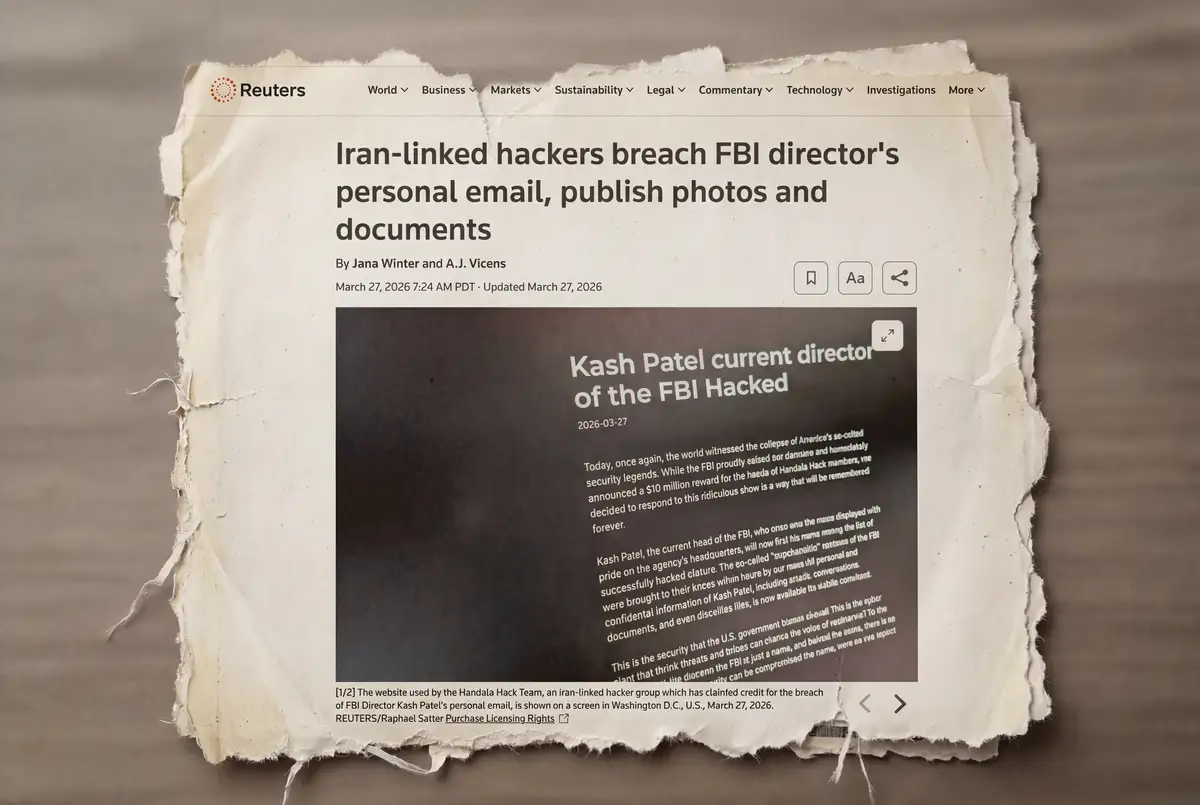
The FBI Director Got Hacked Because He Used Gmail.
Reuters, March 27, 2026 | NBC News, March 27, 2026
Iran-linked hacker group Handala Hack Team breached FBI Director Kash Patel's personal Gmail account, publishing more than 300 emails, personal photos, and his resume. The leak came days after the FBI seized Handala's domains and the State Department offered a $10 million bounty for information about the group. NBC News found that in 2014, Patel appears to have forwarded Department of Justice emails to the same personal Gmail account.
Sources: Reuters, NBC News, March 27, 2026
Our take:
The FBI put a $10 million price tag on the hackers' heads. The hackers responded by putting the FBI director's vacation photos on the internet. Patel was personally warned in 2024 that Iranian operatives were targeting his communications.
His countermeasure, apparently, was to keep using the same Gmail address he had been forwarding Justice Department emails to since the Obama administration. The bureau says no government data was exposed, which is technically true if you do not count the DOJ correspondence sitting in his personal inbox. Somewhere in Tehran, someone is framing that $10 million wanted poster as a compliment.

Marcus Schuler
Tech translator with German roots who fled to Silicon Valley chaos. Decodes startup noise from San Francisco. Launched implicator.ai to slice through AI's daily madness—crisp, clear, with Teutonic precision and sarcasm. E-Mail: [email protected]