Implicator
San Francisco | April 7, 2026
OpenAI's shares sit unsold. Its own CFO says the company is not ready to go public. Anthropic shipped source code to a public registry for the second time in thirteen months. Together they want IPOs worth $1.2 trillion, and neither can explain to investors why the governance keeps breaking.
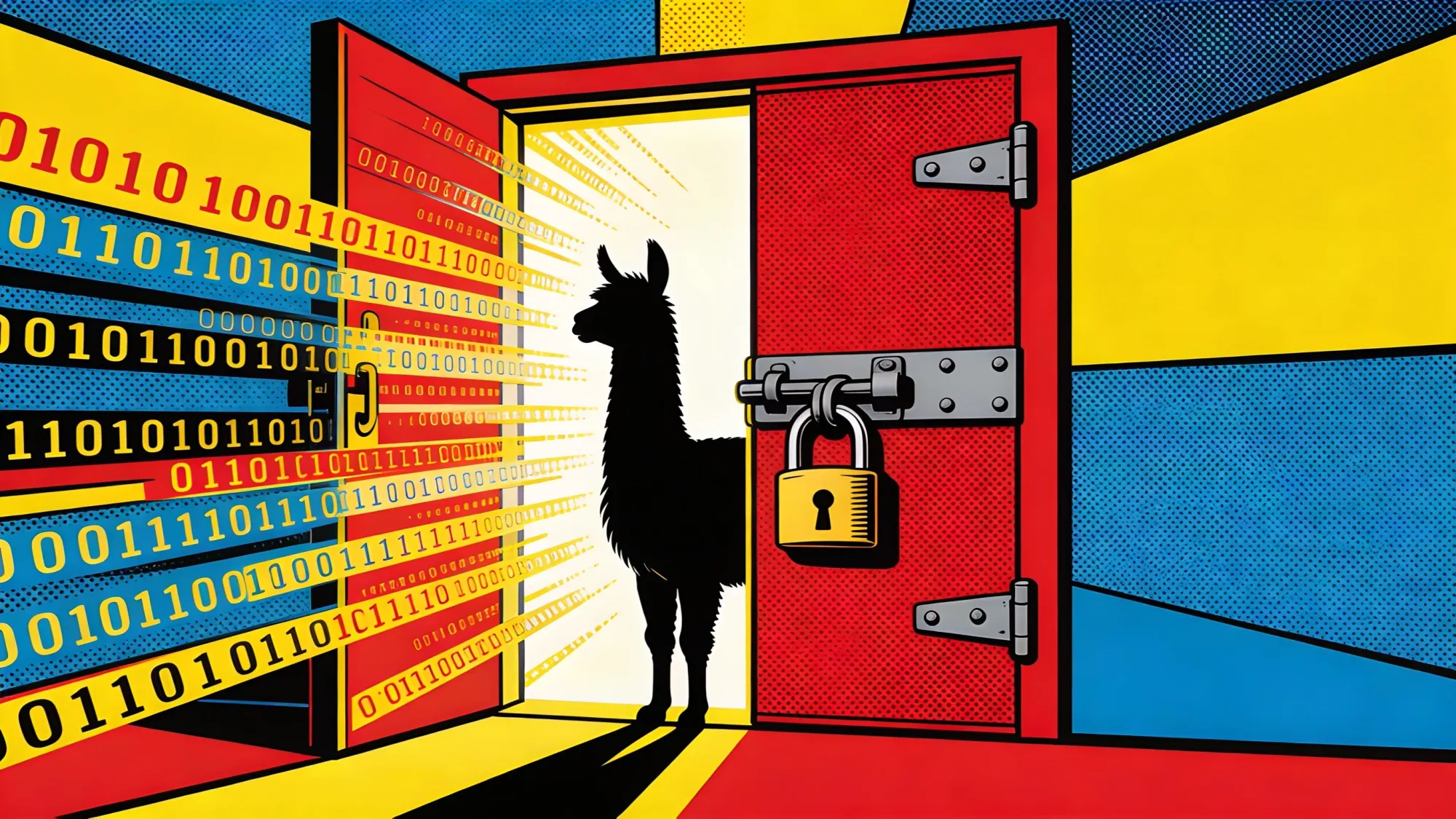
Meta picked a lane, sort of. New models under Alexandr Wang will go open-source at smaller scales. The largest stay locked. Call it a hedge after DeepSeek exploited Llama's weights and Llama 4 disappointed everyone who touched it.
Meanwhile, 85 percent of companies running AI have no idea what their models cost. The token bills stack up. The tools exist. Almost nobody uses them.
Stay curious,
Marcus Schuler
OpenAI and Anthropic's $1.2 Trillion IPO Plans Hit a Governance Wall

OpenAI's shares are going unsold. Anthropic leaked source code twice in thirteen months. Both want IPOs, and both burned investor confidence within eleven days.
A New Yorker investigation built on 100 interviews described Sam Altman as "unconstrained by truth." The same week, OpenAI's CFO acknowledged the company is not prepared to go public. The tender offer designed to let employees sell at a $300 billion valuation found fewer buyers than expected.
Anthropic's problem is operational. The company published proprietary source code to a public registry, the second time since early 2025. For a company built on safety, repeated leaks undermine the very premium investors were willing to pay.
Together, roughly $1.2 trillion in expected market capitalization rests on governance neither company has demonstrated. The safety premium is becoming a governance discount.
Why This Matters:
- Institutional investors require governance track records, and both companies have actively eroded theirs at the worst possible moment
- The "safety premium" that justified higher AI valuations is inverting into a liability as operational failures compound
Reality Check
What's confirmed: OpenAI's CFO said the company is not IPO-ready. Anthropic leaked source code to a public registry twice. The New Yorker published a 100-interview investigation into Altman's leadership.
What's implied (not proven): That governance failures will delay or permanently lower both IPO valuations.
What could go wrong: Markets shrug it off. Demand for AI exposure is so intense that institutional investors overlook governance risk entirely.
What to watch next: OpenAI's next tender offer pricing and take-up rate. Anthropic's IPO filing timeline and any additional security incidents.

The One Number
49% — Projected growth in global semiconductor revenue by the end of 2026, driven almost entirely by AI hardware demand, according to Goldman Sachs. The bank expects AI-related hardware revenues alone to exceed $700 billion by Q4. TSMC, which fabricates the majority of the world's advanced AI chips, enters its earnings quiet period today ahead of an April 16 report. The firm is expected to post 38% year-over-year revenue growth for Q1, confirming whether the spending cycle has staying power or is running ahead of actual deployment.
Meta Plans to Open-Source New AI Models but Will Keep Its Largest Proprietary
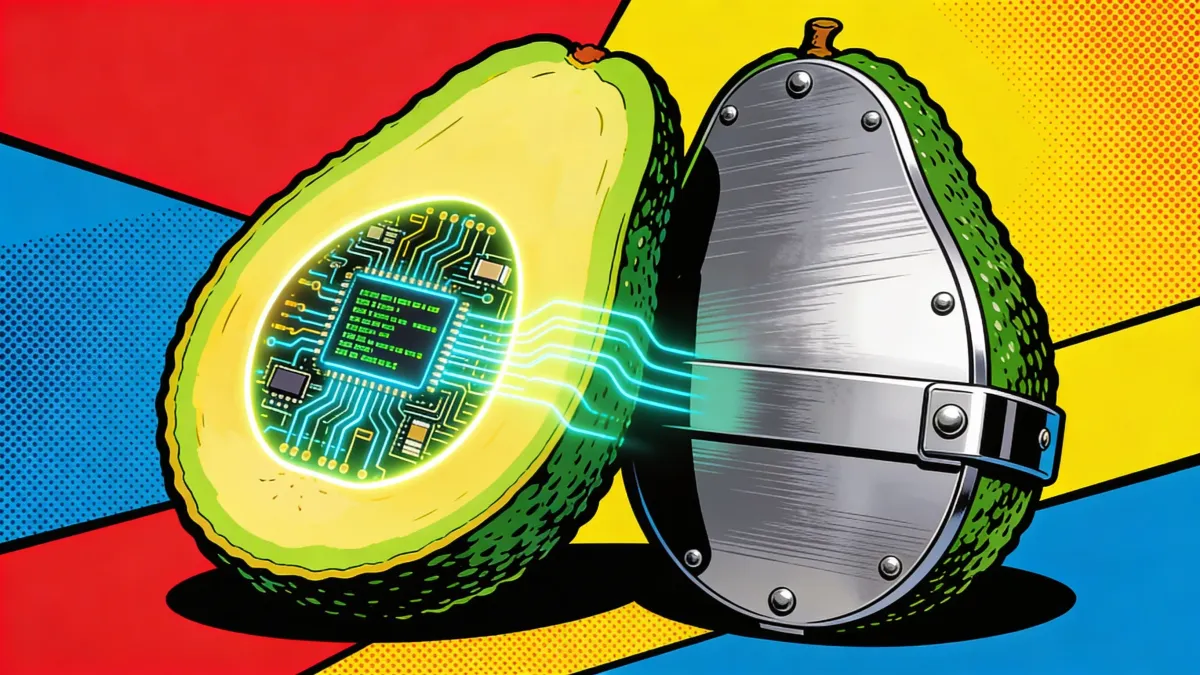
Meta is hedging its open-source bet. New AI models under Alexandr Wang will ship with smaller versions open-sourced and the largest kept proprietary.
DeepSeek used Llama's open weights to build a competitive model at a fraction of the cost. Llama 4 underwhelmed developers. The delayed Avocado model still trails competitors including Google, OpenAI, and Anthropic. Axios described the new approach as "not a full reversal" but a middle ground between commitment and caution.
Why This Matters:
- Open-source built Meta's developer ecosystem, but giving competitors free frontier weights is a trade-off it will no longer make at every scale
- The hybrid model signals that even open-source champions now treat proprietary distribution as the default for their best work
AI Image of the Day

Prompt: Surreal fashion editorial, minimalist studio scene, a young woman with a short platinum blonde bob haircut sitting on a giant fluffy alpaca, both covered in the same lime-green shaggy wool texture, monochromatic outfit matching the animal's fur, oversized fuzzy coat and textured knit clothing, soft pastel aesthetic, bright pink continuous background, high-fashion photography, avant-garde styling, dreamy and whimsical atmosphere, ultra-detailed fibers and fabric texture, soft diffused studio lighting, hyperrealistic yet surreal composition, clean composition, bold color contrast (lime green vs pink), contemporary fashion campaign, 8k, sharp focus.
Only 15% of AI Deployments Track Token Costs, Monitoring Guide Finds

Only 15 percent of enterprise AI deployments track what their models cost. The rest fly blind on token spending.
A single customer support bot handling 10,000 daily conversations burns 400 million tokens and generates a million trace spans. Traditional monitoring tools cannot handle this volume. Token telemetry produces 10 to 50 times more data than standard APIs, and teams report 200 percent jumps in monitoring bills after instrumenting AI workloads.
Why This Matters:
- Companies scaling AI without token observability face costs they cannot diagnose until the invoice arrives
- Monitoring AI spending is itself expensive, creating a gap that only purpose-built tools can fill
🧰 AI Toolbox
How to Get AI Writing Help in Every Text Box on the Web with Clico
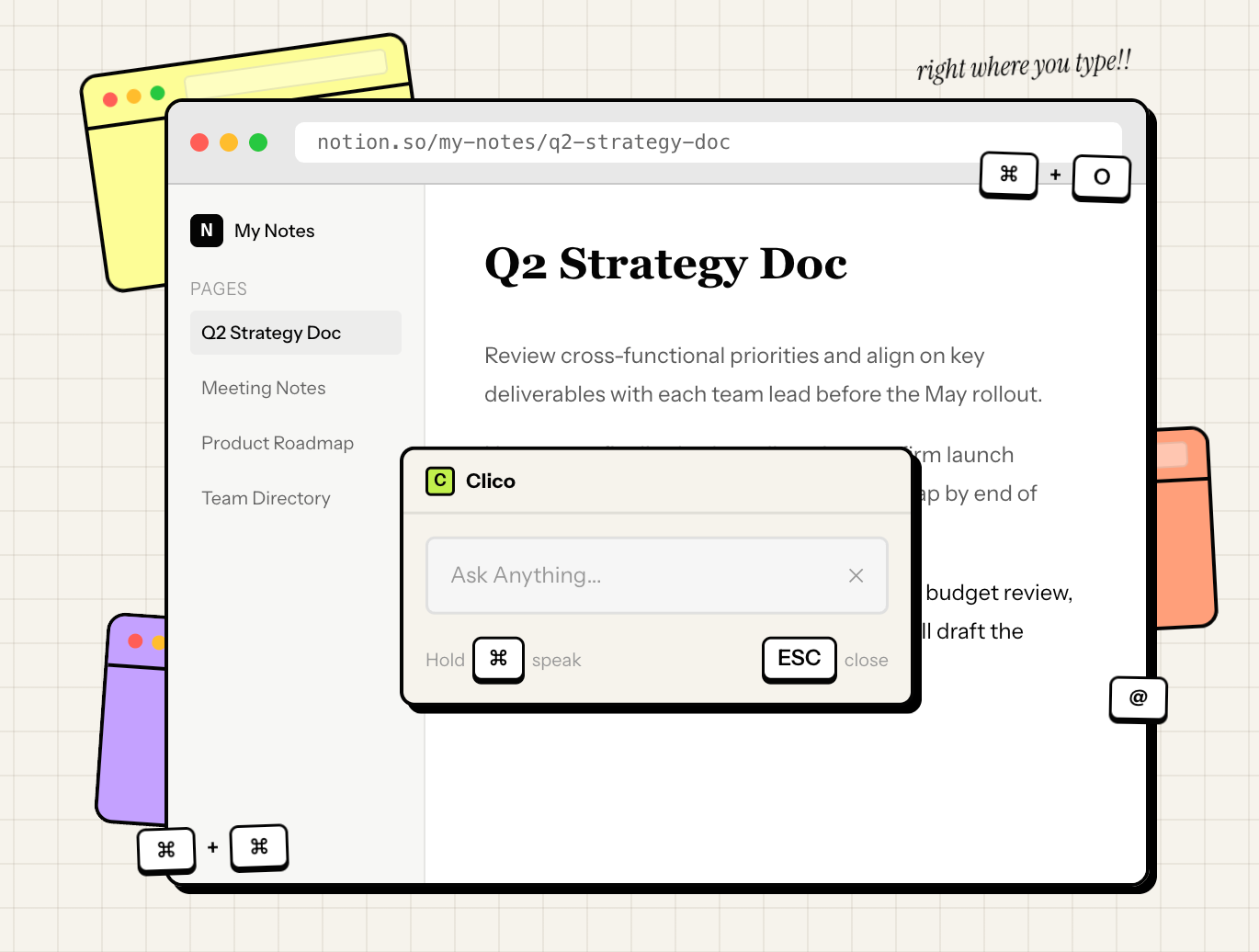
Clico is a Chrome extension that adds an AI writing assistant to every text input on every website. Press Cmd+O inside any compose field and an inline dialog appears that reads the page you are on and drafts a contextually aware response at the cursor. It works across Gmail, Slack, Google Docs, LinkedIn, Reddit, and dozens of other platforms without switching tabs. Currently free with no usage limits on a registered account.
Tutorial:
- Install Clico from the Chrome Web Store and create a free account
- Open any website with a text field, click into the field, and press Cmd+O (Ctrl+O on Windows)
- Type an instruction in the inline dialog: "reply politely declining this meeting" or "summarize the key points above"
- Clico reads the visible page content and generates a draft directly in the text box
- Use the @ symbol in the prompt to pull context from other open browser tabs into your response
- Hold Cmd to activate voice dictation, which transcribes and writes based on page context
- Double-tap Cmd on any page to get an instant structured summary without opening the text dialog
URL: https://tryclico.com
What To Watch Next (24-72 hours)
- Samsung: Q1 earnings guidance drops Tuesday, projecting roughly $38 billion in operating profit, an eightfold year-over-year jump driven by AI memory chip demand. Watch for any signal that Middle East energy costs or supply chain disruptions are threatening margins.
- TSMC: Enters its earnings quiet period today ahead of an April 16 report. Analysts expect 38% year-over-year revenue growth for Q1. The results will confirm whether AI chip spending has staying power or is running ahead of deployment.
- OpenAI vs. Musk: Jury selection for Musk's $134 billion lawsuit against OpenAI begins April 27 in San Francisco. Pre-trial filings due this month will shape whether the case centers on contract breach or antitrust claims.
🛠️ 5-Minute Skill: Turn an Overloaded Inbox Into Three Emails That Actually Matter
It is Monday morning. You have 47 unread emails from the weekend. Half are FYIs, a few need replies, and somewhere in the pile is something urgent. You need triage, not just labels.
Your raw input:
47 emails. Mix of vendor invoices, internal status updates, two
client escalations, a board member asking for a data point, and
15 newsletter digests.
The prompt:
Sort these emails into three buckets: (1) reply today, ranked by
urgency, (2) delegate with a one-line forwarding note, (3) archive.
Draft a two-sentence reply for each email in bucket 1. Under 120
words total for the triage summary.
What you get back:
Reply today:
1. Board member data request. Draft: "The Q1 figure is $4.2M, up 18% YoY. Full breakdown attached."
2. Client escalation (Acme). Draft: "I am looking into this and will have an update by 2 PM today."
3. Client escalation (Bolt). Draft: "Looping in Sarah, who owns this workflow. She will follow up within the hour."
Delegate: 3 vendor invoices → forward to finance. 2 status updates → forward to your PM.
Archive: 15 newsletters, 8 FYIs, all-hands recap.
Why this works
Scanning 47 subjects takes 20 minutes. The prompt does the sorting and drafts the easy replies, so you spend your time on the two emails that actually need your judgment.
What to use
Claude: Better at judging what is truly urgent vs. just loud.
ChatGPT: Faster at batch-drafting short replies.
AI & Tech News
Google AI Overviews Deliver Tens of Millions of Wrong Answers Annually, Analysis Finds
A New York Times analysis found Google's Gemini 3-powered AI Overviews are roughly 90% accurate, which across an estimated 5 trillion yearly searches translates to tens of millions of incorrect responses. The system pulls from sources including Facebook posts, raising questions about whether authoritative-looking answers deserve the trust their formatting implies.
Meta Employees Compete for "Token Legend" Status on Internal AI Leaderboard
Meta launched an internal leaderboard called "Claudeonomics" that tracks and rewards employees based on their AI token consumption, with top contributors earning elite titles. The gamified initiative reflects the company's push to embed generative AI across every workflow.
Google Adds Mental Health Crisis Detection to Gemini Chatbot After Lawsuit
Google is updating Gemini to automatically detect potential mental health crises and trigger referrals to suicide prevention hotlines. The move follows a lawsuit and mounting pressure on AI companies to build safety features for sensitive interactions.
Firms Exploit AI Search Systems with Hidden Instructions Behind "Summarize" Buttons
A Verge investigation found a surge of companies embedding hidden prompts behind "Summarize with AI" buttons to manipulate search results into citing their clients' content. The tactics target Google Search, ChatGPT, and Gemini, prioritizing short-term manipulation over legitimate optimization.
Silicon Valley Investors Call ARR the "Least Trusted Metric of the AI Era"
Investors are raising alarms over how AI startups calculate annual recurring revenue, citing a lack of standardized SEC definitions and susceptibility to manipulation through aggressive contract terms. Scrutiny intensified after Andreessen Horowitz-backed Cluely promoted a "cheat on everything" ethos.
Cryptography Engineer Calls Post-Quantum Deployment Delay "Unacceptable Risk"
Filippo Valsorda is calling for urgent global deployment of post-quantum cryptographic standards, arguing that the lead time for secure system upgrades makes further delay dangerous. His stance reflects a marked shift in urgency since Google's earlier Q-Day warning.
South Korea Deploys Thousands of ChatGPT-Powered Care Robots for Elderly Population
South Korea is rolling out thousands of AI-powered care robots to support its elderly population, which now makes up 20% of its 51 million residents. The robots provide companionship, health monitoring, and daily assistance using ChatGPT-based conversational AI.
OpenAI Launches Safety Fellowship to Fund External Alignment Research
OpenAI introduced a Safety Fellowship program designed to support external researchers in conducting independent safety and alignment work on advanced AI systems. The pilot initiative aims to develop talent and advance research on AI risk outside the company's own labs.
Q-Factor Exits Stealth with $24 Million for Neutral-Atom Quantum Computing
Israeli quantum startup Q-Factor, backed by Intel Capital, emerged from stealth with a $24 million seed round led by NFX and TPY Capital. The Weizmann Institute and Technion spinout is developing neutral atom quantum computers to overcome limitations of current qubit approaches.
MLB's Automated Strike Zone Validates Umpires More Than It Overrides Them
Major League Baseball's new Automated Ball-Strike System, powered by Sony-developed high-resolution cameras, has confirmed the majority of human umpire calls since its 2026 debut. The technology highlights umpire accuracy rather than replacing human judgment.
🚀 AI Profiles: The Companies Defining Tomorrow
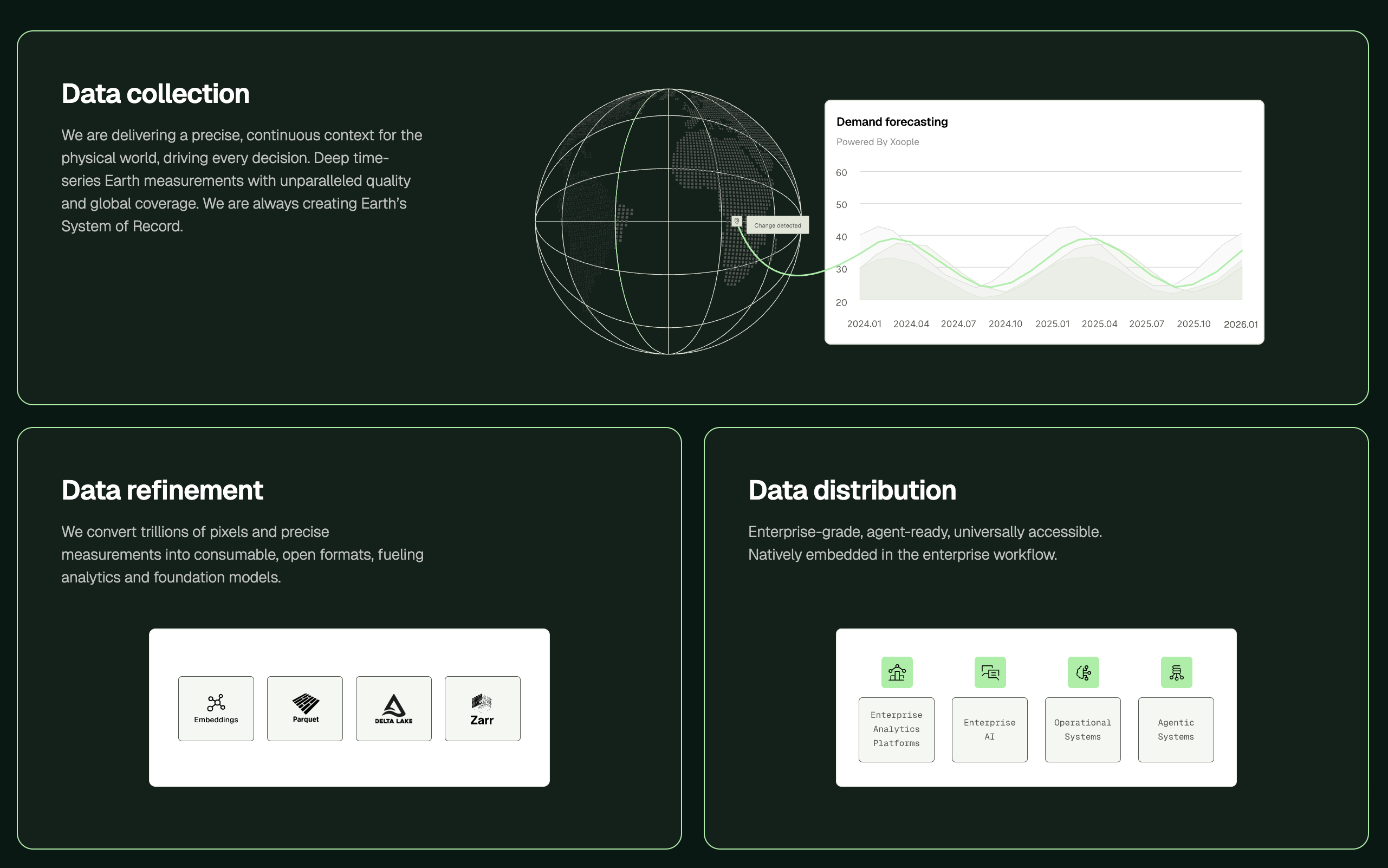
Xoople builds the data layer that teaches AI what the physical world looks like right now. The Madrid startup is assembling a satellite constellation designed from scratch for machine learning, not human analysts. 🛰️
Founders
Fabrizio Pirondini co-founded Xoople in 2019 and serves as CEO. The company spent seven years developing its technology stack around data collected by government spacecraft before raising capital to build its own sensors. The team is based in Tres Cantos, near Madrid.
Product
EarthAI is an end-to-end Earth intelligence system that delivers verifiable time-series measurements of physical changes on the planet's surface via APIs. Unlike traditional satellite imagery companies that sell pictures for human interpretation, Xoople builds data feeds designed for deep learning models. The platform integrates natively with Microsoft Power BI and Esri's geospatial tools, embedding Earth observation directly into enterprise workflows. L3Harris, the US defense contractor, builds the high-precision sensors for Xoople's satellite constellation. Microsoft and Esri distribute the data.
Competition
Planet operates the largest commercial Earth imaging constellation. BlackSky provides real-time geospatial intelligence. Airbus runs Europe's dominant satellite imaging business. Vantor is building AI-focused Earth observation datasets. Google's geospatial AI models set the benchmark everyone is measured against. Xoople differentiates by designing for machine consumption from day one and locking in enterprise distribution before launching its own satellites. The risk: competitors already have satellites in orbit generating revenue while Xoople is still building hardware.
Financing 💰
$130M Series B led by Nazca Capital, with MCH Private Equity, CDTI (Spain's government technology fund), Buenavista Equity Partners, and Endeavor Catalyst. Total raised: $225 million. Pirondini says the company is in "unicorn territory" but declined to share the exact valuation.
Future ⭐⭐⭐
Pirondini calls the goal "Earth's System of Record," which is either visionary or a marketing line depending on whether the sensors work as promised. The L3Harris partnership brings defense-grade hardware expertise to a commercial venture, and the Nazca Capital backing taps Spain's largest aerospace and defense fund. The distribution-first strategy is clever: Microsoft and Esri already reach the enterprises that will buy this data. But Planet has 200+ satellites in orbit. BlackSky processes intelligence in real time. Xoople has $225 million and a factory partner. The thesis is sound. The execution gap between "most capitalized" and "most data" is measured in years of launches. 🌍
🔥 Yeah, But...
OpenAI Asked Two Attorneys General to Investigate Elon Musk. Its Chief Lobbyist Made the Call.
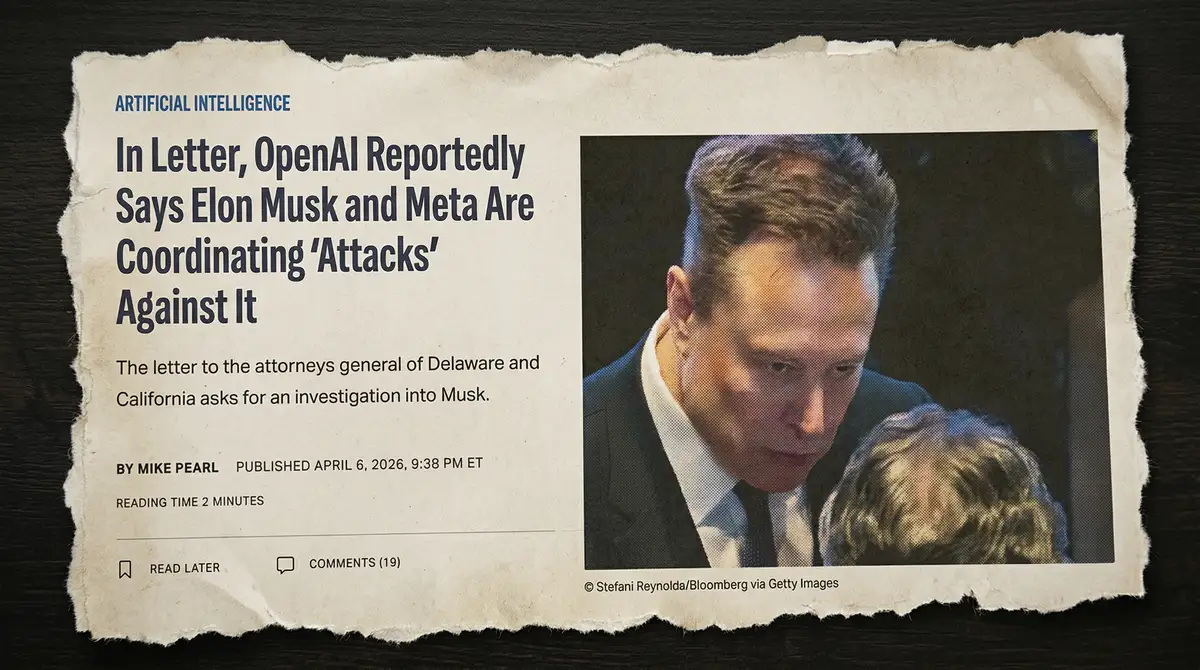
Gizmodo, April 6, 2026
OpenAI sent letters to the attorneys general of California and Delaware requesting investigations into "improper and anti-competitive behavior" by Elon Musk and Mark Zuckerberg. The letters accuse the two of "colluding as Musk sought to dig up incriminating information on Altman," citing a New Yorker report about intermediaries tracking Altman's flights and party attendance. Text messages obtained by Engadget show Zuckerberg offering Musk help with DOGE budget cuts. Musk replied with a heart emoji and then asked if Zuckerberg was "open to the idea of bidding on the OpenAI IP." Jury selection for Musk's $134 billion lawsuit against OpenAI begins April 27.
Sources: Gizmodo
Our take: OpenAI has now accused the owner of a rival AI lab and the CEO of Meta of coordinating opposition research that includes tracking Altman's travel schedule. The company brought this complaint not through its legal team but through Chris Lehane, a political crisis adviser who spent the 1990s defending Bill Clinton.
Last week, Lehane's department acquired a tech talk show. This week, it filed a complaint that reads more like an opposition research dossier than a legal brief. Musk is suing for $134 billion. Zuckerberg texted him a job offer for OpenAI's intellectual property. And somewhere between the heart emoji and the flight tracking, the most important technology companies in the world started behaving like rival campaigns in a primary.

Marcus Schuler
Senior broadcast journalist and former ARD correspondent for Europe's largest public broadcaster. Covering the tech industry from San Francisco for 10+ years. Founded implicator.ai for independent, rigorous AI reporting. E-mail: [email protected]