Implicator
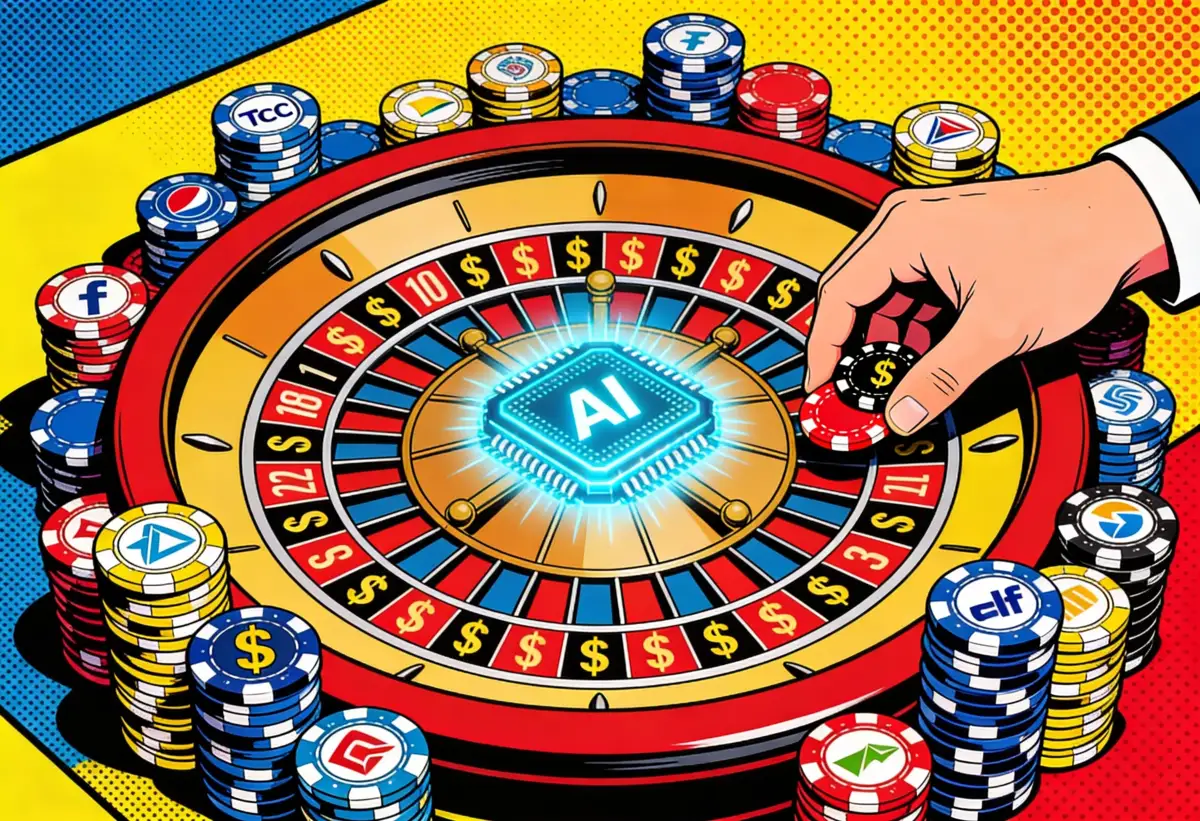
OpenAI on Tuesday closed a $122 billion funding round at an $852 billion post-money valuation, the largest private raise in Silicon Valley history. The round grew from the $110 billion announced in February, with an additional $12 billion pulled from a wider pool of institutional and individual investors. OpenAI is now worth more than all but a dozen S&P 500 companies. It has never turned a profit.
Key Takeaways
- OpenAI closed a $122 billion funding round at an $852 billion valuation, the largest private raise in Silicon Valley history.
- Individual investors gained access for the first time, with $3 billion raised through bank channels and ARK Invest ETF inclusion.
- Amazon's $35 billion of its $50 billion commitment is conditional on an IPO or AGI achievement by 2028; Nvidia's $30 billion is largely compute.
- OpenAI is pivoting to enterprise and killing consumer products like Sora as Anthropic gains ground with Claude Code.
Conditional capital and circular questions
SoftBank co-led the round alongside Andreessen Horowitz, D.E. Shaw Ventures, MGX, and TPG. Amazon committed $50 billion. Nvidia, $30 billion. SoftBank, another $30 billion. Microsoft participated again, though OpenAI did not disclose how much. A broader group of institutions, including Sequoia, BlackRock, Blackstone, Fidelity, Temasek, and the University of California's investment office, rounded out the deal.
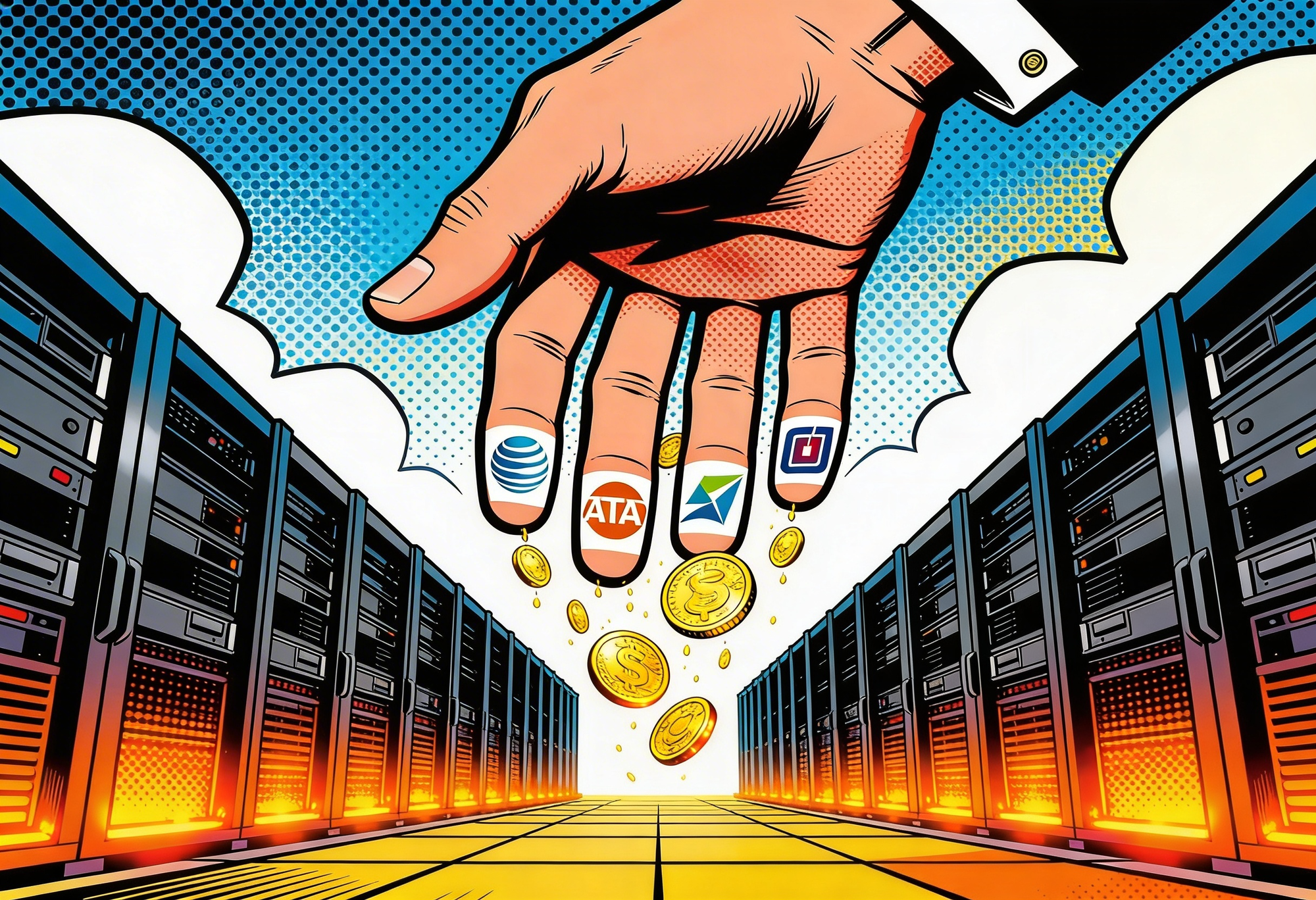
But the headline figure deserves a closer read. Amazon's commitment splits into a $15 billion upfront payment and a $35 billion tranche conditional on OpenAI going public or reaching artificial general intelligence before the end of 2028. Nvidia's $30 billion is largely compute capacity, not cash. And Amazon's investment runs alongside an eight-year AWS contract, meaning a significant portion of the money flows right back to Amazon's cloud division. Bloomberg and Reuters have a term for this: circular financing.
Banking on retail
For the first time, OpenAI sold shares to individual investors through bank channels, raising more than $3 billion. The company also announced inclusion in several ARK Invest ETFs, making it the first private company to sit inside ARK's flagship $6 billion Innovation fund. Private companies don't typically appear in exchange-traded funds. This one is doing it while still losing money.
Get Implicator.ai in your inbox
Strategic AI news from San Francisco. No hype, no "AI will change everything" throat clearing. Just what moved, who won, and why it matters. Daily at 6am PST.
No spam. Unsubscribe anytime.
Cathie Wood's retail base now holds pre-IPO OpenAI shares, a move that creates built-in demand for whatever public offering comes next. And the banks facilitating that retail access, JPMorgan, Goldman Sachs, Citi, Morgan Stanley, Wells Fargo, also extended OpenAI a $4.7 billion revolving credit facility. Those same banks are the likely candidates to underwrite an IPO expected by year-end. You don't assemble this roster for a company planning to stay private.
From consumer app to enterprise platform
OpenAI used the announcement to reframe its business. Enterprise revenue now accounts for 40% of total sales, up from 30% a year ago, and the company targets parity with consumer by December. Its APIs process more than 15 billion tokens per minute. Codex, the coding assistant, serves over 2 million weekly users, a fivefold increase in three months.
That shift explains the recent wave of cuts. Sora, the video generation app OpenAI once treated as a marquee product, is dead. Instant Checkout, a shopping tool, limped through five months before getting pulled. Resources now flow toward a planned "superapp" merging ChatGPT, Codex, and agentic capabilities into one interface for developers and business users.
The urgency is partly defensive. Anthropic raised $30 billion in February at a $380 billion valuation and has built serious traction with Claude Code in exactly the enterprise market OpenAI needs to own. Anthropic is reportedly working toward its own public listing this year. Filing second means absorbing whatever market reaction the first IPO triggers, and neither company wants that.
The math still doesn't add up
OpenAI pulls in $2 billion a month now. It recorded $13.1 billion for all of 2025. More than 900 million people open ChatGPT every week. Fifty million pay for it. An advertising pilot launched six weeks ago already pulls in $100 million in annualized revenue.
Impressive numbers. But the company expects to spend $115 billion over the next four years, according to the New York Times. Internal forecasts suggest profitability won't arrive until 2030, the Wall Street Journal reported. In April, OpenAI faces trial against co-founder Elon Musk, who left the company and later founded rival xAI. He alleges OpenAI breached its founding mission by pursuing profit. OpenAI has argued Musk is motivated by bitterness over the company succeeding without him.
The $122 billion bought time, not answers. Retail investors, from wealthy bank clients to ordinary ETF holders, now have money riding on whether OpenAI can convert consumer scale into sustainable margins before public markets get their say. The clock started the moment those ETF shares hit retail accounts.
Frequently Asked Questions
How much did OpenAI raise in its latest funding round?
OpenAI closed a $122 billion funding round at an $852 billion post-money valuation, up from the $110 billion announced in February. SoftBank, Amazon, Nvidia, and Microsoft were among the key investors.
Why is the funding round considered circular financing?
Amazon's $50 billion investment is tied to an eight-year AWS contract, meaning much of the money flows back to Amazon's cloud division. Nvidia's $30 billion contribution is largely compute capacity, not cash. Bloomberg and Reuters have labeled this pattern circular financing.
Can individual investors buy OpenAI stock?
OpenAI sold $3 billion in shares to individual investors through bank channels and announced inclusion in several ARK Invest ETFs. This marks the first time a private company will appear in ARK's flagship Innovation fund.
When is OpenAI expected to go public?
OpenAI is widely expected to pursue an IPO by the end of 2026. The retail investor access, credit facility from major banks, and ARK ETF inclusion all point to active IPO preparation.
Is OpenAI profitable?
No. OpenAI generates $2 billion in monthly revenue but remains unprofitable. The company expects to spend $115 billion over the next four years, with profitability not expected until 2030 according to internal forecasts reported by the Wall Street Journal.
Harkaram Grewal
Maps the India–Germany–U.S. AI triangle from New Delhi. Background in cross-market operations and business development. Writes about supply chains, enterprise adoption, and talent—the unsexy forces that actually move global AI.