IMPLICATOR
Sam Altman stood on a stage in Seoul last month and smiled for cameras. Back in San Francisco, his finance team was quietly hiring the people you bring on when you're about to go public: a chief accounting officer named Ajmere Dale, a corporate business finance officer named Cynthia Gaylor, someone to run investor relations. The photo ops were for the press. The hires were for Wall Street.
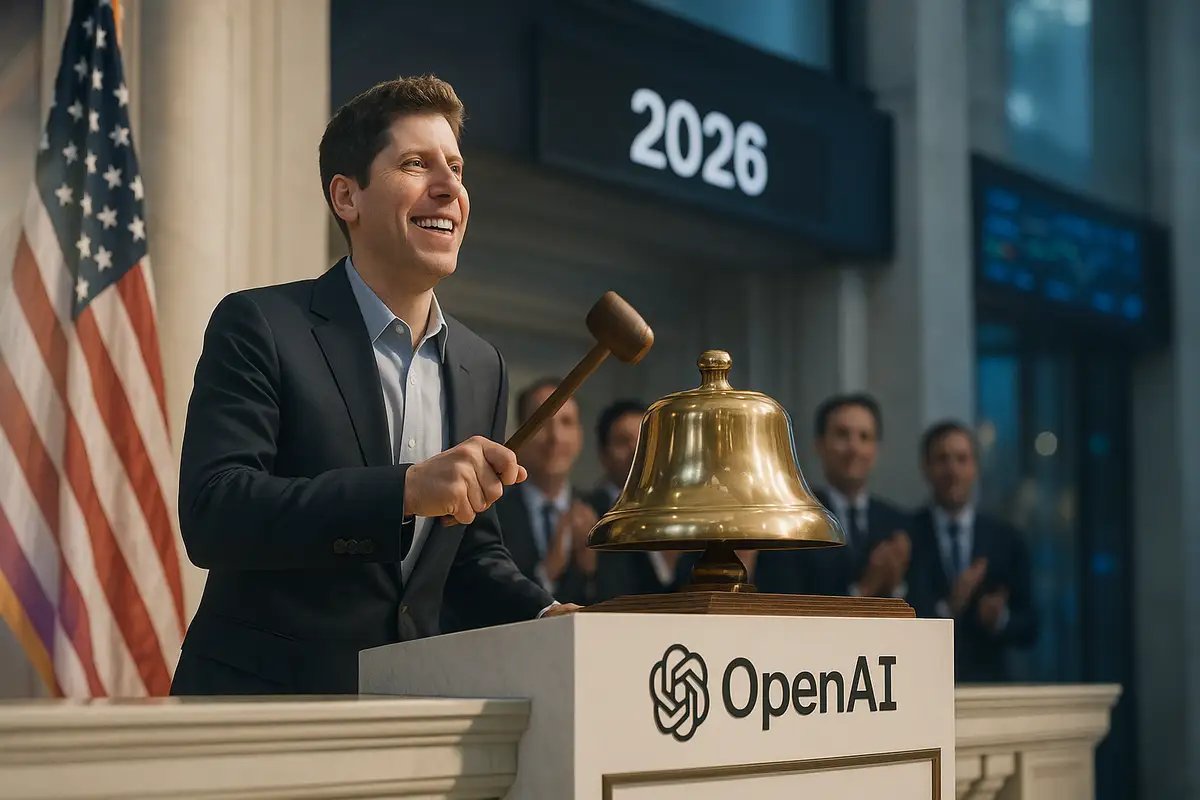
OpenAI is preparing to list on public markets in the fourth quarter of 2026, according to people familiar with the matter, even as it tries to close a pre-IPO funding round that could pull in more than one hundred billion dollars and value the company at $830 billion. That number sits between Samsung and the GDP of the Netherlands. For a company that lost billions last year and expects to keep losing money until 2030, the valuation requires a particular kind of faith, the kind that tolerates burning cash at a rate that would bankrupt most Fortune 500 companies.
But faith is cheap in AI right now. And OpenAI is racing to harvest it before the window shuts.
The race nobody admits to running
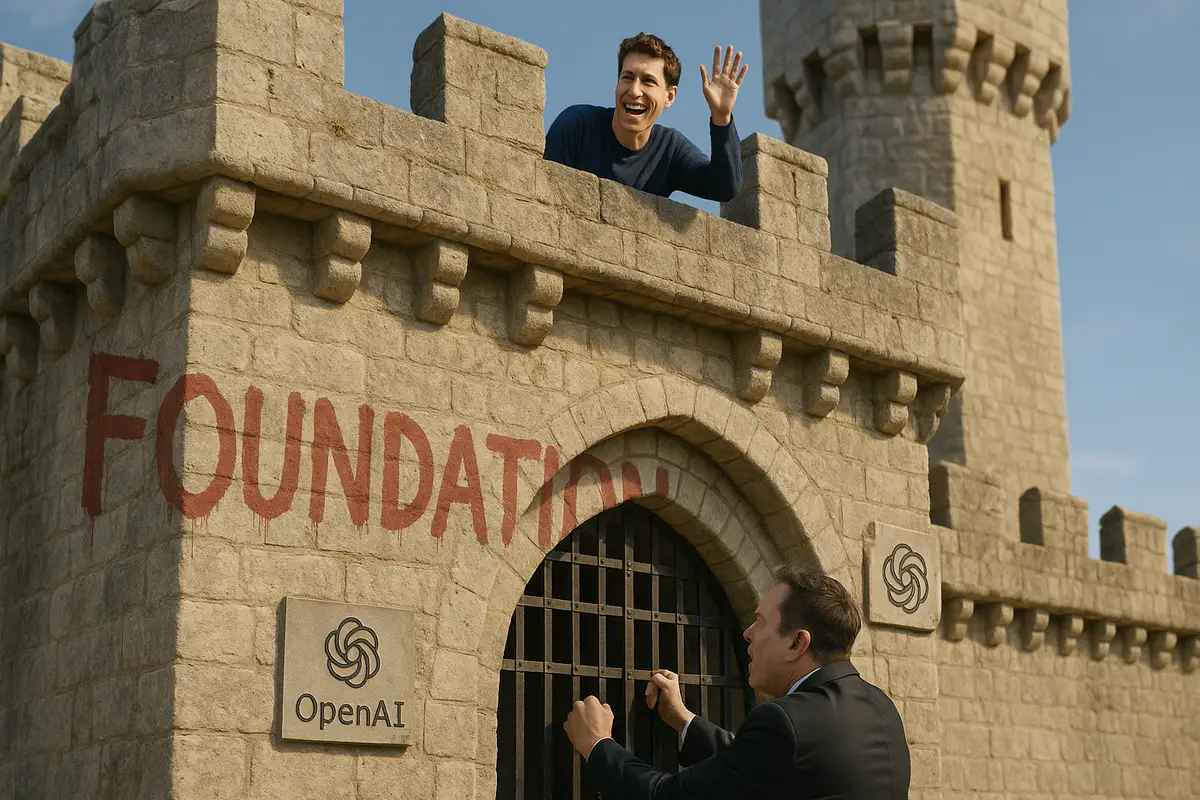
OpenAI executives have privately expressed anxiety about one specific scenario: Anthropic going public first. The fear has a commercial logic to it. The first company to list grabs a massive pool of public-market investors, retail buyers included, who have been dying to own a piece of generative AI and have had zero options. Whoever goes second fights over what's left.
The Breakdown
• OpenAI is targeting a Q4 2026 IPO while closing a $100 billion+ pre-IPO round at an $830 billion valuation.
• Amazon, Nvidia, SoftBank, and Microsoft are in talks to invest up to $130 billion combined, most of which flows back to them as infrastructure revenue.
• Microsoft disclosed OpenAI accounts for 45% of its $625 billion in future contracts, sparking a 10% stock drop.
• Anthropic projects breakeven by 2028; OpenAI not until 2030, with $1.4 trillion in long-term compute commitments.
Anthropic knows this. The company, founded by former OpenAI researchers Dario and Daniela Amodei, has told financial partners it is open to listing by the end of 2026. Its sales have been surging on the strength of Claude Code, a coding agent that caught fire among developers. Anthropic is in the process of raising a round that will likely exceed its initial ten billion dollar target. It has hired Andrew Zloto to run capital markets and brought on Blackstone investor Kevin Chang, a hire that had not been previously reported.
Elon Musk's SpaceX adds a third variable. The rocket company is aiming for a summer IPO and hopes to raise more than one trillion dollars. SpaceX, OpenAI, and Anthropic are competing for the same finite supply of institutional appetite for private-to-public tech transitions. The calendar matters as much as the balance sheet.
One hundred billion dollars and the companies that can't say no
OpenAI's fundraising round reads less like a venture capital deal and more like a plumbing diagram where every pipe feeds back into itself. SoftBank is discussing roughly thirty billion dollars. Amazon CEO Andy Jassy is personally negotiating an investment of up to fifty billion. Nvidia could put in as much as twenty billion. Microsoft, already the largest investor, is in talks for another ten to twenty billion.
Look at those names. SoftBank, Nvidia, Microsoft, Amazon. Three of them are OpenAI's largest infrastructure providers. They sell the company chips, cloud computing, and data center capacity. When they invest in OpenAI, some of that money flows directly back to them as revenue. The Financial Times mapped this circular dependency last October, showing how capital in the AI sector moves in a closed loop: investor to startup, startup to cloud provider, cloud provider back to investor.
This is the financial architecture that makes walking away from OpenAI feel, to its Big Tech backers, like sawing off the branch they're sitting on. Microsoft disclosed this week that OpenAI accounts for 45 percent of its $625 billion in future commercial contracts, roughly $280 billion. When analysts on the earnings call asked Microsoft's finance chief Amy Hood whether that concentration posed a risk, she pointed to the remaining $350 billion in non-OpenAI contracts. You could hear the pause on the call before the next question. Microsoft shares dropped nearly 10 percent.
"There's obviously concern about the durability," Jefferies analyst Brent Thill told the New York Times. "I think everyone is concerned about the exposure."
Join 10,000+ AI professionals
Strategic AI news from San Francisco. No hype, no "AI will change everything" throat clearing. Just what moved, who won, and why it matters. Daily at 6am PST.
No spam. Unsubscribe anytime.
Concerned, and still writing checks.
The math that doesn't work yet
OpenAI generated thirteen billion dollars in revenue last year. It expects to triple that in 2026. But OpenAI has locked in $115 billion in computing costs through 2029. And that number? A fraction of the $1.4 trillion in long-term compute deals it has already signed. Thirteen billion in, 1.4 trillion committed. The spending outruns the revenue by an order of magnitude, and that is not a phase the company is passing through. It is the business model.
Anthropic's pitch to investors: we stop bleeding money in 2028. OpenAI's pitch is quieter about the timeline. Its own projections say 2030. Two more years of losses after its biggest rival reaches breakeven. Two more years of fundraising. And a public listing somewhere in the middle of all of it.
The company has started selling ads on the free version of ChatGPT, which now has more than 800 million users. About 6 percent of those users pay twenty dollars a month for the premium version. OpenAI is also pushing into enterprise sales across health care and finance. These are real revenue streams. They are also nowhere close to covering the infrastructure costs that the company has already locked in.
Altman himself sounded less than thrilled on the Big Technology podcast in December. "Am I excited to be a public company CEO? 0%." Zero. He said that out loud, on a podcast, months before the planned listing. He added that going public would be "really annoying," which is one way to pitch your stock to future shareholders. The practical solution: hand the public-company headaches to Fidji Simo, the former Instacart CEO who already runs OpenAI's product and business teams.
Wall Street's Thursday verdict
Wall Street weighed in on Thursday, and it was ugly. Enterprise software stocks cratered into bear market territory, wiping out almost a year of gains in a single session. Microsoft got hit hardest, down 10 percent, even though Azure grew 39 percent. Any other quarter, that number throws a party. This quarter, it was one point slower than last quarter, and one point was enough. Then came the capex figure: $37.5 billion. Wall Street had expected a billion less. That gap did damage.
Over at Amazon, 16,000 employees lost their jobs on Wednesday, pushing the total since October past 30,000. Google Cloud, which made a big show two years ago of eliminating transfer fees, quietly announced it would raise those same fees starting in May. And TD Cowen floated the idea that Oracle might need to cut tens of thousands of workers and dump Cerner just to pay for the data centers it promised OpenAI.
If you work at one of these companies, the pattern is hard to miss. Headcount shrinks. Prices go up. Capital expenditure balloons. The office gets quieter while the data center buildout accelerates. And the central question, whether AI revenue will grow fast enough to justify the spending, remains unanswered.
J.P. Morgan, for its part, told The Information it has no plans to rip out its existing enterprise software vendors. Anthropic itself is hiring people with experience in Salesforce and Workday. So the revolution gets financed on the promise that it will replace the old guard. The old guard keeps signing contracts.
Daily at 6am PST
Don't miss tomorrow's analysis
No breathless headlines. No "everything is changing" filler. Just who moved, what broke, and why it matters.
Free. No spam. Unsubscribe anytime.
What an IPO actually solves
Going public would give OpenAI something no private round can: a real price. Right now, a handful of investors with strategic skin in the game set the number. SoftBank wants OpenAI to succeed because it has thirty billion on the line. Nvidia wants it to succeed because OpenAI buys its chips. That is not price discovery. An IPO forces thousands of independent investors to put money behind what they actually believe the company is worth. That is.
If OpenAI can list at or above its $830 billion target, it calms the circular-dependency fears. It gives SoftBank and Nvidia and Microsoft a mark-to-market gain on their investments. It lets retail investors buy shares of the company behind ChatGPT. It generates the kind of news coverage that reinforces the narrative.
If the listing stumbles, the questions get harder. OpenAI's trial against Elon Musk, who is seeking up to $134 billion in damages, will be active during the IPO preparation. The company has been reshuffling its leadership ranks. It declared a "code red" effort to improve ChatGPT's quality after Google started eating into its consumer lead. None of these are the conditions you want surrounding a debut on public markets.
Altman is betting that demand for AI exposure outweighs every red flag. He is probably right, at least on timing. ChatGPT is a genuine consumer product with hundreds of millions of users, and no other pure-play AI company trades on a public exchange. The IPO will likely price. Investors will line up. The first-day pop will generate headlines that make the valuation feel earned.
But pricing an IPO and sustaining a public company are different sports. The investors buying shares on day one will eventually want to see the highway fill with traffic. They will want the $1.4 trillion in computing commitments to produce margins, not just revenue growth. And they will notice, quarter after quarter, whether the plumbing diagram still works or whether the pipes have started leaking.
The machinery of a public listing grinds forward in San Francisco. Ajmere Dale and Cynthia Gaylor are settling into new offices. The banks keep getting called. None of it changes the underlying arithmetic. OpenAI can go public. Staying public, at this valuation, is the part nobody has figured out.
Frequently Asked Questions
Q: When is OpenAI planning to go public?
A: OpenAI is targeting the fourth quarter of 2026 for its IPO. The company has been holding informal talks with Wall Street banks and has hired a chief accounting officer and corporate business finance officer to prepare for the listing.
Q: How much is OpenAI trying to raise before its IPO?
A: OpenAI is seeking more than $100 billion in a pre-IPO funding round that could value the company at $830 billion. Major investors in talks include Amazon (up to $50 billion), SoftBank ($30 billion), and Nvidia ($20 billion).
Q: Why are Microsoft, Nvidia, and Amazon investing in OpenAI when they compete with it?
A: All three are major OpenAI infrastructure providers selling chips, cloud computing, and data center capacity. Their investments create a circular dependency where capital flows from investor to startup and back as revenue. Walking away would damage their own businesses.
Q: Is Anthropic also planning an IPO?
A: Anthropic has told financial partners it is open to listing by the end of 2026. The company has been hiring capital markets and investor relations staff, and its sales have been surging thanks to the popularity of its Claude Code product.
Q: How does OpenAI plan to cover its massive infrastructure costs?
A: OpenAI generated $13 billion in revenue in 2025 and expects to triple that in 2026 through ChatGPT subscriptions, advertising on the free tier, and enterprise sales. But its committed spending of $1.4 trillion in long-term compute deals dwarfs current income.
Related Stories


Marcus Schuler
Editor-in-Chief and founder of Implicator.ai. Former ARD correspondent and senior broadcast journalist with 10+ years covering tech. Writes daily briefings on policy and market developments. Based in San Francisco. E-mail: editor@implicator.ai