IMPLICATOR
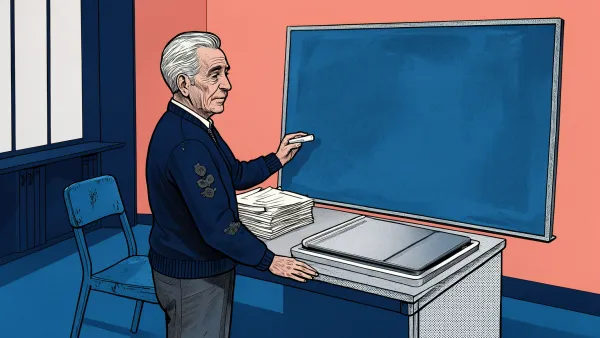
Last week, inside the glass-and-blond-wood headquarters OpenAI opened in San Francisco's Mission Bay, Fidji Simo told the company's entire staff to stop chasing distractions. "We cannot miss this moment because we are distracted by side quests," the company's CEO of applications said in an all-hands meeting, according to remarks reviewed by The Wall Street Journal. Top leaders including Sam Altman and chief research officer Mark Chen were "actively looking at which areas to deprioritize." The changes would arrive within weeks.
The language was revealing. Not "refine." Not "iterate." Deprioritize. A company valued at more than half a trillion dollars was admitting, in the bluntest internal language available, that it had been doing the wrong things.
But here is the problem OpenAI cannot restructure its way out of: the customers it needs most have already made their choice. According to the Ramp March 2026 AI Index, which tracks corporate credit card spending across more than 50,000 businesses, Anthropic now wins approximately 70% of new enterprise deals in head-to-head matchups against OpenAI. A year ago, one in 25 businesses on Ramp's platform paid for Anthropic. Today it is nearly one in four. OpenAI's business adoption rate just recorded its largest single-month decline.
You can cut side quests. You cannot unlose a customer.
The Breakdown
- Anthropic wins 70% of new enterprise deals vs. OpenAI, per Ramp's March 2026 spending data across 50,000 businesses
- Claude Code generates $2.5B annualized revenue vs. Codex's $1B, now accounting for 4% of all public GitHub commits
- OpenAI's enterprise market share dropped from 50% in 2023 to 27% by end of 2025; Anthropic's climbed past 60%
- OpenAI's gross margin fell to 33% with $57B projected annual burn by 2027, trailing Anthropic's breakeven target by two years
The everything store that sold nothing well enough
OpenAI's sprawl was deliberate, and it was expensive. Last year alone, the company launched a video generator called Sora, a web browser called Atlas, a hardware device designed with Jony Ive, and e-commerce features for ChatGPT. Altman likened the approach to "betting on a series of startups" inside OpenAI. The theory looked sound on paper: build the consumer super-app for AI, capture attention across every category, monetize the audience later.
Anthropic skipped the consumer plays entirely and built coding tools and enterprise infrastructure instead. Claude Code launched as a research preview in February 2025. By the end of that year it was generating $1 billion in annualized revenue. By February 2026, that figure had more than doubled to $2.5 billion, according to Anthropic's Series G materials. Four percent of all public GitHub commits globally now come from Claude Code, double the share from just one month prior.
OpenAI's Codex, by comparison, brought in just over $1 billion in annualized revenue by the end of January, according to a person with direct knowledge cited by WIRED. The product has since tripled its weekly active user count to 1.6 million following the release of GPT-5.3 Codex in early February. Respectable growth, but still half of what Anthropic's coding agent generates. That gap widens every month, and the trajectory has not flattened once.
OpenAI scattered its engineering talent across consumer gimmicks and professional tools at the same time, betting that volume would compensate for depth. Anthropic built one specialist shop, the exact category where enterprises write large checks. In technology, the specialist wins when the product is complex enough that expertise matters more than brand.
The revenue numbers tell you who is anxious
Strip away the narratives and look at the money. OpenAI crossed $25 billion in annualized revenue at the end of February, growing 17% in two months, according to The Information. That sounds commanding until you see Anthropic's trajectory. The rival surged to nearly $19 billion, roughly triple its end-of-2025 level. At current growth rates, Anthropic is on track to match or surpass OpenAI's revenue by year-end, according to estimates from Epoch and Semianalysis.
Enterprise clients account for 80% of Anthropic's revenue. Eight of the Fortune 10 are active customers. More than 500 enterprise clients each spend over $1 million annually, a number that stood at just a dozen two years ago.
OpenAI's enterprise position looks increasingly exposed, and the trajectory is steep. Its market share in enterprise LLM usage dropped from 50% in 2023 to 27% by the end of 2025, according to a Menlo Ventures report. Ramp's data shows its share of business AI invoices fell from nearly 90% to about 35% in a single year. Anthropic's share climbed from just over 10% to more than 60% over that same period.
A company that merely needs to refocus does not produce charts like these. OpenAI waited too long to notice where revenue comes from.
Current and former OpenAI employees told the Journal that last year's strategy "sometimes created a lack of focus" and made strategic direction hard to follow. Computing resources shifted between teams at the last minute. The Sora team sat under the research division despite being responsible for one of the company's most high-profile consumer products. OpenAI's leadership looks defensive, and the restructuring announcement confirms it.
Why the pivot may arrive too late
Enterprise AI adoption follows a pattern you can already see forming in other software categories. Once a team trains its workflows around a specific tool, invests in custom integrations, and builds institutional memory of its quirks, switching costs compound fast. A finding from a16z's Top 100 Gen AI Consumer Apps report puts a number on how far apart they have drifted: just 11% overlap between the two app ecosystems. They stopped competing for the same buyers months ago.
Stay ahead of the curve
Strategic AI news from San Francisco. No hype, no "AI will change everything" throat clearing. Just what moved, who won, and why it matters. Daily at 6am PST.
No spam. Unsubscribe anytime.
Anthropic recognized this early and moved to deepen the moat. The company committed $100 million to the Claude Partner Network, bringing Accenture, Deloitte, Cognizant, and Infosys into its enterprise channel. It launched Cowork, a product for non-coders that extends Claude Code's agent capabilities into sales, finance, marketing, and legal workflows. When it did, stock-market value evaporated from software companies to the tune of $300 billion, according to TIME.
OpenAI is trying to counter with Frontier, its enterprise platform launched last month under the Frontier Alliances program, which pairs OpenAI engineers with consulting firms like BCG, McKinsey, and Accenture. The company is also in advanced talks with private equity firms TPG, Advent International, Bain Capital, and Brookfield for a joint venture to distribute enterprise products across their portfolio companies, according to Reuters.
But consulting partnerships and PE joint ventures are distribution plays, not product advantages, and the underlying problem persists. Developers prefer Claude Code. It surpassed OpenAI's Codex extension in Visual Studio Code Marketplace installs. Business subscriptions to Claude Code quadrupled since January. Enterprise use now represents over half of all Claude Code revenue, according to Anthropic.
Simo acknowledged as much internally when she told staff that Anthropic's success should serve as a "wake-up call" and that OpenAI needed to "regain the lead" among software developers and enterprise customers. You do not issue wake-up calls at companies that are winning.
The IPO problem neither side can avoid
All of this collides with the most consequential deadline on OpenAI's calendar, one that no amount of restructuring can push back. The company is preparing for a potential IPO as early as the fourth quarter of 2026. It selected law firms Cooley and Wachtell Lipton Rosen & Katz to lead preparations.
Sora downloads and ChatGPT's consumer reach will mean nothing when the S-1 lands on an analyst's desk. What public markets actually price is margins, enterprise contract velocity, and competitive position in segments that generate durable revenue. On all three fronts, the numbers are heading the wrong way.
OpenAI's gross margin fell seven points to 33% last year, and the company expects to burn through $57 billion annually by 2027. Nobody inside the building is projecting profitability before 2030. Anthropic says it will break even two years sooner, by 2028. If you are an institutional investor comparing the two ahead of dual IPOs expected this year, that two-year profitability gap matters as much as the revenue gap.
Neither company is profitable, and the balance sheets make that painfully visible. Both face a bigger structural threat. They are "cannibalizing each other," as PitchBook analyst Harrison Rolfes told Axios, keeping prices low to fight for market share. Google, the silent third player, grew Gemini's paid subscribers by 258% year over year and landed a Pentagon AI contract while its two rivals slugged it out in public. "OpenAI looked opportunistic. Anthropic got blacklisted. Google gained the most ground and nobody's talking about it," Moor Insights & Strategy CEO Patrick Moorhead told Axios.
The real test is not what OpenAI cuts but what it keeps
Simo's restructuring will produce the right press releases and the org chart will look cleaner. Fewer side quests, more focus, resources flowing toward coding and enterprise. Some promising but distracting projects will get folded into ChatGPT or quietly shelved. Sora's stand-alone app, which briefly topped the App Store last September before usage flatlined, is reportedly being absorbed back into the main chatbot.
None of that addresses the core vulnerability, which is that OpenAI's consumer brand, somewhere between 800 and 900 million weekly users, does not convert into enterprise dominance. Consumer attention and enterprise revenue are different animals entirely, and you can have the most downloaded app in the world while still losing the market that determines whether your IPO prices at $550 billion or $350 billion.
The everything-store strategy left OpenAI exposed in the only category its balance sheet requires it to win. Cutting side quests is the correct instinct arriving roughly 12 months late. Anthropic did not just capture enterprise market share. It trained engineering teams at more than 500 companies spending seven figures annually on Claude Code, built switching costs into daily workflows, and locked in consulting-channel partnerships that will shape where the next wave of corporate AI spending lands.
When OpenAI files its S-1, and the company's IPO preparation suggests that filing is coming, the document will show impressive revenue numbers and a consumer brand that dwarfs every competitor. It will also show enterprise market share that has been falling for two straight years, margins under pressure, and a profitability timeline that trails its closest rival by 24 months. If you are Simo, the side quests were never the real problem. The real problem is that while OpenAI was building the everything store, someone else already owned the only aisle that matters.
Frequently Asked Questions
What is the Ramp AI Index and why does it matter?
Ramp tracks corporate credit card spending across more than 50,000 businesses, providing real-time data on which AI vendors companies actually pay for. It is one of the most reliable proxies for enterprise adoption because it measures invoices, not press releases or user signups.
Why does the IPO timeline pressure OpenAI's strategy?
OpenAI is preparing for a potential Q4 2026 IPO with law firms Cooley and Wachtell Lipton. Public markets price enterprise contract velocity and margins more heavily than consumer reach, which means OpenAI needs to show enterprise traction in its S-1 filing.
What is Anthropic's Claude Partner Network?
Anthropic committed $100 million to bring consulting firms including Accenture, Deloitte, Cognizant, and Infosys into its enterprise sales channel. These partnerships create a distribution layer that increases switching costs and embeds Claude deeper into corporate workflows.
How does Google factor into the OpenAI vs. Anthropic competition?
Google grew Gemini's paid subscribers 258% year over year and landed a Pentagon AI contract while OpenAI and Anthropic competed publicly. Analyst Patrick Moorhead said Google gained the most ground while nobody was paying attention.
What happened to OpenAI's Sora video generator?
Sora briefly topped the App Store after its September 2025 launch but usage quickly flatlined. The standalone app is reportedly being absorbed back into ChatGPT as part of CEO Fidji Simo's restructuring to cut side projects.

Marcus Schuler
Editor-in-Chief and founder of Implicator.ai. Former ARD correspondent and senior broadcast journalist with 10+ years covering tech. Writes daily briefings on policy and market developments. Based in San Francisco. E-mail: editor@implicator.ai