IMPLICATOR
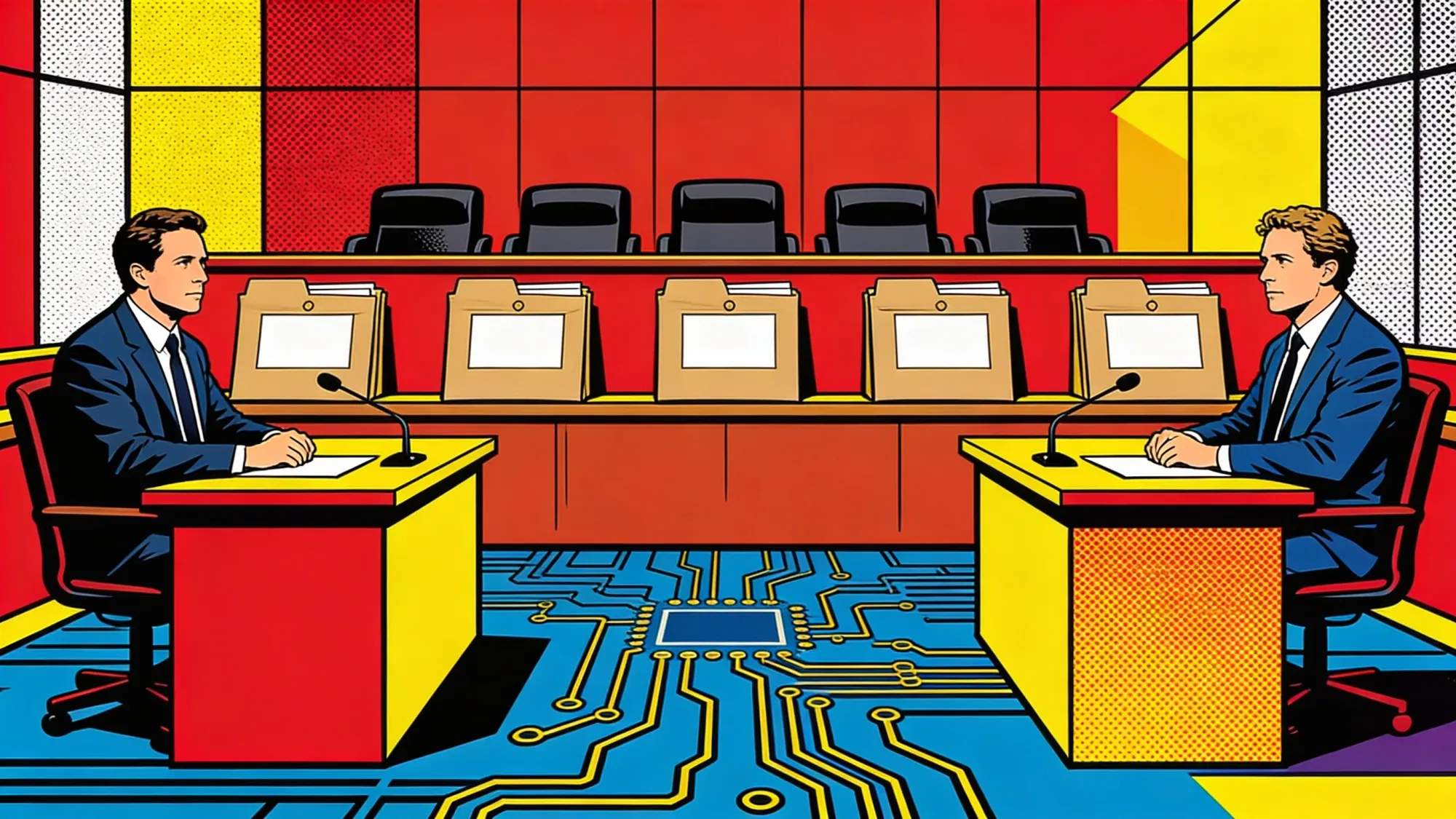
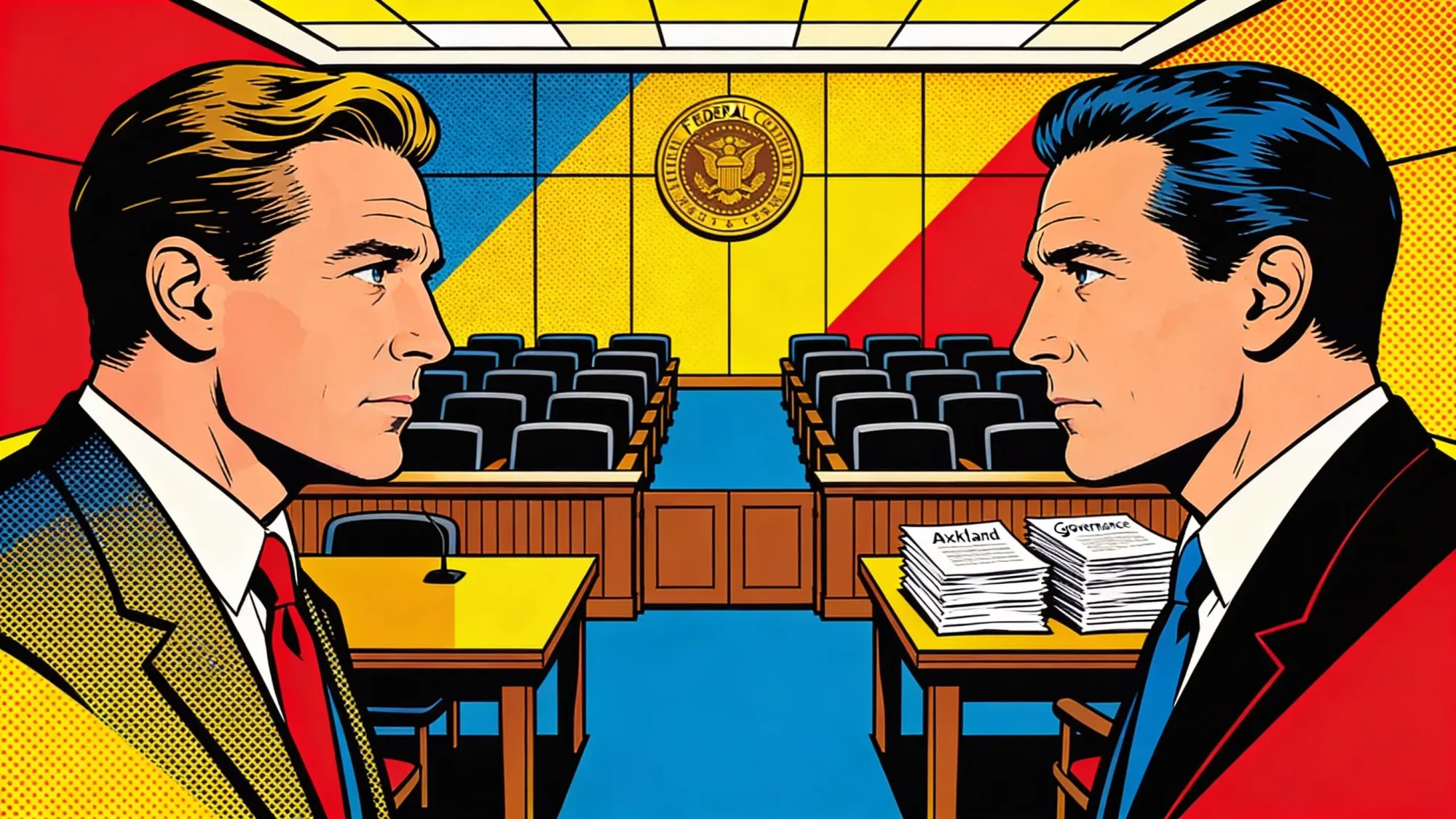
Judge Yvonne Gonzalez Rogers stopped Steven Molo on Thursday morning before jurors entered the Ronald V. Dellums U.S. Courthouse. Molo, Elon Musk's lawyer, wanted AI safety expert Stuart Russell to discuss extinction and climate risk. By then, people had already lined up outside; inside, roughly 40 reporters worked from wooden benches where laptops were allowed and recording was not. Rogers kept the case on charitable trust, corporate control, and Musk's own AI company.
That narrowing is the point of the trial now. Musk is asking jurors to believe OpenAI betrayed a nonprofit mission. OpenAI is asking them to look at xAI, the for-profit rival Musk launched in 2023, and decide whether his complaint is also a competition story. When William Savitt turned from OpenAI's charter to Grok's training, the room no longer needed a debate about humanity's fate.
Key Takeaways
- Musk said xAI had partly used OpenAI models while testifying in the Oakland trial.
- Judge Gonzalez Rogers kept the case focused on charity law, not AI extinction risk.
- OpenAI used xAI to argue Musk is running inside the same commercial race he condemns.
- The distillation fight moved from a China-policy frame into a domestic courtroom.
AI-generated summary, reviewed by an editor. More on our AI guidelines.
xAI became the exhibit
Savitt asked Musk whether xAI had used OpenAI models to train its own systems. The exchange was short. "Do you know what distillation is?" Savitt asked. "It means to use one AI model to train another AI model," Musk said. Had xAI done that with OpenAI? Musk first answered that "all the AI companies" do it. Savitt pressed: "So that's a yes." Musk replied: "Partly."
The answer gave OpenAI's lawyers a concrete comparison point. Musk has spent the trial arguing that OpenAI took a nonprofit mission and turned it into a commercial engine. xAI launched in 2023, five years after Musk left OpenAI in 2018. Musk described it as much smaller than OpenAI, "about a tenth of the size," while another courtroom account put OpenAI's valuation around $852 billion and xAI's staff at only a few hundred employees.
Musk also described other AI systems as tools for validation. That put OpenAI's earlier public position in an awkward light. The company has told lawmakers it took steps to harden its models against distillation and warned that Chinese rivals could advance by "appropriating and repackaging American innovation." In Oakland, the same practice was now part of testimony about Musk's own company.
The atmosphere did the legal work
The setting mattered because the case is built on motive. Photographers pressed toward the glass doors. Around 40 reporters shared the gallery. Young AI safety researchers had arrived early with Subway sandwiches. Greg Brockman sat behind OpenAI's lawyers with a yellow legal pad. Sam Altman was in the room.
Under that pressure, the mythology kept losing altitude. Musk wanted to talk about "The Terminator." The judge said no. Musk said OpenAI stole a charity until Gonzalez Rogers struck one repetition from the record: "That portion is stricken, we've heard it many times." Musk complained Savitt cut him off. "Few answers are going to be complete," he said, "especially if you cut me off all the time."
He also made the comparison easier for OpenAI. Savitt asked why Musk had not started another nonprofit after leaving OpenAI. "I thought I had started a nonprofit with OpenAI but they stole it," Musk replied. Yet xAI began as Musk's for-profit answer to the same competitive pressure OpenAI says forced its own corporate change. The jury had a witness, a timeline, and a rival company.
Track the AI trial that matters
Strategic AI news from San Francisco. No hype, no "AI will change everything" throat clearing. Just what moved, who won, and why it matters. Daily at 6am PST.
No spam. Unsubscribe anytime.
Distillation moved home
Until this week, distillation was mostly discussed as a China problem in Washington. The Implicator reported in February on Anthropic's disclosure of 16 million exchanges from Chinese labs, and OpenAI warned Congress about model extraction. A later industry effort put OpenAI, Anthropic, and Google into the Frontier Model Forum channel for sharing attack data. The policy frame was national advantage. Oakland made it domestic.
TechCrunch put the market logic plainly: distillation threatens AI companies because it lets rivals mimic expensive models without paying the same training cost. Musk's defense was that this is common practice, closer to validation than theft. That may be true as industry habit. It is still damaging as courtroom posture, because OpenAI's lawyers are not trying to prove xAI alone built on OpenAI outputs. They are trying to prove Musk understood the same incentives he now calls betrayal.
The numbers help them. Musk says he donated $38 million after a $1 billion pledge. He wants damages reported between $134 billion and $150 billion, depending on the outlet, while OpenAI points to his own attempt to place a $97.4 billion bid on the nonprofit's assets. Musk told the court xAI is small. The record around it is not: it has been joined to SpaceX, and Business Insider reported a Cursor-related right worth $60 billion.
That is the comparison OpenAI wanted jurors to see: money on both sides, control on both sides, mission language on both sides.
Musk can still win parts of this case. Brockman's journal entries, Birchall's donations, and OpenAI's changing structure give his lawyers material for weeks. Thursday's testimony gave OpenAI a narrower point for jurors: Musk says OpenAI betrayed a nonprofit mission, while his own rival has used OpenAI's models in the race he says corrupted the lab.
Frequently Asked Questions
What did Elon Musk say about xAI and OpenAI models?
Musk said it was partly true that xAI had used OpenAI models. He described the practice as common in the AI industry and closer to validation than theft.
Why did this matter in the OpenAI trial?
OpenAI's lawyers are arguing that Musk is not only a disappointed founder, but also a rival running his own AI company. The xAI exchange supported that framing.
What is model distillation?
Model distillation usually means training one AI model on outputs from another model. It can be legitimate inside one company, but rival use often runs into terms-of-service and competition disputes.
How did Judge Yvonne Gonzalez Rogers limit the case?
She blocked extended testimony about AI extinction risk and pushed lawyers back toward the legal claims: charitable trust, corporate control, donations, and OpenAI's restructuring.
What happens next in Musk v. Altman?
The trial continues with more witnesses, including OpenAI president Greg Brockman. The jury will assess liability, while Judge Gonzalez Rogers will decide any remedies.
AI-generated summary, reviewed by an editor. More on our AI guidelines.

Marcus Schuler
Editor-in-Chief and founder of Implicator.ai. Former ARD correspondent and senior broadcast journalist with 10+ years covering tech. Writes daily briefings on policy and market developments. Based in San Francisco. E-mail: editor@implicator.ai