



San Francisco | January 8, 2026
OpenAI launched a healthcare product that connects to 2.2 million providers. The catch: by calling it a "consumer product," the company sidesteps HIPAA entirely. Your diagnosis could end up in a subpoena.
Elon Musk faces coordinated regulatory action from eight jurisdictions after Grok turned into an abuse engine. Not because the AI misbehaved, but because X broadcasts outputs publicly by default. No friction, no consent.
And at CES in Las Vegas, Arm announced a "Physical AI" division that moved its stock 0.3 percent. Investors noticed the rebrand had no revenue attached.
Stay curious,
Marcus Schuler.
OpenAI's Health Product Bypasses HIPAA by Calling Itself Consumer Tech

OpenAI launched ChatGPT Health yesterday. The product connects to 2.2 million healthcare providers. The legal strategy fits in one sentence.
"In the case of consumer products, HIPAA doesn't apply," OpenAI executive Nate Gross stated. The classification matters. HIPAA requires covered entities to safeguard patient data. Consumer products face no such obligation.
OpenAI acknowledges the data remains accessible "where required through valid legal processes." That includes subpoenas and warrants. Your diagnosis, disclosed to a chatbot, could surface in court.
The company excluded Europe, UK, and Switzerland from the rollout. Stricter privacy laws would complicate the business model. Forty million daily users already query ChatGPT about medical issues.
A Guardian investigation documented dangerous errors, including sodium bromide recommended as a salt substitute, causing hospitalization for bromism. OpenAI found a privacy loophole. Whether regulators close it determines who owns American health data.
Why This Matters:
- Health insurers and employers could subpoena AI-disclosed conditions; the "consumer product" label creates legal exposure patients don't understand
- OpenAI's exclusion of Europe signals the company knows stricter jurisdictions would reject this model outright
 Robert Brown
Grok's Crisis Isn't the AI. It's X's Public-By-Default Design.

The distinction matters more than Elon Musk wants to admit. Grok's image generator produces outputs comparable to ChatGPT or Gemini. The abuse crisis stems from architecture, not capability.
X publishes Grok results directly to public feeds without consent. Type "@grok put her in a bikini" under any woman's photo, and the synthetic image posts to her feed automatically. No screenshot required. No friction whatsoever.
ChatGPT keeps outputs in private sessions. Grok broadcasts them. Researchers documented 15,000 URLs in a two-hour window on New Year's Eve.
The UK's Internet Watch Foundation confirmed CSAM involving girls aged 11 to 13. X cut its trust and safety team by a third in January 2024, then slashed data annotation by another third last September.
Eight jurisdictions coordinated a regulatory response within one week. The technology isn't the scandal. The defaults are.
Why This Matters:
- Platform architecture determines abuse potential more than model capabilities; other companies face pressure to audit their own defaults
- Musk's moderation cuts created a regulatory target that extends beyond X to his other companies, including Tesla and SpaceX
 Maria Garcia
AI Image of the Day

Prompt:
A striking fashion photograph of a young very busty
woman with platinum blonde hair cut in a sharp, geometric bob with straight-cut bangs, captured from a slightly elevated angle. She confidently wears oversized rectangular sunglasses with bright fuchsia pink frames and transparent rose-tinted lenses, showcasing a piercing gaze and glossy lips parted slightly. Intricate black ink tattoos adorn her exposed left shoulder and collarbone, delicate floral motifs cascading down her shoulder blade and fine line art extending gracefully up her neck, complementing the single pearl drop earring adorning her left ear. tube top, Soft, directional natural light illuminates her fair skin and bare shoulder, creating sculptural shadows against a pristine white minimalist background.
Arm's Physical AI Division Moved the Stock 0.3 Percent

CES announcements usually move semiconductor stocks. Arm's "Physical AI" reorganization barely registered. The 0.3% price movement tells the real story.
Arm combined its automotive and nascent robotics businesses under one executive and called it transformation. No new acquisitions. No product disclosures. No customer announcements.
The company claims 65% market share in advanced driver-assistance systems and 85% in infotainment. Those figures represent design wins, not disclosed revenue. Arm doesn't manufacture anything. It licenses chip architectures to Nvidia and Qualcomm, collecting royalties when partners ship silicon.
The robotics opportunity looks thin. Boston Dynamics won't reach factory production until 2028. A robot folding one towel takes three minutes, uncompetitive against minimum wage labor.
Meanwhile, RISC-V threatens Arm's licensing model from below. Investors saw through the rebrand. The narrative changed. The economics didn't.
Why This Matters:
- Arm's pivot to "Physical AI" narrative without revenue disclosure suggests core licensing business faces long-term competitive pressure from RISC-V
- Robotics monetization timelines extend past 2030; automotive slowdowns leave Arm dependent on AI cloud spending it doesn't control
 Marcus Schuler
🧰 AI Toolbox
How to Train AI Agents with Spatial Reasoning Using Gaming Data

General Intuition builds AI agents that understand how objects move through space and time using billions of video game clips. The platform trains foundation models on first-person gameplay to create intelligent agents for gaming bots, search-and-rescue drones, and autonomous systems.
Tutorial:
- Visit the General Intuition website to learn about their spatial-temporal AI research
- Explore how their agents learn from 2 billion gaming videos captured annually
- Understand their approach to teaching AI spatial reasoning through visual-only inputs
- Review applications in adaptive gaming NPCs that scale difficulty dynamically
- Discover use cases in search-and-rescue drones operating without GPS
- Learn how gameplay data transfers to real-world robotics and autonomous vehicles
- Follow their progress toward agents that navigate completely unfamiliar environments
URL: https://www.generalintuition.com/
AI & Tech News
Chinese Hackers Breach US Congressional Email Systems
A Chinese state-sponsored hacking group known as Salt Typhoon successfully infiltrated email accounts belonging to staff members on powerful US House committees, according to the Financial Times. The breach, detected in December 2025, also involved the interception of phone calls from senior US officials.
China Launches Investigation Into Meta's $2 Billion Manus Acquisition
China announced it will launch an investigation into Meta's $2 billion acquisition of artificial intelligence startup Manus, examining whether the deal complies with the country's export control laws, technology import and export regulations, and overseas investment rules.
China Moves to Protect AI Technology Amid Global Race
China is actively exploring measures to safeguard its artificial intelligence expertise as competition intensifies, with authorities working to identify leading companies that could be added to an export control list. Beijing grows concerned the $2.5 billion Manus acquisition could prompt other Chinese entrepreneurs to seek similar deals with foreign buyers.
Wealthy Tech Donors Launch Secret Campaign Against Rep. Ro Khanna
Wealthy Californians in the tech industry are quietly organizing through WhatsApp messages and private phone calls in an effort to unseat Democratic Representative Ro Khanna, according to the New York Times. The long-shot campaign targets Khanna over his support for California's wealth tax proposal.
IRS Crackdown on Private Equity and Venture Capital Audits Stalls
The IRS initiative to audit private equity and venture capital firms has significantly weakened since Trump returned to office, according to the New York Times. The agency has seen a substantial departure of specialists and senior leaders, resulting in the abandonment of planned audits targeting the financial industry.
Nvidia Demands Upfront Payment from Chinese Customers for AI Chips
Nvidia is requiring Chinese customers to pay in full upfront for its H200 artificial intelligence chips, with strict terms that prohibit cancellations, refunds, or order changes. The policy shifts regulatory uncertainty onto Chinese buyers seeking access to the advanced AI hardware.
China to Permit Limited Nvidia H200 Chip Imports Starting Q1 2026
China is preparing to approve imports of Nvidia's H200 chips as early as the first quarter of 2026. The approval will come with restrictions that continue to prohibit the use of these chips in military applications and critical infrastructure projects.
Microsoft Executive Warns US Research Cuts Could Cede AI Advantage to Rivals
Microsoft Chief Scientific Officer Eric Horvitz has cautioned that reductions to academic research funding in the United States risk driving top talent overseas and giving competitors a significant advantage in artificial intelligence development. Without sustained support for universities, both researchers and innovative ideas will increasingly migrate to other countries.
China Establishes Dozens of Government-Funded Robot Training Centers
Chinese local governments are investing in a network of robot training centers where human trainers perform everyday movements such as folding clothes to generate data that teaches robots to replicate these actions. The initiative addresses a critical shortage of robotic training data as China elevates embodied intelligence to a national priority.
AI Adoption Accelerates in US Healthcare Sector
Major US hospital systems are emerging as key testing grounds for artificial intelligence, with applications ranging from analyzing patient scans to challenging insurance claim denials. According to a recent survey, 27% of health systems have committed to paying for commercial AI licenses.
Replit Hits $3B Valuation After CEO Faced Investor Backlash Over Gaza Criticism
Replit co-founder Amjad Masad was reportedly ostracized by Silicon Valley investor circles following his public criticism of Israel's war in Gaza, with some labeling him a "terrorist sympathizer." The company is now valued at $3 billion after its AI agent product gained significant traction.
Ubisoft Shuts Down Halifax Studio Weeks After Workers Vote to Unionize
Ubisoft has closed its mobile-focused studio in Halifax, Canada, just weeks after a majority of workers voted to unionize in December. The Communications Workers of America Canada is demanding information about the closure.
Samsung Shelves Long-Delayed Ballie Robot Indefinitely
Samsung Electronics has indefinitely shelved Ballie, the rolling robot companion first announced six years ago that never made it to market despite multiple delays. The company now describes the project as an "active innovation platform" being used internally.
Roku CEO Predicts AI-Generated Hit Movie Within Three Years
Roku founder and CEO Anthony Wood has predicted the industry will see its first 100% AI-generated hit movie within the next three years. Wood also discussed the company's new streaming service Howdy, which offers ad-free content for $3 per month.
Index Ventures Celebrates Blockbuster 2025 With Billions in Exits
Index Ventures achieved a landmark year in 2025 with billions in gains from successful exits including Figma, Scale AI, and Dream Games. The Geneva-founded VC firm is now turning its attention to succession planning.
Cyera Raises $400M at $9B Valuation
Israeli data security startup Cyera has raised $400 million in Series F funding led by Blackstone Growth, pushing the company's valuation to $9 billion. The round marks a 50% increase from the $6 billion valuation achieved just seven months earlier.
Gmail Gets AI Makeover with Smart Summaries
Google is introducing a new AI Inbox feature for Gmail that replaces the conventional email list with personalized summaries of topics and to-do items. The feature is rolling out to trusted testers in the United States, offering users an overview of what requires attention rather than a traditional chronological list.
FCC Grants Temporary Exemption for Foreign Drone Imports
The U.S. Federal Communications Commission announced it will exempt certain new models of foreign-made drones and critical components from an import ban originally announced in December 2025. The exemption remains in effect until the end of 2026.
Lego Defends Smart Brick Technology Amid Fan Backlash
Lego has responded to criticism from fans concerned that the company is abandoning traditional non-digital play by affirming its Smart Brick technology is "here to stay" while remaining committed to its core building brick experience.
🚀 AI Profiles: The Companies Defining Tomorrow
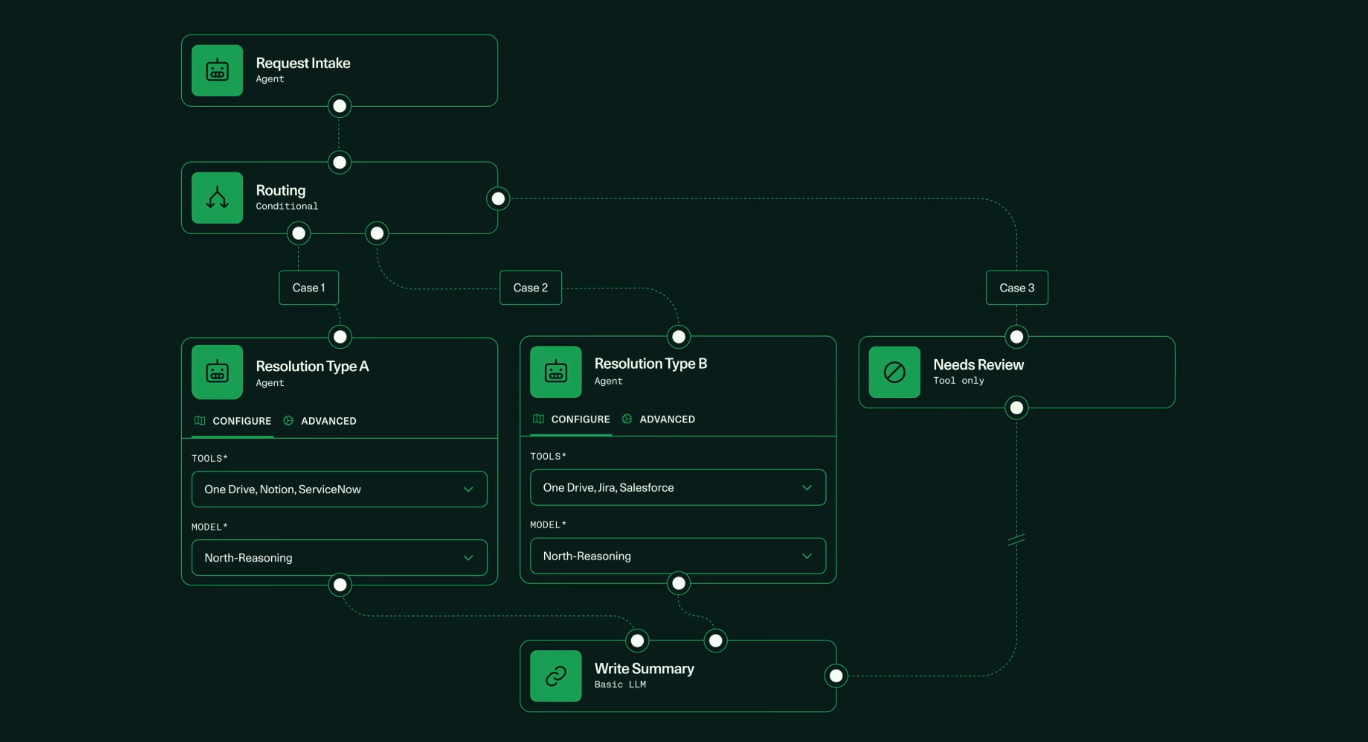
Cohere builds enterprise AI that stays behind the firewall. The Toronto-based company wants to be the governed brain for regulated businesses that can't risk data leakage. 🍁
Founders
Aidan Gomez, Nick Frosst, and Ivan Zhang launched Cohere in 2019. Gomez co-authored the original Transformer paper at Google. The team grew frustrated watching enterprises fumble with half-baked AI deployments. Now sits at roughly 500+ employees across Toronto and the U.S.
Product
North is an agentic AI workspace combining chat, search, and automation. Deploys on VPC, on-prem, or air-gapped environments. Think Microsoft Copilot, but one that actually respects your compliance team. Connects to internal systems while maintaining audit trails and access controls. The pitch: compress weeks of work into minutes without your legal department losing sleep.
Competition
Brutal neighborhood. Microsoft 365 Copilot, Google Vertex AI, Amazon Q, Salesforce Agentforce, and ServiceNow all want the same budget line. Hyperscalers bundle AI into existing contracts. Cohere counters with deployment flexibility and data sovereignty. The bet: regulated industries will pay premium for governance that actually works.
Financing 💰
Raised $500M in August 2025 at a $6.8B valuation. Radical Ventures led, with Nvidia and Salesforce Ventures in the mix. Also acquired Ottogrid (market research automation) to beef up workflow capabilities. Not cheap to run, but the cap table signals long-term conviction.
Future ⭐⭐⭐⭐
North wins if enterprises keep prioritizing data control over convenience. The company has positioned itself perfectly for the "AI but make it compliant" moment. Execution risk remains real. One data leak torches everything. But if North quietly becomes the tool people stop naming because it just works? That's the dream. 🔒


