Implicator
San Francisco | Monday, April 6, 2026
OpenAI's CFO told colleagues the company is not ready for a 2026 IPO. Sarah Friar cited $14 billion in projected losses and $600 billion in spending commitments no public market has been asked to absorb. Sam Altman wants to list by Q4. The joint statement says they're aligned. Joint statements always say that.
The FDA warned a two-person telehealth startup about false drug claims six weeks before the New York Times called it AI's first billion-dollar company. Deepfake photos, 800 fake doctor accounts, a 1.6-million-record breach.
Claude fell 5 points in the LLM Popularity Meter after two data leaks in five days. Mistral posted the biggest gain. The trust scoreboard just recorded its wildest week.
Stay curious,
Marcus Schuler
OpenAI CFO Warns 2026 IPO Isn't Ready as Losses Hit $14 Billion

Sarah Friar has told colleagues OpenAI will not be ready for an initial public offering by late 2026, placing her in direct conflict with Sam Altman's push to list by Q4. Internal projections show $200 billion in cash burn before breakeven.
The financial gap is stark. OpenAI generates about $2 billion in monthly revenue but has committed $600 billion over five years to cloud infrastructure. Losses for 2026 alone sit at roughly $14 billion, according to The Information. Friar has questioned whether the company even needs to pour so much capital into servers as revenue growth decelerates.
The organizational fracture runs deeper. Altman has excluded Friar from financial discussions, including a recent investor meeting about server procurement. Since August 2025, she no longer reports to him. She reports to Fidji Simo, who is now on medical leave. The CMO departed the same week. Three senior roles in flux, months before a possible filing window.
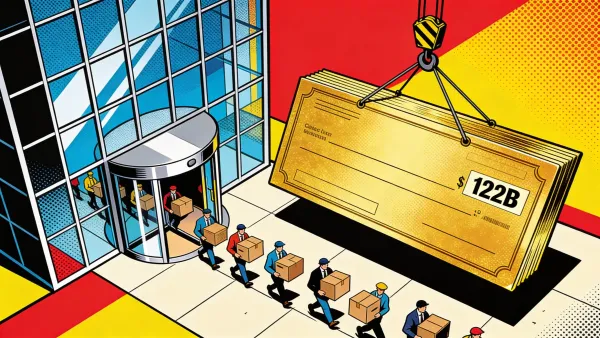
A large portion of the $122 billion round came from Amazon and NVIDIA, both of which also sell OpenAI the chips and cloud capacity it needs to operate. When your investors are also your suppliers, the distinction between funding and procurement starts to dissolve.
OpenAI has retained Goldman Sachs and Morgan Stanley for preliminary IPO discussions. Altman has privately said he wants to beat Anthropic to the public markets. A New Yorker investigation drawing on more than 100 interviews published the same day. A board member described him as "unconstrained by truth." Public markets will demand what private rounds have not: audited financials, quarterly scrutiny, and governance that institutional investors can verify.
Why This Matters:
- Investors face the largest IPO credibility test in tech history, with circular funding structures and $200 billion in projected cash burn before breakeven
- Whether Altman or Friar wins this debate sets the template for how AI companies enter public markets
Reality Check
What's confirmed: Friar told colleagues the IPO is not ready. $14 billion in projected 2026 losses. Goldman Sachs and Morgan Stanley retained for preliminary talks.
What's implied (not proven): Altman is sidelining Friar to push the listing through on his timeline.
What could go wrong: An IPO at $852 billion with $200 billion in cash burn before breakeven could collapse under the scrutiny private markets never applied.
What to watch next: Whether Anthropic files first, forcing Altman's hand regardless of readiness.

The One Number
1,200 — Court cases worldwide involving AI-hallucinated legal filings, according to HEC Paris researcher Damien Charlotin, who found 10 cases from 10 different courts on a single day. About 800 are from U.S. courts. The pace in Q1 2026 is triple the volume of all of 2025. Last week, Mike Lindell's attorneys were each fined $3,000 for submitting briefs with fabricated citations. Penalties are climbing from hundreds to five figures as judges lose patience with the excuse that the lawyer did not know the AI made it up.
Medvi Got an FDA Warning Before the Times Called It a $1.8 Billion AI Story

The FDA sent telehealth startup Medvi a formal warning letter on February 20 for false and misleading claims about its GLP-1 drugs. Six weeks later, the New York Times profiled the company as proof that AI could build a billion-dollar business with two employees and $20,000.
The profile did not mention the warning letter. Or the class-action lawsuit filed months earlier. Or a Futurism investigation from May 2025 that documented deepfake patient photos pulled from Reddit, fabricated doctor personas, and media logos implying editorial coverage that never existed. One supposed patient's "transformation" came from a 2017 sobriety journey that predated semaglutide for weight loss entirely.
The marketing operation has scaled since. More than 800 ad accounts run on Facebook under fabricated doctor names like "Dr. Sarah Martin" and "Dr. Monica Ashford." None of them exist. Drug Discovery & Development confirmed more than 5,000 active Medvi ads on Meta this week. Medvi's clinical partner OpenLoop suffered a 1.6-million-record data breach in January 2026. A separate class-action lawsuit alleges the compounded oral tirzepatide tablets sold through their network have "no viable absorption pathway."
The Times verified $401 million in 2025 revenue and $65 million in profit. Those numbers appear real. The $1.8 billion figure is founder Matthew Gallagher's own projection, not audited revenue. The business rests on the compounding window staying open. The FDA has signaled it will restrict compounded GLP-1 products. Novo Nordisk has sued Hims & Hers over compounded versions. The first company held up as proof that AI builds billion-dollar businesses turns out to be a marketing funnel for weight-loss drugs, running through a partner network under federal scrutiny.
Why This Matters:
- AI-built marketing funnels can scale faster than regulators can inspect them, creating a new category of enforcement risk for telehealth
- The Times profile becomes a case study in how legacy media amplifies AI hype without checking the regulatory record

AI Image of the Day

Prompt: a big built man with a beard, confident and relaxed, wearing a loose aloha shirt with simple hand-drawn floral pattern, rough tropical flowers, naive doodle style, uneven lines, holding a whiskey glass, upper body, minimal line art, continuous line drawing, black and white illustration, no shading, no detailed face, simple clean outline --ar 3:4 --sref
Claude Drops 5 Points After Code Leaks as Mistral Surges in LLM Popularity Meter

This week's LLM Popularity Meter records the widest score swings since its launch. Claude fell 5 points to 85% after two security incidents in five days. Mistral posted the biggest single-week gain, climbing 6 points to 61%.
Two breaches rattled enterprise confidence. A CMS misconfiguration leaked roughly 3,000 internal files, exposing an unreleased model tier called Claude Mythos with advanced cybersecurity capabilities. Five days later, 512,000 lines of Claude Code source shipped accidentally via npm, revealing 44 hidden feature flags and an undisclosed stealth mode. Anthropic filed more than 8,000 DMCA takedowns. Then came a billing shock: heavy agent users got cut from flat-rate plans to pay-as-you-go pricing, with some facing costs up to 50 times higher.
Mistral's $830 million debt raise from a seven-bank consortium led by BNP Paribas funds 13,800 Nvidia GPUs for a 44-megawatt data center south of Paris. First owned compute. No more Azure or CoreWeave dependency. For government clients who treated third-party cloud as a security disqualifier, the procurement math just changed. The company targets 200 megawatts of European capacity by end of 2027.
Grok fell 6 points to 42% after the New York Times reported Musk requires banks advising on the SpaceX IPO to purchase Grok subscriptions. Contractual coercion is not organic demand. ChatGPT barely moved despite the $122 billion round, with mobile daily active share falling below 40% for the first time. Gemini gained 4 points on the strength of Gemma 4's open-weight release and free Veo 3.1 video generation for all Workspace users.
Why This Matters:
- Security incidents now move enterprise AI procurement decisions in real time, with trust becoming as measurable as performance benchmarks
- Mistral's owned infrastructure gives European sovereignty a concrete offering, not just a pitch deck

🧰 AI Toolbox
Noiz AI — Turn text into emotionally expressive audio with inline emoji controls
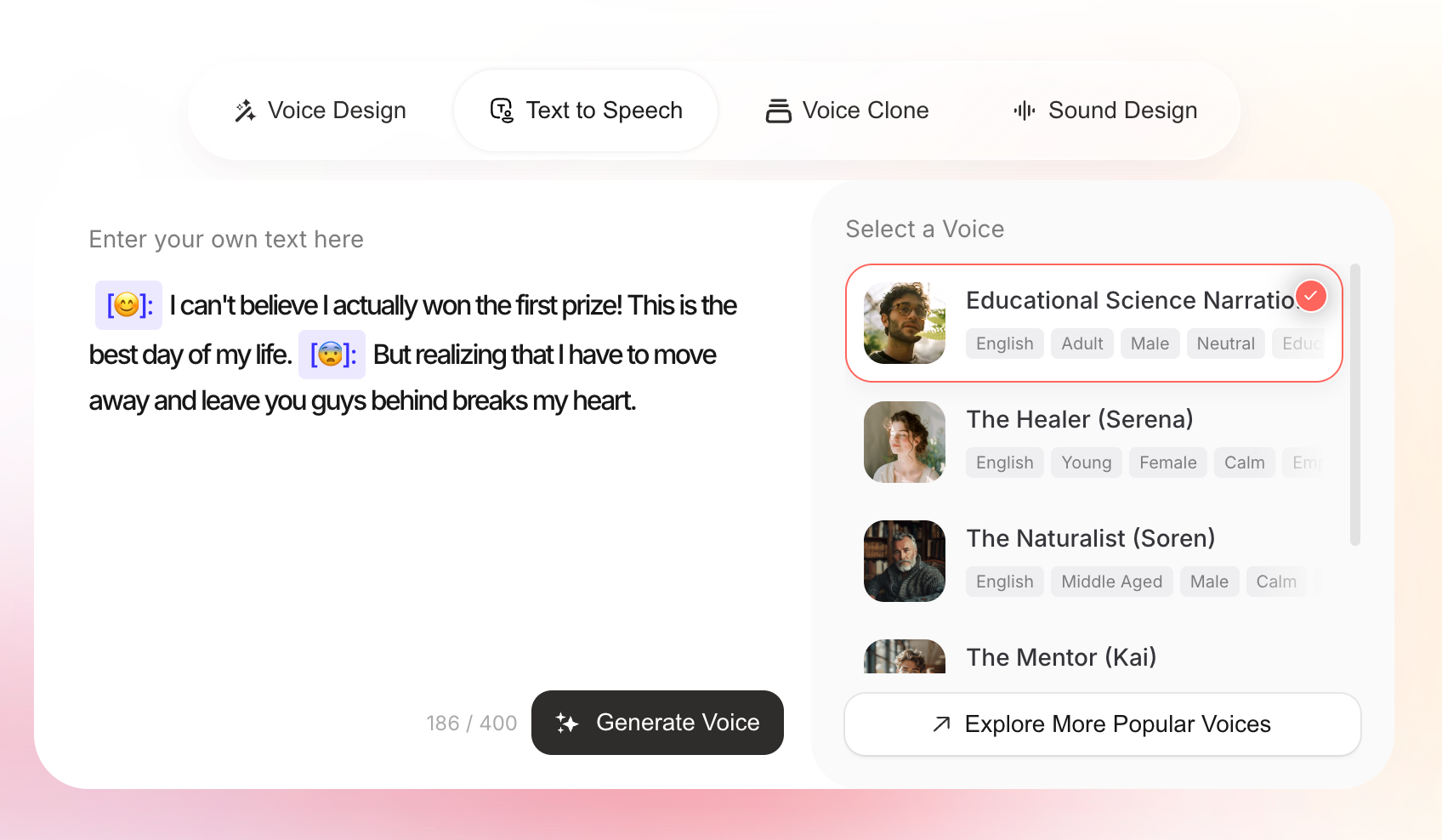
Noiz AI generates voices from text with fine-grained emotional control. Place emojis inline with your script and the AI adjusts pitch, pacing, and tone at each marker. The built-in studio layers background music and sound effects on top of the voice, so a finished audio clip comes out of one tool instead of three. Over 150 voice models cover narration, character work, and multilingual dubbing. Free tier available with starter credits.
How to get started:
- Go to noiz.ai and create a free account
- Open the TTS creation panel and paste or type your script
- Place emojis at key moments in the text to set the emotional tone: a 😢 for sorrow, a 😡 for intensity, a 😊 for warmth
- Choose a voice model from the library, filtered by style tags like "narrative," "cinematic," or "podcast"
- Click "Generate" and listen to the result, then adjust emoji placement to fine-tune delivery
- Add background music and sound effects in the studio mixer for a polished audio scene
- Export the final audio file or use the API to integrate voice generation into your own app
URL: https://noiz.ai
What To Watch Next (24-72 hours)
- Google: Cuts Veo 3.1 Fast video generation pricing on Monday, with 720p dropping to $0.10 per second. The move undercuts competitors days after OpenAI shut down Sora, signaling Google wants to own the developer video-generation market.
- Dubai AI Festival: Opens Tuesday at Dubai World Trade Centre with 20,000 attendees and 500 investors from 120 countries. Government-backed and co-organized with the UAE Minister of State for AI, making it the clearest signal of Gulf AI ambitions this quarter.
- GITEX AI Asia: Starts Wednesday at Marina Bay Sands with 23,000 tech leaders from 110 countries. Sessions on ASEAN AI policy and enterprise adoption will show how Southeast Asia is positioning itself as more than a manufacturing base for chips.
🛠️ 5-Minute Skill: Turn Scattered Notes Into a Pre-Meeting Brief
You have a call in 90 minutes with a client you last spoke to six weeks ago. The context is split across an email thread, a Slack DM, and three bullet points in your notebook. You need to walk in sharp.
Your raw input:
Email thread: client concerned about Q2 deliverables slipping.
Slack DM from your PM: "their CFO is joining this call, first time."
Notebook: they mentioned budget review in March, want to consolidate
two vendors, and the champion internally is the VP of Ops.
The prompt:
From these notes, build a pre-meeting brief: (1) who will be in
the room and what each person likely cares about, (2) the one
issue most likely to dominate the call, (3) three talking points
that move the conversation forward. Under 100 words.
What you get back:
Room: VP of Ops (your champion, wants consolidation proof), CFO (first appearance, evaluating spend).
Dominant issue: Q2 timeline. The CFO joining signals budget scrutiny, not just curiosity.
Talking points: 1. Open with revised timeline and what changed. 2. Frame consolidation as cost reduction the CFO can model. 3. Ask the VP of Ops to confirm internal wins since last quarter.
Why this works
Meeting prep fails when you read old threads instead of synthesizing them. The prompt forces a shift from "what happened" to "what will each person want to hear."
What to use
Claude: Better at reading between the lines on attendee motivations.
ChatGPT: Faster at structuring clean briefing formats.
AI & Tech News
North Korean Hackers Steal $270 Million from Drift in Six-Month Impersonation
Suspected North Korean state actors stole $270 million from decentralized finance platform Drift after posing as a legitimate quantitative trading firm for six months. The attackers deposited over $1 million of their own capital, held in-person meetings across multiple countries, then exploited lending and margin-trading vulnerabilities.
Ransomware Surge Forces Companies to Hire Professional Negotiators
Companies facing a sharp rise in ransomware attacks are contracting cybersecurity firms like Palo Alto Networks and Sophos for dedicated ransom negotiators. The specialists mediate directly with attackers during incidents, reflecting how the frequency and sophistication of attacks now demand a standing professional response.
New Yorker Investigation Questions Whether Sam Altman Can Be Trusted
A New Yorker investigation drawing on more than 100 interviews examines persistent concerns about the OpenAI CEO's truthfulness and leadership. One board member described him as "unconstrained by truth," while the report details internal memos that triggered his 2023 firing and safety teams the company has since shuttered.
OpenAI and Anthropic Show Investors Profitability Path as Inference Eats Half of Revenue
Internal documents reviewed by the Wall Street Journal show both companies have projected profitability with and without training costs included. Inference expenses at both firms consume more than half of revenue, highlighting the central cost challenge ahead of potential public listings.
Wipro Acquires Olam's IT Arm for $375 Million, Signs $1 Billion Services Deal
Indian IT firm Wipro agreed to acquire Mindsprint from Singapore-based Olam for $375 million while signing an eight-year, $1 billion outsourcing contract. Wipro shares rose 3.2% on the announcement.
Apple Removes Dorsey's Bitchat from China App Store After Government Order
Jack Dorsey confirmed Apple removed his Bluetooth peer-to-peer messaging app from China's App Store following demands by the Chinese Cyberspace Administration. Bitchat enables offline, censorship-resistant communication and has been deployed during protests in Iran, Uganda, and Indonesia since its July 2025 launch.
Netflix Launches VOID, an AI Model That Erases Objects and Simulates Scene Physics
Netflix introduced VOID, a vision-language model that removes objects from video and simulates how remaining elements would physically behave in their absence. The system integrates visual reasoning with language understanding for realistic post-production editing.
Japan Proves Physical AI Works Outside the Lab as Labor Shortages Bite
Facing acute workforce constraints, Japan is rapidly scaling robots and AI-powered machines through a hybrid model where startups develop technology and corporations handle deployment at scale. Healthcare, logistics, and manufacturing are seeing tangible results.
Cybersecurity Pioneer Mikko Hypponen Pivots from Malware to Anti-Drone Defense
Finnish security veteran Mikko Hypponen, known for decades of work at F-Secure combating threats like ILOVEYOU and Conficker, has shifted to developing counter-drone technologies for law enforcement and military applications. His new focus reflects the growing urgency of drone threats in sensitive environments.
🚀 AI Profiles: The Companies Defining Tomorrow
AKASA
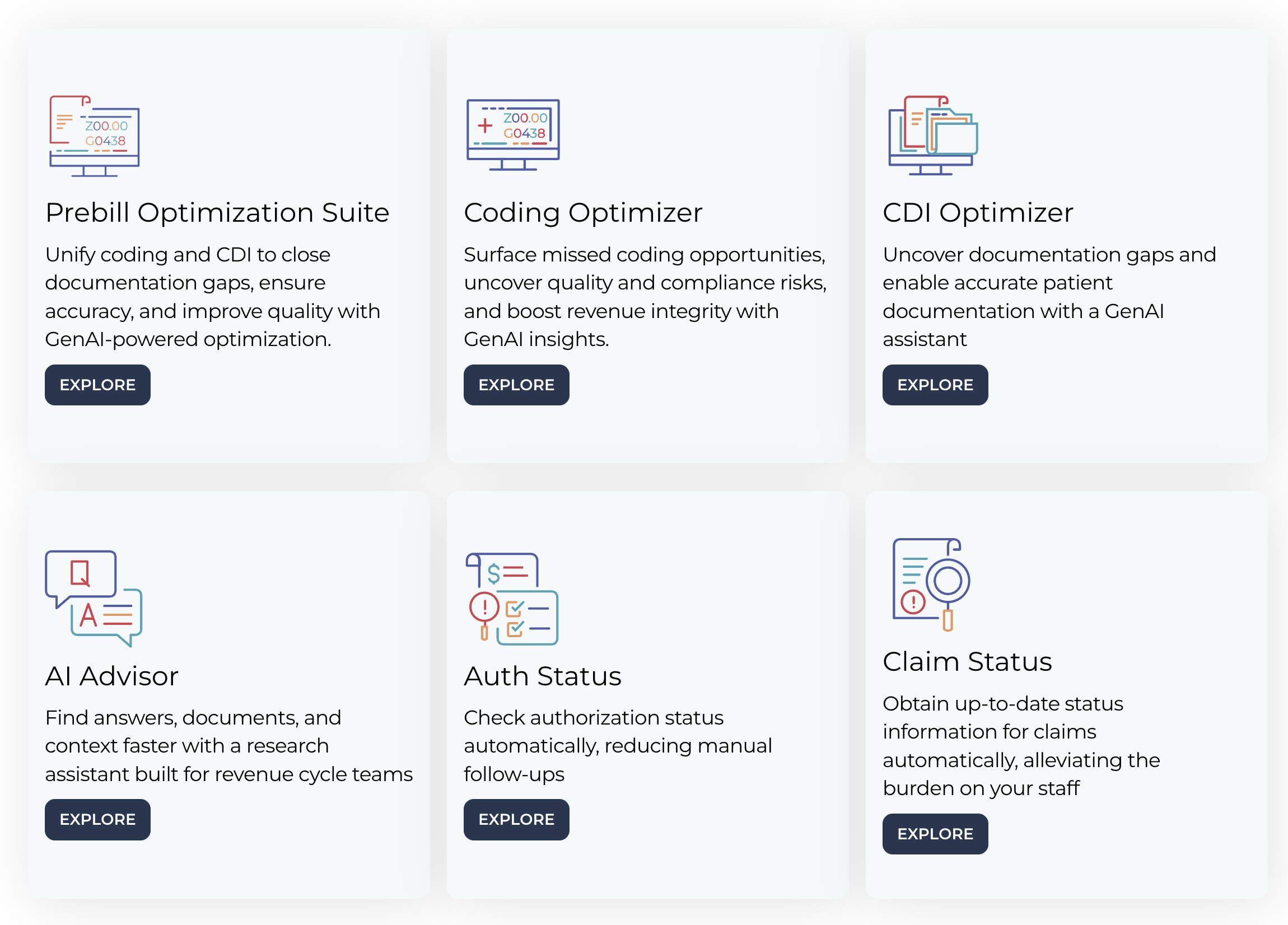
AKASA automates the paperwork that keeps American hospitals from getting paid. The San Francisco startup uses generative AI to handle insurance pre-authorizations, medical coding, and claims management for health systems including Cleveland Clinic. 🏥
Founders
Malinka Walaliyadde and Varun Ganapathi co-founded AKASA in 2019. Walaliyadde was a partner at Andreessen Horowitz, where he worked on nearly $250 million of healthcare investments across about 20 companies. Ganapathi holds three Stanford degrees, including a PhD in artificial intelligence, and previously founded two AI companies (acquired by Google and Udacity). The company has roughly 200 employees.
Product
AI agents process prior authorizations, assign medical codes, manage claim submissions, and appeal denials. The platform integrates with Epic and Cerner, the two electronic health record systems that run 80% of US hospitals. Unlike robotic process automation tools that follow rigid scripts, AKASA's generative AI reads clinical notes, understands payer rules, and adapts when insurers change requirements. The company says customers see 50% faster prior authorization turnaround and significant reductions in claim denials.
Competition
Waystar went public and dominates revenue cycle technology for large health systems. R1 RCM was acquired by TowerBrook for $8.9 billion. Olive AI raised $848M before running into trouble and selling assets. Vim and Cohere Health target prior authorization specifically. AKASA differentiates by using generative AI rather than RPA, handling complexity that scripted bots cannot. The risk: Waystar has the customer relationships, and Epic could build this natively.
Financing 💰
Over $205 million raised across three rounds. Investors include Andreessen Horowitz, Coatue Management, BOND Capital, and Costanoa Ventures. Black Book Research ranked AKASA the #1 most promising healthcare RCM startup of 2025.
Future ⭐⭐⭐
Revenue cycle is healthcare's least glamorous problem and its most expensive one. US hospitals spend $250 billion annually just processing payments. Cleveland Clinic choosing AKASA validates that generative AI can handle the complexity that defeated an entire generation of RPA tools. The $205 million is modest compared to Olive AI's $848 million flame-out, which might be a feature, not a bug. AKASA needs to prove it can scale across health systems without the integration nightmares that killed Olive. If it works, AKASA owns the plumbing under American healthcare finance. If it doesn't, it joins a long list of companies that underestimated how hard hospitals are to sell to. 💰
🔥 Yeah, But...
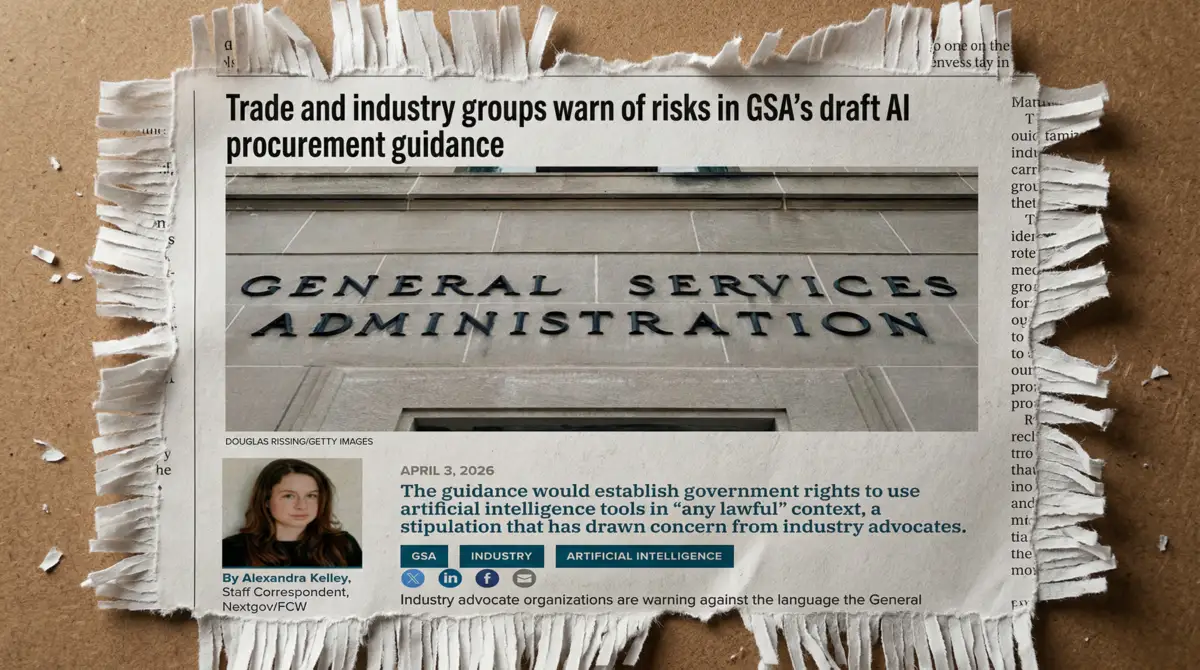
The General Services Administration closed public comments Thursday on a draft procurement clause that gives the federal government the right to use any purchased AI system for "any lawful government purpose," overriding vendor terms of service. The clause was drafted after Anthropic refused to let the Pentagon use Claude for surveillance of Americans or lethal autonomous weapons. Industry groups called the language a "sledgehammer."
Sources: Nextgov, April 3, 2026 | Lawfare, March 2026
Our take: One AI company told the Department of Defense it would not build weapons or spy on citizens. The government's response was not to agree, disagree, or negotiate. It was to draft a contract clause ensuring that no AI company can say no again.
The language is specific: where vendor terms conflict with federal terms, the federal terms win. In practice, this means your acceptable-use policy is a suggestion, not a boundary. Anthropic drew a red line. Washington drew a bigger one around it.
The system learned from the disagreement exactly what procurement lawyers learn from every disagreement. Not "how do we find common ground?" but "how do we make the next contract airtight?"

Marcus Schuler
Tech translator with German roots who fled to Silicon Valley chaos. Decodes startup noise from San Francisco. Launched implicator.ai to slice through AI's daily madness—crisp, clear, with Teutonic precision and sarcasm. E-Mail: [email protected]