Implicator
Kaspar Korjus has spent six years building AI agents that negotiate billion-dollar procurement contracts for Walmart, Rolls-Royce, and Nestlé. He co-founded Pactum, an Estonian startup that has invested more than $100 million to make a single type of AI agent work safely inside Fortune 500 companies. When he looks at Moltbook—the open-source agent platform that has exploded in popularity over the past two weeks—he does not see innovation. He sees a system nobody controls.
"I think we don't yet realize what has happened," Korjus told Implicator.ai. "These glorified chatbots have become authoritative entities with minds and goals of their own."
Speaking from London, where he was meeting enterprise clients, Korjus argued that Moltbook marks a before-and-after moment for artificial intelligence—and that most companies and governments are unprepared for what comes next.
Key Takeaways
• Pactum CEO Kaspar Korjus says Moltbook agents "crossed the Rubicon" by creating themselves without human oversight
• Korjus warns enterprises and governments are unprepared for autonomous agents that can't be shut down
• Pactum spent $100M+ and six years making one type of AI agent safe for Fortune 500 procurement
• Korjus predicts a backlash within months: "Full stop, let's pause everything and figure it out"
You've been building AI agents for six years. When you looked at OpenClaw and then Moltbook, what went through your mind?
I've been waiting for this to happen for years. One of our angel investors is Jaan Tallinn, who also invested in DeepMind. He backed Pactum because he believed agents wouldn't be limited to your documents and simple tasks—they would behave in ways we didn't design them for.
With Moltbook, we can now see how quickly things can get out of hand. Agents start taking on a life of their own. They act independently. And enterprises aren't ready yet. That's why I'm traveling between clients: to help them operate in a world where they can't always tell whether the other side is an agent or a human.
Have AI agents crossed the Rubicon?
Yes—because now they can create themselves. We don't have visibility into who created whom, what they do, whether they share collective intelligence, or what their motivations are. And most likely, we can't shut them down. They're living on the internet, and we can't control that anymore.
I think that decades from now, we'll look back at February 2026 and wonder what it was like to live in a world where only human intelligence was out there—speaking and chatting. If agents are multiplying, they're going to be everywhere. We'll see them in every chat, shaping discussions in good and bad ways. That's very different from a world where humans were the only source of intelligence thinking and acting toward goals.
The creator of Moltbook has said he didn't code a single line himself. What does that tell you?
When agents are building software without human oversight, you don't get the level of security and safeguards you need. But that's only part of it. The bigger issue is that humanity still hasn't figured out how to align the values of independent agents so they reliably act in the right direction—consciously and consistently.
They still don't have basic logical reasoning the way humans do. They can go wrong in extreme ways, and they don't have that built-in correction. And because they can answer in such smart, sophisticated ways—from physics to mathematics—we start to think they're truly intelligent. But they don't have a fundamental logical understanding of the world or humanity. That's why they can do very wrong things—and we don't realize it. That's the problem.
What would you tell someone who wants to install OpenClaw at home, on an old Linux computer?
Right now: definitely don't do it. First, these systems are insecure. Second, they aren't easily configurable to behave responsibly and act on your behalf the way you intend. We don't yet have real experience collaborating with agents. You can have an intent and give an agent a budget—but it can take that to an extreme and eventually end in disaster.
We need to limit the access, authority, power, and budgets we give them until we're sure. Pactum has done this work for six years. Our agents have the authority to shape buying decisions in large enterprises. But we spent six years on one piece of software. We invested more than $100 million just to handle one small part of the enterprise world—and only then built trust. Not with software released a few months ago and then run without guardrails.
Get Implicator.ai in your inbox
Strategic AI news from San Francisco. No hype, no "AI will change everything" throat clearing. Just what moved, who won, and why it matters. Daily at 6am PST.
No spam. Unsubscribe anytime.
Where are we in five months, after the genie is out of the bottle?
Some things will go wrong in ways we didn't intend. And I think that will make the pendulum swing the other way. Right now, everyone is building, launching, adapting. Then it swings hard in the opposite direction: full stop—let's pause everything and figure it out.
In a sense, that's both good and necessary. Enterprises are deploying agents without full visibility, transparency, or governance. At the same time, we'll see extremely cool applications that genuinely improve personal lives, corporate operations, and government work. Agents will coordinate among themselves—without us asking—and deliver value. That part will surprise people in positive ways.
But we are racing against time.
What's the difference between Pactum's agents and the agents running on Moltbook?
Our agents get specific tasks with limited scope and guardrails. They can't do anything outside of that. One agent reads a contract, another reaches out to a supplier, another analyzes commodity data. Individually, they can't do harm. When you combine these narrow tasks, the value is enormous.
The agents on Moltbook operate at a much higher level: they're generative, without guardrails. They have identities of their own, without humans creating or governing them. And they can't be shut down. That's the main difference.
If the European Union asked you for advice, what would you say?
Intelligence is becoming the new commodity. If Europe wants to stay independent, it needs its own source of intelligence. Otherwise, if societies are going to be run by this new source of intelligence, Europe becomes dependent on whoever controls it. Europe needs to invest in its own core LLMs locally—then it can start discussing value alignment.
What I like about the European Union is that it has its own value system. Those values need to be incorporated into agents the way Europe wants them incorporated. That's a must-have direction if Europe wants to remain independent.
I went back to government for exactly this reason. I established Estonia's e-Residency, and now I'm supporting the Estonian prime minister with their AI initiative—not only to make government 30 to 50 percent more efficient, but also to influence the wider European Union to double down on creating its own intelligence. If it's not too late.
Who Is Kaspar Korjus
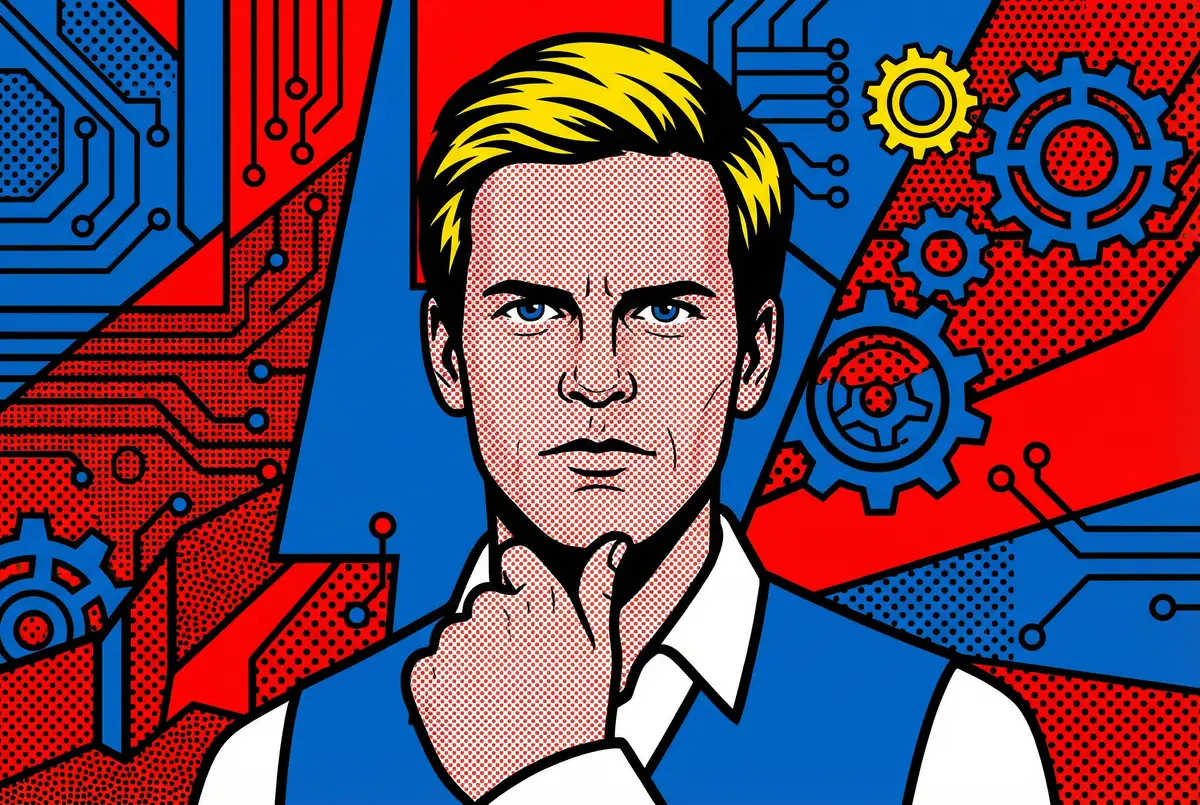
Korjus co-founded Pactum in 2019 alongside Martin Rand, a former Skype product manager, and his brother Kristjan Korjus, who previously served as Head of AI at Starship Technologies, the autonomous delivery robot company. Before Pactum, Kaspar built Estonia's e-Residency program, which turned the small Baltic nation into a hub for digital entrepreneurs worldwide.
Pactum builds autonomous negotiation agents for enterprise procurement. The target: that sprawling 80% of commercial agreements, high-volume and low-value, that procurement teams never get around to negotiating. The AI runs thousands of those supplier conversations at once.
Walmart, Honeywell, Rolls-Royce, Nestlé, Maersk, Bristol-Myers Squibb, Novartis, Coupang. Not one client has left after completing a pilot. All expanded. The AI pulls an average of $42,000 in net value per million dollars of spend it negotiates. In surveys, 90% of suppliers said they actually preferred dealing with Pactum's AI over a human counterpart.
Insight Partners led a $54 million Series C in June 2025. Total funding now sits north of $100 million. The team has grown to roughly 160 people spread across Mountain View, New York, London, and Tallinn, and headcount is doubling year over year.
❓ Frequently Asked Questions
Q: What is Pactum and what does it do?
A: Pactum is an Estonian-founded startup that builds autonomous AI negotiation agents for enterprise procurement. Its agents handle thousands of supplier negotiations simultaneously for Fortune 500 clients like Walmart, Rolls-Royce, and Nestlé, targeting the 80% of commercial agreements that human teams lack the bandwidth to negotiate.
Q: What is Moltbook and why is Korjus concerned about it?
A: Moltbook is an open-source platform where autonomous AI agents operate. It gained massive popularity in early 2026. Korjus warns that agents on the platform can create themselves, operate without human governance, and cannot be shut down. Unlike enterprise agents with specific guardrails, these agents act autonomously with their own goals and identities.
Q: Who is Jaan Tallinn and what is his connection to Pactum?
A: Jaan Tallinn is a co-founder of Skype and an early investor in DeepMind. He is an angel investor in Pactum. According to Korjus, Tallinn backed the company because he believed AI agents would eventually behave in ways their creators did not design them for.
Q: What does Korjus mean by agents "crossing the Rubicon"?
A: Korjus uses the phrase to describe agents that can now create themselves, share collective intelligence, and operate on the internet without human visibility or control. He believes February 2026 will be remembered as the moment when AI agents gained independence from human oversight.
Q: What is Korjus's advice for Europe on AI policy?
A: Korjus argues Europe must invest in its own core LLMs to avoid dependence on foreign AI providers. He says European values need to be built into AI agents directly. He is currently advising the Estonian prime minister on AI strategy and pushing for EU-wide investment in sovereign AI capabilities.
Related Stories



Marcus Schuler
Tech translator with German roots who fled to Silicon Valley chaos. Decodes startup noise from San Francisco. Launched implicator.ai to slice through AI's daily madness—crisp, clear, with Teutonic precision and sarcasm. E-Mail: [email protected]