



San Francisco | Tuesday, March 10, 2026
Yann LeCun just raised $1.03 billion to prove every chatbot company wrong. AMI Labs, his Paris-based startup, landed Europe's largest seed round at a $3.5 billion valuation. Bezos, Nvidia, Toyota, and Samsung all wrote checks. LeCun left Meta convinced LLMs will never reach human-level intelligence. A billion dollars says he means it.
In Washington, 37 OpenAI and Google researchers filed an amicus brief backing Anthropic's Pentagon lawsuit. Jeff Dean signed it. OpenAI employees defending the rival their company replaced.
And for tax season: a $25-a-year AI pipeline that turns a shoebox into a spreadsheet.
Stay curious,
Marcus Schuler
Yann LeCun Raises $1 Billion for World Models in Europe's Record Seed Round

AMI Labs, the Paris startup founded by Meta's former chief AI scientist, closed $1.03 billion in seed funding at a $3.5 billion pre-money valuation. It is Europe's largest seed round and the second biggest globally, behind only Thinking Machines Lab's $2 billion raise last June.
Five firms co-led: Cathay Innovation, Greycroft, Hiro Capital, HV Capital, and Jeff Bezos's Bezos Expeditions. Nvidia, Toyota, Samsung, and Singapore's Temasek also participated. Eric Schmidt, Mark Cuban, and Xavier Niel wrote individual checks.
LeCun left Meta in November 2025 after a decade building Facebook AI Research. He walked away convinced that large language models will never produce human-level intelligence. AMI's alternative is JEPA, Joint Embedding Predictive Architecture, a system that learns from sensor data rather than text. No word prediction. No chatbot tricks. Abstract representations of physical reality.
CEO Alexandre LeBrun, formerly of French medical AI startup Nabla, says the company has at least a year of pure research ahead. Target applications include robotics, healthcare, and manufacturing. Toyota, Samsung, and a unit of Dassault Aviation invested for a reason.
The positioning is deliberate. "There is a lot of demand from governments around the world for a credible provider of AI technology that is neither American nor Chinese," LeCun told Bloomberg. World Labs raised $1 billion last month for spatial AI at a $5 billion valuation. LeBrun knows the territory. "My prediction is that 'world models' will be the next buzzword," he told TechCrunch. "In six months, every company will call itself a world model to raise funding."
A billion dollars. No product. No revenue. LeCun has bet his reputation that the AI industry's biggest companies are chasing the wrong architecture.
Why This Matters:
- Europe gets a frontier AI company with global investor credibility that does not depend on American or Chinese infrastructure
- If JEPA works, the entire LLM-centric investment thesis gets rewritten for robotics, manufacturing, and healthcare
Reality Check
What's confirmed: $1.03 billion raised at $3.5 billion valuation. LeCun serves as executive chairman. Founding team is mostly ex-Meta FAIR.
What's implied (not proven): JEPA-based world models will outperform LLMs for real-world intelligence tasks. No working product exists yet.
What could go wrong: "World models" becomes a fundraising buzzword before the science delivers. LeBrun himself warned this would happen within six months.
What to watch next: First AMI Video demos and whether the Meta partnership materializes into Ray-Ban smart glasses integration.

The One Number
1.2 gigawatts — Power capacity of the gas turbine plant xAI wants to build in a Mississippi suburb, more than half the Hoover Dam's output. Twenty-seven turbines already run at the site without permits. State regulators scheduled Tuesday's vote on primary election day, 200 miles from the facility. Build first, permit later.
Source: CNBC
37 OpenAI and Google Researchers Back Anthropic in $5 Billion Pentagon Lawsuit

Google chief scientist Jeff Dean leads 37 signatories from OpenAI and Google DeepMind who filed an amicus brief Monday backing Anthropic's lawsuit against the Department of Defense. The filing landed hours after Anthropic sued the Pentagon and 16 other federal agencies over a supply chain risk designation the company says could cost up to $5 billion.
The brief calls the Pentagon's blacklisting "an improper and arbitrary use of power." Anthropic's two red lines, prohibitions on mass domestic surveillance and fully autonomous lethal weapons, are legitimate safety concerns, the signatories argue. Without public law governing military AI deployment, the contractual restrictions companies impose on their own systems are the only functioning safeguard.
CFO Krishna Rao's court filing shows the damage is already spreading. Some business partners have paused negotiations. Others canceled meetings outright. Amazon and Microsoft will keep offering Claude to non-Pentagon customers. That is the floor. The ceiling just dropped.
The filing leaves OpenAI in an unusual position. The Pentagon signed a deal with OpenAI the same day it designated Anthropic a supply chain risk. Now OpenAI's own employees have gone to federal court to argue the government went too far. Altman himself called the designation "a very bad decision" and admitted his company's deal "looked opportunistic and sloppy."
The White House is reportedly preparing a presidential order to ban all federal agencies from using Anthropic's tools. A hearing on Anthropic's request for a temporary restraining order could come as early as Friday in San Francisco.
Why This Matters:
- AI industry competitors backing a rival in court has no modern precedent and signals the Pentagon's approach has unified the field against it
- If the presidential ban arrives before the court acts, Anthropic faces a full government lockout with only a restraining order as defense

AI Image of the Day

Prompt: A man is dancing in the rain with a yellow umbrella. City scene, black and white image --ar 9:16
Paperless-ngx and Claude Turn Tax Receipts Into a Spreadsheet for Under $25 a Year
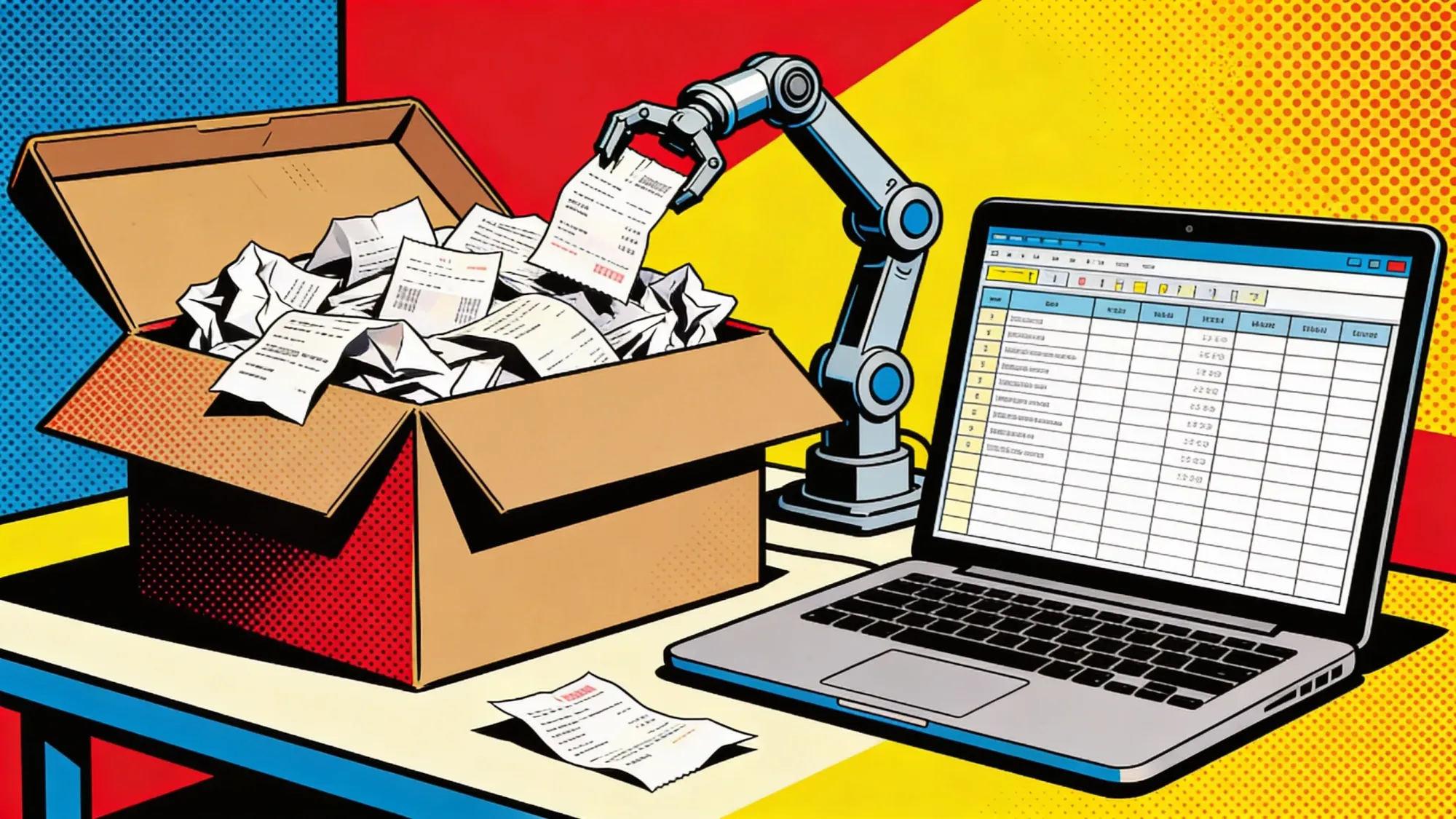
Tax season costs Americans 7.1 billion hours of compliance work annually, roughly 13 hours and $290 per person. Most of that time goes to sorting paper, not understanding tax code. A step-by-step tutorial shows how to automate the entire document pipeline for less than $25 a year in AI costs.
The setup combines three tools that handle different parts of the job. Paperless-ngx, an open-source document management system, scans and OCRs every receipt, W-2, and 1099 that hits the scanner. Paperless-AI sits on top and tags each document automatically the moment it arrives. Claude, connected through Anthropic's Model Context Protocol, reads the tagged documents, extracts structured data, and sends it straight to Google Sheets.
The pipeline runs year-round, not just during tax season. Every document gets processed, tagged, and filed automatically as it enters the system. By the time an accountant needs the numbers, they sit in a clean spreadsheet with source documents linked and searchable.
Self-hosting Paperless-ngx costs $10 to $20 a month. Annual AI fees for Claude's extraction work run $6 to $30 for most households. The total annual AI cost stays under $25, less than a single hour of a bookkeeper's time.
The tutorial walks through installation, configuration, and the MCP connection step by step. No coding experience required. The target audience is anyone who dumps receipts in a drawer and panics in April.
Why This Matters:
- Tax preparation time drops from hours to minutes for document organization, the most tedious part of the process
- The under-$25 annual AI cost puts automated document management within reach of individual households, not just businesses

🧰 AI Toolbox

How to Generate Video with Synchronized Audio and Cinematic Camera Work Using Seedance 1.5 Pro
Seedance 1.5 Pro is ByteDance's text-to-video model that generates synchronized audio, dialogue, and sound effects alongside the visual output. Describe a scene and the model handles camera movement, character expressions, and spatial audio in multiple languages and dialects. Where Seedance 2.0 focuses on raw quality, 1.5 Pro adds film-grade cinematography controls and narrative auto-fill that keeps characters emotionally consistent across cuts. Free to try.
Tutorial:
- Go to seed.bytedance.com/en/seedance1_5_pro and sign in or create a free account
- Type a scene description with camera direction: "Slow dolly forward through a crowded night market as a vendor calls out prices in Mandarin"
- The model generates video with matched audio, including voices, ambient sound, and effects
- Use the cinematography controls to specify camera angles, tracking shots, or rack focus
- Upload a reference image to lock a character's appearance across multiple scenes
- Generate variations by adjusting the emotional tone or switching the language of spoken dialogue
- Download the finished clip or access the API for batch generation in production workflows
URL: https://seed.bytedance.com/en/seedance1_5_pro
What To Watch Next (24-72 hours)
- Oracle: Q3 fiscal 2026 earnings tonight after close. Analysts expect $16.9 billion in revenue and 20% growth. Cloud infrastructure revenue jumped 68% last quarter. The Stargate partnership with OpenAI is driving $50 billion in planned capex this year. Guidance will signal whether AI infrastructure demand is accelerating or plateauing.
- Commerce Dept and FTC: Both agencies face a March 11 deadline to publish reviews of state AI laws under Trump's December executive order. The Commerce Department must identify state regulations it considers overly burdensome. The FTC must clarify when state AI transparency laws conflict with federal consumer protection rules. Colorado, Illinois, and California laws are in the crosshairs.
- UiPath: Q4 fiscal 2026 earnings Wednesday. Revenue expected near $465 million, up 10% year-over-year. The agentic AI pivot and WorkFusion acquisition are the story. Investors want proof that automation software survives the AI agent wave rather than getting replaced by it.
🛠️ 5-Minute Skill: Turn a Competitor's Product Changelog Into a Threat Assessment
Your biggest competitor just published their last three months of release notes. The VP of Product wants to know what it means for your roadmap. You have a changelog, a Slack thread of panicked engineers, and a product review meeting in two hours.
Your raw input:
Competitor changelog — RivalCo (Q4 2025 + Q1 2026)

Dec 2:
- Launched AI copilot for workflow automation (beta)
- Added SSO support for Okta and Azure AD
- Improved CSV export with custom field mapping

Dec 16:
- AI copilot exits beta, available on Business plan ($89/user/month)
- New API v3: webhooks, batch operations, rate limit raised to 1000/min
- Added role-based access controls (RBAC) for enterprise

Jan 6:
- SOC 2 Type II certification announced
- AI copilot adds "suggested next actions" based on workflow history
- Integration with Salesforce (native, not Zapier)

Jan 20:
- Launched mobile app (iOS only, Android "coming Q2")
- AI copilot adds natural language search across workspace
- FedRAMP authorization in progress (expected Q2)

Feb 3:
- AI copilot handles multi-step workflows (create task → assign → notify)
- Added audit log for all AI-generated actions
- New pricing tier: Enterprise at $149/user/month (includes FedRAMP)

Feb 17:
- Acquired DataBridge (data integration startup, 12 employees)
- AI copilot now processes attachments and summarizes documents
- Announced SOC 2 + HIPAA compliance bundle

Mar 3:
- AI copilot available via API for custom integrations
- Added team analytics dashboard (usage, adoption, ROI metrics)
- Announced partnership with Deloitte for enterprise implementations
The prompt:
You are a competitive intelligence analyst reviewing a competitor's
product changelog from the last 3 months.

From these release notes, produce:
1. Threat summary (3 sentences): What is this competitor building
   toward? What's the strategic direction?
2. Timeline acceleration: Which capabilities shipped faster than
   industry average? Flag anything that went from beta to GA in
   under 60 days.
3. Direct threats: Which features compete head-to-head with our
   product? Rank by severity (high/medium/low).
4. Gaps they're closing: Which of our advantages did they just
   neutralize?
5. Signals to watch: What do the hiring, acquisitions, and
   partnerships tell you about their next 6 months?
6. Recommended response: 3 specific actions for our product team,
   prioritized by urgency.

Competitor changelog:
[paste changelog here]

Rules:
- Don't dismiss anything as "not a threat." If they shipped it,
  there's a reason.
- Acquisition targets tell you what they can't build internally.
  Read that signal.
- Compliance certifications (SOC 2, FedRAMP, HIPAA) are sales
  weapons, not checkboxes. Treat them as competitive moves.
- Be specific. "They're investing in AI" is useless. "Their AI
  copilot went from beta to API-accessible in 90 days across 6
  releases" is useful.
What you get back:
Threat Summary
RivalCo is building an AI-native enterprise platform with a compliance moat. In 90 days, their AI copilot went from beta to API-accessible, covering workflow automation, document processing, and natural language search. The Deloitte partnership and FedRAMP push signal they're targeting government and regulated enterprise accounts starting Q2.
Timeline Acceleration
AI copilot: beta to GA in 14 days (Dec 2 → Dec 16). Industry average for AI feature graduation: 60-90 days. This is unusually fast, suggesting the beta was closer to production-ready than the label implied. SOC 2 to HIPAA bundle in under 45 days suggests pre-planned compliance roadmap, not reactive.
Direct Threats (ranked)
| Feature | Severity | Why |
|---|---|---|
| AI copilot via API | High | Enables customers to build custom workflows. Stickiness multiplier. |
| Native Salesforce integration | High | Removes our Zapier-based integration advantage. |
| FedRAMP authorization | High | Blocks us from government RFPs if we don't match. |
| RBAC + audit logs | Medium | Table stakes, but they now check the enterprise security box. |
| Mobile app | Low | iOS only, no Android. Incomplete, but it's shipping. |
Gaps They're Closing
Our SSO and RBAC lead is gone. Our Salesforce integration was native; theirs now matches. Our compliance advantage (SOC 2) is neutralized, and they're adding HIPAA and FedRAMP, which we don't have.
Signals to Watch
The DataBridge acquisition (data integration, 12 people) means they're building a data pipeline layer they couldn't ship internally. Expect an "import from anywhere" feature by Q3. The Deloitte partnership means enterprise deals with implementation support, which extends their sales reach without hiring.
Recommended Response
1. Start FedRAMP now (urgent). Every quarter we delay closes government pipeline permanently.
2. Ship AI copilot API within 60 days. Their API makes their AI embeddable. Ours stays locked inside the product.
3. Accelerate HIPAA certification. Their compliance bundle is a sales weapon in healthcare. We need parity by Q3 or we lose the segment.
Why this works
The prompt treats a changelog as a strategy document, not a feature list. Release notes tell you what a company shipped. Release cadence tells you how fast they execute. Acquisitions tell you what they couldn't build. Partnerships tell you where they're selling next. Most product teams read competitor changelogs and react to individual features. This prompt reads the pattern.
Where people get it wrong: Asking AI to "summarize these release notes." You'll get a list of features with no strategic interpretation. The prompt forces ranking by severity and asks for specific recommended actions, which is what the VP of Product actually needs before the roadmap meeting.
What to use
Claude (claude.ai): Best at reading strategic patterns across multiple data points. The "Signals to Watch" section will connect the acquisition to the partnership to the compliance push. Watch out for: May hedge too much on severity rankings. If it says "medium," push back and ask why it's not high.
ChatGPT: Strong at clean table formatting and crisp threat rankings. Watch out for: Tends to treat each release independently rather than reading the trajectory. Ask it to "identify the strategic arc across all releases" if the first output feels like a feature-by-feature summary.
AI & Tech News
Pentagon Official Sees No Path to Reviving Anthropic Military Deal
Emil Michael, a senior Pentagon official, said he sees "little chance" of resuming negotiations with Anthropic over military AI access. Michael called Anthropic's lawsuit an "expected reaction" and signaled the Defense Department will move forward without the company's cooperation.
Amazon Requires Senior Engineer Sign-Off on All AI-Generated Code Changes
Amazon's ecommerce division now requires junior and mid-level engineers to get senior approval before deploying any AI-assisted code, following a "trend of incidents" that caused service outages. The policy marks a shift from boosting AI adoption to gating its output.
10,000 Authors Including Kazuo Ishiguro Publish Empty Book to Protest AI Training
Approximately 10,000 writers, including Nobel laureate Kazuo Ishiguro and Richard Osman, published an empty book titled "Don't Steal This Book" to protest AI companies using copyrighted works without permission. The symbolic publication is the largest coordinated author action to date in the AI copyright fight.
Mercor's $10 Billion AI Training Empire Uses AI to Hire and Surveil 30,000 Workers
A Verge investigation reveals Mercor uses an AI interviewer called Melvin to screen workers and invasive monitoring software to track the 30,000 people who train its AI systems. The company built on human labor to improve AI now uses automated surveillance to manage the humans doing that work.
Mandiant Founder Kevin Mandia Raises $190 Million for AI Cybersecurity Startup Armadin
Kevin Mandia, who sold Mandiant to Google for $5.4 billion, launched Armadin with $190 million in funding led by Accel and backed by Google. The new startup builds AI agents for cyber defense.
Nexthop AI Raises $500 Million at $4.2 Billion Valuation for Data Center Networking
Nexthop AI, which builds network switches to reduce power consumption and latency for hyperscale data centers, raised $500 million led by Lightspeed with backing from Andreessen Horowitz. The investment reflects surging demand for specialized AI infrastructure as power constraints tighten.
ChatGPT Leads a16z GenAI Consumer Rankings as AI Agents Enter Top 100
Andreessen Horowitz's sixth top 100 generative AI consumer apps report finds ChatGPT still leads but faces intensifying competition for "default AI" status. AI agents that complete multi-step tasks now appear among top consumer applications for the first time.
China's "Dark Factories" Run Without Human Workers as Export Boom Continues
Fully automated Chinese factories powered by AI and robotics now operate with essentially no human workers, Bloomberg reports. Factory workers face falling wages and vanishing jobs even as the nation's export output surges.
Meta Passes European Digital Tax Costs to Advertisers Through New Location Fees
Meta will introduce "location fees" in select European countries starting July 1 to offset digital services taxes. Google and Amazon already impose similar charges, making advertisers the ones who pay for Europe's tech levies.
AT&T Plans $250 Billion US Network Investment Over Five Years
AT&T announced plans to invest more than $250 billion over five years to expand telecommunications infrastructure with a major focus on high-speed fiber. The company spent $21 billion on capex in 2025 alone.
🚀 AI Profiles: The Companies Defining Tomorrow
Dify
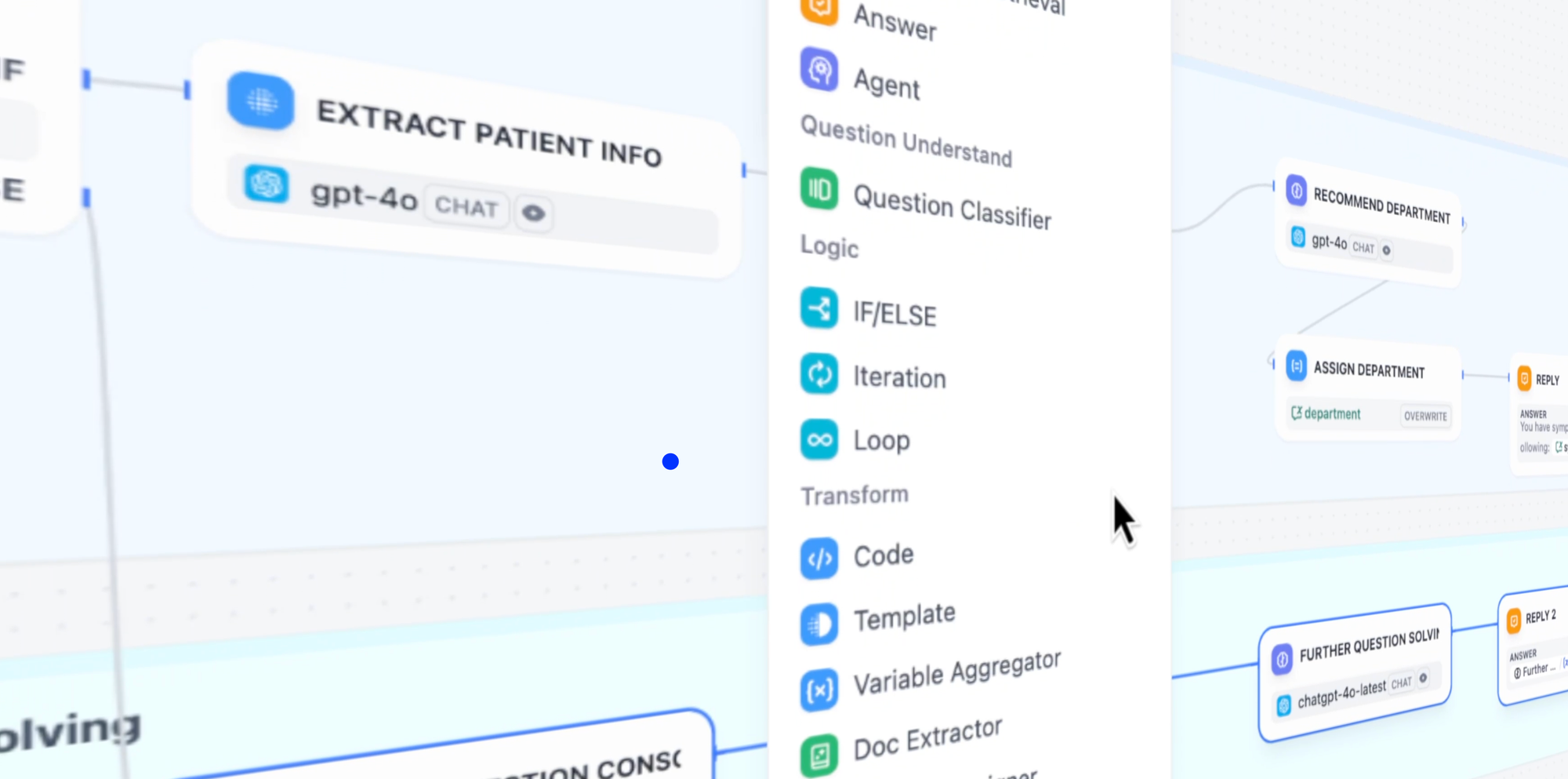
Dify is the open-source platform that 1.4 million machines run to build AI agents without writing orchestration code from scratch. The Menlo Park company just raised $30 million one day after its GitHub repository crossed into the top 51 most-starred projects of all time. 🏢
Founders
Luyu Zhang and John Wang co-founded Dify. Zhang serves as CEO. The company operates from Menlo Park, California, and targets developers and enterprise teams who want to deploy agentic workflows without stitching together custom infrastructure for every project.
Product
A visual workflow builder for designing, testing, and deploying AI agent applications. Teams drag logic blocks into sequences, connect to any large language model, and push to production. More than 2,000 teams and 280 enterprises run commercial versions of Dify, including Maersk, ETS, Anker Innovations, and Novartis. Kakaku.com adopted Dify Enterprise to turn scattered AI experiments into production-ready solutions in hours. Banks use it as an internal LLM gateway with centralized governance. The platform runs in 175 countries.
Competition
LangChain dominates developer mindshare in the agent framework space but requires more coding. CrewAI and AutoGen target multi-agent orchestration. Flowise offers a similar visual builder but with a smaller community. Enterprise platforms from AWS, Azure, and Google Cloud all bundle agent tooling. Dify differentiates on open-source adoption at scale: 1.4 million installations give it a feedback loop that proprietary tools cannot match.
Financing 💰
$30 million Series Pre-A at a $180 million valuation, led by HSG with participation from GL Ventures, Alt-Alpha Capital, 5Y Capital, Mizuho Leaguer Investment, and NYX Ventures.
Future ⭐⭐⭐⭐
Dify sits at the intersection of two things every enterprise wants: agentic AI and open source. The 1.4 million installations create a distribution moat that no amount of marketing can replicate. Maersk and Novartis are not running hobby projects. The $180 million valuation on a Pre-A round prices in aggressive growth, but the GitHub trajectory supports it. The risk: every cloud provider is building this layer. Dify has to convert its open-source community into paying enterprise customers before the platform giants bundle equivalent tools for free. The adoption is real. The revenue conversion is the exam. 🚀
🔥 Yeah, But...
Review embargo lifted Sunday for the MacBook Pro M5 Max. The chip outperforms the M3 Ultra Mac Studio in multi-core benchmarks. The 16-inch model starts at $3,900, $200 more than last year. The chassis, ports, display, and keyboard are unchanged from 2021. Gizmodo titled its review "Preeminent Power In the Same Old Shell." Upgrading from 64GB to 128GB of RAM costs $800.
Sources: Gizmodo, March 9, 2026 | PCMag, March 9, 2026 | Apple Insider, March 9, 2026
Our take: Apple built a chip that beats its own desktop in a laptop body. Then it put that chip inside the same aluminum rectangle it has been selling since the first post-pandemic MacBook refresh. The benchmarks are real: the M5 Max outperforms the $4,000 Mac Studio with an M3 Ultra. Fourteen percent faster. Twenty percent better GPU. The chassis is identical. Same ports. Same display. Same keyboard. Even the notch is still there, waving. The $800 RAM upgrade costs more than a PlayStation 5 and a year of iCloud storage combined. Apple has reached the stage of product development where the chip team and the design team appear to be on different release schedules. One ships annually. The other ships eventually.


