Implicator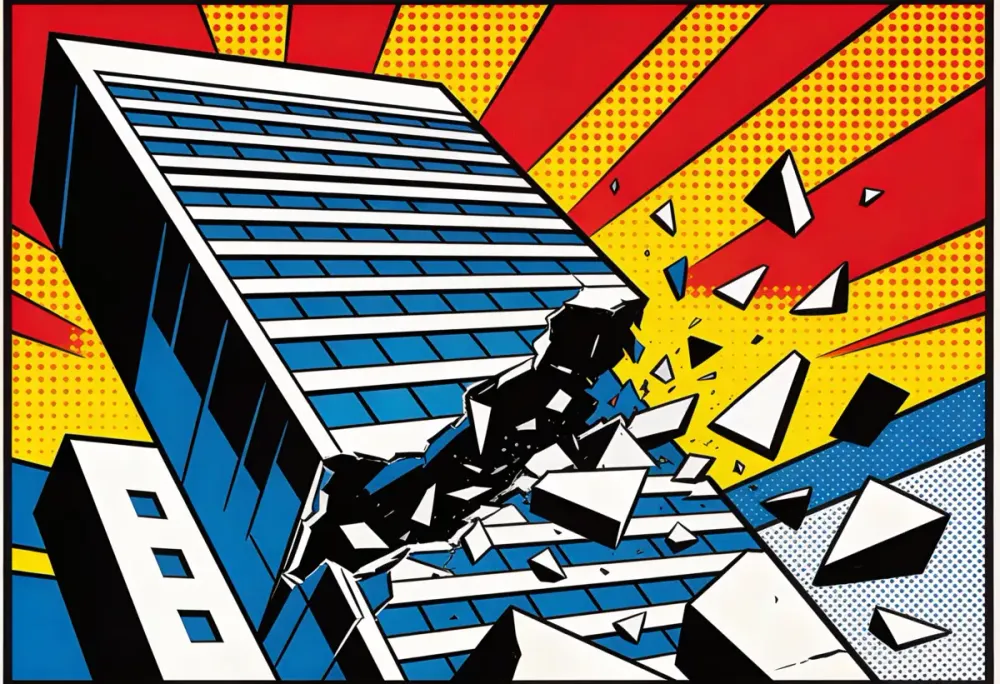
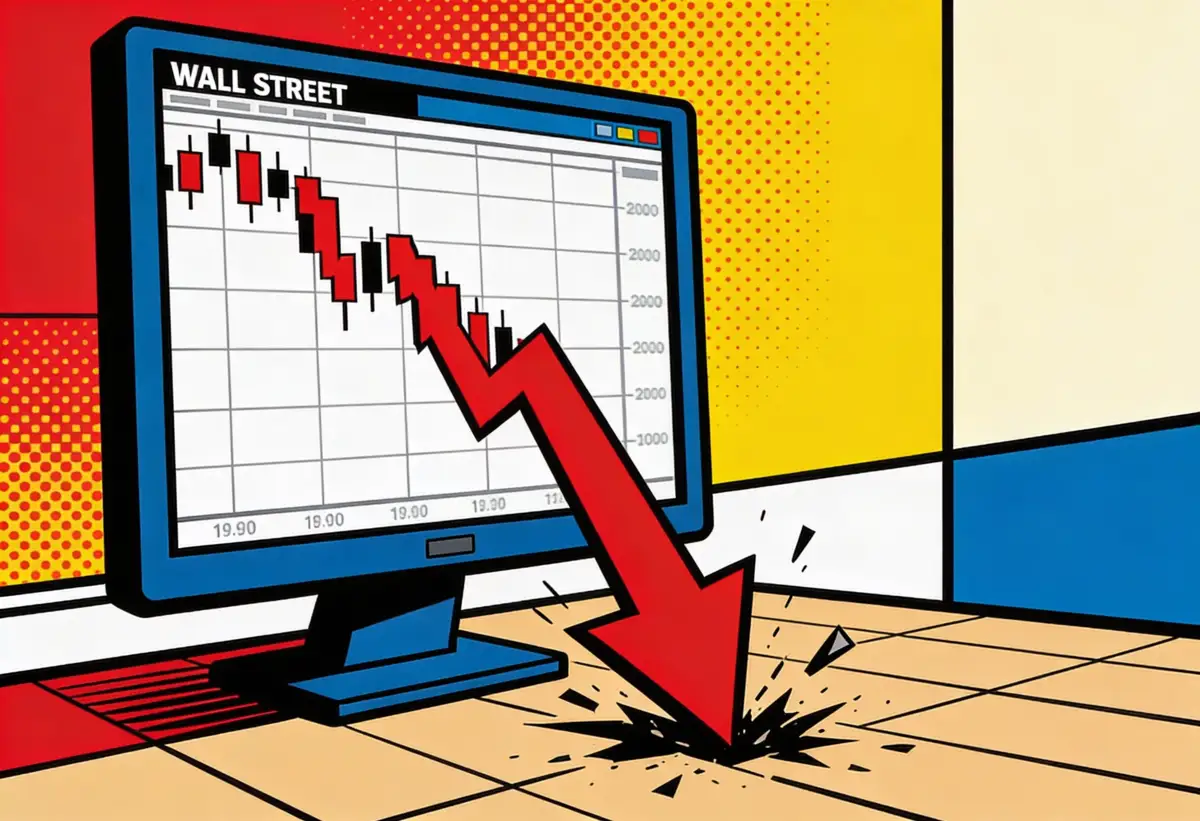
Anthropic released a legal plugin on Friday. By Tuesday afternoon, a Goldman Sachs basket of U.S. software stocks had dropped 6%, its worst single day since April's tariff shock. Thomson Reuters fell 16%. Relx, the British data giant that owns LexisNexis, shed £6 billion in market value. PayPal lost a fifth of its worth. The S&P indexes tracking software and financial-data companies hemorrhaged a combined $300 billion.
The trigger was small. A blog post announcing Claude Cowork plugins for contract review, compliance workflows, and legal briefings. "All outputs should be reviewed by licensed attorneys," the page noted, which is the AI industry's version of "contents may be hot."
And yet. The selling wasn't contained to legal software. It swallowed Salesforce, Intuit, Adobe, Expedia, Equifax, and CrowdStrike. Private equity firms like Ares, KKR, and Blue Owl Capital got dragged in too, because they'd loaded up on software debt over the past decade. By Wednesday morning, the contagion had spread to Asia. Tata Consultancy Services dropped 6% in Mumbai. Xero fell 16% in Sydney, its worst session since 2013. NEC and Fujitsu cratered in Tokyo.
If you think a single legal plugin did all that, I have some recurring-revenue loans to sell you.
The building was already condemned
Here is what the selloff actually priced in. Not a product launch. A reckoning that's been building since at least 2024.
The Breakdown
• Anthropic's Claude Cowork plugins triggered a $300 billion selloff across software, financial services, and private equity stocks
• Software sector ETF had already dropped 15% in January before Tuesday, its worst month since 2008
• Private equity exposure doubled: software now 20% of BDC investments vs. 10% in 2016
• Market is repricing margin compression, not AI extinction. Five-year returns: Salesforce -16%, Workday -37%, Adobe -44%
Before Tuesday, the iShares Expanded Tech-Software Sector ETF had already plunged 15% in January. Worst month since 2008. Software and services was the S&P's worst-performing subsector for 2026 before Anthropic published a word. Only 71% of software companies in the S&P 500 beat revenue expectations this earnings season, Bloomberg data shows, compared with 85% for the broader tech sector.
Constellation Research CEO Ray Wang has been warning about margin compression hitting enterprise software since 2024. "Customers seek vendors who can help them consolidate their vendor stack AND reduce total spend across the board," he wrote then. CxOs are done paying annual price increases for tools that haven't changed meaningfully in years. SaaS platform fatigue set in long before Claude learned to read a contract.
Wang's warning went mostly unheard during the 2024-2025 bull run. Software stocks kept climbing on AI hype and the assumption that incumbents would integrate machine learning into their products faster than startups could replace them. Relx pitched itself as an AI winner. Thomson Reuters touted its data moats. The market bought it, until it didn't.
Anthropic didn't demolish the building. It pulled the permit on a structure investors had been eyeing nervously for months.
What made Tuesday different
The Anthropic announcement did one thing that previous AI product launches hadn't. It named specific job functions. Not "AI for everything," which Wall Street can absorb as abstract potential. Sales plugins. Legal plugins. Marketing plugins. Finance plugins. Each one pointed at a concrete revenue stream belonging to a publicly traded company.
That specificity spooked investors in a way that grand AI proclamations never did. "We are now in an environment where the sector isn't just guilty until proven innocent but is now being sentenced before trial," J.P. Morgan analyst Toby Ogg told Reuters.
Consider the anxiety in those words. Not concern. Not caution. Anxiety. The investment community has spent two years watching generative AI tools get better while software multiples shrank, and the gap between those two trends finally snapped.
Art Hogan at B. Riley Wealth Management put it plainly. "If things are advancing as rapidly as we hear from OpenAI and Anthropic, it's going to be a problem. Investors are starting to go after any of the companies that could be disrupted, which is all kinds of software application names."
Any. All kinds. That's not targeted selling. That's a fire drill.
Join 10,000+ AI professionals
Strategic AI news from San Francisco. No hype, no "AI will change everything" throat clearing. Just what moved, who won, and why it matters. Daily at 6am PST.
No spam. Unsubscribe anytime.
And Anthropic wasn't even the only accelerant. Microsoft reported higher-than-expected AI infrastructure spending and slower cloud growth last week. Alphabet started rolling out Project Genie, which can generate immersive game worlds from text prompts, and video-game stocks buckled. SAP, Europe's largest software company, had already wiped $40 billion off its own market value the previous week after disappointing cloud revenue forecasts.
Each announcement chipped at a different corner of the software market. Anthropic's plugins just happened to name the addresses.
The real tell was the selling pattern. Investors didn't differentiate between legal software, fintech, advertising technology, and enterprise platforms. They sold the category. Publicis and WPP, advertising companies with no connection to legal automation, fell 9% each on Tuesday. Gartner, an analytics firm, dropped 22%. When a market sells everything with "software" in the description, it's not reacting to a product. It's repricing a sector.
The private equity exposure nobody talked about
This is where Tuesday's selloff turned from painful to structural.
Software now accounts for about 20% of investments in business development companies, the booming category of private-credit funds. That share was 10% in 2016, according to Barclays research. Private equity firms spent the past decade snapping up software companies, often borrowing from private-debt funds to finance the buyouts.
Blue Owl Capital built its lending business around the idea of "recurring-revenue" lending. The bet was that corporate clients would never cancel sticky software contracts because switching technology systems was too painful. That logic held for years. On Tuesday, Blue Owl stock fell for a ninth straight session, hitting its lowest price since 2023. Fears of disruption have sent software loans lower in the broadly syndicated credit market too, and because BDCs are publicly traded, they became a real-time window into an otherwise opaque corner of private lending.
Ares dropped 10%. KKR fell almost 10%. TPG lost more than 10% at one point. Apollo and Blackstone shed over 4.5% each.
Blackstone's president Jon Gray went on WSJ Invest Live and tried to contain the damage. "I don't view this as a private credit or liquidity issue," he said. But he couldn't leave it there. "You could be an incumbent software company that's the system of record and maybe you face risk from AI disrupters." Maybe. Software investing now comes with "disruption risk," he conceded.
When the president of Blackstone starts using the word "disruption" about his own portfolio, the controlled demolition is underway.
The Huang defense and why it won't hold
Nvidia CEO Jensen Huang stepped in on Wednesday, dismissing the selloff at Cisco's AI Summit. "Remember what software is. Software is a tool," he said. "There's this notion that the software industry is in decline, and will be replaced by AI. It is the most illogical thing in the world, and time will prove itself."
He's right on the narrow point. Software won't vanish. Enterprises won't spin up homegrown AI-generated applications for every business function. Systems of record will remain systems of record. Without software companies, Anthropic and OpenAI lose their biggest API customers.
But Huang's defense misses what the market is actually punishing. Wall Street isn't paying less because software earnings have collapsed. It's paying less for future earnings because the pricing power that justified 30x multiples is evaporating.
"The earnings aren't going away, they're just paying less for them," CNBC's Jim Cramer observed, "because that's what you do when you're worried about the future."
Constellation Research's Larry Dignan framed it sharper. Five-year returns after Tuesday's wipeout tell the story. Salesforce was down 16% over five years. Workday, down 37%. Adobe, down 44%. "It's as if these software vendors did absolutely nothing over the last five years," he wrote.
They didn't do nothing. They raised prices. Year after year, like clockwork, software vendors bumped annual contract values to hit internal quotas rather than deliver new value. The industry treated pricing power as permanent, protected by sticky contracts and switching costs that kept customers captive. The moat was real until it wasn't.
And now the market is telling them that was the wrong strategy in a world where an AI startup can publish a blog post and vaporize your market cap. Stephen Yiu, CIO of Blue Whale Growth Fund, put the binary choice starkly. "This year is the defining year whether companies are AI winners or victims, and the key skill will be in avoiding the losers. Until the dust settles, it's a dangerous path to be standing in the way of AI."
What comes next looks worse than what just happened
The selloff will find a floor. Some of it was indiscriminate. CrowdStrike, for instance, got lumped in with the broader software category even though cybersecurity workloads are harder to automate than contract review. Cramer bought shares. Selective buyers will emerge.
But the structural pressure isn't going away. Every week brings a new AI capability that does something a software vendor charged for. Not replacing the software. Compressing the margin on it. And private equity firms holding software debt from the past decade's buying spree will face uncomfortable conversations with LPs about portfolio valuations.
If you run a software company, the playbook has changed. Consolidation and cost reduction now beat feature expansion. The companies that survive this repricing will look more like Zoho or ServiceNow, platforms that help customers spend less across the board, and less like the pure-play SaaS vendors that built empires on annual price increases.
J.P. Morgan's Ogg captured the mood. "General appetite to step in remains generally low," citing competition from AI-native firms and clients building solutions in-house.
Here's the thing nobody on the sell side mentioned. Anthropic needs software companies. OpenAI needs software companies. The entire AI model business depends on enterprises buying APIs and integrating them into existing platforms. If the software industry collapses, the AI companies lose their biggest customers. Huang spotted this correctly at Cisco's summit. What he didn't say is that the market doesn't care about long-term symbiosis when short-term pricing power is dying.
Call it what it was. A price-discovery event for an industry that spent years avoiding it. The $300 billion question isn't whether software dies. It's what software gets to charge for staying alive.
Frequently Asked Questions
Q: Why did Anthropic's legal plugin cause such a broad selloff?
A: The plugin named specific job functions like sales, legal, marketing, and finance, pointing directly at revenue streams of publicly traded software companies. Previous AI launches stayed abstract. This one got specific, and investors sold the entire category rather than differentiating between exposed and protected businesses.
Q: How are private equity firms affected by the software selloff?
A: PE firms spent the past decade buying software companies, often using private-debt financing. Software now represents 20% of business development company investments, up from 10% in 2016. Blue Owl Capital, Ares, KKR, and TPG all fell 10% or more as investors questioned the value of their software-heavy portfolios.
Q: Is software actually going to be replaced by AI?
A: Nvidia CEO Jensen Huang called the idea "the most illogical thing in the world." Most analysts agree software won't vanish. The real threat is margin compression: AI tools reduce the pricing power that justified high software multiples, forcing vendors to compete on value rather than switching costs.
Q: Which software companies are most vulnerable?
A: Companies that sell data, analytics, or professional services face the most pressure. Thomson Reuters fell 16%, Relx dropped 15%, and Gartner lost 22%. Cybersecurity firms like CrowdStrike got caught in the selling but may be better protected since their workloads are harder to automate.
Q: What should software companies do to survive this repricing?
A: Analysts point to consolidation and cost reduction over feature expansion. Companies that help customers spend less across the board, like Zoho and ServiceNow, are better positioned than pure SaaS vendors that relied on annual price increases and sticky contracts to maintain margins.

Maria Garcia
Bilingual tech journalist slicing through AI noise at implicator.ai. Decodes digital culture with a ruthless Gen Z lens—fast, sharp, relentlessly curious. Bridges Silicon Valley's marble boardrooms, hunting who tech really serves.