Implicator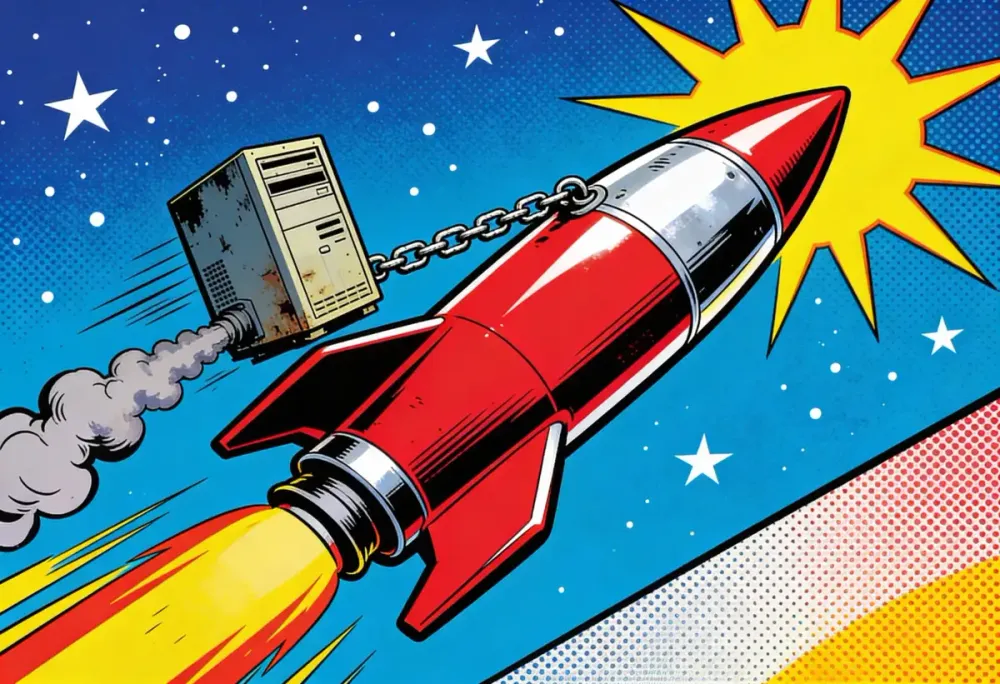
SpaceX on Monday confirmed it has acquired xAI, merging Elon Musk's rocket-and-satellite business with his artificial intelligence startup in a deal that values the combined company at $1.25 trillion, according to people familiar with the matter cited by Bloomberg and the Wall Street Journal. The merger converts xAI stock into SpaceX equity at a ratio of 0.1433 shares, creating what is now the most valuable private company on Earth.
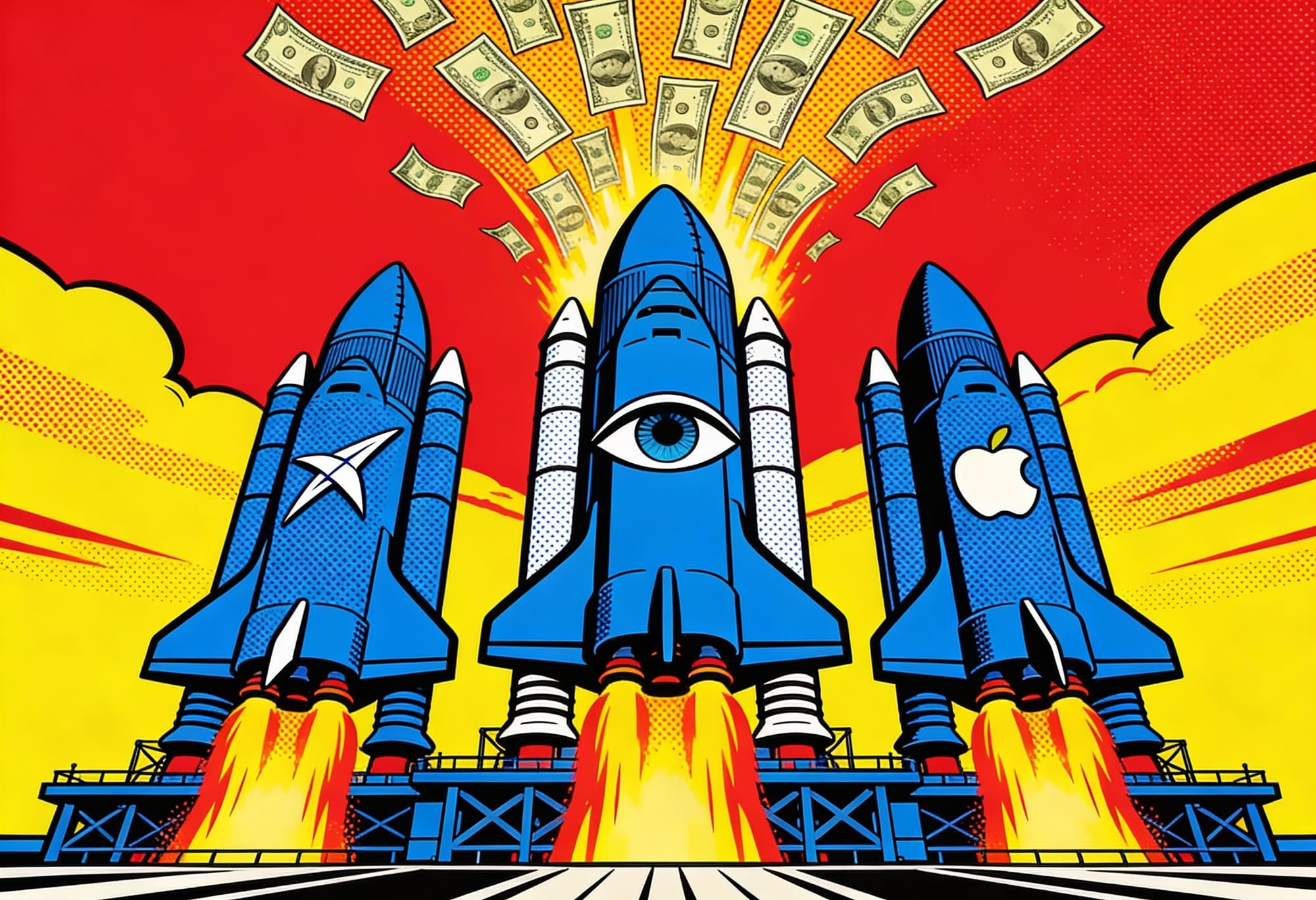
Musk posted the announcement on SpaceX's website, calling the combined entity "the most ambitious, vertically-integrated innovation engine on (and off) Earth." The deal folds xAI, its Grok chatbot, and the X social media platform into SpaceX's existing operations: Falcon 9 launches, the Starlink satellite network, and the in-development Starship rocket. An escape pod dressed up as a rocket ship. xAI gets to ride SpaceX's balance sheet to public markets, and SpaceX gets a growth story large enough to justify an IPO valuation that its rocket business alone cannot support.
Reuters first reported merger talks last week, and we covered the financial mechanics behind the combination and the orbital data center filing that accompanied it. What Monday brought was confirmation, specific terms, and the first signs of how two very different corporate cultures plan to coexist. Or not.
The share swap and what it means for employees
An email sent to current and former xAI and X employees on Monday laid out the conversion mechanics, the Wall Street Journal reported. Each xAI share becomes 0.1433 shares of SpaceX stock. Employees who prefer cash can sell their xAI shares back to the company instead.
The Breakdown
• SpaceX confirmed its acquisition of xAI on Monday, creating a combined entity valued at $1.25 trillion ahead of a planned IPO
• xAI shares convert to SpaceX stock at a 0.1433 ratio, valuing Musk's AI startup at roughly $250 billion
• Tesla's $2 billion xAI investment now converts into an indirect SpaceX stake, complicating existing fiduciary duty lawsuits
• SpaceX filed with the FCC to launch one million orbital data center satellites, but Starship has yet to deliver an operational payload
That ratio values xAI at roughly $250 billion, a modest bump from its $230 billion price tag in January after closing a $20 billion funding round backed by Fidelity and the Qatar Investment Authority. SpaceX itself was priced at $800 billion in a secondary share sale late last year. SpaceX shares hit roughly $527 each on Monday, up from $421 in December. If you hold xAI equity, the conversion math is straightforward. If you hold Tesla stock, the picture gets murkier fast.
A separate internal memo from xAI, reported by Business Insider, told staff that both companies would maintain their branding and that day-to-day collaboration between SpaceX and xAI teams would be limited. The combined entity is continuing preparations for a possible IPO later this year, the memo said.
That IPO could raise as much as $50 billion, according to Wall Street estimates. Largest public listing in history. Bigger than Saudi Aramco's $29 billion offering in 2019. The escape pod needs a very large runway.
A cash-burning AI lab boards the rocket
SpaceX is the profitable half of this marriage. The company pulled in somewhere between $15 billion and $16 billion in revenue last year and kept roughly $8 billion of it as profit, Reuters reported last week. Nine thousand six hundred Starlink satellites in orbit. A Falcon 9 going up about every other day. NASA and the Pentagon both write checks. Anyone who has visited the Hawthorne factory knows what it feels like in there: rocket fuselages standing vertical on the production floor, engineers bent over test rigs with their laptops open, a checklist culture that borders on religious. The culture there lives on test data and the awareness that a bad weld kills people.
And then there's xAI. Founded in 2023, exposed on multiple fronts. Musk's AI company is burning through capital trying to keep pace with OpenAI, Google, and Anthropic. Its Grok chatbot faces regulatory probes in Australia, California, Europe, and India over AI-generated sexual imagery. Its competitive position in frontier models remains murky at best. The company feels less like a peer to SpaceX than a dependent, climbing aboard before the hatch closes.
"xAI prides itself on 'move fast and break things,' flat hierarchy, act first ask questions later," wrote Benjamin De Kraker, a former staffer on xAI's human data team, on social media after the announcement. "I have a hunch many xAI people will hit culture shock w/ SpaceX."
Join 10,000+ AI professionals
Strategic AI news from San Francisco. No hype, no "AI will change everything" throat clearing. Just what moved, who won, and why it matters. Daily at 6am PST.
No spam. Unsubscribe anytime.
That culture gap is real. SpaceX builds hardware that carries humans into orbit. Failure means death, regulatory shutdown, grounded fleets. xAI ships chatbot updates. The tolerance for error at these two organizations is separated by orders of magnitude. The memo promising limited collaboration suggests somebody inside is nervous about what happens when the two workforces actually share a corporate parent.
Tesla's $2 billion question
The deal excludes Tesla, which invested $2 billion in xAI last month. That money now converts into an indirect stake in the combined SpaceX-xAI entity, giving Tesla shareholders a small, unasked-for window into SpaceX's equity. The lawsuit alleging Musk breached fiduciary duty by steering Tesla capital toward his private ventures got more tangled on Monday. Not less.
Musk owns roughly 18 percent of Tesla, 42 percent of SpaceX with 79 percent voting control, and a controlling stake in xAI. Practically every dollar that moves between these companies benefits him in different proportions. Tesla's board has not pushed back on any of it. Call it what you want. Compliant. Captured. Pick your adjective.
Analysts floated the idea last week that Tesla might get pulled into a three-way combination. That did not happen. Could not easily happen, really, given Tesla's public shareholder base and the headaches of merging a listed company into a private one.
But the split in Musk's empire is now explicit. SpaceX-xAI-X on one side: rockets, AI, social media. Tesla on the other: cars, batteries, the Optimus robot. If you bought Tesla stock banking on Musk's undivided attention toward self-driving and humanoid robotics, Monday told you where his head is going. The bigger, more ambitious entity sits on the other side of the wall, and Musk just made clear which one he considers the escape pod and which the vehicle it launched from.
The orbital pitch and its skeptics
Musk's stated rationale for the merger goes far beyond financial consolidation. He wants to put data centers in space. The ambition gives the escape pod its destination.
On Friday, SpaceX filed with the FCC to launch up to one million satellites operating as orbital data centers at altitudes between 500 and 2,000 kilometers. Musk wrote in Monday's employee memo that launching a million tons of satellites per year, each generating 100 kilowatts of compute per ton, would add 100 gigawatts of AI capacity annually. Cheaper than terrestrial alternatives within two to three years, he predicted.
Staggering ambition. No working prototype. Starship has flown eleven test missions and has yet to deliver a single operational payload to orbit. The proposed constellation would dwarf the existing Starlink network by a factor of one hundred. And as we reported on Friday, the FCC filing contained no hardware specifications, no satellite mass details, and asked to waive standard deployment timelines.
Space sustainability experts are uneasy. Victoria Samson, chief director of space security and stability at the Secure World Foundation, told Ars Technica that events were moving uncomfortably fast. Marlon Sorge of The Aerospace Corporation pointed to the debris problem at the higher altitudes SpaceX is targeting, where objects stay in orbit for centuries because the atmosphere is too thin to drag them down.
"The big challenge at those altitudes is the stuff that's up there stays up there," Sorge told Ars Technica. "If you generate more debris, if you have problems, it won't go away, so you're stuck with it."
Goldman Sachs estimates AI will drive a 165 percent increase in data center power demand by 2030. Microsoft spent $37.5 billion on data center capital expenditure in the last quarter of 2025 alone. Meta spent $22 billion. The hunger for compute is genuine. Whether the answer sits in orbit rather than on the ground in Texas or Iowa remains an engineering problem that no amount of FCC filings can solve.
What the deal does not settle
SpaceX confirmed the acquisition on a day when Nvidia shares were falling on reports that its own investment in OpenAI had stalled. The AI spending frenzy is real, but so is the creeping dread that the capital may outrun the returns.
The combined SpaceX-xAI does not resolve the fundamental tension in Musk's AI play. Grok is not ChatGPT. X is not growing. Regulatory pressure on AI-generated imagery is tightening, not loosening. What the merger does is give xAI access to SpaceX's cash flow, SpaceX's engineering credibility, and a clear path to public markets. The escape pod has a destination. Whether it has enough fuel is a different question.
For SpaceX's 13,000 employees who joined to build rockets and put boots on Mars, Monday's memo included a familiar Musk flourish about lunar factories and Kardashev civilizations. But somewhere in Hawthorne, engineers who spend their days stress-testing heat shields and running propellant simulations now share a corporate parent with a chatbot under investigation on four continents. The IPO roadshow will need to make that feel like a coherent company, not two organizations handcuffed together on the way to the stock exchange.
Frequently Asked Questions
Q: What is the SpaceX-xAI share conversion ratio?
A: Each xAI share converts into 0.1433 shares of SpaceX stock. Employees can alternatively sell their xAI shares back to the company for cash. The ratio values xAI at approximately $250 billion within the $1.25 trillion combined entity.
Q: Does the merger include Tesla?
A: No. Tesla is excluded from the deal, though it invested $2 billion in xAI last month. That investment now converts into an indirect stake in the combined SpaceX-xAI entity. A lawsuit alleging Musk breached fiduciary duty by steering Tesla capital to his private companies remains ongoing.
Q: When is the SpaceX IPO expected?
A: SpaceX is preparing for a possible IPO later in 2026 that could raise as much as $50 billion, according to Wall Street estimates. It would be the largest public listing in history, surpassing Saudi Aramco's $29 billion offering in 2019. SpaceX shares were valued at $527 each on Monday.
Q: What are orbital data centers and do they exist yet?
A: Orbital data centers are satellites designed to run AI computing workloads using solar power in space. SpaceX filed with the FCC to launch up to one million such satellites. No working prototype exists. Starship, the rocket intended to deploy them, has not yet delivered an operational payload to orbit.
Q: What happens to xAI's Grok chatbot and the X platform?
A: Both Grok and X are now part of SpaceX. An internal xAI memo said both companies will maintain separate branding with limited day-to-day collaboration. Grok currently faces regulatory probes in Australia, California, Europe, and India over AI-generated sexual imagery.
Harkaram Grewal
Maps the India–Germany–U.S. AI triangle from New Delhi. Background in cross-market operations and business development. Writes about supply chains, enterprise adoption, and talent—the unsexy forces that actually move global AI.