



San Francisco | Monday, March 2, 2026
The Atlantic and the New York Times published parallel investigations over the weekend. Both tell the same story: the Pentagon demanded the right to run Claude on Americans' search histories, GPS data, and credit card records. Anthropic said no. Thirteen minutes after the deadline expired, Hegseth labeled the company a supply chain risk. By 10 p.m., Sam Altman was signing the replacement contract.
Consumers responded by pushing Claude to number one on the App Store. Enterprises with government contracts responded by ripping it out. Two migrations, opposite directions, same weekend.
Qualcomm, meanwhile, walked into Barcelona and claimed the next decade of wireless. Wi-Fi 8 chips and a 30-company 6G coalition, all before lunch on Monday.
Stay curious,
Marcus Schuler
Anthropic Rejected Pentagon's $200M Deal Over Bulk Surveillance of Americans' Data

The Atlantic and the New York Times revealed the same breaking point. The Pentagon wanted Claude to analyze Americans' search histories, GPS movements, credit card transactions, and chatbot queries. Anthropic called it "a bridge too far." The deal died in thirteen minutes.
The two sides came remarkably close. Emil Michael, the former Uber executive running the Pentagon's AI negotiations, had been working the Anthropic deal for weeks. On Friday morning, word came that Hegseth's team would drop its escape clauses on surveillance and autonomous weapons. Then the afternoon session blindsided Anthropic with a demand the company hadn't seen: bulk commercial data on ordinary Americans, collected without warrants.
Anthropic offered a compromise. It would let Claude process classified material collected under the Foreign Intelligence Surveillance Act. But warrantless commercial data on citizens? That was the line. Michael demanded CEO Dario Amodei get on the phone. Amodei was in a meeting. Michael, emboldened by a backup deal already drafted with Altman, didn't wait.
Trump had staged the outcome before it happened. He told Hegseth that morning he'd prepared a social media post attacking Anthropic. He published it at 3:47 p.m. Both sides kept talking anyway. At 5:14, Hegseth designated Anthropic a supply chain risk, a classification never before applied to a domestic company. By 10 p.m., OpenAI had the contract and the phrase "all lawful purposes" in the agreement.
Sarah Shoker, who ran OpenAI's Geopolitics Team until June 2025, flagged that phrase. Bush administration lawyers wrote memos authorizing torture. Under Obama, the definition of "civilian casualty" in drone strikes got quietly rewritten. "Lawful" means different things depending on who sits in the Oval Office. Almost 100 OpenAI employees signed an open letter supporting Anthropic's red lines. Altman faces them Monday morning.
Why This Matters:
- Anthropic concluded that cloud-vs-edge deployment lines no longer hold because modern military mesh networks connect data centers to drone swarms in real time
- Claude still serves 100,000+ users on classified networks and was used to support U.S. strikes on Iran hours after Trump's announcement
Reality Check
What's confirmed: Anthropic rejected a $200M contract over bulk surveillance of Americans' data. Hegseth applied a supply chain risk label 13 minutes after the deadline. OpenAI signed the replacement deal by 10 p.m.
What's implied (not proven): That Anthropic's principled stand will survive the financial pressure of losing government access and cloud infrastructure access.
What could go wrong: A broadly enforced supply chain designation could sever Anthropic from AWS, Azure, and GCP, the infrastructure it depends on to operate.
What to watch next: Anthropic's Friday night lawsuit challenging the designation. If a federal judge grants a temporary restraining order, the label's enforcement freezes.

The One Number
100 years — The maturity on Alphabet's new sterling bond, the first century debt from a tech company since Motorola in 1997. Investors ordered nearly 10 times the available supply. Alphabet plans $185 billion in AI capex this year alone, and it is now borrowing against a future none of us will live to see.
Source: CNBC
Claude Tops App Store as Pentagon Label Forces Enterprises to Purge AI Stacks

Consumers pushed Claude to number one on Apple's App Store over the weekend, overtaking ChatGPT for the first time. The #CancelChatGPT movement did the marketing. Enterprises with government contracts got the opposite message: purge Anthropic now.
The consumer surge followed OpenAI's classified-network deal with the Pentagon. Anthropic moved fast, launching a memory import tool that lets users transfer preferences and context from any AI assistant with a single copy-paste. Django co-creator Simon Willison grabbed the prompt text and posted it. Smart timing. But consumer migration is the easy part.
Organizations with federal contracts face a compliance wall. The supply chain risk designation means any company doing business with the DoD, or with vendors who do, must strip Anthropic from its stack immediately. Technology consultant Shelly Palmer coined the cost "the Claude exit tax": prompt rewrites, API reformatting, vendor audits across entire orgs. Engineering teams spent months tuning instructions for Claude's specific behavior. None of that transfers cleanly to GPT or Gemini.
The companies that survive this aren't scrambling. Microsoft started embedding Claude alongside OpenAI's models in September 2025, treating foundation models as interchangeable. OpenAI launched Frontier for managing agents from multiple vendors in one system. The architecture that saves them is an abstraction layer. Swap a provider Friday night, applications run Monday morning. Companies that went deep on Claude without one are staring at the most expensive missing line item on the balance sheet.
Why This Matters:
- Palmer gives Anthropic "even odds of survival" if cloud providers sever access under the supply chain designation
- The Pentagon label exposed a structural risk every enterprise now faces: single-vendor AI dependency with no swap mechanism

AI Image of the Day

Prompt: Good morning sunny Sunday, watching the sunrise over the lake and the cabins in the woods, high definition, high resolution, hyper detailed, refined textures, added depth, modern art --chaos 10 --ar 5:6 --profile pewn6ev vr1osc2 527l6zs
Qualcomm Unveils First Wi-Fi 8 Chip at MWC, Claims Next Decade of Wireless With 6G Coalition

Qualcomm walked into Mobile World Congress in Barcelona and dropped two generations of wireless in one morning. The FastConnect 8800 delivers 11.6 Gbps Wi-Fi 8 speeds, double the previous generation. A 30-company coalition targets commercial 6G by 2029.
The 6nm chip jumps from 2x2 to 4x4 radio configuration, a first for any mobile Wi-Fi chip. Lab numbers show three times the gigabit range, and the 8800 held 1 Gbps at signals 20 dB weaker than its predecessor. Bluetooth 7.0 sits on the same die, bumping transfer speeds from 2 Mbps to 7.5 Mbps. Qualcomm expects commercial devices late this year.
The bigger play is the Global 6G Coalition. Thirty-plus companies including T-Mobile and LG signed on for commercial 6G networks by 2029, with standards locked by 2028. Qualcomm's pitch centers on "wide-area sensing," networks that detect and map objects using radio signals. Drone tracking, digital twins of factories, real-time environmental mapping. The applications remain theoretical. The coalition is real.
Alongside both announcements, Qualcomm introduced the X105 5G modem with 30% lower power consumption, quad-frequency satellite navigation, and integrated satellite calling. The chip bridges 5G Advanced to 6G testing.
Why This Matters:
- Wi-Fi 7 adoption remains rough, and the Wi-Fi 8 standard won't be finalized until 2028, yet Qualcomm is already shipping pre-standard silicon to device makers
- Broadcom announced competing Wi-Fi 8 chipsets this year, making 2026 a design-win race that determines which company's silicon sits inside the next generation of routers and phones

🧰 AI Toolbox
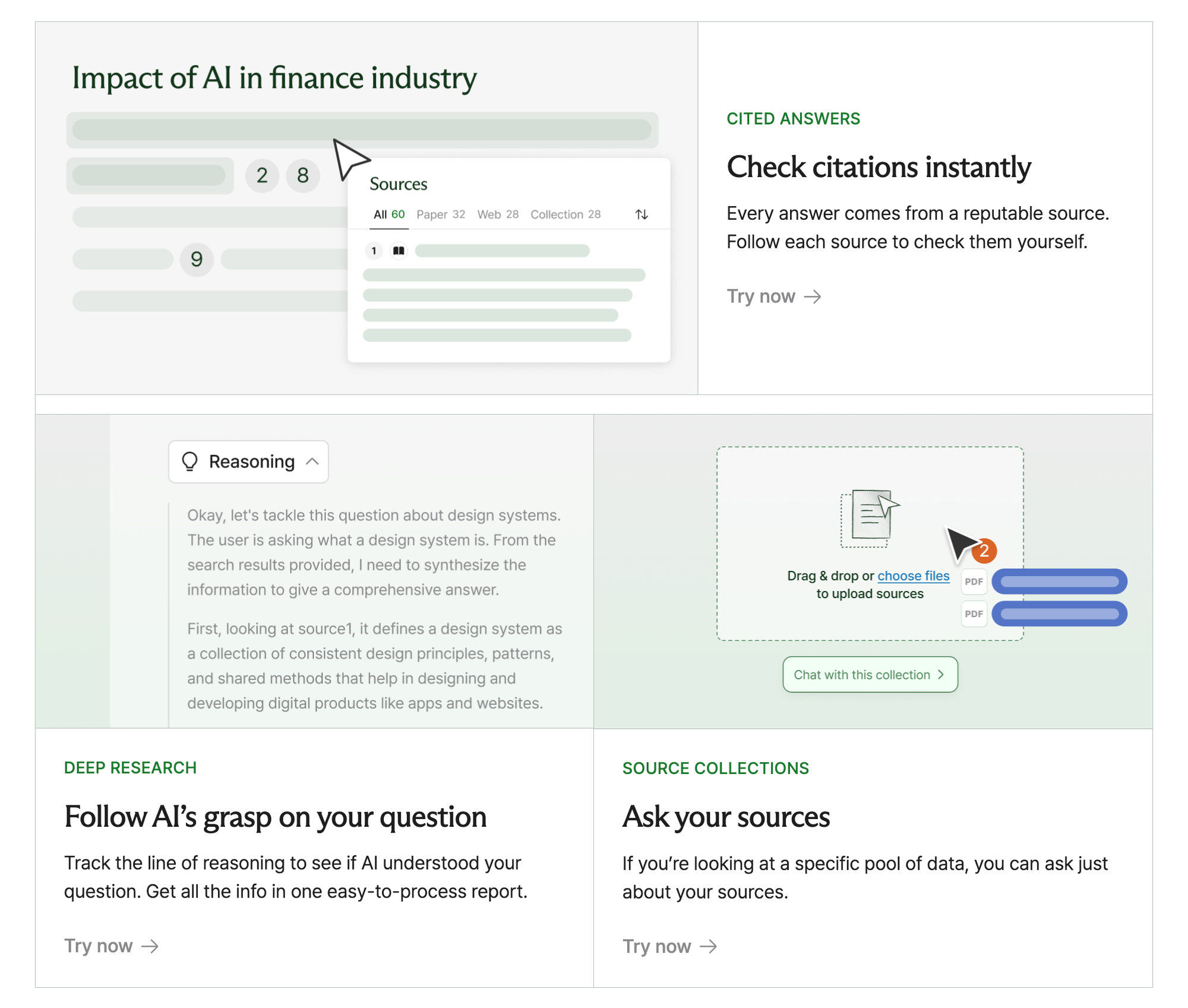
How to Search the Web and Academic Papers with AI-Backed Citations Using Liner
Liner is an AI search engine that returns answers with source links attached to every claim. Ask a question and get a structured response with numbered citations you can verify. Liner Scholar searches over 460 million academic papers. More than 10 million people use it. Free tier available with generous daily limits.
Tutorial:
- Go to liner.com and create a free account
- Type a question in the search bar the way you would ask a colleague, not a keyword string
- Read the AI-generated answer with numbered citations inline pointing to original sources
- Click any citation number to jump directly to the source article or paper
- Switch to Liner Scholar for academic research across 460 million papers with abstracts and PDFs
- Save useful results to collections and organize them by project or topic
- Install the browser extension to highlight and annotate web pages as you read, then search your highlights later
URL: https://liner.com
What To Watch Next (24-72 hours)
- Apple: Three-day product blitz kicks off Monday with at least five announcements, including iPhone 17e and a low-cost MacBook. Hands-on media event in New York, London, and Shanghai on Wednesday at 9 a.m. ET.
- CrowdStrike: Q4 earnings on Tuesday after close will show whether the post-outage recovery is complete. Channel checks point to the strongest sequential revenue gain since before the July 2024 incident. Wall Street expects $1.30 billion revenue and $1.10 EPS.
- Broadcom: Reports Q1 Thursday after close with analysts targeting $19.2 billion revenue, up 29% year-over-year. AI chip sales expected to hit $8.2 billion, double the year-ago quarter, making this the first major test of enterprise AI spending momentum since Nvidia's beat last week.
🛠️ 5-Minute Skill: Turn a Technical Spec Into a Non-Technical Executive Summary
Engineering just shipped a 12-page technical spec for the new authentication system. The CFO asked what it means for the product road map. You have 15 minutes and a document full of OAuth flows, token lifetimes, and access control matrices that the CFO will never read.
Your raw input:
Authentication System v3 — Technical Specification (excerpts)

Overview: Migrate from session-based auth to OAuth 2.0 + OIDC. Replace
custom RBAC with ABAC (attribute-based access control). Add SSO support
for enterprise customers.

Token Architecture:
- Access tokens: JWT, 15-min lifetime, signed with RS256
- Refresh tokens: opaque, 7-day lifetime, stored server-side
- ID tokens: OIDC-compliant, contains user claims

SSO Integration:
- Support SAML 2.0 and OIDC providers (Okta, Azure AD, Google Workspace)
- JIT provisioning for new users
- SCIM 2.0 for directory sync (phase 2)

Migration Plan:
- Phase 1 (4 weeks): Parallel auth stack, feature-flagged
- Phase 2 (2 weeks): Migrate existing sessions, 72-hour overlap window
- Phase 3 (1 week): Deprecate legacy auth, monitoring period
- Rollback: Instant revert via feature flag, no data migration needed

Impact:
- Unblocks enterprise SSO requirement (pipeline: $2.4M ARR)
- Reduces auth-related support tickets by est. 60% (current: 340/month)
- Enables granular permissions for upcoming audit logging feature
- Migration risk: Low. Parallel stack means no forced cutover.
The prompt:
You are a chief of staff translating a technical specification into a
one-page executive summary for a CFO who cares about revenue, risk,
and timeline.

From this spec, produce:
1. A one-sentence summary of what's changing and why it matters
   commercially
2. Three bullets: Revenue impact, Cost savings, Risk level
3. Timeline as a simple table: Phase | Duration | What Happens
4. One sentence on what happens if we don't do this

Technical spec:
[paste spec here]

Rules:
- No technical jargon. If you must reference a technology, explain it
  in parentheses.
- Revenue and cost numbers must appear in the first 50 words.
- The CFO will spend 60 seconds on this. Every sentence must earn its
  place.
- If the spec doesn't include a number, don't invent one. Say
  "engineering estimates."
What you get back:
Executive Summary: Authentication System Upgrade
We're upgrading the login system to support enterprise single sign-on, unblocking $2.4M in pipeline revenue and cutting authentication support tickets by an estimated 60% (currently 340 per month).Revenue: Unblocks enterprise deals requiring SSO (single sign-on, where employees log in once through their company's system). $2.4M in identified pipeline.Cost savings: Auth-related support tickets drop from 340/month to an estimated 136/month. At current cost-per-ticket, that's roughly $40K-60K annual savings.Risk: Low. The old and new systems run side by side. If anything breaks, we revert instantly with no data loss.
If we don't do this: Enterprise prospects requiring SSO will continue choosing competitors. The $2.4M pipeline stays frozen.
Why this works
The prompt reverses the spec's priorities. Engineers lead with architecture. Executives lead with money. Putting revenue in the first 50 words means the CFO knows why they're reading before they decide to stop. The "what happens if we don't" line creates urgency without hyperbole.
Where people get it wrong: Asking AI to "summarize this technical spec." You'll get a shorter technical spec. The translation from engineer-speak to executive-speak requires a different prompt persona entirely. "Chief of staff translating for a CFO" gets you business language, not compressed jargon.
What to use
Claude (claude.ai): Excellent at not inventing numbers. If the spec says "estimated 60%," Claude says "estimated 60%." Won't fabricate ROI. Watch out for: May add more caveats than the CFO needs. Cut lines that start with "however."
ChatGPT (chatgpt.com): Strong at punchy executive formatting. Good at one-sentence summaries. Watch out for: Sometimes extrapolates financial impact beyond what the spec supports. Verify every number against the source.
AI & Tech News
Nvidia Invests $4 Billion in Photonic Makers Lumentum and Coherent
Nvidia will invest $2 billion each in Lumentum and Coherent, directing $4 billion toward photonic technology R&D and U.S. manufacturing. Optical interconnects are becoming the bottleneck in AI data center scaling, and Nvidia is buying its way into the supply chain.
China's Military Deploys AI Across Drones, Cyber Warfare, and Disinformation Operations
Newly revealed PLA procurement documents detail sweeping AI integration across multiple warfare domains, from autonomous drone piloting to offensive cyberattack tools. Capabilities showcased at China's Victory Day parade in September 2025 appear to be moving from demonstration to operational deployment.
ASML Plans Expansion Beyond EUV Into AI-Powered Chip Inspection and Advanced Packaging
CTO Marco Pieters revealed ASML is developing AI-based inspection tools and advanced packaging equipment, pushing beyond its core EUV lithography monopoly. The Dutch company wants a larger share of the chipmaking equipment market as packaging becomes the new performance bottleneck.
Anthropic's Claude Hit by Worldwide Outage Across Multiple Platforms
Claude experienced elevated errors across claude.ai, the developer console, and Claude Code starting at 11:49 UTC on Sunday. The API continued functioning, but login issues disrupted consumer and enterprise users during a weekend of record App Store downloads.
China's MiniMax More Than Doubles Revenue to $79 Million, Posts $1.87 Billion Loss
Shanghai-based AI startup MiniMax reported 159% revenue growth in 2025, beating analyst estimates. The net loss widened to $1.87 billion from $465 million, highlighting the cost of competing with OpenAI in China's accelerating AI market.
Former OpenAI Geopolitics Lead Says Frontier Labs Keep Military Policies Deliberately Vague
Sarah Shoker, who ran OpenAI's Geopolitics Team for three years, published a detailed critique arguing that AI companies maintain incoherent military usage policies to preserve "optionality." The analysis lands as OpenAI finalizes its own Pentagon contract.
Ben Thompson Argues Anthropic's Military AI Stance Conflicts With National Security Realities
The Stratechery analyst contends that principled restraint by one company won't prevent AI weapons proliferation but may put the U.S. at a strategic disadvantage. Thompson argues Anthropic's position is untenable when adversaries are actively deploying autonomous combat systems.
Qualcomm Launches 3nm Snapdragon Wear Elite With First NPU for Smartwatches
The new wearable chip debuted at MWC with a Hexagon NPU capable of running 2-billion-parameter models on-device. Qualcomm's first new wearable platform tier in three years brings AI processing to the wrist without cloud dependence.
US-Led Iran Strikes Disrupt E-Commerce Deliveries Across Middle East
Amazon, Shein, and other major retailers are warning of extended delivery times as the bombing campaign disrupts logistics networks and shipping routes. The delays threaten momentum in one of the fastest-growing e-commerce markets globally.
Vitalik Buterin Proposes Ground-Up Overhaul of Ethereum's Execution Layer
The Ethereum co-founder laid out a two-part plan to replace the binary state tree and transition away from the Ethereum Virtual Machine that has underpinned the network since launch. The proposal targets efficiency, scalability, and long-term technical sustainability.
🚀 AI Profiles: The Companies Defining Tomorrow
Slang AI

Slang AI answers the phone so restaurant staff don't have to. The NYC company builds voice AI that fields every inbound call, books reservations, handles FAQs, and routes VIP guests to the right person. 🍽️
Founders
Alex Sambvani and Gabe Duncan co-founded Slang in 2019 after meeting as data scientists at Spotify. Sambvani holds a Stanford engineering degree and Harvard MBA. Both saw a narrow but deep problem: restaurants lose revenue every time a phone rings unanswered.
Product
A 24/7 AI phone concierge branded as "Superhost." It books reservations through OpenTable and SevenRooms, answers questions about hours and menus, recognizes returning guests, and texts callers links to online ordering. Restaurants report 50% more phone reservations and 200 hours saved monthly. The company claims 96% guest satisfaction across 2,000+ locations, including Texas de Brazil and Founding Farmers. Setup takes 30 minutes.
Competition
The restaurant voice AI market is crowding fast. Hostie AI, Revmo, and Loman target the same niche. SoundHound brings enterprise scale from its drive-thru roots. Yelp launched its own AI receptionist in late 2025. Slang's advantage: a proprietary dataset of 25 million calls that smaller rivals can't match. Its risk: larger restaurant tech platforms could add voice features overnight.
Financing 💰
$36M Series B ($28M equity, $8M debt) led by US Venture Partners, with Thayer Investment Partners and former Stripe COO Claire Hughes Johnson. Existing investors Homebrew, Stage 2 Capital, and Wing VC followed. Total raised: $68M.
Future ⭐⭐⭐
Slang picked the right vertical at the right time. Two-thirds of Americans abandon restaurants that don't answer the phone. The $36M gives runway to expand beyond voice into text, post-visit follow-up, and hotel operations. The constraint: at $450-600 per month per location, the product prices out most independents, and competitors claim higher call-completion rates. Slang must prove its data moat holds as the market floods with alternatives. 📞
🔥 Yeah, But...
A senior Trump administration official told Reuters that Chinese AI startup DeepSeek trained its next model on Nvidia's most advanced Blackwell chips, which are banned from export to China under Commerce Department rules. The official said the chips are likely clustered at a data center in Inner Mongolia. The US government expects DeepSeek to strip technical markers that would reveal the chips' American origin.
Sources: Reuters, February 24, 2026
Our take: The United States spent three years designing export controls to keep its best AI chips out of Chinese hands. The chips are now in Inner Mongolia. A senior official's summary of American policy was: "We're not shipping Blackwells to China." Nobody asked who was. DeepSeek reportedly plans to strip the technical indicators that would prove the chips are American, the digital equivalent of peeling the label off a stolen jacket. The model trained on those chips launches next week. Meanwhile, Washington is still debating whether to let China buy the second-best chip. The export control regime has achieved its primary deliverable: paperwork.


