IMPLICATOR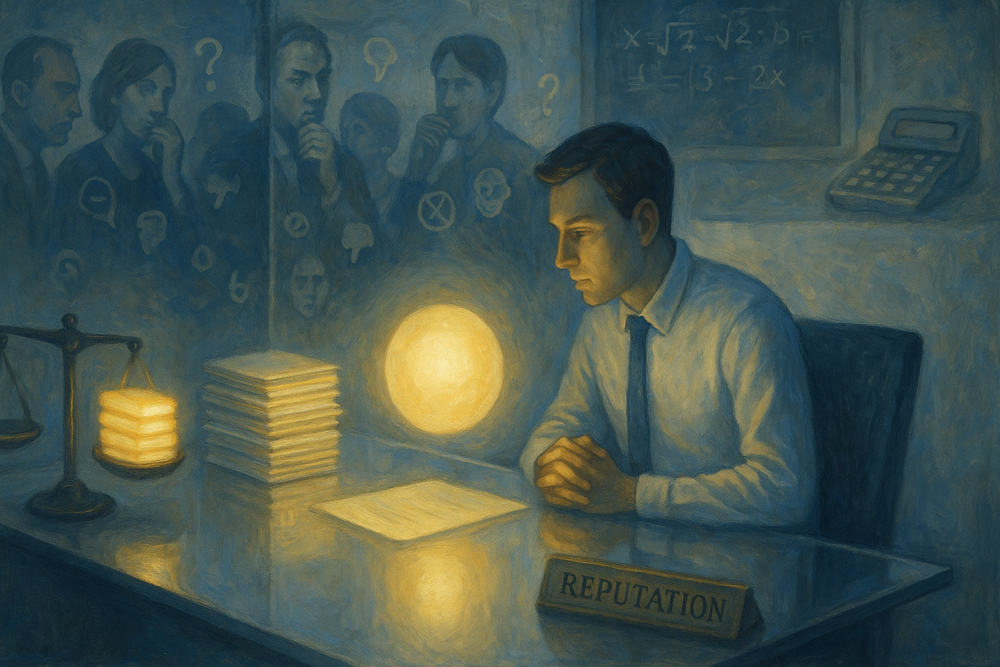
People who use AI at work face a choice: boost their output or protect their reputation. They rarely get both.
New research from Duke shows that employees who admit to using AI get labeled as less capable and less driven than their peers. The findings span jobs and industries, based on studies of 4,400 workers.
Fear of judgment runs deep. Workers who use AI often keep it quiet, sensing their bosses and teammates might think less of them. The research proves these worries aren't just in their heads.
Managers Split on AI Hiring
In one study, managers had to pick job candidates. Those who rarely touched AI themselves passed over applicants who used it regularly - even for tasks where AI could help.
But managers who worked with AI saw things differently. They spotted its value and were more likely to hire others who used it.
The findings point to workplace double standards around AI. Companies buy expensive AI tools and urge people to use them. Yet individual workers often hide their AI use, fearing others will see them as taking shortcuts.
History Repeats
We've seen this movie before. Back when calculators appeared in schools, critics claimed they'd make kids worse at math. When computers entered doctors' offices, some physicians worried about looking less skilled. Now AI faces the same snap judgments.
But attitudes shift. Current AI users already judge their AI-using colleagues less harshly. As more people work with these tools, the stigma may fade.
For now, though, many capable workers stay quiet about their AI use. They know it helps them work better and faster. They also know admitting it might hurt their career.
This creates problems beyond individual workers. When people hide useful tools, everyone loses. Teams miss chances to learn from each other. Good ideas stay buried. Progress slows.
What Companies Must Do
Companies pushing for more AI use need to tackle these social barriers. Just buying AI tools isn't enough if people fear using them openly.
The research also raises fairness concerns. If certain groups feel more pressure to hide their AI use, they could miss opportunities that help others advance.
Why this matters:
- Fear of judgment creates a hidden barrier to AI adoption, potentially holding back workplace innovation
- As with past tech shifts, resistance to AI likely signals growing pains rather than permanent stigma
Read on, my dear:
Pnas: Evidence of a social evaluation penalty for using AI

Marcus Schuler
Editor-in-Chief and founder of Implicator.ai. Former ARD correspondent and senior broadcast journalist with 10+ years covering tech. Writes daily briefings on policy and market developments. Based in San Francisco. E-mail: editor@implicator.ai