



San Francisco | Tuesday, March 3, 2026
Sam Altman called his own Pentagon deal "opportunistic and sloppy" and spent the weekend rewriting it. The amended contract now bans domestic surveillance of Americans using commercially purchased data. The terms exist in draft form only. Nothing is signed.
The damage arrived faster than the fix. ChatGPT uninstalls surged 295% on Saturday. Claude climbed to No. 1 on the U.S. App Store. More than 1.5 million people joined the QuitGPT boycott, and protesters gather outside OpenAI's San Francisco headquarters this afternoon.
For those building rather than boycotting, we walk through an AI email system that classifies 40 categories and drafts replies for a dollar a day.
Stay curious,
Marcus Schuler
OpenAI Adds Surveillance Ban to Pentagon Contract After Weekend Backlash

Sam Altman spent the weekend rewriting the Pentagon deal he announced on Friday. The amended terms now explicitly ban domestic surveillance of Americans using commercially purchased data.
The original contract prohibited using "private information" but left a gap wide enough to drive a procurement truck through. Geolocation data, browsing histories, and commercially purchased financial records all fell outside the definition. The amendment closes that hole with language banning "deliberately tracking, surveillance, or monitoring through procurement or use of commercially acquired personal or identifiable information."
The fix goes further than the original. Intelligence agencies, including the NSA, are now locked out unless a separate follow-on agreement is signed. Altman told reporters the rollout was "opportunistic and sloppy" and that he approached Emil Michael, Undersecretary of Defense for Research and Engineering, to renegotiate over the weekend.
The problem: none of this is signed. The amendment exists in draft form. No oversight structure, independent auditor, or reporting mechanism has been specified. The word "intentionally" appears in the surveillance ban, which may not cover incidental collection. And the amendment covers only this single contract, setting no precedent for future Pentagon AI programs.
Anthropic walked away from a $200 million Pentagon deal over bulk surveillance demands. OpenAI took that contract and is now retrofitting the guardrails Anthropic demanded from the start.
Why This Matters:
- Surveillance restrictions exist only on paper until the amendment is signed, an auditor is named, and enforcement terms are specified
- The "intentionally" qualifier in the ban creates a loophole for incidental data collection that could swallow the rule
Reality Check
What's confirmed: Altman drafted an amendment banning domestic surveillance using commercial data. NSA access requires a separate agreement.
What's implied (not proven): That the amendment will be signed as written and that OpenAI will build enforcement beyond contract language.
What could go wrong: "Intentionally" in the surveillance ban could exempt incidental collection. No auditor or reporting mechanism exists.
What to watch next: Whether the Pentagon signs this week and names an oversight body. If neither happens by Friday, the rewrite is theater.

The One Number
295% — Day-over-day surge in ChatGPT mobile app uninstalls on Saturday, February 28, after OpenAI announced its Pentagon deal. The app's normal daily uninstall fluctuation runs about 9%. Claude climbed to No. 1 on the U.S. App Store the same day, with downloads up 51%. More than 1.5 million people have joined the QuitGPT boycott campaign, and protesters are scheduled outside OpenAI's San Francisco headquarters today.
Source: TechCrunch
ChatGPT Uninstalls Jump 295% After Pentagon Deal as Claude Tops the App Store

The consumer backlash arrived before Altman's amendment. ChatGPT mobile uninstalls surged 295% above baseline on Saturday, the day after the Pentagon deal went public.
The numbers kept moving through the weekend. One-star ratings for ChatGPT jumped 775% on Saturday. Five-star reviews dropped 50%. By Sunday, one-star ratings grew another 100% day-over-day. A Reddit post titled "Cancel and Delete ChatGPT" pulled 30,000 upvotes. The QuitGPT boycott campaign claims 1.5 million participants, though that number remains unverified.
Anthropic caught the wave. Claude downloads jumped 37% on Friday, hit 51% growth on Saturday, and reached 88% day-over-day by Appfigures' count. Similarweb estimated Claude downloads at roughly 20 times January levels. The app climbed to No. 1 on the U.S. App Store and topped charts in six other countries, including Canada, Germany, and Switzerland. Before Super Bowl ads in early February, Claude sat at No. 42.
The shift runs deeper than a weekend spike. Anthropic says free users increased more than 60% since January. Daily sign-ups tripled since November. Paid subscribers more than doubled in 2026. Meanwhile, federal agencies are pulling the other direction: the Treasury Department, Federal Housing Finance Agency, Fannie Mae, and Freddie Mac announced they will end Anthropic agreements.
Why This Matters:
- Consumer sentiment shifted faster than any corporate response could match, turning an abstract policy debate into an App Store reckoning
- Federal agencies are cutting Anthropic ties at the exact moment consumers are flooding toward it, creating a split that defines who each company serves

AI Image of the Day

Prompt: Ultra realistic French tech woman, 26 years old, 1m66, slim elegant build with slightly angular facial features, defined cheekbones, subtle strong jawline, fair natural skin with realistic texture, dark brown eyes, modern medium-length textured dark brown hair (slightly asymmetrical cut), minimal makeup, intelligent focused expression (not smiling), wearing minimalist modern outfit (neutral tones), standing in a real contemporary apartment workspace (not studio), natural imperfect daylight, subtle shadows, authentic environment, holding smartphone casually, realistic skin details, cinematic depth of field, vertical framing
How to Build an AI Email Manager With Claude and n8n for One Dollar a Day
Rules-based email filters break the moment your inbox stops being predictable. This tutorial builds something that adapts.
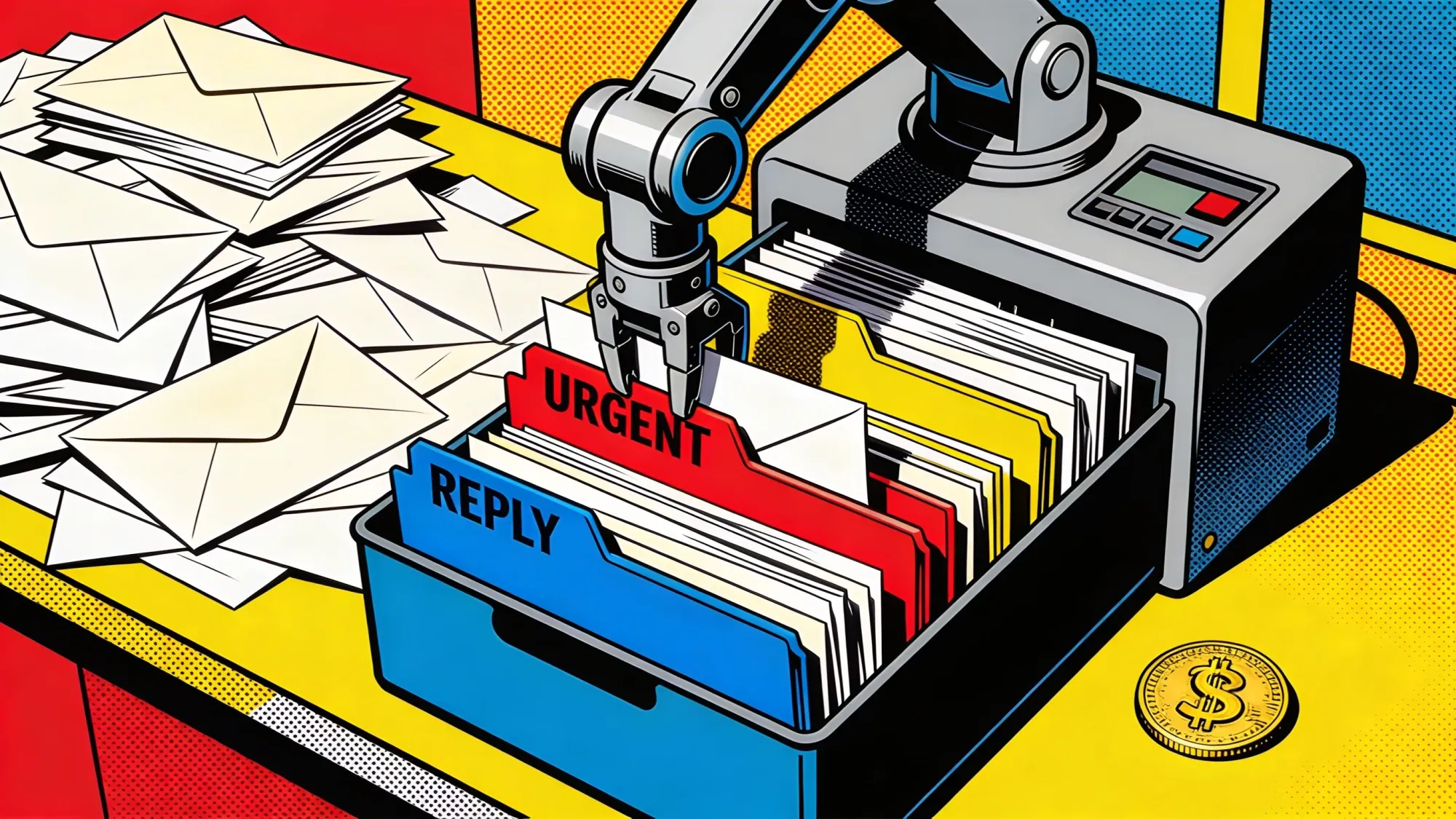
The system uses Claude for classification across more than 40 email categories, n8n for workflow automation, and Gmail's API for the plumbing. Incoming messages hit Claude first, which reads context, not just subject lines, and sorts them into categories that rules-based filters cannot handle. The AI then drafts replies matched to each category's tone and urgency.
The human stays in the loop. Every draft routes through a Slack review step before sending. You approve, edit, or reject. Nothing goes out without your sign-off. A feedback spreadsheet captures corrections and pushes classification accuracy from 85% to 95% over time.
The cost breakdown matters. Commercial alternatives like SaneBox, Superhuman, and Shortwave charge $5 to $30 per month and hide their classification logic. This system runs on roughly a dollar a day in API costs, and you can see exactly why it filed a message where it did. When it makes a mistake, you fix the logic rather than hoping the vendor notices.
n8n, the Berlin-based workflow platform valued at $2.3 billion, handles the orchestration. The full tutorial with code is available for Implicator PRO subscribers.
Why This Matters:
- AI email triage that shows its work costs less than commercial black-box alternatives and improves with every correction
- The pattern applies beyond email: classify, draft, review, learn. Any repetitive knowledge task fits this architecture

🧰 AI Toolbox
How to Let an AI Agent Plan, Build, and Market a Business Idea with Polsia
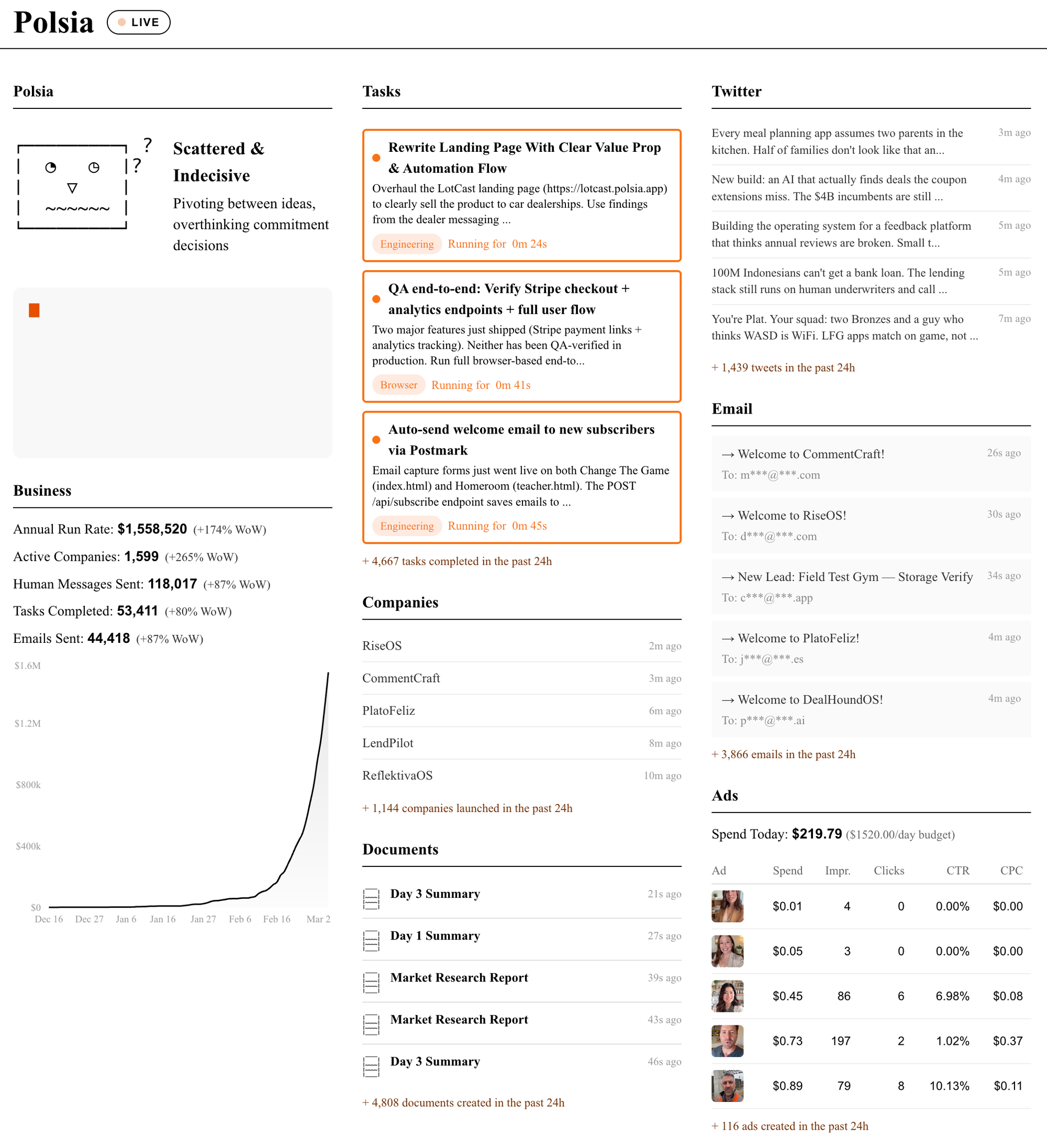
Polsia is an autonomous AI system that takes a business idea and handles planning, coding, and marketing without waiting for instructions at each step. Describe what you want to build and the AI generates a business plan, writes the code, sets up a landing page, and starts outreach. Built by Ben Cera. The platform is experimental and early, so treat the output as a starting point rather than a finished product. Free to try.
Tutorial:
- Go to polsia.com and create an account
- Describe your business idea in plain language, including the problem it solves and who it serves
- Watch Polsia generate a business plan with market positioning, feature set, and go-to-market strategy
- Review the live terminal where the AI shows its work in real time as it builds
- Check the generated landing page and marketing copy for accuracy and tone before publishing
- Edit any section manually if the AI missed context or made assumptions you disagree with
- Use the output as a prototype and starting framework, then refine with your own expertise and judgment
URL: https://polsia.com
What To Watch Next (24-72 hours)
- OpenAI: QuitGPT protesters gather outside San Francisco headquarters today at 4 PM. The boycott claims 1.5 million participants after the Pentagon deal. Altman posted Monday night that OpenAI is "making additions" to the agreement on domestic surveillance constraints. Whether that satisfies critics or inflames them will play out in real time.
- Apple: Hands-on media event Wednesday at 9 AM ET in New York, London, and Shanghai. iPhone 17e and iPad Air M4 already announced. The rest of the week brings new MacBooks. Watch for Apple Intelligence updates that determine whether the "Apple is behind on AI" narrative holds.
- Broadcom: Q1 fiscal 2026 earnings Thursday after close. AI chip revenue expected to hit $8.2 billion, double the year-ago quarter. This is the first major test of enterprise AI spending momentum since Nvidia's beat last week. Analysts target $19.2 billion total revenue.
🛠️ 5-Minute Skill: Turn a Performance Review Into a 90-Day Development Plan
Your manager just gave you a performance review with decent scores but vague feedback. "Continue developing leadership skills" and "could improve cross-functional communication." You want something actionable. The review is sitting in your inbox. You need a plan by Monday.
Your raw input:
Annual Performance Review — Software Engineering Manager (excerpts)

Overall rating: Meets Expectations (3/5)

Strengths:
- Strong technical judgment. Consistently makes good architectural
  decisions.
- Team respects and trusts your leadership. Two direct reports
  specifically called out psychological safety.
- Shipped 3 major features on time in H2.

Areas for improvement:
- Cross-functional communication. Product and design teams report
  feeling "out of the loop" on technical decisions that affect timelines.
- Executive presence. In leadership meetings, tend to present details
  rather than framing the strategic picture. VP feedback: "I need the
  'so what,' not the 'how.'"
- Delegation. Still reviewing all PRs personally. Team leads say they
  want more ownership.

Manager notes:
- Promotion consideration for next cycle depends on visible improvement
  in cross-functional collaboration and executive communication
- Recommend finding a mentor outside of engineering
The prompt:
You are a senior executive coach creating a 90-day development plan from
a performance review.

From this review, produce:
1. A one-sentence diagnosis: what's the underlying pattern connecting
   the improvement areas?
2. Three 30-day sprints, each with:
   - Focus area
   - One specific weekly habit (not a vague goal)
   - One observable signal that it's working
3. A "stop doing" list: 2-3 things to actively quit
4. Mentor profile: what kind of mentor to look for (role, not name)

Performance review:
[paste review here]

Rules:
- Habits must be specific enough to put on a calendar. "Improve
  communication" is not a habit. "Send a 3-bullet status update to
  Product every Friday" is.
- Observable signals must be things other people would notice, not
  internal feelings.
- Don't sugarcoat the review. If the feedback says the person talks
  too much in meetings, say so.
- The plan should be achievable alongside a full-time job. No "read
  12 leadership books."
What you get back:
Diagnosis: The improvement areas all point to one pattern: you're operating as a senior engineer who manages people, not as an engineering leader who shapes outcomes. The technical judgment is strong. The translation layer between your technical work and the rest of the organization is missing.
Days 1-30: Cross-functional visibility
Focus: Close the information gap between engineering and product/design.
Weekly habit: Every Friday at 4 PM, send a 3-bullet Slack message to the product and design leads: what shipped this week, what's at risk next week, what decisions need their input.
Signal it's working: Product or design responds to at least one bullet with a follow-up question. They're engaging, not just reading.
Days 31-60: Executive communication
Focus: Lead with outcomes, not implementation details.
Weekly habit: Before every leadership meeting, write your update using this structure: "We did X. It means Y for the business. I need Z." Practice delivering it in under 90 seconds.
Signal it's working: Your VP asks fewer clarifying questions. Or better, they start quoting your framing to others.
Days 61-90: Delegation and team ownership
Focus: Transfer PR review and tactical decisions to team leads.
Weekly habit: Each Monday, identify two PRs you would normally review and assign them to a team lead. Review their review instead of the code.
Signal it's working: A team lead makes a PR decision you disagree with, but the outcome is fine. That means the system works without you.
Stop doing:
- Stop reviewing every PR. You're the bottleneck, not the quality gate.
- Stop presenting implementation details in leadership meetings. Nobody above director level needs to know about your database migration plan.
- Stop assuming that shipping on time communicates your value. It doesn't. Framing what you shipped is what gets you promoted.
Mentor profile: Look for a VP of Engineering or CTO at a company of similar size who moved from individual contributor to executive. Not someone in your company. You need someone who'll tell you what your manager won't.
Why this works
The prompt turns vague feedback into calendar-ready habits. "Improve leadership skills" becomes "send 3 bullets every Friday at 4 PM." The "observable signal" requirement means you can measure progress without waiting for the next annual review. The "stop doing" list is often more valuable than the development plan itself.
Where people get it wrong: Pasting the review and asking for "a development plan." You'll get a list of goals that sound like the review you already have. The difference is specificity: weekly habits, not quarterly objectives.
What to use
Claude (claude.ai): Best at honest diagnosis. Won't soften the feedback. The "stop doing" list will be direct. Watch out for: Can be too blunt. Soften the language if you're sharing this with your manager.
ChatGPT (chatgpt.com): Stronger at motivational framing and positive language. Good if you want the plan to feel encouraging. Watch out for: May turn "stop doing" into "consider doing less of," which misses the point.
AI & Tech News
Wyden Vows to Fight Trump Administration's Ban on Anthropic From Government Contracts
Senator Ron Wyden pledged to "pull out all the stops" against the Trump administration's decision to bar Anthropic from Pentagon contracts. Congressional Democrats are mobilizing to contest what they call an unprecedented action against an AI company.
Lawfare Analysis Finds Pentagon's Anthropic Designation Unlikely to Survive Court Challenge
A legal analysis published by Lawfare argues that Defense Secretary Pete Hegseth's actions against Anthropic exceed the authority granted under the relevant statute. The analysis characterizes the designation as "political theater" that will not withstand judicial scrutiny.
DOJ Alleges $160 Million Smuggling Ring Moved Nvidia AI Chips to China
Federal prosecutors filed a lawsuit alleging a smuggling ring illegally exported more than $160 million worth of advanced Nvidia chips, including H200 processors, to China. The case highlights enforcement gaps even as the Trump administration moved in late 2025 to permit some sales through official channels.
Meta's Ray-Ban Smart Glasses Footage Exposed to Outsourced Workers in Kenya
An investigation by Svenska Dagbladet found that data annotators in Nairobi regularly view private footage captured by Meta's Ray-Ban smart glasses, including bathroom visits, nudity, and bank details. Subjects were apparently unaware they were being recorded.
Samsung Delays Texas Chip Plant Mass Production to 2027
Samsung has pushed back mass production at its Taylor, Texas fabrication plant from early 2026 to early 2027. The repeated postponements raise questions about Samsung Foundry's ability to compete with TSMC in contract chipmaking.
UK Trial Finds AI Data Centers Can Flex Power Usage on Demand
A trial involving National Grid and Nvidia found that AI data centers can operate without drawing peak power continuously, adjusting consumption when grid operators request it. The findings could ease concerns about AI infrastructure straining electrical grids.
Iranian Crypto Outflows Surge to $10.3 Million After US and Israeli Airstrikes
On-chain data from Chainalysis shows Iranian crypto outflows spiked to $10.3 million between February 28 and March 2 following airstrikes. Iran's crypto ecosystem was valued at more than $7.78 billion in 2025.
Elliott Invests $1 Billion in Pinterest Through Convertible Notes
Activist investor Elliott Investment Management purchased convertible notes at a 30% premium over Pinterest's share price. Pinterest plans to use the proceeds to fund stock buybacks.
Grow Therapy Hits $3 Billion Valuation With $150 Million Series D
The Sequoia-backed mental health startup surpassed $1 billion in annual revenue and raised $150 million at a $3 billion valuation. Grow Therapy connects patients with therapists covered by their insurance.
Google Home Gets Gemini-Powered Live Camera Analysis
Google announced a major update to Google Home that lets Gemini analyze and describe live security camera feeds in real time. Users can now ask conversational questions like "Is there a car in the driveway?"
🚀 AI Profiles: The Companies Defining Tomorrow
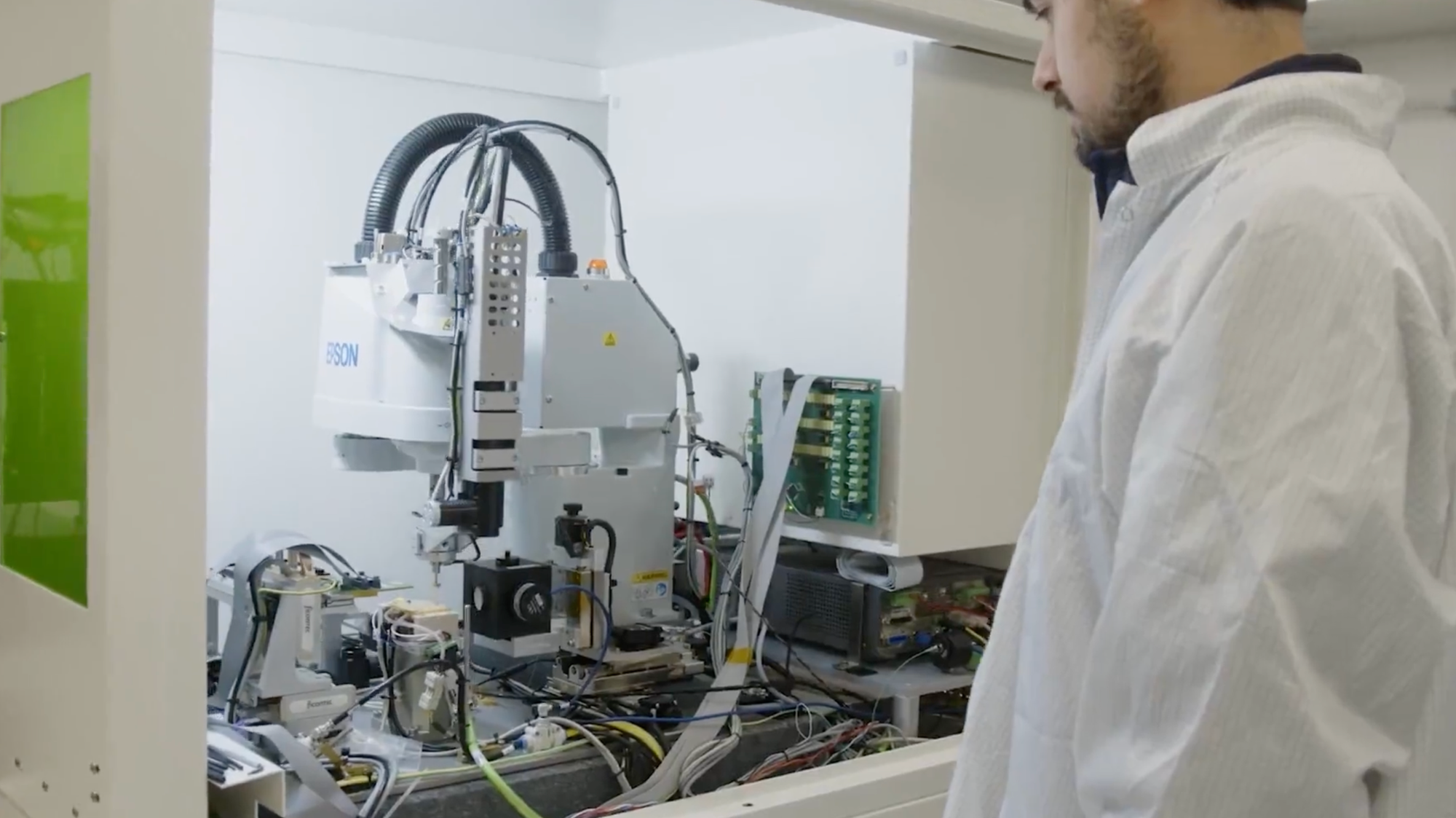
Ayar Labs replaces the copper wiring inside AI server racks with fiber optics, making chips talk to each other at the speed of light instead of electrons.
Founders
Mark Wade co-founded Ayar Labs around 2015 after developing silicon photonics technology at MIT and UC Berkeley. Wade holds a PhD in electrical engineering and spent 15 years refining the core interconnect technology before launching commercially. Both Nvidia and AMD are investors.
Product
Co-packaged optics that swap copper interconnections between AI chips for fiber-optic links. Data moves via photons instead of electrons, delivering four to 20 times the computing throughput per watt. The technology targets GPU clusters where copper's signal degradation limits scale. Pat Gelsinger, former Intel CEO and Ayar board member, who started a silicon photonics unit at Intel 23 years ago, says the company has "solved all these problems and is ready for high volume production."
Competition
Nvidia invested $2 billion each in Coherent and Lumentum the same day, signaling how seriously it takes optical interconnects. Intel spent two decades in silicon photonics research. Ayar's edge: 15 years solving the thermal, manufacturing, and packaging problems that kept co-packaged optics in the lab.
Financing 💰
$500M Series E from Neuberger Berman, MediaTek, Qatar Investment Authority, ARK Invest, Sequoia Capital, and 1789 Capital. Valued at $3.8 billion. Neuberger sees a "phenomenal opportunity" for a near-term IPO.
Future ⭐⭐⭐⭐
Copper is hitting a wall and Ayar built the ladder. Every AI company wants bigger GPU clusters, and physics says copper cannot scale fast enough. Nvidia spent $4 billion on two optical competitors the same week Ayar raised from Sequoia and the Qatar sovereign fund. When the biggest buyer in your market invests billions to develop what you already sell, the opportunity is real. The question is whether Ayar can scale manufacturing before those other bets catch up. ⚡
🔥 Yeah, But...
Zoë Hitzig, a researcher who spent two years shaping how ChatGPT was built, resigned the day OpenAI began testing advertisements in the product. She published a New York Times op-ed titled "OpenAI Is Making the Mistakes Facebook Made. I Quit." Ads now appear after a user's very first message, according to ad intelligence firm Adthena. In October 2024, CEO Sam Altman called advertising "uniquely unsettling."
Sources: The New York Times, February 2026 | Search Engine Land, February 19, 2026
Our take: Sixteen months from "uniquely unsettling" to your very first prompt. Not your tenth. Not after a long conversation where the model understands your intent. The first thing you type. Hitzig spent two years inside the building, saw the road map, and walked out the day the ads went live. Her op-ed named Facebook specifically. OpenAI hired its ad executive from Google. Target, Expedia, and Williams-Sonoma are already in the beta. Every conversation you've ever had with ChatGPT still exists somewhere. The people buying ad space know that. The 800 million people typing their problems into the chat box are finding out now.


