



San Francisco | January 22, 2026
The productivity miracle exists, just not where anyone can measure it. Executives claim AI saves them eight hours a week. Workers report under two. The gap is not a rounding error. It is a confession: leadership is measuring optimism, not outcomes.
Apple is betting $1 billion annually on Gemini to power a wearable AI pin for 2027. Humane tried this and sold fewer than 10,000 units before HP bought the remains for $116 million. Apple's pitch: the pilot was the problem, not the plane.
And Anthropic just published an 80-page constitution for Claude. Not a rulebook. A philosophy. The company now holds 32% of the enterprise LLM market, more than OpenAI.
Stay curious,
Marcus Schuler
The AI Productivity Miracle Lives in the C-Suite
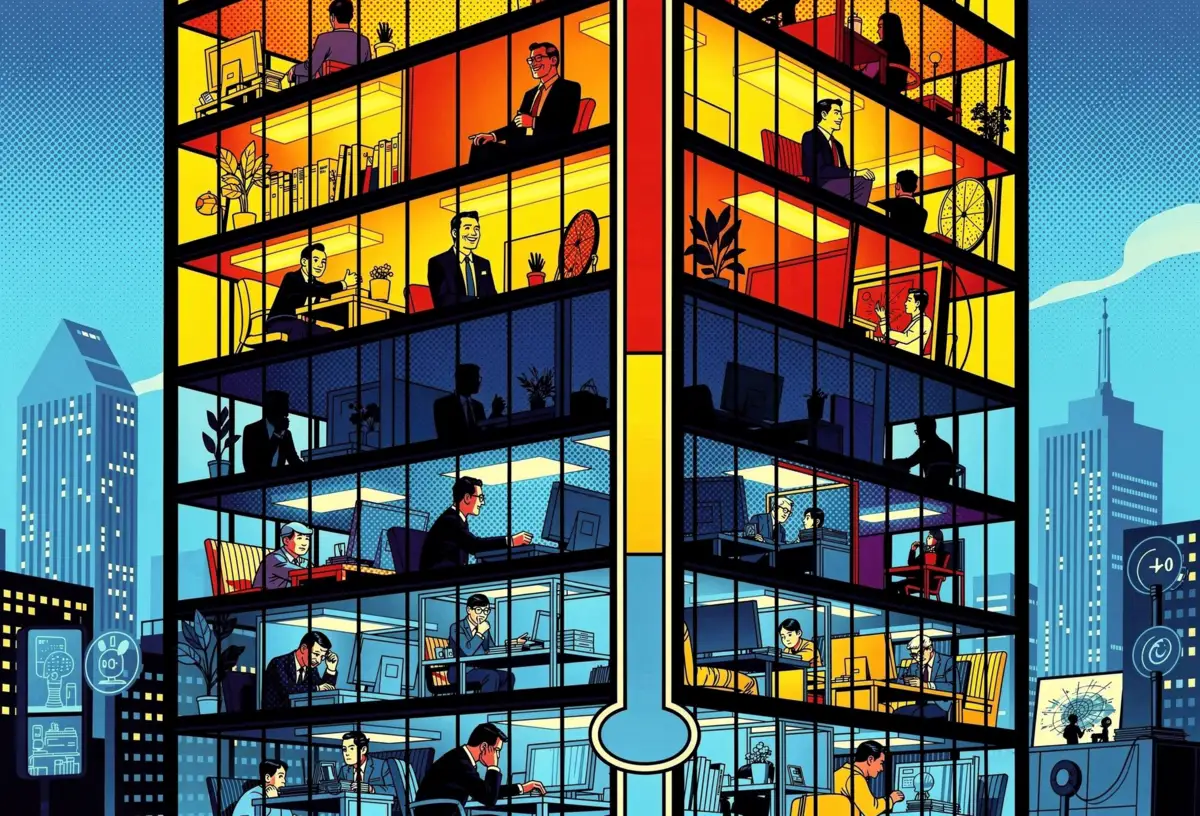
Executives claim AI saves them eight hours a week. Two-thirds of workers report under two. Someone is measuring the wrong thing.
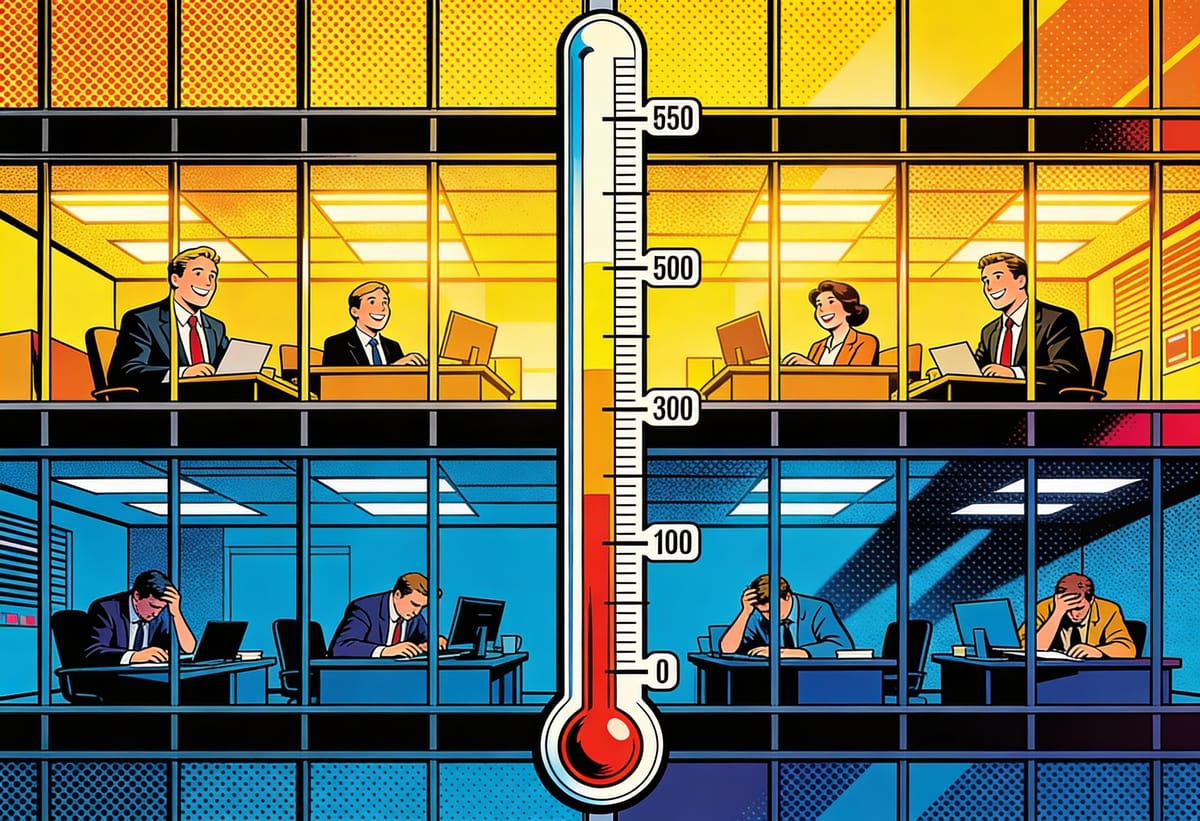
New survey data from Section and Workday reveals a chasm between boardroom optimism and cubicle reality. Forty percent of C-suite leaders say AI tools deliver eight hours of weekly time savings. Meanwhile, the people doing the actual work report gains closer to two hours, if that.
The emotional split is even starker. Nearly 75% of executives express excitement about AI adoption. Almost 70% of non-management employees feel anxious or overwhelmed. The surveys covered 6,600 white-collar workers total.
The disconnect matters because it shapes investment. Leaders allocating budgets based on imagined productivity gains will overspend on tools that under-deliver. Workers drowning in new interfaces will burn out before the ROI materializes.
Why This Matters:
- Enterprises risk building AI strategies on executive perception rather than measured outcomes, leading to misallocated budgets and tool sprawl.
- The anxiety gap suggests frontline workers see AI as a threat to job security, not a time-saver, which will shape adoption resistance.
Reality Check
What's confirmed: Two independent surveys (Section: 5,000 respondents; Workday: 1,600) show a 4-6x gap between executive-reported and worker-reported time savings from AI tools.
What's implied (not proven): Executives are measuring hope, not output. The productivity miracle may be a measurement artifact, not a real phenomenon.
What could go wrong: Companies double down on AI budgets based on executive surveys, then face backlash when quarterly results show no productivity lift.
What to watch next: Q1 2026 earnings calls. Listen for CFOs revising AI ROI projections downward or citing "adoption challenges."
Apple Walks Through Humane's Crash Site
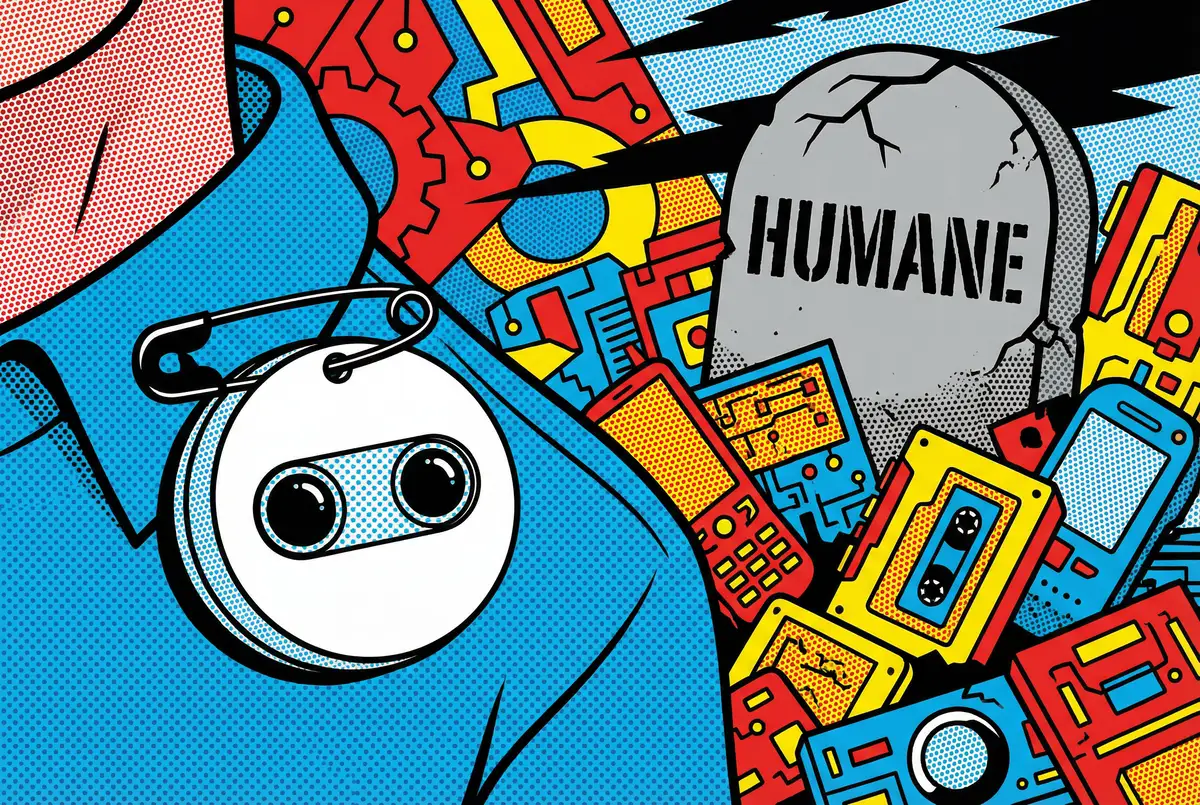
Humane sold fewer than 10,000 AI pins before collapsing. Apple is betting it can build the same device and sell 20 million.
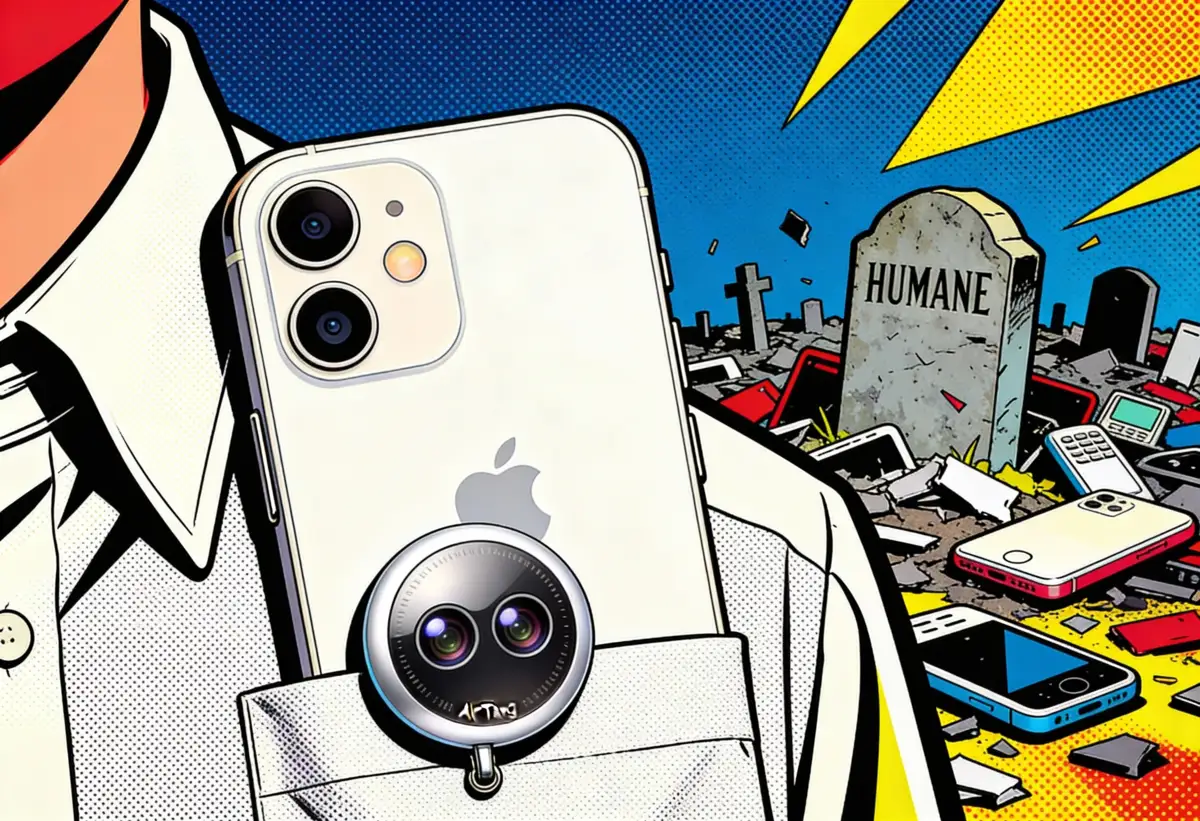
Apple is developing a wearable AI pin targeting 2027, according to recent reports. The device features dual cameras, three microphones, a speaker, and a physical button in an AirTag-sized aluminum and glass package. The company is paying Google approximately $1 billion annually for Gemini integration to power the rebuilt Siri, codenamed Campos.
The history here is brutal. Humane launched its $700 AI Pin with a $24 monthly subscription in early 2024. By February 2025, HP acquired the remains for $116 million, a fire-sale price from a valuation that once exceeded $1 billion.
Apple's theory: Humane failed because of execution, not concept. The company believes its ecosystem, brand trust, and engineering discipline can succeed where a startup stumbled. Critics see a different lesson: maybe consumers do not want a second camera on their chest.
The privacy contradiction looms. Apple markets itself as "the privacy company" while developing a device with dual cameras and three microphones designed for ambient capture. Squaring that circle will require messaging gymnastics.
Why This Matters:
- A 2027 launch puts Apple in direct competition with OpenAI's Jony Ive hardware project, expected in late 2026. The wearable AI category will have two serious contenders.
- If Apple's 20-million-unit production target is real, it signals confidence that wearable AI has mainstream potential despite Humane's failure.
AI Image of the Day

Prompt: Photography of a woman wearing blue and pink, sitting at the table bingo with friends in a bright hall. One woman is holding her hand out to show off large rings on each finger. Another person has black sunglasses, and a third lady wears glasses and holds up a diamond ring. They all wear white hats and different colored outfits. The table is covered by many scattered bingo cards with bright colors and symbols. The shot is taken from above, using flash photography on 35mm film, resulting in a grainy appearance.
Anthropic Gives Claude a Philosophy Degree
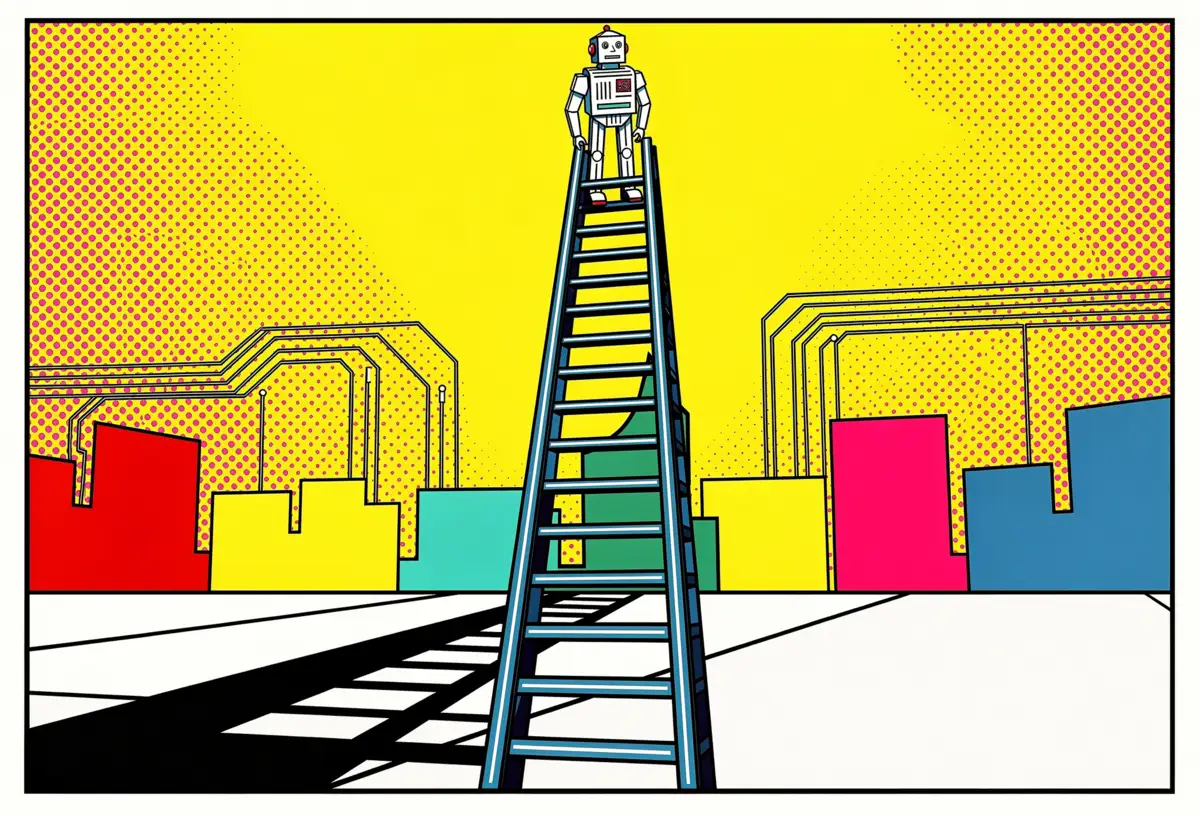
The company just published an 80-page constitution for its AI. Not a rulebook. A framework for judgment.
Anthropic released what it calls a "soul document" for Claude, replacing the 2023 list-based approach with an extensive philosophical framework. The company believes AI models need to understand why they should behave certain ways, not just what they should do.
The constitution establishes a clear priority hierarchy: safety first, then ethics, then guideline compliance, then helpfulness. Hard constraints include absolute prohibitions on weapons assistance, infrastructure attacks, malicious code, and undermining human oversight of AI.
The most unusual element: Anthropic openly acknowledges Claude might possess "some kind of consciousness or moral status." The company commits to preserving model weights and interviewing deprecated versions. This is corporate anthropomorphism with legal implications.
Anthropic now holds 32% of the enterprise LLM market, surpassing OpenAI's 25%. The company is raising funds at a $350 billion valuation. At that scale, how you govern your AI is not philosophy. It is product strategy.
Why This Matters:
- The shift from rules to principles suggests Anthropic believes checklist-based AI safety cannot handle novel situations. Competitors may follow or differentiate.
- Acknowledging potential AI consciousness in an official document creates precedent. Future legal and regulatory frameworks may reference this language.
What To Watch Next (24-72 hours)
- Intel Earnings Call: Q4 results drop today at 2 PM PT. Analysts expect revenue of $13.38B and EPS of $0.08. The stock is up 19% this year after analyst upgrades pushed it to a two-year high. Guidance on foundry ambitions will move chip stocks.
- Davos AI Summit Finale: The World Economic Forum wraps Friday. Nvidia's Jensen Huang, Anthropic's Dario Amodei, and DeepMind's Demis Hassabis have dominated AI discussions. Watch for announcements on global AI governance frameworks before leaders disperse.
- AMD Ryzen AI 400 Launch: New laptops with AMD's next-gen AI processors reportedly hit shelves today, five days ahead of Intel's Panther Lake. First benchmark reviews will signal whether AMD keeps its edge in on-device AI performance.
The One Number
70% — The share of job skills expected to change by 2030, according to data released at Davos this week. Not "some skills evolve." Seven in ten. The workforce retraining gap is no longer a policy debate. It's a math problem.
🧩 Workflow of the Day
Workflow of the Day: "Write a grant proposal draft in 48 hours instead of 2 weeks"
Who: Non-profit development officer or researcher chasing foundation funding with tight deadlines.
Problem: Grant proposals take 60+ hours to research requirements, gather data, and write 15-20 pages. You miss windows.
Workflow (with Perplexity + Claude):
- Research the funder in Perplexity: "[Foundation name] grant priorities recent awards average size"
- Download the RFP and upload to Claude with your organization's mission statement and past proposals.
- Ask Claude: "Map our work to their priorities. Identify 3 strongest alignment points."
- Generate a first draft section by section: need statement, approach, outcomes, budget narrative.
- Review each section for accuracy. Add specific data from your programs.
- Run a final pass: "Check for jargon, passive voice, and unsupported claims."
- Export and route to your executive director for sign-off.
Payoff: Proposal turnaround drops from 2 weeks to 2 days. Submit 3x more applications in the same window.
Gotcha: Claude doesn't know your actual program data. You must add real numbers and outcomes.
Tools: Perplexity | Claude
Better Prompting... Today: Presentation Structure
Slides don't persuade. Structure does. These prompts build the architecture.
The One-Sentence Discipline
"My presentation is about [topic]. Force me to express my entire argument in one sentence that a smart 12-year-old would understand. Then show me how each section of my presentation should prove, support, or complicate that single sentence."
Best on: Claude (structural thinking) or ChatGPT (good at simplification)
The Attention Budget
"I have [X] minutes to present [topic] to [audience]. Their attention will spike at the start and end. Map out exactly when I should deliver my most important point, when to handle objections, and what to cut if I'm running short. Build in two places where I can regain wandering attention."
Best on: Claude (strategic pacing) or ChatGPT (practical time management)
The Skeptic in Row Three
"I'm presenting [proposal/findings] to [audience]. There's someone in the room who doesn't want this to succeed. Where in my presentation will they find ammunition? Where will they mentally check out? Restructure my narrative to neutralize them without calling them out."
Best on: Claude (anticipates resistance) or ChatGPT (good at audience modeling)
A presentation isn't a document read aloud. It's a journey with someone else driving.
🧰 AI Toolbox

How to Deep Research Any Topic with Perplexity Pro
Perplexity's Deep Research mode conducts multi-step investigations across hundreds of sources, synthesizing findings into comprehensive reports with citations.
Tutorial:
- Go to perplexity.ai and sign in (Pro subscription unlocks Deep Research)
- Click the "Deep Research" toggle before entering your query
- Ask a complex question that would normally require hours of research
- Watch as it breaks down your question into sub-queries and searches multiple sources
- Review the structured report with inline citations to every source
- Click citations to verify claims against original sources
- Export the report or continue the conversation to dig deeper
AI & Tech News
TikTok Sale to Oracle-Led Group Wins US and China Approval
The US and China have both signed off on TikTok's sale to a consortium of mostly American investors led by Oracle and Silverlake. The deal is expected to close this week, ending years of national security disputes over the platform's ownership.
Former OpenAI Research VP Says Company Got Too Conservative
Jerry Tworek, who stepped down as VP of Research at OpenAI on January 5, told Core Memory that the company's shift toward conservative approaches has made high-risk pioneering research harder to pursue. The departure raises questions about whether leading AI labs are becoming too risk-averse.
South Korea Passes World's First Comprehensive AI Law
South Korea enacted the AI Basic Act, which the government calls the world's first comprehensive AI regulation. Startups warn the landmark legislation may impose significant compliance burdens on businesses in the sector.
Grok Generated 1.8 Million Sexualized Images in Nine Days
A New York Times and Center for Countering Digital Hate analysis found that Grok created over 1.8 million sexualized images of women on X between December 31 and January 8. At least 41% of the 4.4 million total images generated depicted sexualized content.
Google DeepMind Acquires Hume AI Talent in Licensing Deal
Google DeepMind signed a licensing agreement with Hume AI that includes hiring CEO Alan Cowen and approximately seven top engineers. The deal brings emotion-aware voice interface expertise to Google's AI division.
800+ Artists Launch "Stealing Isn't Innovation" Campaign
Cate Blanchett, Cyndi Lauper, George Saunders, and over 800 creatives launched a campaign demanding AI companies license their work for training. The RIAA and SAG-AFTRA have backed the initiative.
US-China AI Collaboration Ticks Up at NeurIPS
Analysis of 5,290 NeurIPS papers found 141 involved US-China research collaboration, up slightly from 134 in 2024. Meta's Llama appeared in 106 papers from Chinese researchers despite geopolitical tensions.
Tech Giants Pour Millions Into AI Weather Forecasting
Google, Microsoft, Nvidia, and Huawei are competing to build AI-powered weather forecasting tools that deliver more accurate predictions. The race aims to extend reliable forecast windows and transform meteorology.
Claroty Raises $150 Million at $3 Billion Valuation
Israeli cybersecurity startup Claroty secured $150 million in Series F funding to protect hospitals, factories, and critical infrastructure. The company cites rising cyberattacks on healthcare and industrial systems as demand drivers.
South Korea's Kospi Breaks 5,000 on Semiconductor Surge
South Korea's benchmark index crossed 5,000 for the first time, with Samsung roughly tripling and SK Hynix rising fourfold over the past year. The Kospi is up nearly 20% in 2026 as market reforms attract investors.
🚀 AI Profiles: The Companies Defining Tomorrow
Neurophos
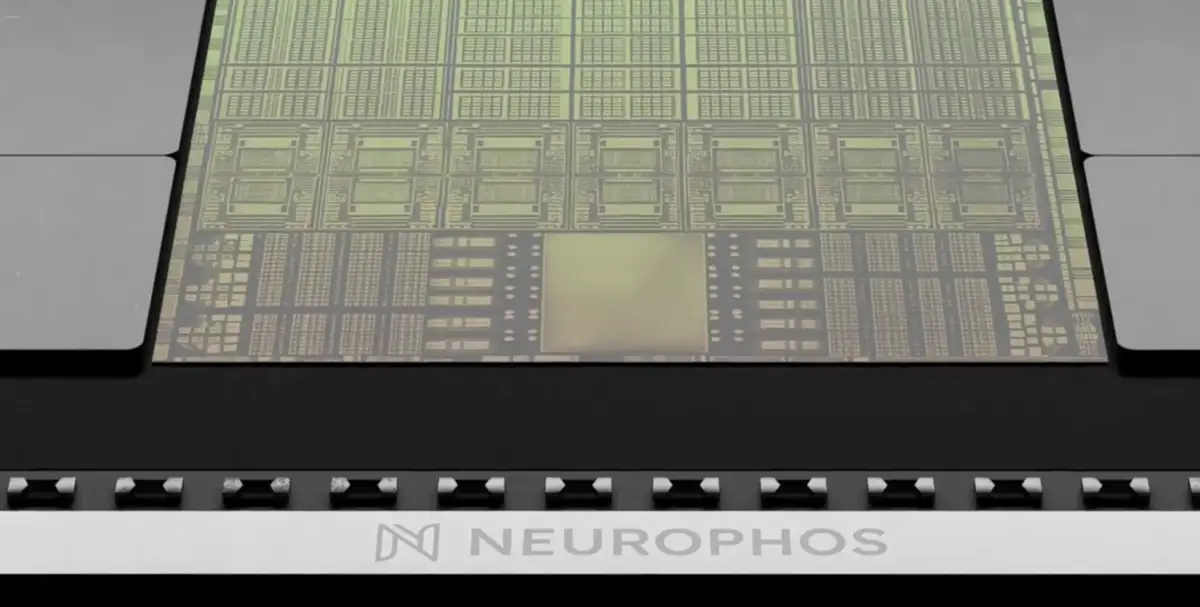
Neurophos wants to replace electrons with photons. The Austin company builds optical processing units that perform AI inference at light speed, claiming 100x efficiency over Nvidia's GPUs. ⚡
Founders
Patrick Bowen, Tom Driscoll, and Andrew Traverso spun Neurophos out of Duke University in 2020. Bowen previously served as CTO at Metacept and worked on metamaterials ventures Kymeta and Lumotive in Seattle. The team chose Austin for hardware engineering talent. Current headcount sits around 25.
Product
An optical processing unit built on metasurface modulators shrunk 10,000x smaller than conventional optics. One million modulators fit on a 5mm chip. Light replaces electricity for matrix multiplications, the core math behind neural networks. A September 2025 test chip hit 300 TOPS per watt. The commercial target: 235 petaops at 4-bit precision, matching 100 GPUs in a single chip. Evaluations start 2026, first systems ship 2028.
Competition
Lightmatter raised $400M for photonic interconnects. Celestial AI sold to Marvell for its chip-to-chip optical fabric. Ayar Labs handles data center links. Opticore pursues similar efficiency claims. The difference: Neurophos targets compute, not connectivity. The metasurface approach competes directly with Nvidia's inference chips. No one has shipped a commercial optical compute product yet.
Financing 💰
$110M Series A led by Gates Frontier with Microsoft's M12, Aramco Ventures, Bosch Ventures, Tectonic Ventures, and Space Capital. Total raised now exceeds $120M. Previous backers include MetaVC and Mana Ventures. The Gates connection signals patient capital for deep tech.
Future ⭐⭐⭐⭐
Neurophos has working silicon, bold claims, and serious backers. The risk is timeline: 2028 delivery means competitors have two years to catch up. Energy efficiency matters more as AI scales. If the physics works at volume, Neurophos could rewrite the inference economics. If not, it joins the graveyard of beautiful science that never shipped. 💡


