
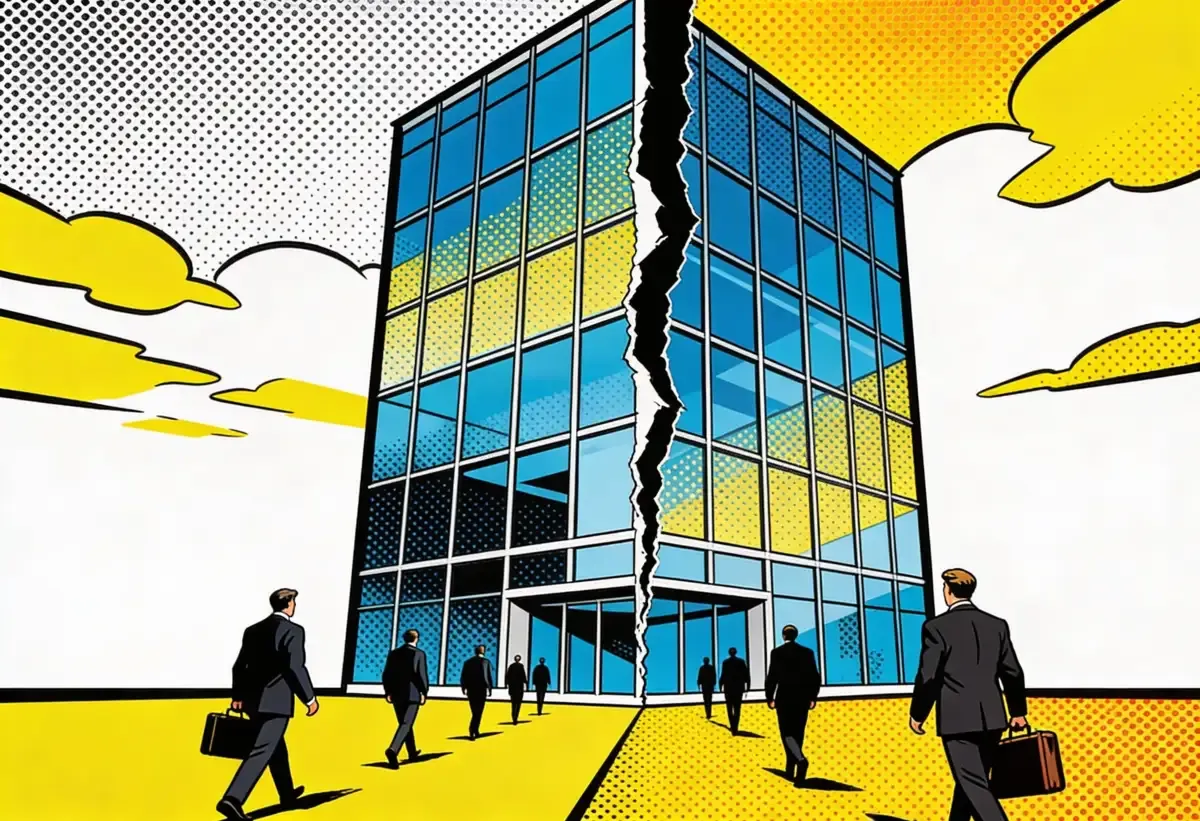
The all-hands went sideways. Mira Murati called the meeting Thursday to address the departure of CTO Barret Zoph. The call ran short. By the time it ended, more employees had decided to leave. According to tech journalist Alex Heath, at least a few resigned that day, some before the Q&A even started. Others are in talks to follow.
If you read the headlines, you came away thinking this was about ethics. A CTO fired for "unethical conduct." Confidential information shared with competitors. Drama at an AI startup. But a source familiar with Thinking Machines told WIRED something that points to a different story: "This has been part of a long discussion at Thinking Machines. There were discussions and misalignment on what the company wanted to build. It was about the product, the technology, and the future."
If you take the press release at face value, this is a scandal about a leaky CTO. If you look at the timeline, it's a structural failure. A company whose leadership never agreed on its direction.
The Breakdown
• More employees resigned after Thursday's all-hands; others are in talks to follow the three founders back to OpenAI
• The $50 billion funding round has stalled amid questions about product direction and leadership clarity
• Tinker, a fine-tuning API, remains the only product. No foundation model has been trained.
• Chief Scientist John Schulman is now the sole original research leader still at the company
The funding question nobody wants to answer
Six months ago, Thinking Machines closed a $2 billion seed round at a $12 billion valuation. Andreessen Horowitz led. Nvidia, AMD, Accel, and Jane Street participated. Everyone wanted in. The bet was straightforward: Murati had assembled the team that built ChatGPT's post-training systems. Give them capital, give them compute, and they'd build something that mattered.
By November, Bloomberg reported the company was in talks to raise at a $50 billion valuation. Some sources said it could reach $55 billion or $60 billion. That round hasn't closed. Benzinga reports that Thinking Machines has struggled to secure additional funding and that leadership hasn't defined a clear product direction.
This article continues below.
Sign up once, read everything for free. No algorithms, no fluff—just the AI intel that actually matters for your work.
Get free access →