IMPLICATOR
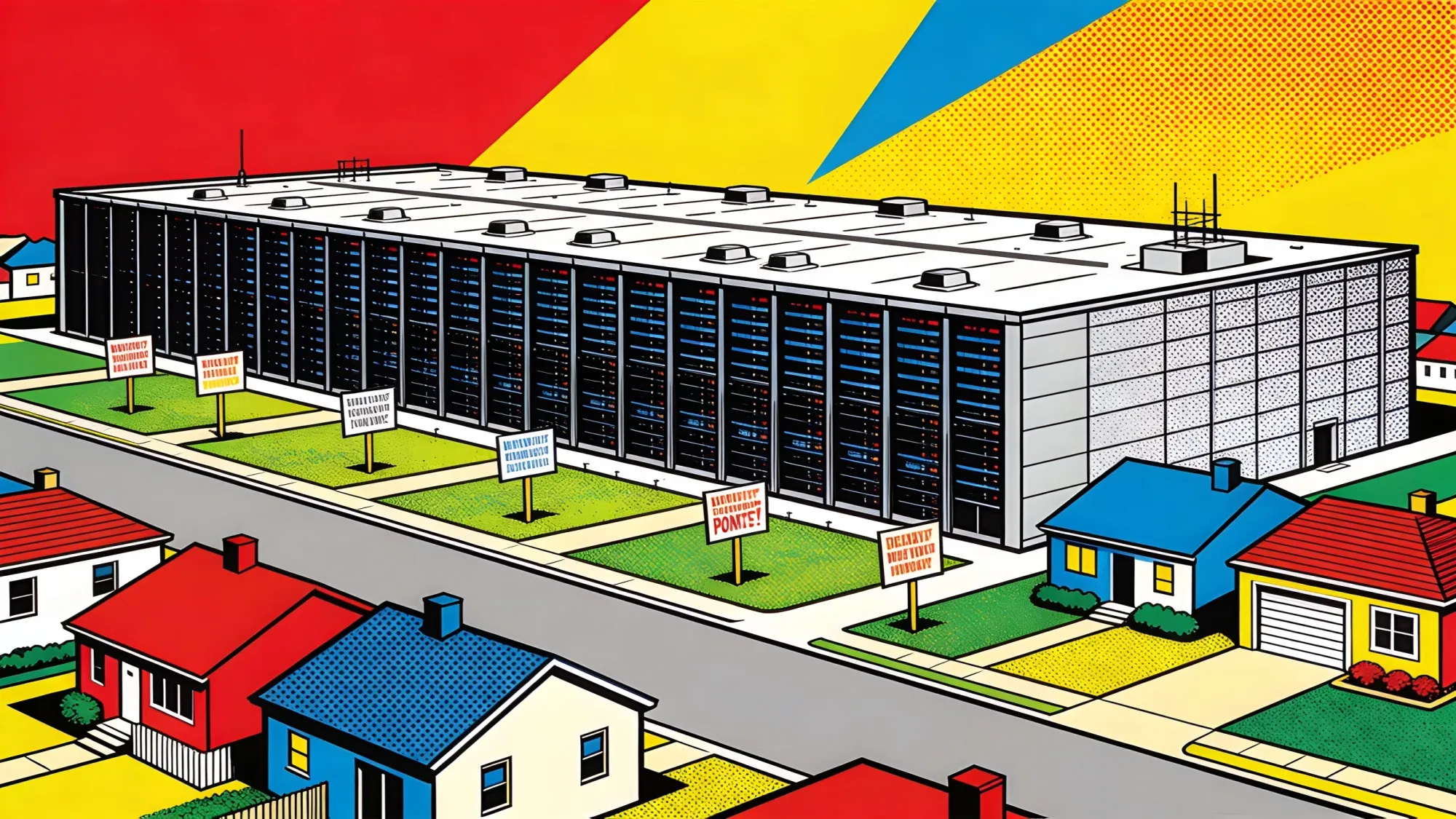
President Donald Trump said communities that reject data centers are “making a mistake” in an interview that aired in full on Sunday, even as 61% of U.S. adults opposed a new data center in their area, including 54% of Republicans. He added that the facilities create “tremendous amounts of jobs and money.” The remarks put Trump at odds with Republican officials who have begun treating local resistance as an electoral and infrastructure problem.
What the numbers show
- Trump says communities that reject data centers are making a mistake, while 61% of U.S. adults oppose a new local project, including 54% of Republicans.
- Brookings found that a county’s first large data center was associated with roughly 100 to 200 jobs over its first decade and no change in wages.
- A Washington audit found $42.4 million in estimated tax savings, 53 reported permanent jobs that the state had not verified, and no new urban facility under the preference.
- An industry-supported Virginia study counted statewide spillover effects, making its 112,000-job estimate incomparable with site-level employment figures.
AI-generated summary, reviewed by an editor. More on our AI guidelines.
The Republican break
Texas Gov. Greg Abbott said developers had “dug their own grave” after failing to secure local support. He ordered regulators to audit projects seeking connections to the Texas grid. Abbott later said fewer than 10% of companies answered a state request for information needed to forecast power demand.
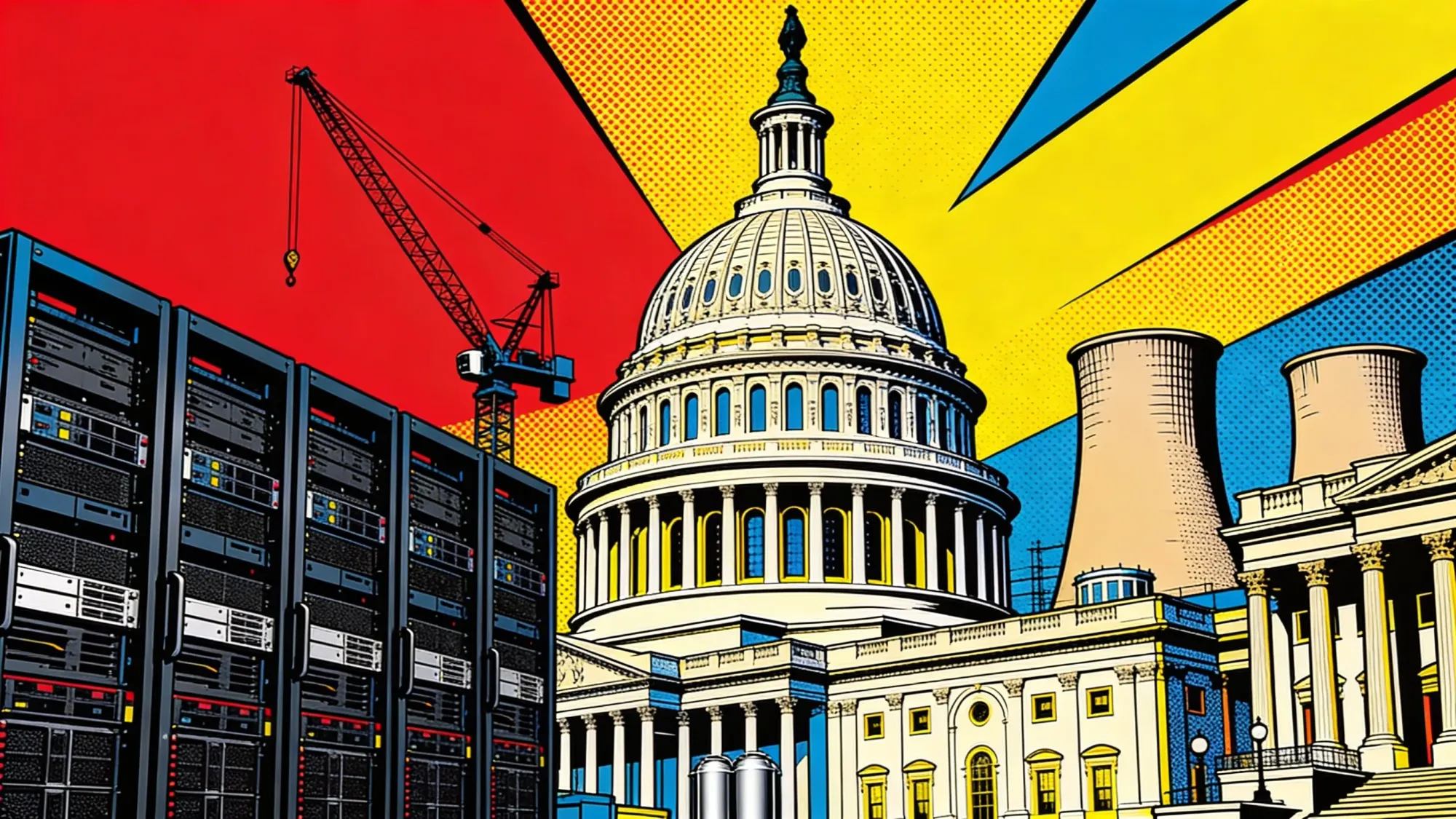
Trump’s answer to that grid concern is that data centers are building their own power plants and are not taking electricity from the grid. Some projects use generation behind the meter, but others rely on public systems. Federal regulators ordered all six regional grid operators under their jurisdiction on June 18 to justify or reform rules for connecting large loads, including protections against shifting transmission costs to other customers.
The Annenberg survey covered a nationally representative sample of 1,320 U.S. adult citizens and was fielded from June 16 through July 19. The 61% opposition reading was up from 49% in a survey fielded in February and March, a 12-point increase over about four months.
The jobs evidence
Independent research supports a smaller local employment claim than Trump’s broad formulation. A study updated in August compared about 1,500 operating facilities with 52 announced but canceled projects using county labor data from 2003 through 2024. A county’s first large facility was associated with roughly 100 to 200 jobs over its first decade, unchanged wages and home-price gains of 2% to 5%.
A Washington legislative audit found that an urban tax preference saved beneficiaries an estimated $42.4 million from fiscal 2023 through 2026. Beneficiaries reported 53 permanent family-wage jobs and 296 temporary construction and trade jobs. The state had not verified the permanent positions, and no new urban facility was built under the preference.
FREE WEEKDAY MORNING BRIEFING
Independent reporting on AI’s real-world costs
The Implicator Morning Briefing filters the AI news cycle to the stories worth your attention and explains their consequences. From San Francisco, every weekday at 4:45 a.m. Pacific, 7:45 a.m. Eastern.
About five minutes. No hype. No spam.
The industry countercase
An industry-supported Virginia study counted nearly $40 billion in statewide economic activity during 2025, more than 112,000 direct, indirect and induced jobs, and over $1.5 billion in state tax revenue. One utility, one data-center company, one fuel-management firm and several economic-development organizations supported the report.
Know someone who'd find this useful? ✉️ Email it to a friend in one click, or they can subscribe free here.
The figures describe different measures. Trump’s jobs claim was not tied to a particular site, while the studies measure local direct employment, temporary construction work and statewide spillover effects. Their job totals cannot be treated as comparable.
Power costs remain unsettled
The White House launched the Ratepayer Protection Pledge in March as a voluntary initiative. Amazon, Google, Meta, Microsoft, OpenAI, Oracle and xAI signed it. The companies agreed to build, bring or buy new generation, cover power-delivery infrastructure upgrades, and negotiate separate rate structures with utilities and state governments. They also committed to paying those rates whether they use the electricity or not. The initiative is intended to keep those expenses from being passed to American households.
The political split reaches beyond governors. Nearly 200 activists aligned with Robert F. Kennedy Jr.’s Make America Healthy Again movement signed an Aug. 21 letter opposing Trump’s promotion of coal for data-center power and seeking public review of project locations and energy sources.
Frequently Asked Questions
What did Trump say about communities that reject data centers?
Trump said they are “making a mistake” and argued that data centers create “tremendous amounts of jobs and money.”
How much public opposition is there to local data centers?
An Annenberg survey fielded from June 16 through July 19 found that 61% of U.S. adults opposed a new data center in their area, including 54% of Republicans. Overall opposition was 49% in the prior survey.
How many local jobs does a large data center create?
A Brookings study associated a county’s first large facility with roughly 100 to 200 jobs over its first decade. A Washington audit separately reported permanent and temporary positions tied to a tax preference. Statewide industry estimates include indirect and induced jobs, so the totals are not comparable.
What is the Ratepayer Protection Pledge?
It is a voluntary White House initiative signed by Amazon, Google, Meta, Microsoft, OpenAI, Oracle and xAI. The companies agreed to secure new power, cover delivery-infrastructure upgrades, negotiate separate rates and pay those rates whether they use the electricity or not.
AI-generated summary, reviewed by an editor. More on our AI guidelines.

Free AI briefing · Weekdays
The AI stories that matter, sourced and explained.
Join the Morning Briefing. It goes out every weekday at 4:45 a.m. Pacific, with later sends for the East Coast, Berlin and Tokyo.
Free when you sign up: The Paperclip Compendium, our tested guide to running AI agents.
Free. Unsubscribe in one click.

Marcus Schuler
Editor-in-Chief and founder of Implicator.ai. Former ARD correspondent and senior broadcast journalist with 10+ years covering tech. Writes daily briefings on policy and market developments. Based in San Francisco. E-mail: editor@implicator.ai