IMPLICATOR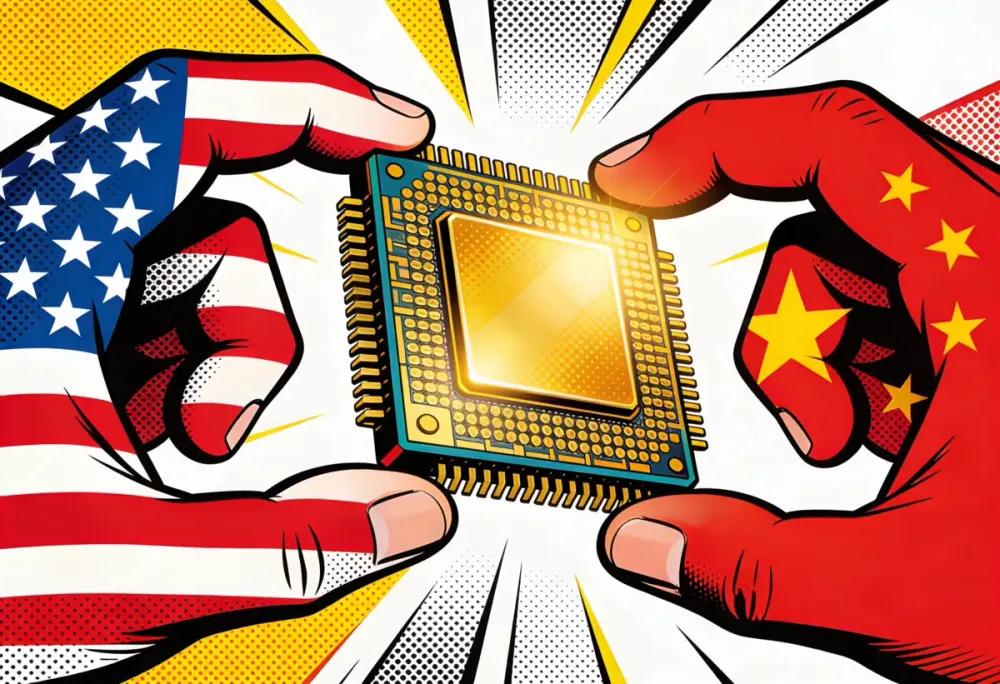
The Trump administration spent Tuesday morning doing something the Biden White House had explicitly refused to do: handing Nvidia a license to ship advanced AI chips to China. The Commerce Department published new rules. Export applications would be reviewed case-by-case instead of denied by default. H200 processors, Nvidia's second-most-powerful silicon, could legally cross the Pacific.
By afternoon, the celebration had a problem. Beijing told its own tech companies to pause their orders.
The directive didn't arrive on official letterhead with a red stamp. It came through phone calls and quiet dinners: Don't sign the check. The Information reported that Chinese officials issued instructions to buy only when "necessary." University research labs might qualify. Commercial AI training runs apparently would not. A chip that Washington had blocked for years, then grudgingly approved, was now being soft-blocked by the very customers who were supposed to want it.
Two million H200s are gathering dust in Taiwan warehouses, burning electricity to stay cool while bureaucrats in two capitals argue about whether they should move. Nvidia has maybe 700,000 units ready to ship. And neither government seems sure whether the transaction should actually happen.
The Breakdown
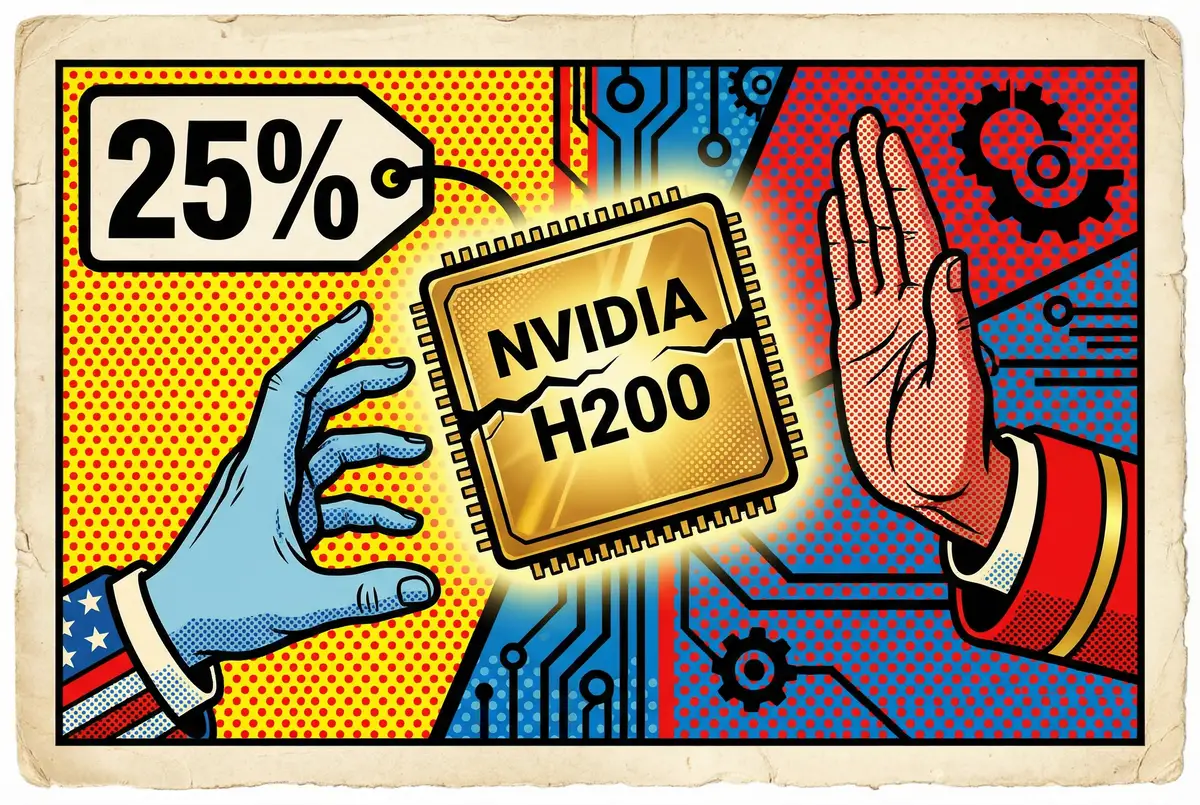
• Trump approved H200 exports with 25% government cut, but Beijing told its companies to pause orders the same day.
• Two million chips on order at $27,000 each represents $54 billion in potential revenue now in limbo.
• New rules cap China at 50% of U.S. volume and require KYC procedures typically used in banking.
• Nvidia shifted to 100% upfront payment from Chinese buyers, signaling doubt the deal will close.
The deal that wasn't quite a deal
President Trump announced the arrangement in December, framing it as a win for American power. Nvidia could sell. The U.S. government would collect 25 percent of the revenue. Chinese companies would get access to hardware they desperately need. Handshakes all around.
Then you read the fine print published Tuesday. The constraints are suffocating. Nvidia must certify domestic supply first. Chinese buyers are capped at 50 percent of volume. Third-party labs must verify performance specs. And those Chinese buyers must demonstrate "sufficient security procedures" and formally attest that the chips will not touch military applications. It is a sales contract written by a prosecutor.
Here is where the math stops working. How exactly does a lab in Shenzhen prove it will never divert a GPU to a defense contractor? The Commerce Department's answer is Know Your Customer procedures. The same framework banks use to prevent money laundering now applies to semiconductors.
But enforcement remains an open question. Jay Goldberg, an equities analyst at Seaport Research, called the regulations "a Band-Aid, a temporary attempt to cover the huge gap among the U.S. government's export policy makers." Chinese companies have found ways around previous restrictions. These rules assume they will suddenly start following them.
Stay ahead of the chip wars
Strategic AI news from San Francisco. No hype, no "AI will change everything" throat clearing. Just what moved, who won, and why it matters. Daily at 6am PST.
No spam. Unsubscribe anytime.
Beijing's counter-move
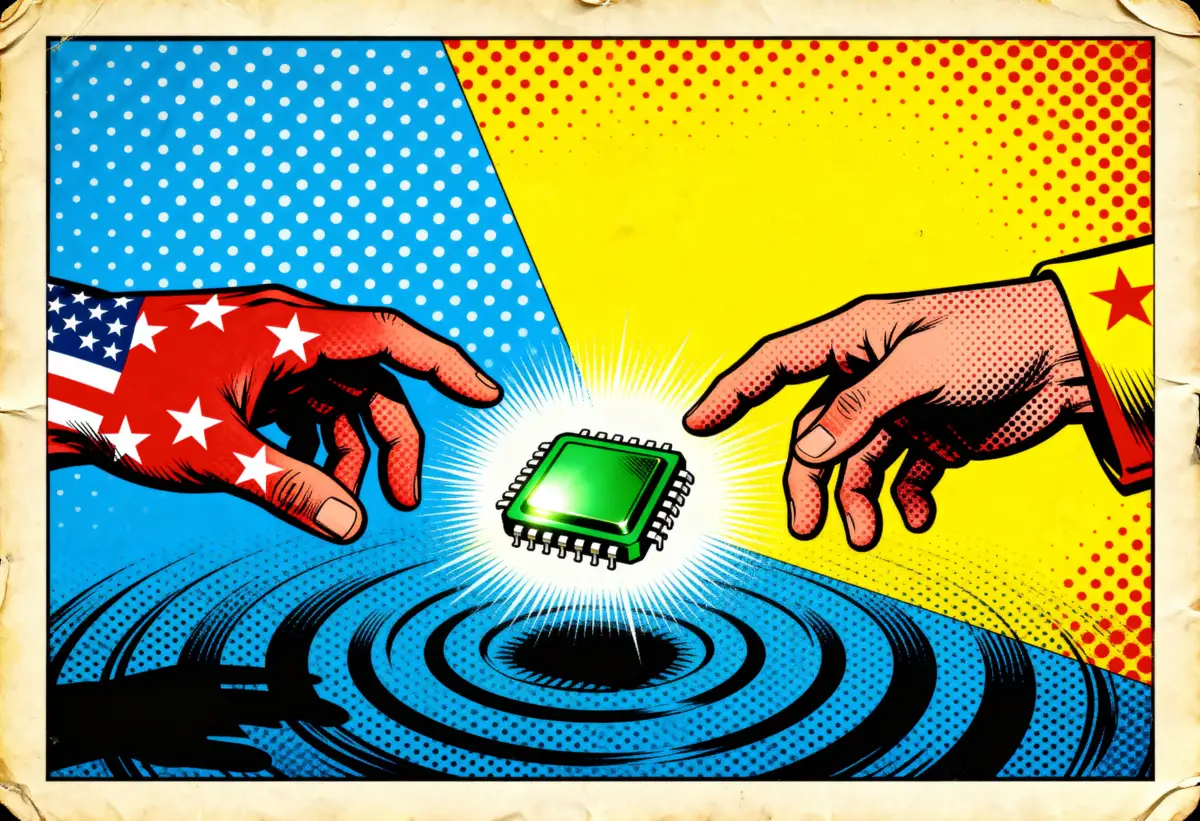
If Washington expected gratitude from Chinese buyers, it miscalculated. The purchase pause signals something deeper than bureaucratic caution. Beijing is looking at the H200 and seeing a trap.
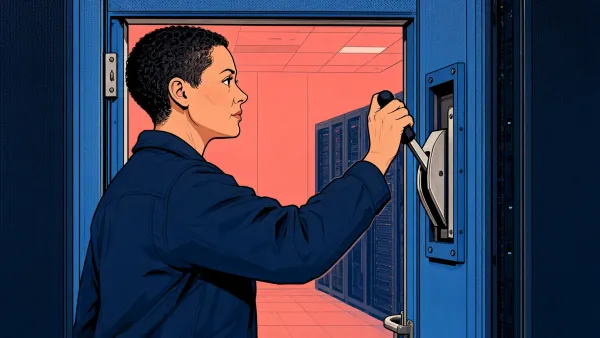
Washington isn't just opening a door. They are installing a dimmer switch. By flooding China with H200s, the U.S. ensures that Chinese AI runs on American hardware, hardware that Washington can dim, brighten, or shut off with a single signature. Beijing looked at the switch and decided they'd rather sit in the dark than let the Americans control the lights.
Beijing poured billions into domestic fabs. Huawei stopped waiting for Nvidia and started building its own Ascend line. Research labs learned to squeeze performance from second-tier hardware. Now that the door is cracking open, China's regulators are asking whether their companies should walk through it, or whether walking through it hands Washington exactly what it wants: dependency.
Some Chinese officials have floated requiring domestic companies to buy a certain ratio of homegrown chips for every Nvidia processor they acquire. Others simply want to wait. The message to tech executives: We're not saying no. We're not saying yes. Keep your checkbook closed until we figure this out.
The pricing tells the story
Nvidia has been watching this drama unfold from Santa Clara, and the company has quietly adjusted its terms.
Chinese buyers now pay upfront. Full amount. No deposits, no flexibility, no refunds. The commercial relationship that once included standard payment terms has been replaced by something closer to cash-on-delivery. Nvidia is shifting risk to the purchaser, which makes sense when neither government can commit to the transaction actually completing.
Huang put it bluntly this month: Chinese approval will show up "quietly in purchase orders, not press releases." Nobody is expecting fanfare. The actual buying, if it happens, will be invisible until it's done.
At $27,000 per chip, the 2 million units on Chinese order books represent roughly $54 billion in potential revenue. Nvidia's current inventory covers barely a third of that demand. The company has reportedly asked TSMC to ramp production. But building chips takes time. Policy reversals can happen overnight.
The argument for selling
White House AI chief David Sacks has made the case for exports publicly. Shipping H200s to China, he argues, actually hurts Chinese competitors. When ByteDance or Alibaba buy Nvidia hardware, they're not funding Huawei's catch-up effort. American technology becomes the foundation for Chinese AI systems, which is better than the alternative.
The logic has a certain elegance. China will develop AI capabilities regardless. The question is whether they do it on American silicon or on domestically produced alternatives that Washington cannot control. Every Nvidia chip in a Chinese data center is a customer who isn't buying from Huawei's Ascend line.
Daily at 6am PST
Don't miss tomorrow's analysis
No breathless headlines. No "everything is changing" filler. Just who moved, what broke, and why it matters.
Free. No spam. Unsubscribe anytime.
But former Biden administration officials see the same data differently. Saif Khan, who ran technology and national security at the NSC, pointed out that 2 million H200s would give China compute power equivalent to what a typical U.S. frontier AI company owns today. The competitive advantage that export controls were designed to preserve evaporates if you ship the chips anyway.
Democrats in Congress have been blunter. The policy shift, they argue, will supercharge Beijing's military and accelerate the erosion of American technological leadership. Rishi Sunak, Britain's former prime minister, called it "naive" to assume the processors would stay in commercial applications.
Eighteen months behind, but catching up
The H200 is not Nvidia's best chip. It launched more than two years ago. The Blackwell generation is already shipping to American buyers. The Vera Rubin architecture is in development. By the time Chinese companies can reliably purchase H200s, the hardware will be two generations behind the cutting edge.
That gap matters less than it appears. Frontier AI models require enormous compute, but most commercial applications do not need state-of-the-art silicon. Training runs that once required Blackwell-class hardware can often be replicated on older chips with more time and more units. China doesn't need the fastest GPU. It needs enough GPUs.
And 2 million is enough. Spread across research labs, cloud providers, and AI startups, that volume could transform China's competitive position. The export controls were premised on scarcity. This arrangement introduces abundance.
The real tell
Watch the order flow, not the press releases. That was Huang's advice, and it applies to both sides.
Washington's regulations assume good-faith compliance from buyers who have already demonstrated creative approaches to previous restrictions. Beijing's directive assumes that dependence on American hardware is a strategic vulnerability. Neither assumption survives contact with the other.
But Nvidia's new payment terms tell you everything you need to know. You don't demand 100 percent cash upfront from a partner you trust. You demand it from a customer you expect to lose.
The door is open. Nobody expects anyone to walk through it.
Frequently Asked Questions
Q: What chips did the Trump administration approve for export to China?
A: The H200, Nvidia's second-most-powerful AI processor. The more advanced Blackwell generation remains blocked. The H200 launched over two years ago and is roughly 18 months behind Nvidia's current cutting-edge offerings.
Q: How much does the U.S. government receive from these sales?
A: Trump announced a 25 percent cut of all H200 sales to China would go to the U.S. government. At $27,000 per chip with 2 million units on order, the potential government take could reach $13.5 billion if all orders were fulfilled.
Q: Why is Beijing telling Chinese companies not to buy?
A: Beijing views dependency on American chips as a strategic vulnerability. Washington could cut off access again with a single executive order, giving the U.S. permanent leverage over Chinese AI development. Some officials want domestic chip ratios instead.
Q: What restrictions apply to Chinese buyers?
A: Chinese buyers are capped at 50% of U.S. sales volume, must pass Know Your Customer procedures, undergo third-party testing, certify no military use, and now pay 100% upfront. Nvidia must also certify sufficient domestic U.S. supply first.
Q: What does Nvidia's shift to upfront payment signal?
A: Nvidia replaced standard payment terms with full cash upfront, no deposits, no flexibility, no refunds. This shifts all transaction risk to Chinese buyers and suggests the company expects many orders may never complete due to policy reversals.
Free AI briefing · Weekdays
The AI stories that matter, sourced and explained.
Join the Morning Briefing. It goes out every weekday at 4:45 a.m. Pacific, with later sends for the East Coast, Berlin and Tokyo.
Free when you sign up: The Paperclip Compendium, our tested guide to running AI agents.
Free. Unsubscribe in one click.

Marcus Schuler
Editor-in-Chief and founder of Implicator.ai. Former ARD correspondent and senior broadcast journalist with 10+ years covering tech. Writes daily briefings on policy and market developments. Based in San Francisco. E-mail: editor@implicator.ai