IMPLICATOR
WhatsApp on Thursday rolled out an update to its AI-powered Writing Help feature that generates suggested message replies based on users' conversations, the Meta-owned company announced in a blog post. The update expands a tool that previously only rephrased or adjusted the tone of messages users had already typed, turning it into something more forward-leaning: an AI that proposes what to say next. The change arrives as Meta pushes its assistant deeper into a 3.3 billion-user messaging platform while regulators in Europe and Brazil fight the company's grip on which AI services can operate inside WhatsApp.
Key Takeaways
- WhatsApp's Writing Help now generates full reply suggestions from conversation context, moving beyond simple rephrasing
- Meta's Private Processing claims end-to-end privacy, but Stanford researchers warn AI inference risks persist at scale
- Brazil and EU regulators forced Meta to open WhatsApp to rival AI chatbots while the company charges competitors per message
- Recipients receive no disclosure that a message was AI-generated
From rephrasing to replying
When Writing Help first launched in August 2025, it did less. You typed something, tapped the pencil icon, and picked whether you wanted it rewritten as professional or funny or supportive. Three alternate versions came back. Pick one, send it, move on. WhatsApp's own demo had someone asking for help with "Please don't leave dirty socks on the sofa." The machine came back with "Hey, sock ninja, the laundry basket is that way." Cute, but limited.
Back then, the AI touched only what sat in the text field. Nothing else. It could not see the rest of the conversation.
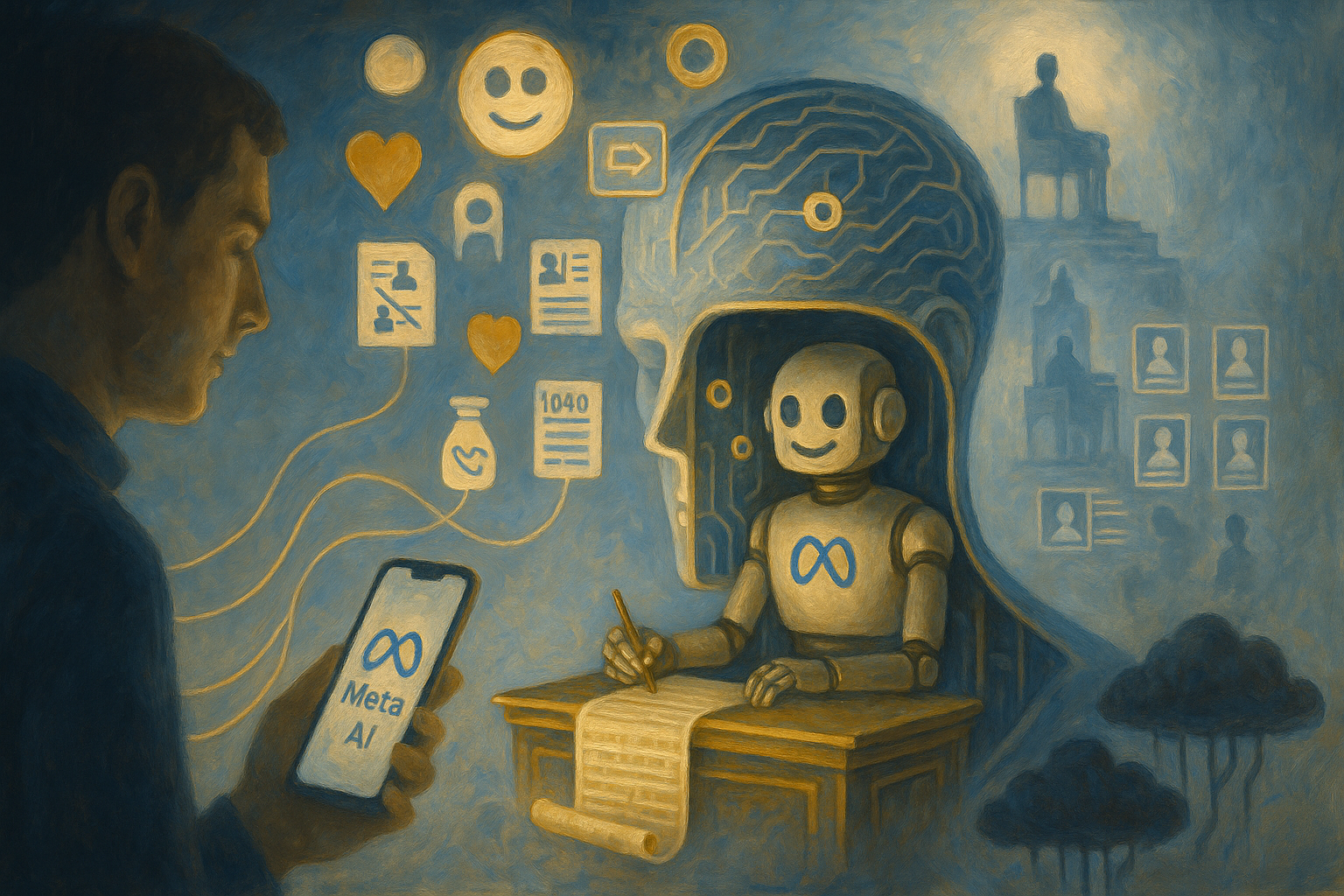
Thursday's update changes that equation. Writing Help now reads conversation context to suggest replies, shifting from a passive editing tool to an active participant in the exchange. Meta says the updated version helps users get their message "just right."
That gap matters more than Meta wants to admit. A tool that cleans up your grammar is a spell-checker with flair. A tool that reads your conversation and tells you what to say next is ChatGPT wearing a WhatsApp skin. Meta is betting users will pick the built-in option over copying text into a separate app. TechCrunch put it plainly: the company "is likely hoping that people use its in-app technology when drafting messages, rather than external tools like ChatGPT."
Getting to the feature takes three taps: chat bar, stickers icon, pencil-with-sparkledust icon. English-speaking markets first, gradual rollout. And the person receiving your AI-polished reply? They see nothing. Zero indication. The message arrives looking exactly like something you sat down and typed yourself.
Private Processing, public doubts
Meta's pitch centers on privacy. Writing Help runs on the company's Private Processing technology, which Meta says handles messages without anyone, including the company itself, seeing them. Independent security researchers at NCC Group and Trail of Bits have published audit reports on the architecture. The feature is opt-in and off by default.
But the expansion from rephrasing to reply generation raises the stakes considerably. A tool that reads conversation context processes far more data than one that edits a single input field. Even if Private Processing works exactly as advertised, the shift means Meta's AI now consumes the substance of personal conversations, not just the isolated sentences users choose to polish.
Privacy researchers are anxious about AI tools that ingest personal communications, regardless of technical safeguards.
"The ultimate problem is that you just can't control where the information goes, and it could leak out in ways that you just don't anticipate," Jennifer King, privacy and data policy fellow at Stanford's Institute for Human-Centered Artificial Intelligence, told ZDNET this week. King's research found that AI models can make inferences even without storing specific user data. A request for heart-healthy dinner ideas, filtered through a developer's data infrastructure, could classify someone as "health-vulnerable." That label might reach an insurance company. King's team found that some organizations take steps to de-identify data before using it for training, blurring faces in uploaded photos to prevent future facial recognition. Others do nothing at all.
King also pointed to Anthropic's recent clash with the Department of Defense, where the AI company objected to its product being used for mass domestic surveillance. "One of the most important things that came out of that was the kind of tacit admission that these things can be used for mass public surveillance," she said. For a messaging platform processing conversations at the scale of WhatsApp, that concern is not theoretical.
Meta's track record complicates the privacy argument. The company attempted to ban third-party AI chatbots from WhatsApp last October, triggering antitrust investigations in Europe and Brazil precisely because Meta simultaneously promotes its own AI inside the app.
Regulators force the door open
Brazil's antitrust regulator CADE ruled against Meta in early March, rejecting the company's appeal and ordering it to allow third-party AI chatbots on WhatsApp. CADE determined that banning competitors "would not be proportionate" and could cause competitive harm, given WhatsApp's dominance in Brazilian messaging.
Get Implicator.ai in your inbox
Strategic AI news from San Francisco. No hype, no "AI will change everything" throat clearing. Just what moved, who won, and why it matters. Daily at 6am PST.
No spam. Unsubscribe anytime.
Meta responded with pricing. Third-party AI providers can now use WhatsApp's Business API, but Meta charges $0.0625 per non-template message in Brazil, effective March 11. That works out to 6.25 cents per message sent through a competing chatbot. Developers told TechCrunch the pricing is too high and could result in prohibitive costs for consumer-facing applications where users expect free access. Open the door, then charge rent.
That defensive posture explains the urgency behind Writing Help's expansion. And the numbers explain the rush. Meta AI went from 500 million to one billion monthly active users in eight months, according to SociallyIn, fueled almost entirely by shoving the assistant into WhatsApp, Instagram, and Facebook search bars. No separate download, no new account. Just there, already inside the apps that 3.58 billion people open every day. Writing Help is another notch in that strategy, landing at the exact moment regulators are trying to pry it loose.
Zapia filed the original antitrust complaint in Brazil. Its response to the ruling was blunt. "People should be free to choose the AI tools they use, and innovation only thrives when the platforms people rely on every day remain open," the company said.
A feature nobody reported missing
The broader question hangs over the entire update: who wanted AI-written text messages?
Writing Help version one made sense. Draft a note to your boss, let the AI smooth it out, send. Fine. But the new version reads your conversation, generates a full reply, and hands it to you ready to fire. The AI watches the exchange and tells you what to say. That is not a writing tool. That is a ghostwriter for your group chat.
Using AI to write an email is one thing. Using it to message the family group chat is something else entirely, as TechCrunch's Aisha Malik noted. She observed that "users likely prefer authentic, personal conversations with friends and family as opposed to AI-generated messages."
Android Central's Jay Bonggolto was blunter. The AI features are "extra features meant to distract from the fact that WhatsApp still doesn't have basics like proper iPad support or a good desktop app," he wrote.
And he has a point. Thursday's update also shipped storage management tools, cross-platform chat transfer between iOS and Android, dual accounts on iOS, and AI photo editing via Meta AI. Those first two items address complaints that have festered for years. Real pain points, real fixes. The AI additions serve a different master, the one that shows up in Meta's quarterly earnings presentations where AI adoption metrics have become the number Wall Street wants to see climb.
The pattern tracks across Meta's product line. The company has been pushing Meta AI into Instagram and Facebook through similar feature additions. WhatsApp now gets AI-written replies. Each update embeds the assistant deeper into the daily communication habits of billions of people, building a usage base that competitors cannot replicate without the same distribution advantage.
The date on the calendar matters
Thursday's update dropped on the same day the European Parliament killed mass surveillance of private messages. One vote. That is how close the Chat Control proposal came to surviving. Lawmakers rejected automated scanning of photos and texts in what observers called a voting thriller, and an interim regulation that had let Meta, Google, and Microsoft scan private messages on a voluntary basis dies permanently on April 4.
Nearly half of the chats German authorities disclosed under that regime turned out to be criminally irrelevant, 48% of them. Researchers showed the algorithms could be fooled with minor image tweaks, while ordinary family photos tripped false alarms. Broken from the start.
Meta now operates in a European messaging environment that simultaneously demands stronger privacy and more open competition. Private Processing answers the first demand. But embedding AI deeper into conversations, even encrypted ones, creates the data dependency that regulators target with the second.
Three point three billion monthly active users as of January 2026. Projections say 3.5 billion by December. Meta's Q4 2025 earnings counted 3.58 billion daily active people across all its apps. At that scale, nudging even a sliver of users toward AI-assisted messaging creates a feedback loop that no standalone AI company can match. Private Processing or not, the behavioral data, what people talk about, how they respond, when they engage, flows toward Meta's model training pipeline whether individual messages stay encrypted or not.
And the person receiving an AI-generated WhatsApp reply will never know. Writing Help leaves no mark. No flag, no watermark, no trace in the metadata.
That is the tell. Not the privacy architecture, not the antitrust fights, not the feature list. The fact that Meta built a tool to write your most personal messages and decided the recipient does not need to be told. The person on the other end of a WhatsApp thread may soon have no way of knowing if they are reading their friend's actual words or Meta's best guess at what their friend should have said. By design, they will never find out.
Frequently Asked Questions
What changed in WhatsApp's Writing Help feature?
The tool previously only rephrased messages users had already typed. Now it reads conversation context and generates full reply suggestions. Users can choose from AI-written responses or keep typing their own.
Is WhatsApp's AI reply feature private?
Meta says Writing Help uses Private Processing technology that prevents anyone, including Meta, from reading messages. Independent audits by NCC Group and Trail of Bits reviewed the architecture. The feature is opt-in and off by default.
Can the person receiving my message tell it was AI-generated?
No. Writing Help leaves no indication on sent messages that AI was involved. Recipients have no way of knowing whether a reply was written by the sender or generated by Meta's AI.
Why are regulators concerned about Meta's AI in WhatsApp?
Brazil's CADE and European regulators forced Meta to allow competing AI chatbots on WhatsApp after Meta tried to ban them last October. The concern is that Meta promotes its own AI while blocking competitors on a platform with 3.3 billion users.
How do I access WhatsApp's AI reply suggestions?
Tap the chat bar, select the stickers icon, then tap the pencil-with-sparkledust icon. The feature is rolling out gradually in English-speaking markets and must be enabled in settings.



Marcus Schuler
Editor-in-Chief and founder of Implicator.ai. Former ARD correspondent and senior broadcast journalist with 10+ years covering tech. Writes daily briefings on policy and market developments. Based in San Francisco. E-mail: editor@implicator.ai