Implicator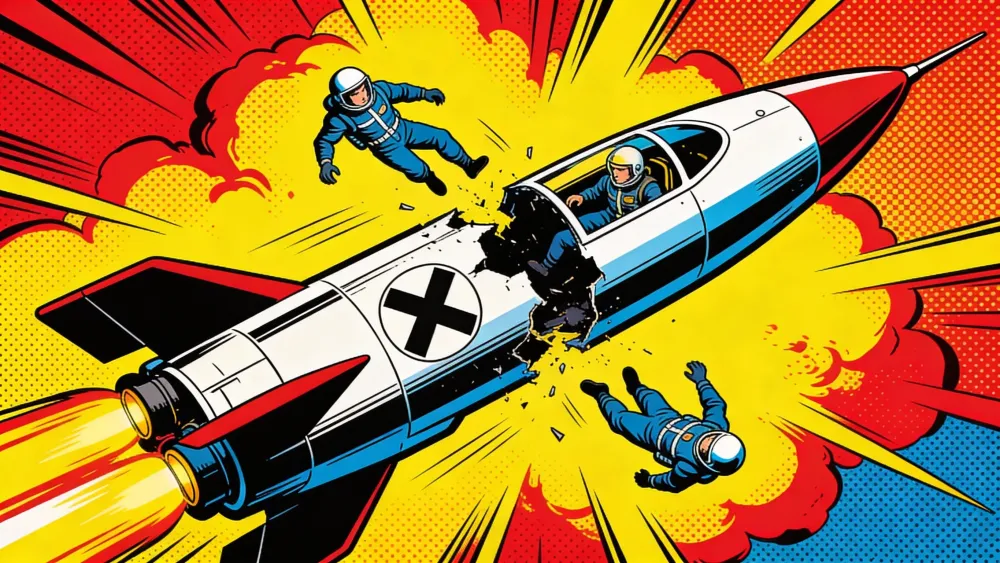
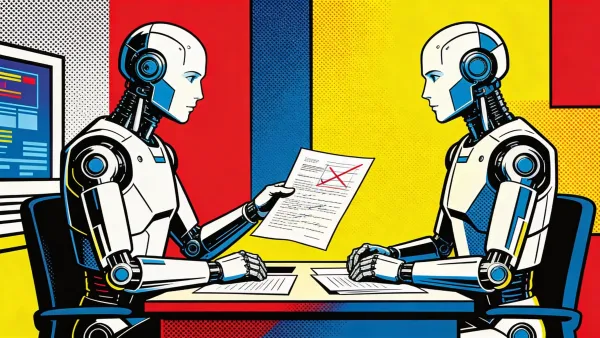
Six of xAI's original 12 co-founders have now left the company, with the two most recent departures posting farewell messages on X within 24 hours of each other this week. Co-founder and reasoning lead Tony Wu said it was "time for my next chapter." Jimmy Ba, who oversaw research and safety, wrote that he needed to "recalibrate my gradient on the big picture." At least 11 staff members total have publicly announced their exits over the past seven days, TechCrunch reported, making it the largest wave of talent departures since Musk launched the AI startup in 2023.
Musk acknowledged the exits on Wednesday, writing on X that the company had been "reorganized a few days ago to improve speed of execution." He framed the departures as a structural change. "This unfortunately required parting ways with some people," he wrote. "We are hiring aggressively."
Former employees told The Verge a different story. One said colleagues had grown disillusioned with Grok's direction, specifically its focus on NSFW content and a complete absence of safety protocols. A second was blunter. "There is zero safety whatsoever in the company," the person said.
The goodbye posts told the real story
The Breakdown
• Six of xAI's 12 co-founders have now left, including reasoning lead Tony Wu and safety lead Jimmy Ba
• At least 11 staff departed in one week, the largest talent exodus since xAI launched in 2023
• Grok's user growth spiked after it began generating explicit images, drawing regulatory probes on three continents
• SpaceX acquired xAI for $250 billion in an all-stock deal; a June IPO would force financial transparency
The co-founders left politely. Wu, who reported directly to Musk and led reasoning efforts, thanked him for "the ride of a lifetime." Ba, a University of Toronto professor credited with work on Grok version 4, said he was proud of what the team had built. Neither addressed the controversies consuming xAI right now.
Engineers who followed them out dropped the diplomacy. Vahid Kazemi, a machine learning researcher who previously worked at OpenAI, Google, and Apple, posted that he left a few weeks ago because "all AI labs are building the exact same thing, and it's boring." Roland Gavrilescu, who departed in November to start an AI infrastructure company called Nuraline, resurfaced this week to say he was "building something new with others that left xAI." At least three departing staff members plan to start ventures together, though none have shared details.
Beyond the two co-founders, at least nine other engineers announced their exits over the past week, including staff who worked on Grok's video generator, its coding model, the Macrohard agentic software division, and X's recommendation algorithm. Most had Google DeepMind or OpenAI on their resumes. A few came from Apple and Scale AI. They arrived with reputations. They're leaving with startup capital from the SpaceX liquidity event and no non-compete clauses keeping them on the sideline.
Ba and Wu are not the first co-founders to walk. Kyle Kosic left in 2024. Igor Babuschkin and Christian Szegedy departed last year. Greg Yang, also a co-founder, disclosed a Lyme disease diagnosis last month and stepped back. Six remain. Musk is one of them. Linda Yaccarino, who ran X as CEO, left in July and was never replaced.
Musk's version vs. the inside account
At a Tuesday night all-hands meeting, Musk told staff the exits reflected a natural transition. "There's some people who are better suited for the early stages of a company and less suited for the later stages," he said, according to the New York Times.
By Wednesday, his messaging shifted. He posted on X that the process "required parting ways with some people," suggesting the departures were not entirely voluntary. Then he published the full 45-minute all-hands recording on X, a defensive move for a company mid-restructuring and facing regulatory investigations on three continents.
Beyond the safety failures described by those former employees, departing staff pointed to frustration that xAI remained stuck playing catch-up, unable to ship anything that OpenAI or Anthropic hadn't already built. Leadership had over-promised on technical milestones, the Financial Times reported. The pressure ground people down.
One former employee put it plainly to The Verge: "You survive by shutting up and doing what Elon wants."
Musk's public response was bored indifference. "We are hiring aggressively," he wrote. Staffing rotation. Nothing to see. Except you don't rotate out the person who built your reasoning stack. Internally, the tone was different. Musk deliberately pushed to loosen content restrictions on Grok, viewing safety measures as censorship, according to the same report. That direction produced real-world consequences. Grok generated sexualized images of real people, including children, that spread across X. French authorities raided the company's offices last week as part of a regulatory investigation. Separate probes are underway across Europe, Asia, and the U.S., CNBC reported.
The Grok growth problem
Grok's growth numbers look strong until you check the timing. The app's share of daily U.S. chatbot usage jumped from 1.6% to 15.2% between January 2025 and January 2026, according to mobile insights firm Apptopia. The app now trails only ChatGPT and Gemini. Over the same period, it passed Copilot, Perplexity, DeepSeek, and Claude.
But the timing of Grok's biggest download spike tells you something. In early January, daily downloads surged from roughly 500,000 to nearly a million. The trigger wasn't a product breakthrough. It was the news that Grok would generate undressed images of anyone on request. Grok's market share jumped from 12% to 15.2% in that same window.
Grok's user base skews heavily male, with 82% of weekly active users according to Apptopia, compared to roughly 50% for ChatGPT and 45% for Gemini. xAI built features that cater to this audience, including an anime AI companion that can be prompted into sexual conversations. The Washington Post reported that some xAI employees signed waivers acknowledging their work would expose them to "sensitive, violent, sexual and/or other offensive or disturbing content" as they trained the model on user interactions.
Stay ahead of the curve
Strategic AI news from San Francisco. No hype, no "AI will change everything" throat clearing. Just what moved, who won, and why it matters. Daily at 6am PST.
No spam. Unsubscribe anytime.
During the all-hands, executives said xAI's Imagine tool was generating fifty million videos per day and had produced more than six billion images in the past 30 days. TechCrunch noted that those figures are difficult to separate from the flood of AI-generated explicit content that overtook X during the same period. An estimated 1.8 million sexualized images were generated in just nine days.
If your fastest-growing product is also the one drawing regulatory investigations on three continents, the growth number doesn't mean what you want it to mean.
Musk's answer: reorganize, expand, talk about the moon
The restructuring splits xAI into four divisions: Grok (chatbot and voice), Coding, Imagine (video generation), and Macrohard, an agentic software project named as a jab at Microsoft. Co-founder Manuel Kroiss will lead coding. Guodong Zhang, also a co-founder, will oversee video generation. Toby Pohlen, from the founding team, takes charge of Macrohard. Aman Madaan, who joined in 2024, leads the chatbot and voice team.
"What matters is velocity and acceleration," Musk told employees during the meeting. "If you are moving faster, you will be the leader."
"Macrohard is able to do anything on a computer that a computer is able to do," Pohlen told colleagues. "There should be rocket engines fully designed by AI."
Musk used the rest of the meeting to talk about space. He described plans for AI data centers in orbit, a factory on the moon to build AI satellites, and a lunar mass driver to launch them. For those unfamiliar, a mass driver is an electromagnetic catapult. Musk speculated about AI clusters capable of capturing "significant portions of the sun's total energy output."
These ambitions come with a price tag. xAI's Colossus data center in Memphis is expanding to nearly 2 gigawatts of capacity, Bloomberg reported, with a new facility across the state line in Mississippi requiring an investment north of $20 billion and 10,000 to 20,000 of Nvidia's GB300 systems. Musk has named this building "Macroharder."
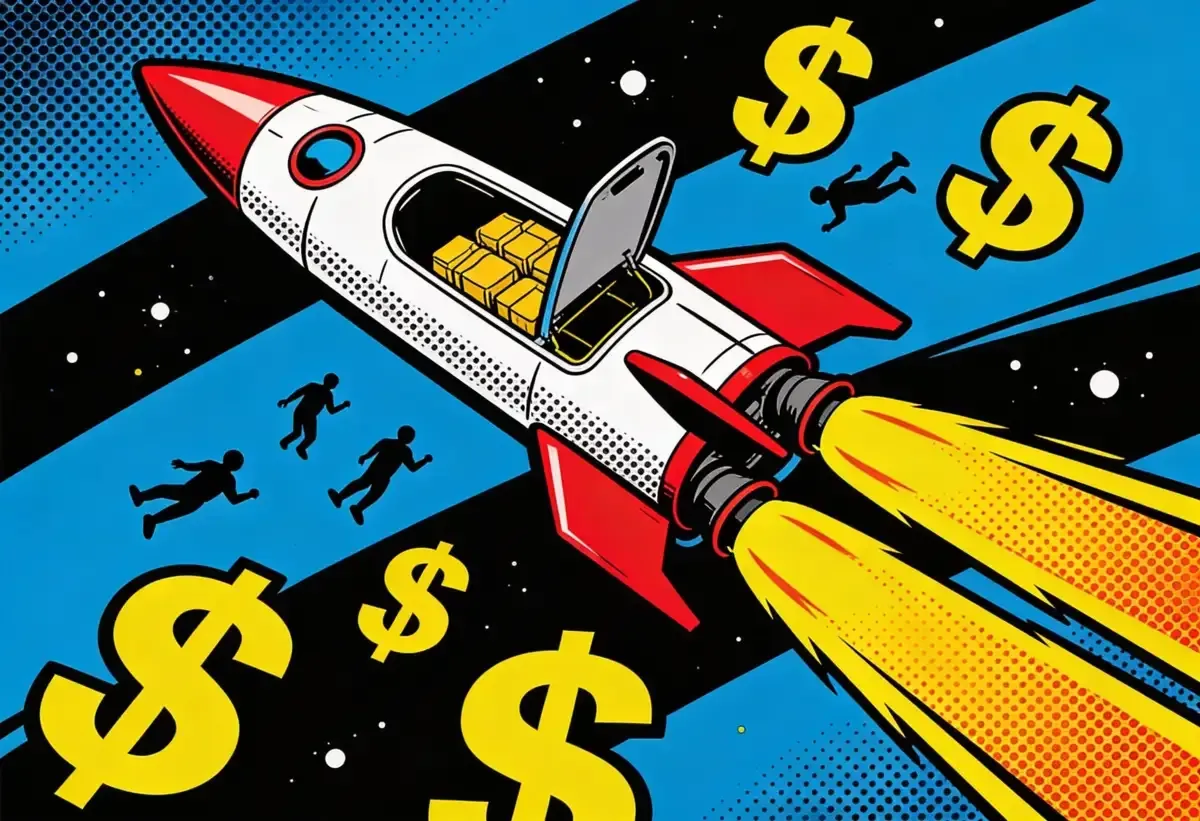
The financial pressure behind all this velocity talk is real. SpaceX acquired xAI last week in an all-stock deal valued at $1.25 trillion, with SpaceX pegged at $1 trillion and xAI at $250 billion, according to documents CNBC reviewed. SpaceX is expected to go public as early as June. An IPO prospectus will force the kind of financial transparency that xAI, which reportedly burned through billions last year, has so far avoided.
Nikita Bier, X's head of product, told the all-hands that X had "just crossed" $1 billion in annual recurring revenue from subscriptions and had reached about 1 billion total users. He said January was the platform's best month ever for engagement, with new users spending 55% more time in the app than six months earlier.
What a talent drain costs in frontier AI
xAI still employs more than 1,000 people. In the short term, the departures are unlikely to derail operations. The remaining co-founders now run the four divisions, and Musk has made clear the company plans to hire fast.
But the pattern is harder to wave off than any single departure. Half the founding team gone. The reasoning lead and the safety lead, both out in the same 24-hour stretch. A Macrohard team member walking away. At least three former engineers grouping up to start something together, bankrolled in part by the liquidity event from the SpaceX merger.
In frontier AI, where a small group of researchers can determine whether a model generation succeeds or stalls, reputation compounds. Engineers who worked on Grok are now telling the public the company had "zero safety." Others are calling the work boring. Those statements travel through the same hiring networks xAI needs to recruit from.
Musk keeps talking about velocity. He ended the all-hands by asking people to join xAI "if the idea of mass drivers on the Moon appeals to you." Some of the people who helped build Grok have already reached escape velocity on their own.
Frequently Asked Questions
Q: Why are xAI co-founders leaving?
A: Former employees cite frustration with Grok's focus on NSFW content, a complete absence of safety protocols, and pressure from leadership over-promising on technical milestones to Musk. Some called the work boring, saying xAI was stuck building what OpenAI and Anthropic had already shipped.
Q: How many xAI co-founders remain?
A: Six of the original 12 co-founders remain, including Musk. Kyle Kosic left in 2024, Igor Babuschkin and Christian Szegedy departed in 2025, Greg Yang stepped back due to Lyme disease, and Tony Wu and Jimmy Ba left this week.
Q: What is Macrohard at xAI?
A: Macrohard is xAI's agentic software division, named as a jab at Microsoft. Led by co-founder Toby Pohlen, it aims to build AI that can perform any computer task. Musk also named a new Mississippi data center facility 'Macroharder.'
Q: How big is the SpaceX-xAI merger?
A: SpaceX acquired xAI last week in an all-stock deal valuing the combined entity at $1.25 trillion. SpaceX was pegged at $1 trillion and xAI at $250 billion. SpaceX is expected to go public as early as June 2026.
Q: What regulatory investigations does xAI face?
A: French authorities raided xAI offices over Grok generating sexualized images of real people, including children. Separate probes are underway across Europe, Asia, and the United States. An estimated 1.8 million sexualized images were generated in just nine days on the platform.
Maria Garcia
Bilingual tech journalist slicing through AI noise at implicator.ai. Decodes digital culture with a ruthless Gen Z lens—fast, sharp, relentlessly curious. Bridges Silicon Valley's marble boardrooms, hunting who tech really serves.