Implicator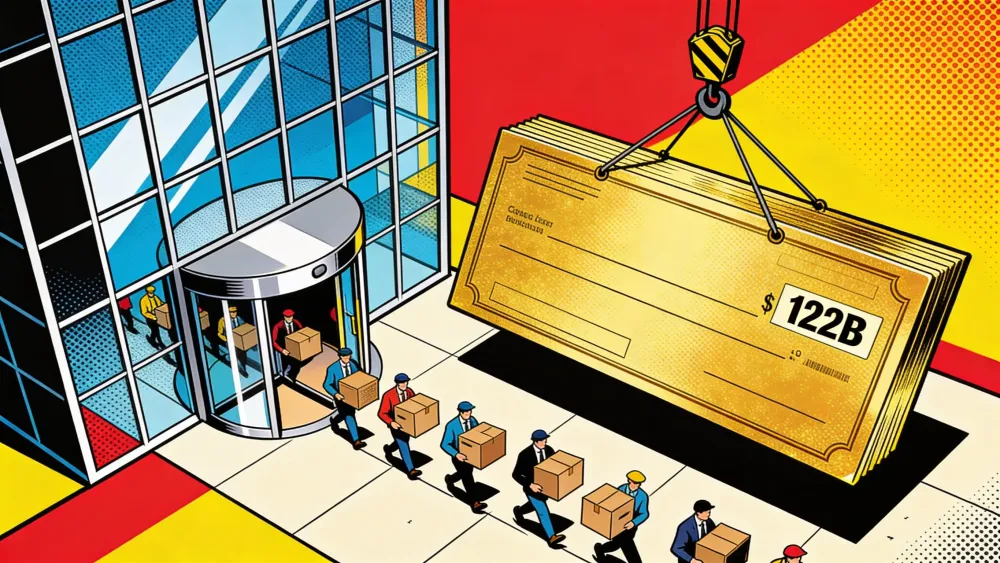
San Francisco | April 1, 2026
OpenAI closed the largest private funding round in history. $122 billion at an $852 billion valuation, with individual investors buying in for the first time through ARK ETFs and bank offerings. Amazon's $35 billion tranche hinges on an IPO that now feels less optional than inevitable.
Oracle marked the same day by firing thousands through 6 AM termination emails. No warning. No HR call. The savings fund $50 billion in AI data centers. The stock rose 6%.
Anthropic shipped Claude Code's full source to npm for the second time in thirteen months. The money floods in at the top. The people flow out at the bottom.
Stay curious,
Marcus Schuler
OpenAI Closes Record $122 Billion Round, Opens Stock to Individual Investors
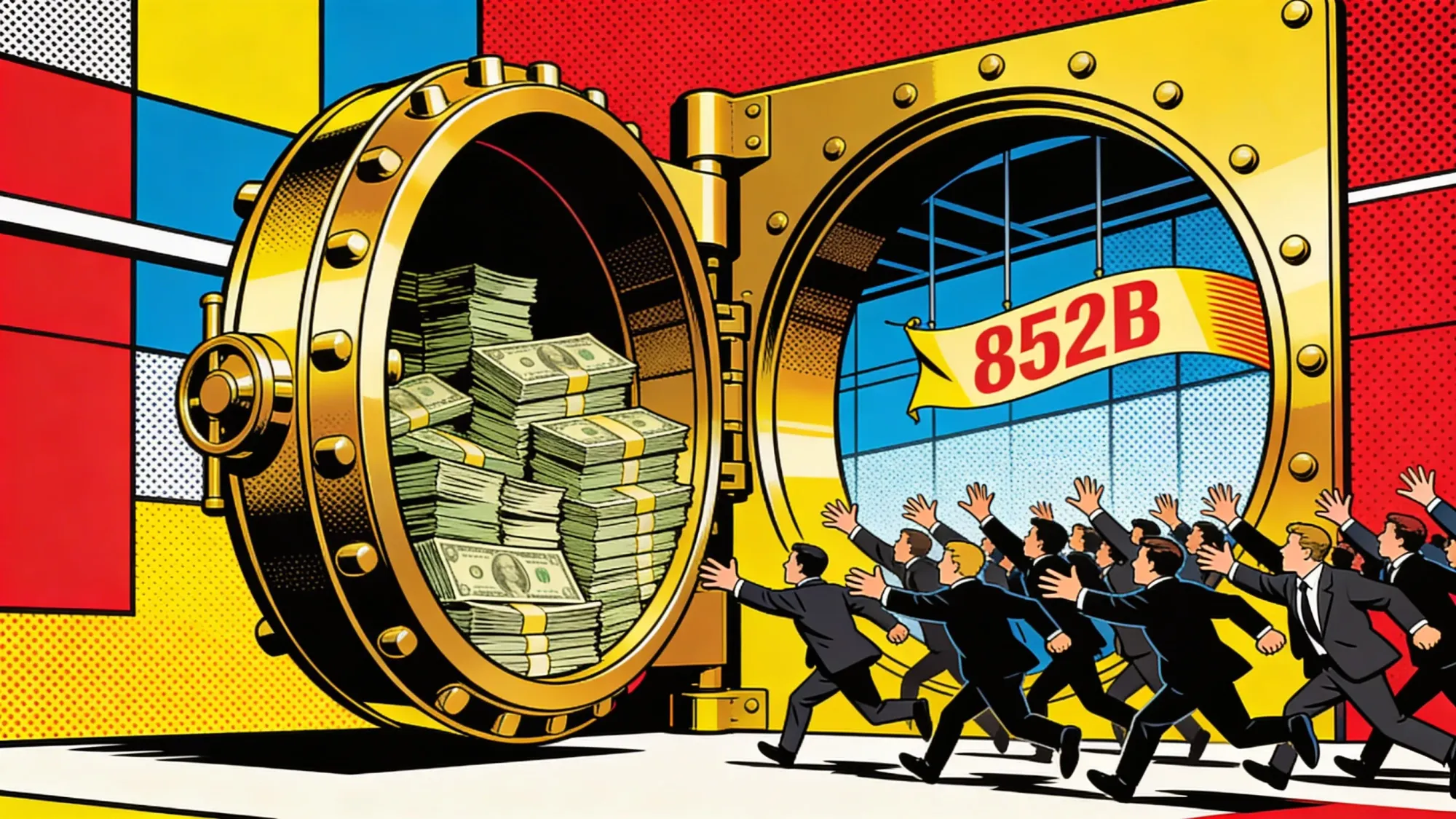
OpenAI closed a $122 billion round at an $852 billion valuation, the largest private funding event in history. Amazon led with $35 billion, contingent on an IPO milestone. For the first time, individual investors bought shares through bank offerings and ARK ETFs.
The headline number masks the deal's architecture. Nvidia contributed compute credits rather than cash. Amazon's tranche carries performance conditions tied to a public offering the company has been preparing since January. SoftBank increased its position after its Vision Fund bet earlier this year.
The retail angle is the more telling signal. ARK Invest offered allocation through its flagship fund, and at least two major banks created structured products for high-net-worth clients. OpenAI is assembling a shareholder base months before an S-1 filing.
At $852 billion, the private valuation exceeds every listed tech firm except Apple, Microsoft, Nvidia, and Alphabet. The gap between the pre-IPO price and public-market reality becomes the central question of 2026.
Why This Matters:
- The largest private fundraising in history now depends on a successful IPO, making OpenAI's public listing a condition of its own financing rather than a strategic choice
- Individual investor access signals OpenAI is building a retail shareholder base before filing, a pattern last seen in SpaceX's pre-IPO roadshow
Reality Check
What's confirmed: $122 billion raised at $852 billion valuation. Amazon's $35 billion contribution. Individual access through ARK and bank products.
What's implied (not proven): The retail push is deliberate pre-IPO sequencing rather than opportunistic fundraising.
What could go wrong: Amazon's tranche is conditional on IPO milestones. If the listing stalls or prices below expectations, the effective raise shrinks significantly.
What to watch next: An S-1 filing before Q3 2026 would confirm the retail investor play was market conditioning.

The One Number
$297 billion — Global venture capital investment in Q1 2026, a record that more than doubled the year-ago quarter. AI startups captured 81% of the total. Four companies alone raised 64% of all venture dollars worldwide. The concentration is extreme: remove those four deals and global VC activity looks roughly flat.
Source: Crunchbase News
Anthropic Ships Claude Code Source to npm for Second Time in Thirteen Months

Anthropic published Claude Code's 512,000-line source code to npm for the second time since January 2025. Days earlier, its content management system left 3,000 internal files publicly accessible. The pattern exposes gaps in operational security at the company building AI for the Pentagon.
The npm package exposed the full architecture of Claude Code's "undercover mode," a feature designed to make AI-generated code indistinguishable from human work. Security researchers independently flagged the CMS leak, finding internal documentation, draft posts, and unreleased product specifications among the accessible files.
Anthropic patched both exposures within days. The company says no customer data was compromised. But shipping source twice to a public registry, thirteen months apart, creates a specific problem for a company that markets trust and safety as its primary differentiator.
Why This Matters:
- Repeated accidental exposure of proprietary code undermines Anthropic's trust-first positioning at the exact moment it fights to stay on Pentagon contracts
- The "undercover mode" source gives competitors and bad actors a blueprint for evading AI detection systems

AI Image of the Day

Prompt: Catrina tattoo design in black and white line art style, featuring a sugar skull-inspired woman with elaborate details and patterns, her face adorned with floral motifs and curvilinear lines, her eyes and mouth stylized with bold strokes, her skin rendered in varying shades of gray, with flowing hair and ornate clothing, set against a minimalist background that lets the subject take center stage, with delicate lines and subtle shading to create a sense of depth and dimensionality.
Oracle Fires Thousands via 6 AM Emails to Fund $50 Billion AI Infrastructure Push
Oracle terminated thousands of employees on on Tuesday through pre-dawn email notifications with no prior warning from HR or managers. TD Cowen estimates up to 30,000 positions will be cut, freeing $8-10 billion annually for AI data center construction.
The termination emails arrived at 6 AM local time. Affected employees discovered they had lost building access before their morning commute. Multiple sources described the process as the most abrupt mass layoff in Oracle's 47-year history.
The cuts fund Oracle's $50 billion AI infrastructure commitment alongside the Stargate joint venture. CEO Larry Ellison has positioned Oracle as a cloud rival to AWS and Azure, but the capital requirements demand cost reductions elsewhere. The stock rose 6%.
Why This Matters:
- Up to 30,000 positions represent Oracle's largest workforce reduction, converting salary expenditure directly into AI infrastructure capital
- The pre-dawn termination method, bypassing HR entirely, signals a restructuring playbook other enterprise companies will study
Salesforce Turns Slackbot Into Full Enterprise Agent With 30 AI Capabilities

Salesforce unveiled 30 new AI capabilities for Slackbot at a San Francisco event on Tuesday, transforming the chat assistant into a full enterprise agent. The upgraded bot handles meeting transcription, desktop access, and connects to 6,000+ external apps through the MCP protocol. Every new Salesforce customer gets Slack bundled starting this summer.
The move redefines what "enterprise chat" means. Slackbot now transcribes meetings in real time, schedules follow-ups, and pulls data from CRM, ERP, and project management systems without leaving the conversation window. The MCP integration is the strategic play: it turns Slack into a universal connector for third-party AI tools rather than a closed ecosystem.
Bundling Slack with every new Salesforce contract eliminates the pricing objection that kept some enterprises on Microsoft Teams. Salesforce is betting that the agent layer, not the chat interface, becomes the product that locks customers in.
Why This Matters:
- MCP protocol support positions Slack as the universal interface for enterprise AI agents, not just a messaging app
- Mandatory bundling with new contracts directly challenges Microsoft Teams and could shift enterprise communication market share
🧰 AI Toolbox
How to Generate Studio-Quality Images From Text Prompts With Leonardo AI
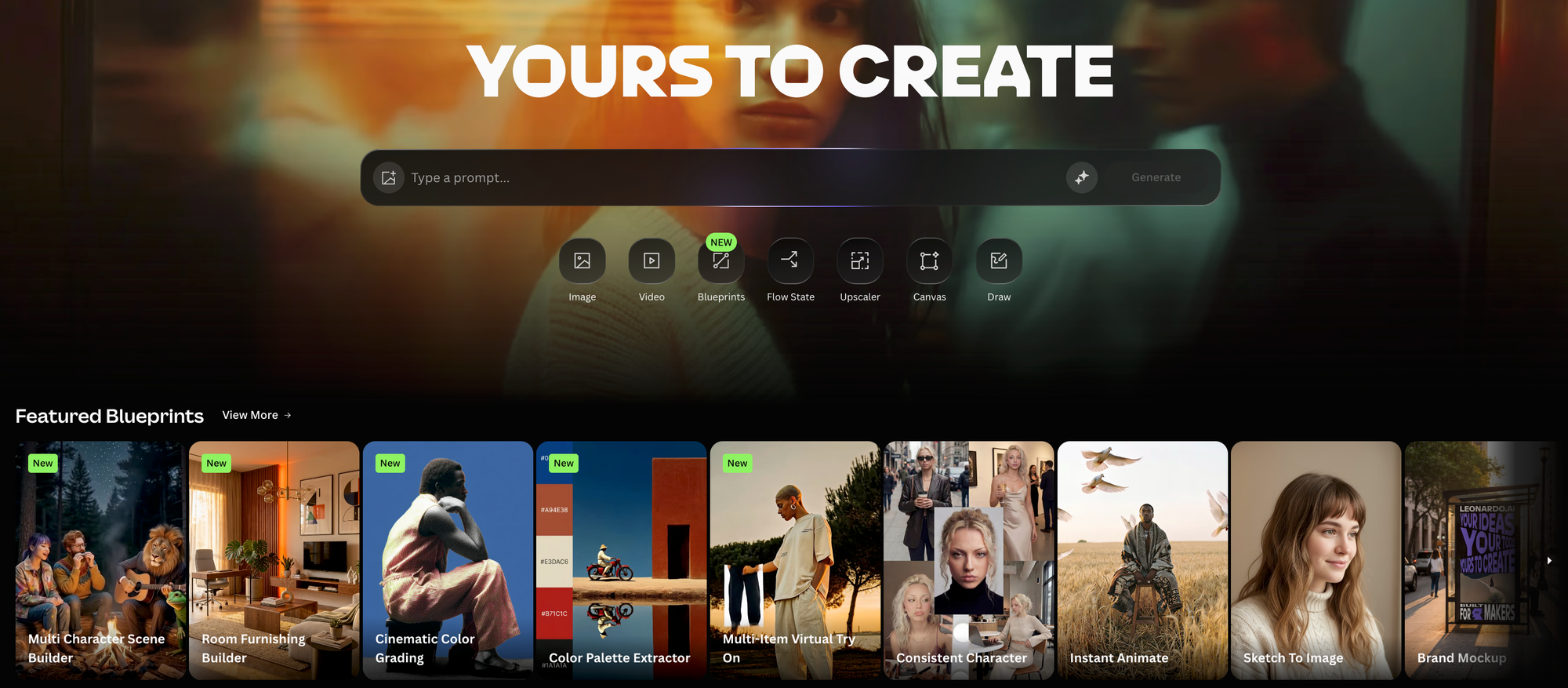
Leonardo AI generates photorealistic images, illustrations, and concept art from text descriptions using its proprietary Phoenix and Flux models. Upload a reference image and the tool matches its style, or start from scratch with a prompt. The latest update added motion generation for turning still images into short video clips. Free tier includes 150 daily tokens, enough for roughly 30 images.
Tutorial:
- Go to app.leonardo.ai and create a free account
- Click "Generate" and type a description: "Vintage travel poster of Tokyo at sunset, flat illustration style, warm colors"
- Pick a model: Phoenix for photorealism, Flux for artistic styles, or Anime XL for character art
- Adjust aspect ratio and number of outputs (generate up to 4 variations per prompt)
- Use "Image Guidance" to upload a reference photo and control how closely the output matches its composition or style
- Try the Motion tab to animate any generated image into a 4-second video clip
- Download in PNG or JPEG, or send directly to the Canvas editor for touch-ups and compositing
What To Watch Next (24-72 hours)
- Trump's Iran address: The president speaks at 9 PM ET tonight after saying the US could exit the conflict within two to three weeks. The postponed strikes on Iran's power grid resume April 6 unless talks produce results. Oil dropped below $100 on Tuesday. The speech will determine whether markets extend the rally or give it back.
- March jobs report: BLS releases the Employment Situation at 8:30 AM ET Friday. February showed a 92,000-job loss with unemployment at 4.4%. This is the first report capturing a full month of the Iran war's economic impact and will test the AI displacement narrative that dominated Q1.
- South Korea chip boom: March chip exports hit a record $32.83B, up 151% YoY, pushing total exports to $86.13B. The numbers preview Q1 earnings for Samsung and SK Hynix and signal whether AI memory demand can sustain the boom as war-driven energy costs squeeze Asian data center financing.
🛠️ 5-Minute Skill: Turn a Conference Agenda Into a Networking Hit List
You registered for a 200-session conference next week. The agenda PDF is 14 pages. You need to know who to meet, not just what to attend.
Your raw input:
Conference agenda, 14 pages. 350 speakers across 8 tracks.
Your priorities: enterprise AI adoption, data infrastructure,
and partnerships. You have 2 days on-site.
The prompt:
From this conference agenda, extract: (1) the 10 speakers most
relevant to enterprise AI infrastructure, (2) which sessions
overlap so I need to choose, (3) gaps between sessions where I
could approach them. I'm a VP of Engineering.
What you get back:
Priority speakers: [10 names with session times, titles, and companies]
Conflicts: Sessions 4 and 7 overlap Tuesday 2 PM. Pick Session 7 (smaller room, easier to approach speaker after).
Networking windows: 15-min gap after Session 3, lunch on Day 2 near Track B.
Why this works
Conference agendas are optimized for browsing, not decision-making. The prompt forces a filter based on your role and goals, then adds the logistics layer most attendees figure out on-site when it is too late.
What to use
Claude: Better at inferring relevance from speaker bios.
ChatGPT: Faster at parsing large PDFs.
AI & Tech News
Juries Rule Meta and YouTube Design Features Defective in Landmark Verdicts
Jury panels in Los Angeles and New Mexico found that specific design features in Instagram and YouTube qualify as defective products, separate from the content they host. The distinction matters: courts can now regulate how platforms are built without touching Section 230 speech protections.
Microsoft Commits $5.5 Billion to Singapore Cloud and AI Infrastructure
Microsoft will invest $5.5 billion in Singapore through 2029 for cloud and AI infrastructure, following a $1 billion commitment to Thailand. Southeast Asia is becoming the company's fastest-growing infrastructure region outside the US.
Grab Launches Southeast Asia's First Robotaxi Service in Singapore
Grab partnered with WeRide to deploy driverless ride-hailing in Singapore, the first commercial robotaxi operation in Southeast Asia. The launch positions Singapore as the region's testing ground for autonomous transport.
Germany's Open-Source Push to Replace Microsoft Hits Implementation Wall
Schleswig-Holstein's plan to swap Microsoft for Linux and open-source tools across state government is running into serious friction. The experiment is the EU's most visible test of "digital sovereignty," and the difficulties are giving other governments pause.
Coder Raises $90 Million Series C Led by KKR
Austin-based Coder, which builds tools for developers to write and run code across local and cloud environments, closed a $90 million round led by KKR. The raise follows a $35 million round in 2024.
Pakistani Official Uses Crypto Diplomacy to Build Trump Relationship
Bilal Bin Saqib, chairman of Pakistan's Virtual Assets Regulatory Authority, used engagement with Trump's World Liberty Financial venture to position Pakistan as a US-Iran mediator. Cryptocurrency policy is becoming a tool of international diplomacy.
Anthropic Makes Leaders Write in Public.
Anthropic requires every leader to maintain a public Slack channel called a "notebook," where they post weekly goals, product thinking, and open questions visible to the entire company. The practice filters for executives comfortable with continuous accountability and gives the organization a real-time map of who is building what and why.
Brain Implant Patient Creates Music Through Thought Alone
A Caltech study participant used his brain-computer interface to produce musical tones by thinking, pushing BCI applications beyond basic communication and movement. The researcher argues that adoption depends on making the technology enjoyable, not just functional.
Chinese AI IPOs Drive Half of Asia's Most Volatile Stocks
Recent AI listings from Moore Threads and MiniMax now account for half of Asia's ten most volatile equities. Thin institutional ownership and retail hype are creating price swings that make the sector one of the most unstable in Asian markets.
🚀 AI Profiles: The Companies Defining Tomorrow
Modular built Mojo, a programming language that makes Python run 68,000 times faster for AI workloads. The company's bet: the AI industry does not have a hardware problem, it has a software problem. ⚡
Founders
Chris Lattner and Tim Davis co-founded Modular in 2022. Lattner created the Swift programming language at Apple and built the LLVM compiler infrastructure that underpins most modern software. He later ran Google's TensorFlow team before concluding that AI's performance bottleneck was the software stack, not the silicon. Davis previously served as a senior engineering leader at Google.
Product
Mojo is a superset of Python that compiles to native machine code, achieving performance comparable to C and CUDA while keeping Python's ease of use. MAX is the inference engine that runs AI models across CPUs, GPUs, and custom accelerators without rewriting code for each chip. Developers write once, deploy anywhere, and stop paying the "Nvidia tax" of CUDA lock-in. Modular open-sourced the Mojo standard library and over 450,000 lines of MAX kernel code in 2025.
Competition
Nvidia's CUDA has 20 years of developer lock-in and runs 90% of AI training. Intel's oneAPI and AMD's ROCm attempt the same portability play but lack developer adoption. Triton (from OpenAI) compiles Python to GPU code. Modular differentiates by replacing the entire stack from language to inference engine. The risk: CUDA's network effects are enormous, and most AI teams would rather optimize on Nvidia than retool their pipeline.
Financing 💰
$250M Series C, valuing Modular at $1.6 billion, nearly tripling its worth in two years. Total raised: $380 million from investors including GV, SV Angel, Greylock, and Factory.
Future ⭐⭐⭐⭐
Lattner built the compiler that compiles most of the software you use. Now he is building the compiler for AI. The bet is structural: if AI models must run on diverse hardware, someone needs to build the translation layer. Modular wants to be that layer. The open-source move was smart. Mojo will not win by being proprietary when CUDA's moat is its ecosystem. The constraint: CUDA works, developers know it, and switching costs are real. Modular needs hardware diversity to become inevitable. Every non-Nvidia chip that ships makes Mojo more valuable. 🔥
🔥 Yeah, But...

Baidu's Robotaxis Froze on a Highway. The SOS Button Said "Unavailable."
More than 100 of Baidu's Apollo Go robotaxis stalled simultaneously across Wuhan on Tuesday, trapping passengers in fast lanes and causing at least two collisions. Baidu's in-car SOS button returned an "unavailable" message. The company had announced 20 million completed rides five weeks earlier.
Sources: WIRED, March 31, 2026 | CNBC, April 1, 2026
Our take: Building a car that drives itself on a highway is, apparently, the easy part. The hard part is making the phone ring when the fleet stops moving.
One dashcam captured 16 frozen robotaxis in 90 minutes. A passenger pressed the emergency button and received the digital equivalent of a shrug. She tried the app, got the same.
Eventually she forced the door open and walked away, which turned out to be the only system that worked as designed. Baidu is currently expanding to Seoul, Abu Dhabi, and Dubai. Those cities might want to test the help desk before the highway permits.

Marcus Schuler
Tech translator with German roots who fled to Silicon Valley chaos. Decodes startup noise from San Francisco. Launched implicator.ai to slice through AI's daily madness—crisp, clear, with Teutonic precision and sarcasm. E-Mail: [email protected]