IMPLICATOR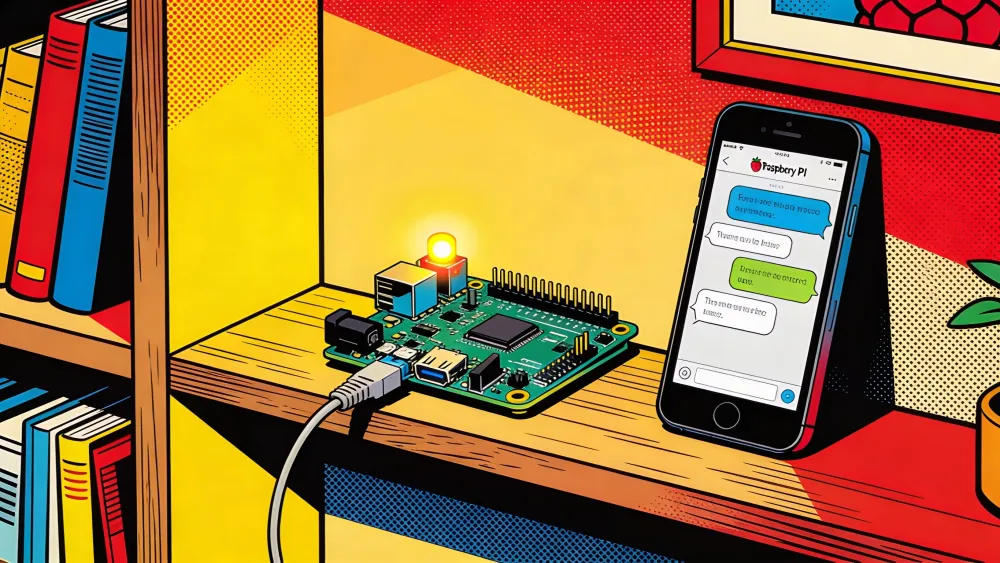
OpenClaw, the open-source framework for running a personal AI assistant on hardware you control, shipped release 2026.5.27 on May 28. The repository now carries more than 375,000 GitHub stars, up from about 250,000 in March. Its creator, Peter Steinberger, has joined OpenAI and says the project will move to a foundation. The cheapest durable way to run it did not leave with him: a Raspberry Pi 5 that costs about $85 to $125 and draws a few watts on a shelf.
The durability is the point, and it owes little to the hardware. A Raspberry Pi running OpenClaw is the most control-preserving way to own an AI assistant in 2026 because the major model labs spent the year tightening the convenient routes into their models, leaving a bring-your-own-key setup on hardware you own as the part of the stack a vendor cannot revoke. The board on the shelf is where that control now lives.
Key Takeaways
- OpenClaw is MIT-licensed and moving to a foundation, and creator Peter Steinberger has joined OpenAI. A Raspberry Pi 5 runs about $85 to $125.
- The Pi runs only the gateway; the AI model runs in the cloud, billed by whichever lab you connect.
- Anthropic's June 15 Claude command-line change and Google's unofficial Gemini login are narrowing the subscription paths self-hosters used.
- Self-hosting moves the setup and its security onto your hardware, but the liability that was the vendor's becomes yours.
AI-generated summary, reviewed by an editor. More on our AI guidelines.
Three names in seven months
OpenClaw, formerly Clawdbot and then Moltbot, now carries an MIT license that names an OpenClaw Foundation as copyright holder, with the old clawdbot and moltbot GitHub paths redirecting to the current repository. The contributing guide still lists Steinberger as the lead maintainer. In a personal post, he tied the handoff to his new employer: "I'm joining OpenAI to work on bringing agents to everyone. OpenClaw will move to a foundation and stay open and independent." He framed that foundation as "a place for thinkers, hackers and people that want a way to own their data." The promise is open independence, though the repository carried no separate foundation charter when its documentation was checked, so that independence is asserted rather than chartered. OpenClaw's own guide gives a one-line installer, curl -fsSL https://openclaw.ai/install.sh | bash, followed by openclaw onboard --install-daemon, and binds the gateway to 127.0.0.1 by default, refusing to listen beyond loopback without authentication.
Free with the Morning Briefing
The Paperclip Compendium: our tested guide to running a company of AI agents. Setup, your first agent team, connecting local and gateway models, keeping token costs under control, and the fixes for what breaks.
What changes on June 15
"Models run in the cloud via API," OpenClaw's documentation states, and the same Raspberry Pi page warns, "Do not run local LLMs on a Pi," because even small models are too slow to be useful. The assistant's brain is rented from the same labs the self-hosted pitch implies you are escaping, and the rental terms are moving. Anthropic's documentation says that on June 15 its Claude command-line subscription path shifts to Agent SDK credits, narrowing the plan-based access OpenClaw setups have relied on. Google's Gemini command-line login is marked unofficial, with a warning that it may trigger account restrictions. OpenAI, the lab that just hired Steinberger, is the outlier that still supports subscription sign-in for its Codex routes. What OpenClaw's provider docs recommend for a stable, long-lived Pi gateway is a paid API key billed by the token. Ryan Carson, a serial founder who runs his startup with an OpenClaw assistant on a MacBook Pro in his closet, reached over Tailscale, described the bargain in a May 24 interview with Peter Yang. "Right now OpenAI is really subsidizing tokens," Carson said. He estimated he gets "two to $3,000 worth of tokens for 200 bucks" a month, and, with investors to answer to, said he plans to "take it while I can."
Get Implicator.ai in your inbox
Strategic AI news from San Francisco. No hype, no "AI will change everything" throat clearing. Just what moved, who won, and why it matters. Daily at 6am PST.
No spam. Unsubscribe anytime.
The $85 board and the cloud bill
OpenClaw's Raspberry Pi guide still lists a "$35 to $80" one-time cost, a figure that predates two rounds of memory-driven price rises. Raspberry Pi's own December and February posts raised a Pi 5 to $70 and then $85 for the 4GB board, and to $95 and then $125 for 8GB, before a power supply, cooling, and storage. The recurring cost runs the opposite way from a cloud subscription. Electricity for an always-on Pi is about $5 to $8 a year at typical US rates, while a token-billed model can cost more than that in a busy week, with Claude Opus 4.8 priced at $5 per million input tokens and $25 per million output. AJ Fisher, who runs OpenClaw on a Pi 5, describes the setup as "orchestration and light tooling, not local inference." The original five-dollar build guide still explains the basic approach, but its commands, names, and prices all need updating. Carson, who has run several companies, was blunt in the same interview about the distance between the demos and the daily work: "anyone who tells you that they're waving a wand and getting OpenClaw to change their entire life and their entire business is not being truthful to you."
1,862 exposed servers
OpenClaw's security guide describes a single-trusted-operator model, not a defense against hostile users, and the assistant runs with shell access to the machine it lives on. The earlier version of the project showed what that means at scale. When the framework was called Moltbot, researchers found 1,862 instances exposed to the open internet with credentials stored in plain text, Implicator reported in January. The current defaults are tighter, with channel pairing, allowlists, an openclaw security audit command, and the loopback binding above. The state directory at ~/.openclaw/ holds the model keys, channel tokens, and pairing lists that a careless backup would leak. That liability now sits with the operator instead of the vendor, which is the actual trade self-hosting makes.
The control story holds, but it is narrower than the marketing. A Raspberry Pi running OpenClaw moves the assistant, its memory, and its security onto hardware no platform can disable, while the model behind it stays rented from the labs that keep reshaping the terms. The next test of how much independence that buys arrives on June 15, when Anthropic's subscription path for the Claude command line changes and OpenClaw users on that route learn what their setup costs at the token meter.
Frequently Asked Questions
Can OpenClaw run on a Raspberry Pi?
Yes. OpenClaw's official docs support running its gateway on Raspberry Pi OS Lite 64-bit. A Raspberry Pi 5 with 4GB or 8GB of RAM is the recommended build, and a Pi 4 with 4GB works well for existing hardware. The Pi runs the gateway, not the AI model itself.
Does the AI model run on the Pi?
No. OpenClaw's documentation states that models run in the cloud via API and warns against running local models on a Pi, because even small ones are too slow to be useful. The Pi handles orchestration and messaging, while the intelligence comes from a cloud provider such as OpenAI, Anthropic, or Google.
How much does an OpenClaw Raspberry Pi build cost in 2026?
A Raspberry Pi 5 board runs about $85 for 4GB and $125 for 8GB after 2026 price rises, before a power supply, cooling, and storage. Electricity for an always-on Pi is roughly $5 to $8 a year. The larger ongoing cost is the model API, which is billed by the token.
Which model providers does OpenClaw support?
OpenClaw works with OpenAI, Anthropic, and Google models, among others. As of late May 2026, OpenAI still supports subscription sign-in for Codex routes, while Anthropic's Claude command-line subscription path changes on June 15 and Google's Gemini command-line login is marked unofficial. A paid API key is the recommended stable setup.
Is OpenClaw safe to run at home?
It runs with shell access and is designed as a single-trusted-operator assistant, not a multi-user service. Keep the gateway bound to loopback, use channel pairing and allowlists, run the security audit command, and back up the ~/.openclaw/ directory privately, since it holds model keys and channel tokens.
AI-generated summary, reviewed by an editor. More on our AI guidelines.

Free AI briefing · Weekdays
The AI stories that matter, sourced and explained.
Join the Morning Briefing. It goes out every weekday at 4:45 a.m. Pacific, with later sends for the East Coast, Berlin and Tokyo.
Free when you sign up: The Paperclip Compendium, our tested guide to running AI agents.
Free. Unsubscribe in one click.

Marcus Schuler
Editor-in-Chief and founder of Implicator.ai. Former ARD correspondent and senior broadcast journalist with 10+ years covering tech. Writes daily briefings on policy and market developments. Based in San Francisco. E-mail: editor@implicator.ai