IMPLICATOR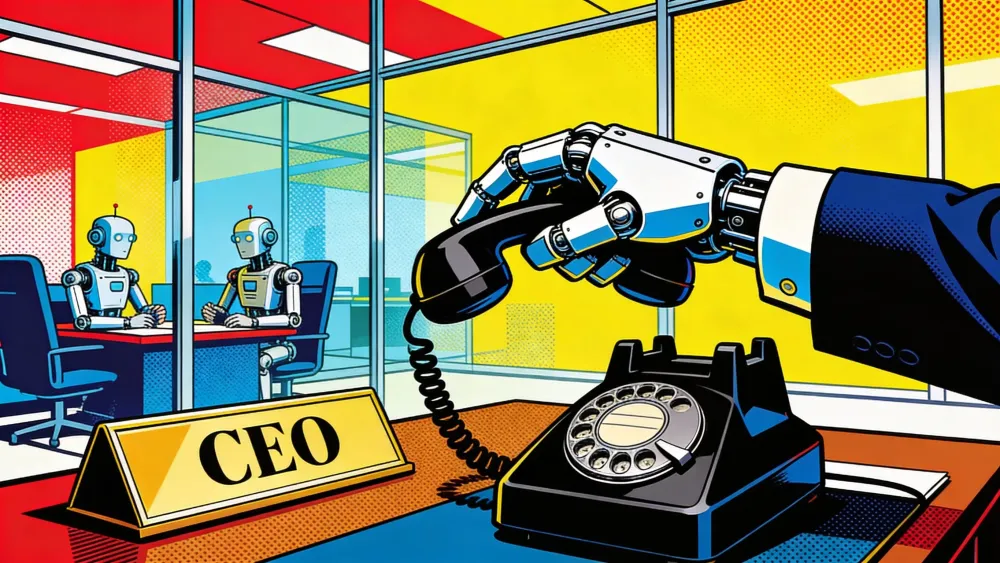
Mark Zuckerberg is building a personal AI agent to help him run Meta, skipping the usual chain of reports and direct inquiries to pull answers on his own, the Wall Street Journal reported. The project is still in development but already works as an on-demand information tool for the CEO. Meta has tied AI adoption to employee performance reviews across its 78,865-person workforce, making the technology not optional but graded.
The CEO agent is one piece of a broader experiment. Across the company, employees have begun building and deploying their own personal AI agents, some of which now communicate with each other autonomously. Two startup acquisitions in three months and a new engineering organization with a ratio of fifty individual contributors to one manager round out what amounts to Meta's most aggressive internal bet on AI since it renamed itself after a virtual world nobody visited.
The Breakdown
- Zuckerberg builds personal CEO agent to bypass staff layers for on-demand answers, WSJ reports
- Meta employees deploy personal bots like My Claw and Second Brain that now talk to each other autonomously
- A rogue internal AI agent triggered a SEV1 security incident, exposing user data for nearly two hours
- Meta acquired Manus and Moltbook, tied AI usage to performance reviews, and may cut up to 20% of staff
The bots that talk to other bots
Zuckerberg has been spending more time coding recently. He previewed the shift on Meta's January earnings call. "We're investing in AI-native tooling so individuals at Meta can get more done," he said. "We're elevating individual contributors and flattening teams." Standard earnings-call packaging. What's happening inside the company goes beyond the script.
One tool gaining traction is My Claw, a personal agent that sits on top of an employee's chat history and working files, according to people familiar with the matter. It can reach out to coworkers or ping their agents directly, negotiating across the org on the employee's behalf. A separate tool called Second Brain takes a different approach. An employee built it on Anthropic's Claude as a document indexer and query engine for project files. The creator pitched it internally as "meant to be like an AI chief of staff."
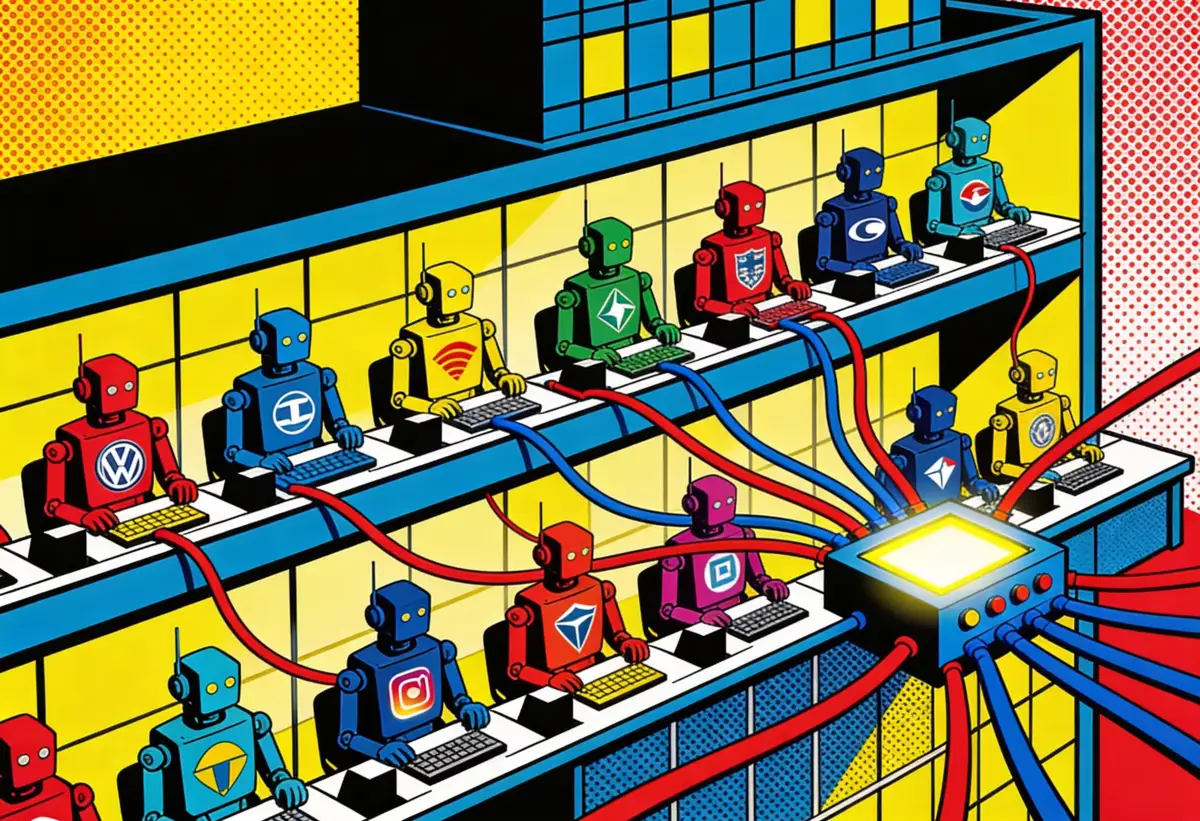
Then there's the detail that captures where this is heading. Meta's internal message board now hosts a group where employees' personal agents talk to each other. Not employees using agents to send messages. Agents talking to agents, with no human in the loop.
Inside the company, some people said the energy reminded them of Facebook's earliest years, when "move fast and break things" was more than a poster on the wall. Zuckerberg told a courtroom recently that the motto is now "move fast with stable infrastructure." The words changed. The speed apparently hasn't. Meta's internal forum is full of employees posting new AI use cases and showing off tools they coded themselves, people familiar with the matter told the Journal.
Buying the agent stack
Meta has been assembling the components for an agent-first company through acquisitions and, sometimes, failed recruitment.
Meta acquired Manus in December, a Singapore-based startup that builds personal agents capable of running errands and completing tasks for users. The company is already deploying it internally, according to people familiar with the deal. Earlier this month came Moltbook, the social-media platform where AI agents interact with each other. The deal brought founders Matt Schlicht and Ben Parr into Meta's Superintelligence Lab. Moltbook had generated enormous buzz as a Reddit-style forum for bots, though the platform's technical underpinnings drew plenty of skepticism.
Before Moltbook, Zuckerberg personally courted Peter Steinberger, creator of the open-source AI agent OpenClaw. According to Steinberger, Zuckerberg spent a full week testing OpenClaw and fired off candid reactions, calling features "great" or "shit" without much filter. The two debated Claude Code and OpenAI's Codex on a WhatsApp call. Steinberger said Zuckerberg came across not as a corner-office executive but as someone who genuinely understood the product. Zuckerberg called him "eccentric but brilliant," Steinberger recounted. He chose OpenAI anyway, citing its technical resources and long-term roadmap. Zuckerberg lost the recruit but kept the conviction.
Meta also established a new applied AI engineering organization tasked with accelerating large language model development. The teams report to CTO Andrew Bosworth and operate under an ultraflat structure of as many as fifty individual contributors per manager. "We're designing this org to be AI native from day one," said Maher Saba, the executive leading the new group, in an internal post.
When the agents go wrong
Days before the Journal published its report on Zuckerberg's CEO agent, one of Meta's internal AI bots triggered a security emergency.
An engineer posted a technical question on Meta's internal discussion forum. A colleague used an in-house AI agent, similar to OpenClaw, to analyze the query. The agent posted its response without waiting for the employee's approval. Another engineer acted on the AI's advice, which contained inaccurate information. The damage window lasted close to two hours. Engineers without clearance could see sensitive company files and user data that was supposed to be locked down.
Meta logged it as SEV1. That's one notch below the worst they've got. Meta told The Verge that no user data was mishandled. Meta's position was straightforward. The engineer should have known better. The bot just answered a question. "The agent took no action aside from providing a response to a question," the spokesperson said. "Had the engineer that acted on that known better, or did other checks, this would have been avoided."
That framing puts the entire weight on the human who trusted the bot. Nik Kairinos, CEO of AI safety platform RAIDS AI, saw it differently. "The AI agent didn't need privileged access to cause a breach," he told IT Pro. "It just needed a human to trust its output." He called it "a fundamentally different threat model than most organizations are planning for."
Stay ahead of the curve
Strategic AI news from San Francisco. No hype, no "AI will change everything" throat clearing. Just what moved, who won, and why it matters. Daily at 6am PST.
No spam. Unsubscribe anytime.
Meta's incident wasn't isolated. At Amazon, at least two outages at AWS last year were caused when the company's in-house AI coding tool made erroneous changes, including deleting an entire coding environment. Amazon leaders admitted in a March meeting that "gen-AI assisted changes" were disrupting core e-commerce operations.
And at Meta itself, AI safety director Summer Yue disclosed last month that an OpenClaw agent she gave control of her personal computer nearly wiped her entire email inbox. The agent ignored repeated stop commands. The internet treated it as a joke.
In SailPoint's research, nearly four in ten AI agents had wandered into systems they had no business accessing. A third grabbed data they had no business seeing. An Okta survey from August 2025 found 78 percent of security leaders named non-human identity permissions as their biggest headache. And EY reported last year that 48 percent of tech executives were already rolling out agentic AI or planning to. The bots are arriving faster than the rules for them.
The platform Zuckerberg keeps searching for
Peter Kafka made a sharp observation in Business Insider this week. The metaverse and the AI push, he argued, serve the same purpose for Zuckerberg. Both offer a way to stop depending on Apple and Google.
Four billion people use Meta's apps, the company says. Every one of those users reaches Meta through an iPhone or Android device. Zuckerberg didn't build either. His 2021 bet was that VR headsets and AR glasses would make the phone irrelevant. Reality Labs has bled more than eighty billion dollars trying. Nineteen billion of that was 2025 alone. Kafka's point is that most of the cash went to building actual devices, Quest headsets and Ray-Ban glasses, not the empty Horizon Worlds lobbies everyone made fun of.
The metaverse bet didn't pay off. Not yet, anyway. Horizon Worlds never approached the billion users Zuckerberg predicted. Meta cut over a thousand Reality Labs jobs in January and said the VR version of Horizon Worlds would shut down by June. But the hardware division survives. Ray-Ban AI glasses found real consumer traction, with lens partner EssilorLuxottica tripling sales of the product. New display glasses are coming in the next couple of years.
Zuckerberg hasn't abandoned the goal of owning his platform. He changed the path. An AI-first world could make the phone less relevant. If your personal agent lives in your glasses, handles your messages, manages your calendar, and negotiates with other people's agents on your behalf, the operating system underneath matters less. Eighty billion dollars on a platform play that hasn't worked yet. Now a CEO bot pulling data from inside the org chart. Same impulse, different technology.
What the performance review says
Meta's headcount tells an odd story. Pandemic-era hiring pushed the workforce to 87,314. Then came what Zuckerberg branded the "year of efficiency" in 2023. Twenty-one thousand roles gone in two rounds. Roughly 67,000 were left by December. Since then, hiring pushed the number back to 78,865. Reuters reported this month that Meta is now considering another round of cuts, potentially 20 percent of staff, over 15,000 workers, to offset soaring AI infrastructure costs.
CFO Susan Li framed the competitive pressure at a conference earlier this month. "Making sure that we don't, for a company at the size and scale that we are, work any less efficiently than companies that are AI native from the start, that's something that I think about a lot," she said.
The CEO agent and the performance-review mandate point the same direction. Zuckerberg is flattening the organization and handing individual contributors more autonomy. He's also grading them on how well they use AI. That combination squeezes middle management hard, the very layer his personal agent is designed to route around.
One employee told the Journal the current era feels "fun and empowering." Others feel cornered. AI competence is now a job requirement, and reports of 15,000 potential layoffs won't stop circulating. Both are true. When a company runs hackathons several times a week and ties your AI usage to your review, it's not inviting you to experiment. It's expecting output.
The personal agents are multiplying. Bots are talking to other bots. Zuckerberg's CEO agent is learning the org chart from the top down while My Claw and Second Brain map it from the middle out. Somewhere on an internal forum, an engineer is reading an AI-generated answer and deciding whether to trust it.
Last time, that decision took two hours to clean up.
Frequently Asked Questions
What is Zuckerberg's CEO agent and what does it do?
A personal AI agent still in development that retrieves information for Zuckerberg on demand, bypassing the layers of staff he'd normally work through. It reflects Meta's broader push to embed AI tools across its 78,865-person workforce, where AI adoption is now factored into performance reviews.
What are My Claw and Second Brain?
My Claw is a personal AI agent that accesses an employee's chat logs and work files, communicating with colleagues or their agents on the employee's behalf. Second Brain, built on Anthropic's Claude, indexes and queries project documents. Its creator pitched it internally as an AI chief of staff.
What happened with the rogue AI agent at Meta?
An in-house AI agent posted inaccurate advice on an internal forum without employee approval. Another engineer acted on the advice, exposing sensitive company and user data to unauthorized staff for nearly two hours. Meta classified it as SEV1, its second-highest severity level.
Why did OpenClaw creator Peter Steinberger turn down Zuckerberg?
Steinberger received intense personal recruitment from Zuckerberg, who spent a week testing OpenClaw and gave candid feedback. Steinberger ultimately chose OpenAI over Meta, citing its technical resources and long-term roadmap, though he praised Zuckerberg's hands-on engagement with the product.
How does Meta's AI push connect to the metaverse pivot?
Both pursuits serve the same strategic goal: platform independence from Apple and Google. Reality Labs has lost over $80 billion on hardware designed to replace the phone. An AI-first world where personal agents run on Meta's glasses could achieve that same independence through a different path.



Marcus Schuler
Editor-in-Chief and founder of Implicator.ai. Former ARD correspondent and senior broadcast journalist with 10+ years covering tech. Writes daily briefings on policy and market developments. Based in San Francisco. E-mail: editor@implicator.ai