IMPLICATOR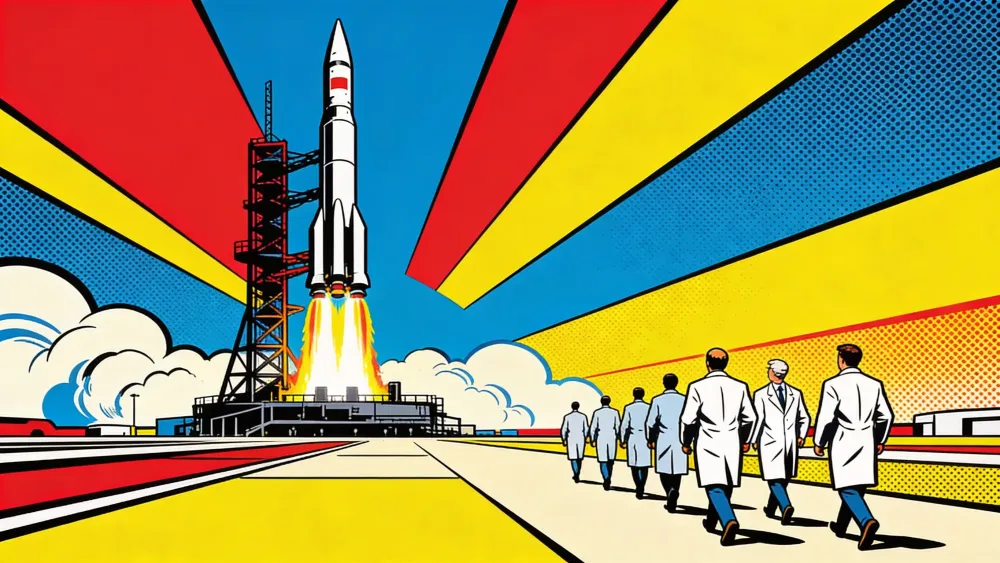
Elon Musk said earlier this month that xAI "was not built right first time around." That admission came from a CEO who rarely apologizes and almost never concedes failure in public. It landed as the most honest assessment anyone at xAI had offered in months, because Ross Nordeen walked out on Friday, and he was the eleventh cofounder to leave. Every researcher Musk assembled in 2023 to build his challenger to OpenAI and Anthropic is gone. Eight of them since January alone.
The company carries a $250 billion valuation. None of them stayed.
That number should stop you. Not because executive turnover is unusual in tech, where senior people rotate between labs constantly. But because the people who left weren't mid-level hires chasing better stock options. Jimmy Ba co-authored the Adam optimizer, the most-cited paper in AI with more than 95,000 citations. Igor Babuschkin came from DeepMind as chief engineer. Guodong Zhang ran both Grok Code and Grok Imagine and reported directly to Musk. This was the starting lineup of one of the best-funded AI labs on the planet. And every one of them chose to walk away during the most aggressive AI funding cycle in history.
Key Takeaways
- All 11 xAI cofounders have left, eight since January, completing a total exodus from Musk's $250 billion AI startup.
- The SpaceX-xAI merger accelerated departures as researchers rejected the shift from scrappy lab to trillion-dollar conglomerate.
- Musk admitted xAI 'was not built right' and is rebuilding with product hires from Cursor rather than research scientists.
- The exodus signals organizational dysfunction that capital and compute alone cannot fix ahead of SpaceX's planned IPO.
The merger that lit the fuse
SpaceX acquired xAI on February 2 in an all-stock deal valuing the combined entity at $1.25 trillion, the largest corporate merger by valuation ever recorded. The pitch was vertical integration: pair xAI's models with SpaceX satellite infrastructure and X's distribution network. Rockets and frontier AI, same corporate roof. Investors loved the story.
The people actually building Grok read the situation differently. Researchers who signed up for a scrappy AI startup in 2023 woke up inside a sprawling corporate machine with aerospace timelines and a CEO splitting attention across six companies. The culture shift landed fast and hard.
Tony Wu announced his departure within days of the merger closing. Jimmy Ba followed 24 hours later, reportedly amid friction over model performance demands. Toby Pohlen, freshly appointed to lead the Macrohard agent project, lasted sixteen days. Then Zihang Dai. Guodong Zhang. Manuel Kroiss, who ran the entire pretraining operation. And finally Nordeen, Musk's right-hand operator since their Tesla days.
The deal's tax-free share conversion made leaving painless. Cofounders could swap xAI equity into SpaceX stock without triggering capital gains. The golden handcuffs were never locked. Financial pressure to stay and vest? Gone. Whoever stayed was staying by choice, not necessity. One by one, they stopped.
What "not built right" actually means
Musk told the Abundance Conference in mid-March that Grok was "currently behind in coding." Then came something rarer. A public apology. He told job candidates that xAI had wrongly passed them over, and said he and talent head Baris Akis were combing through old interview records to find people who deserved a shot.
Think about what that sequence means for Tesla shareholders who watched $2 billion flow from Tesla's balance sheet into xAI's Series E at a $230 billion valuation. They are already suing Musk for breach of fiduciary duty, arguing he funneled company capital into his own private venture. His public concession that the product was broken hands their lawyers ammunition they did not have before.
But the coding admission also clarifies the departures. Zhang, who led Grok Code and reported to Musk, left shortly after Musk called the coding product inadequate on a conference stage. Pohlen quit sixteen days into leading Macrohard. When the boss publicly labels your work as failed, the motivation to stay and defend it collapses.
Get Implicator.ai in your inbox
Strategic AI news from San Francisco. No hype, no "AI will change everything" throat clearing. Just what moved, who won, and why it matters. Daily at 6am PST.
No spam. Unsubscribe anytime.
xAI's remaining leadership looked defensive. Competitors smelled opportunity. Both reactions were rational.
Rocket engineers stay. Researchers leave.
This is where the rocket-factory logic falls apart. When SpaceX loses a senior propulsion engineer, the company absorbs the hit. Processes exist. Documentation carries institutional knowledge forward. Rocket engineering is cumulative, and the work outlasts the person who did it.
AI research has not reached that stage. Not in 2026. The researchers who left xAI carry knowledge about model architectures, training configurations, and research priorities that no onboarding document captures. Institutional memory at a frontier lab lives in the people who built the models. That memory just walked out of the building.
The wider talent market makes replacement harder still. Meta is reportedly offering packages worth up to $300 million over four years to hold onto top AI researchers. OpenAI, Anthropic, and Google DeepMind are all scaling their research teams at a pace that would have seemed reckless two years ago. The eleven people who left xAI can field competing offers by the end of the week. Several probably already have.
Musk responded by hiring from outside the research world. Andrew Milich and Jason Ginsberg, two senior product leaders from AI coding company Cursor, arrived in mid-March to rebuild the coding infrastructure. Strong hires. But replacing research scientists with product engineers is a category swap, not a backfill. You don't staff a research lab the way you staff an assembly line.
xAI still controls the Colossus supercomputer, more than 200,000 NVIDIA H100 GPUs forming one of the largest training clusters on the planet. Capital is not the constraint. Compute is not the constraint. The constraint is that the people who knew what to do with all that hardware are gone.
A management style that works everywhere except here
Musk's track record contains a telling split. Twitter lost roughly 80 percent of its workforce within months of his 2022 takeover and has struggled to rebuild its advertiser base. Tesla's senior leadership has thinned steadily as Musk's attention fragmented across companies. SpaceX is the exception, and it tells you something. Rocket engineering rewards the specific traits Musk brings. High risk tolerance. Obsessive pace. A willingness to scrap what's broken and rebuild from raw materials.
AI research punishes those instincts. The best researchers in the field are emboldened by their market position and protect their autonomy fiercely. They want room to chase experiments that might not pay off for months. Rapid reorganizations spook them. Public blame for product shortfalls alienates them. A management style built on direct control and visible urgency reads to a researcher as interference, not leadership.
That every cofounder walked away, at a moment when xAI commanded more resources than virtually any lab on the planet, tells you the issue is not funding. Not compute. Not strategy. It is organizational. And "rebuilding from the foundations up" only works if you understand why the first foundation cracked.
The clock is running
Musk is stocking the roster with new recruits and direct reports borrowed from Tesla and SpaceX. The SpaceX IPO, potentially targeting a $1.75 trillion valuation, will force this entire enterprise under public market scrutiny by late 2026.
The test is straightforward. If Grok's coding and reasoning tools close the gap with Anthropic and OpenAI by year's end, the cofounder exodus was a painful but survivable growth spurt. Expensive, embarrassing, but fixable. If they don't, the eleven people who walked out were delivering a verdict about something Musk has not yet accepted: you cannot rebuild a research culture with factory discipline and fresh hires alone. The culture was the product. It left with the people who created it.
Watch the product. Not the press releases.
Frequently Asked Questions
How many xAI cofounders have left?
All 11 original cofounders besides Musk have now departed. Ross Nordeen, the last to leave, exited on March 28, 2026. Eight of the eleven left since January alone, with departures accelerating after SpaceX acquired xAI in February.
Why are xAI cofounders leaving?
Multiple factors drove the departures. The SpaceX merger changed the company culture, Musk publicly admitted products were behind competitors, and rapid reorganizations created instability. The tax-free share conversion also removed financial barriers to departure.
What did Musk say about xAI's problems?
Musk said 'xAI was not built right first time around, so is being rebuilt from the foundations up.' He admitted Grok was 'currently behind in coding' and apologized to job candidates the company had wrongly passed over.
Who is replacing the departed cofounders?
Musk hired Andrew Milich and Jason Ginsberg from AI coding company Cursor to rebuild coding infrastructure. He has also brought in workers from Tesla and SpaceX and is reviewing previously rejected candidates.
How does the cofounder exodus affect the SpaceX IPO?
The departures add risk ahead of SpaceX's planned IPO, potentially valued at $1.75 trillion. Tesla shareholders are suing Musk over a $2 billion investment in xAI, and his public admission that the product was broken strengthens their legal case.

Marcus Schuler
Editor-in-Chief and founder of Implicator.ai. Former ARD correspondent and senior broadcast journalist with 10+ years covering tech. Writes daily briefings on policy and market developments. Based in San Francisco. E-mail: editor@implicator.ai