IMPLICATOR
In late July 2026, Amazon Chief Executive Andy Jassy told investors the company’s 2026 capital spending would reach $220 billion, up from a previous estimate of $200 billion, with higher memory costs driving the revision. “Even at that amount, we will still not have enough capacity to meet all the demand we have in 2026,” Jassy said. He said the capacity shortage would continue into 2027.
Four weeks later, the fifth-generation Echo Dot rose to $79.99 from $49.99.
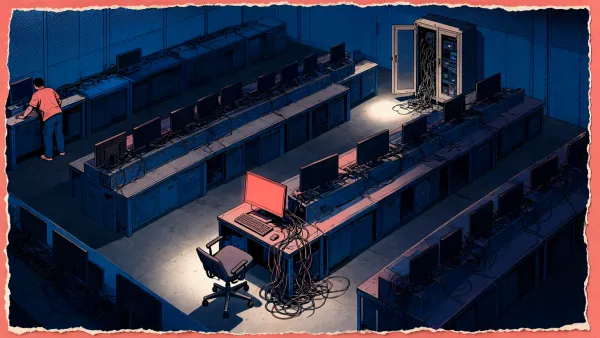
Amazon raised consumer-device prices while AWS, the cloud business that generates much of the company’s profit, is spending more to secure the same scarce components for AI data centers. The common bottleneck now runs from a silicon wafer allocated to AI memory to the new price of a smart speaker.
Amazon made no public announcement. Kristy Schmidt, senior communications manager for Amazon’s Devices & Services division, said, “The consumer electronics industry is facing significant increases in memory and storage component costs. After absorbing these increases for as long as we could, we recently adjusted pricing across our product lines.”
What Changed
- Amazon raised prices across Echo, Kindle, Fire TV and eero with no public announcement, taking the fifth-generation Echo Dot to $79.99 from $49.99 as of Aug. 22, 2026. Ring cameras and doorbells were spared.
- In late July 2026, CEO Andy Jassy told investors Amazon's 2026 capital spending would reach $220 billion, up from a previous estimate of $200 billion, with higher memory costs driving the revision.
- JPMorgan Global Research estimated in August 2026 that DRAM costs would rise more than 400% from the start of 2024 through the end of 2026, and that some consumer devices could become as much as 40% more expensive.
- A class action filed June 25, 2026 in the Northern District of California alleges Samsung, SK Hynix and Micron used the shift to high-bandwidth memory as a pretext to cut older DRAM output. The allegations are untested.
AI-generated summary, reviewed by an editor. More on our AI guidelines.
The bill on the shelf
As of Aug. 22, 2026, the 16-gigabyte Kindle rose to $149.99 from $109.99, about 36%, while the Fire TV Stick 4K Max reached $84.99 from $59.99, about 42%. The Fire TV Cube made the largest dollar move, climbing $60 to $199.99 from $139.99. Ring cameras and doorbells were spared, and Amazon gave no reason for that carve-out.
Amazon was not alone. In June 2026, Apple raised Mac and iPad prices over memory costs, and Chief Executive Tim Cook called it a “100-year flood on memory pricing.” Apple also raised the HomePod mini to $129 from $99.99. Microsoft raised Xbox console prices by $100 to $150 and stopped selling its 2-terabyte configuration. Dell, HP, Lenovo and Asus raised prices or reduced memory, while Roku raised the Streaming Stick 4K by 60% to $79.99 in late July 2026.
The increases press against a hardware model that began with the original Kindle in 2007. Amazon sold devices at or near cost because an e-reader could sell books and a kitchen speaker could take shopping requests. A 2024 report put the devices business’s losses at more than $25 billion from 2017 through 2021. That figure is secondhand.
Amazon’s statement gave no per-device component breakdown. There is no published figure showing how much of the Echo Dot’s increase reflects the memory cost inside it and how much recovers margin the company was already losing.
The data-center buyer
AWS produced $42.2 billion in second-quarter 2026 revenue, up 37% from $30.9 billion in the same quarter of 2025, its fastest growth in 18 quarters.
Amazon is one of four large data-center builders bidding for the chips that memory suppliers can make. JPMorgan Global Research estimated in August 2026 that DRAM costs would rise more than 400% from the start of 2024 through the end of 2026, and that some consumer devices could become as much as 40% more expensive.
The wafer allocation
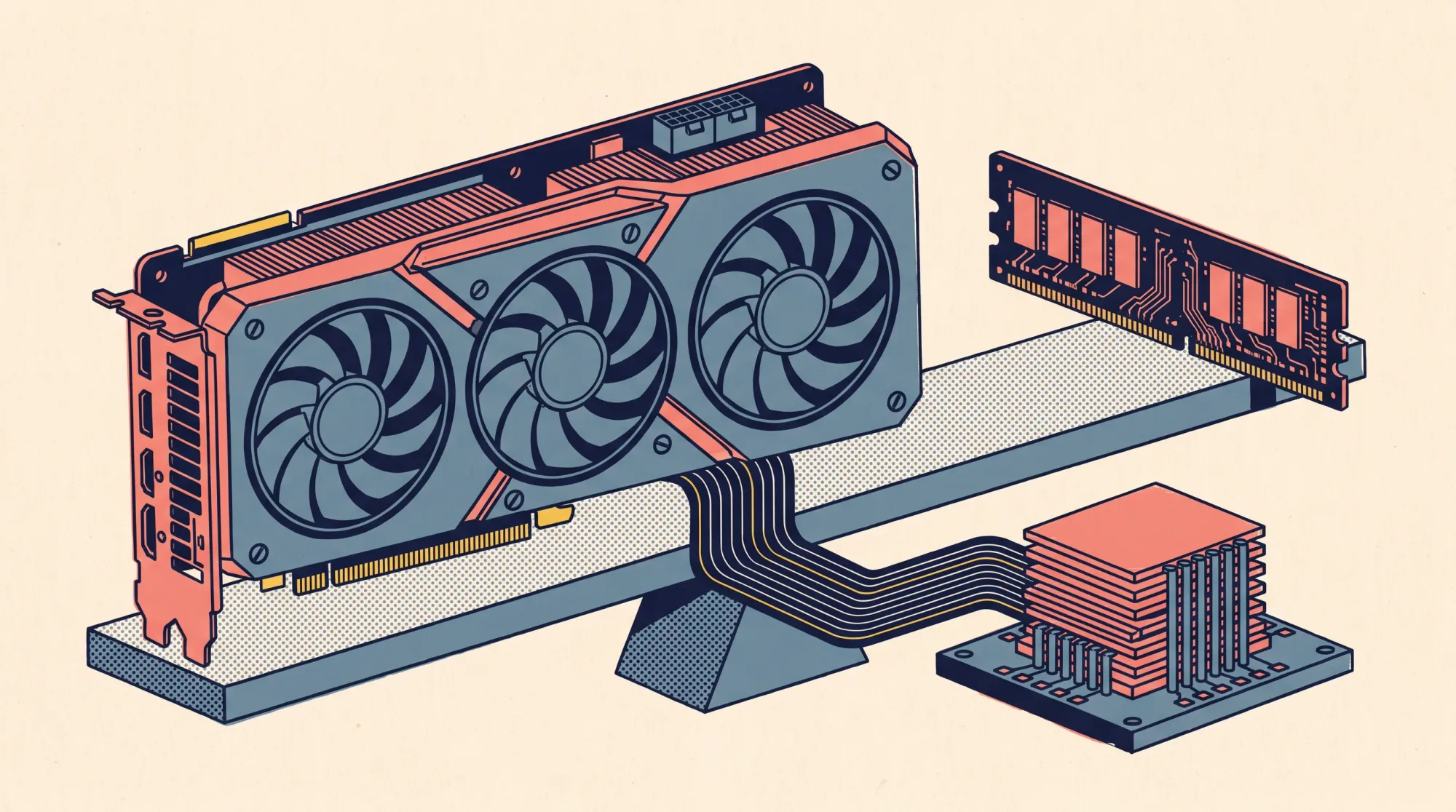
Samsung, SK Hynix and Micron make the overwhelming majority of the world’s DRAM, the working memory used by computers and consumer devices. Their factories are redirecting production toward high-bandwidth memory, or HBM, which stacks memory chips to feed data to AI accelerators much faster.
FREE WEEKDAY MORNING BRIEFING
Don’t miss the next AI story that matters.
The Implicator Morning Briefing filters the AI news cycle to the stories worth your attention and explains their consequences. From San Francisco, every weekday at 4:45 a.m. Pacific, 7:45 a.m. Eastern.
About five minutes. No hype. No spam.
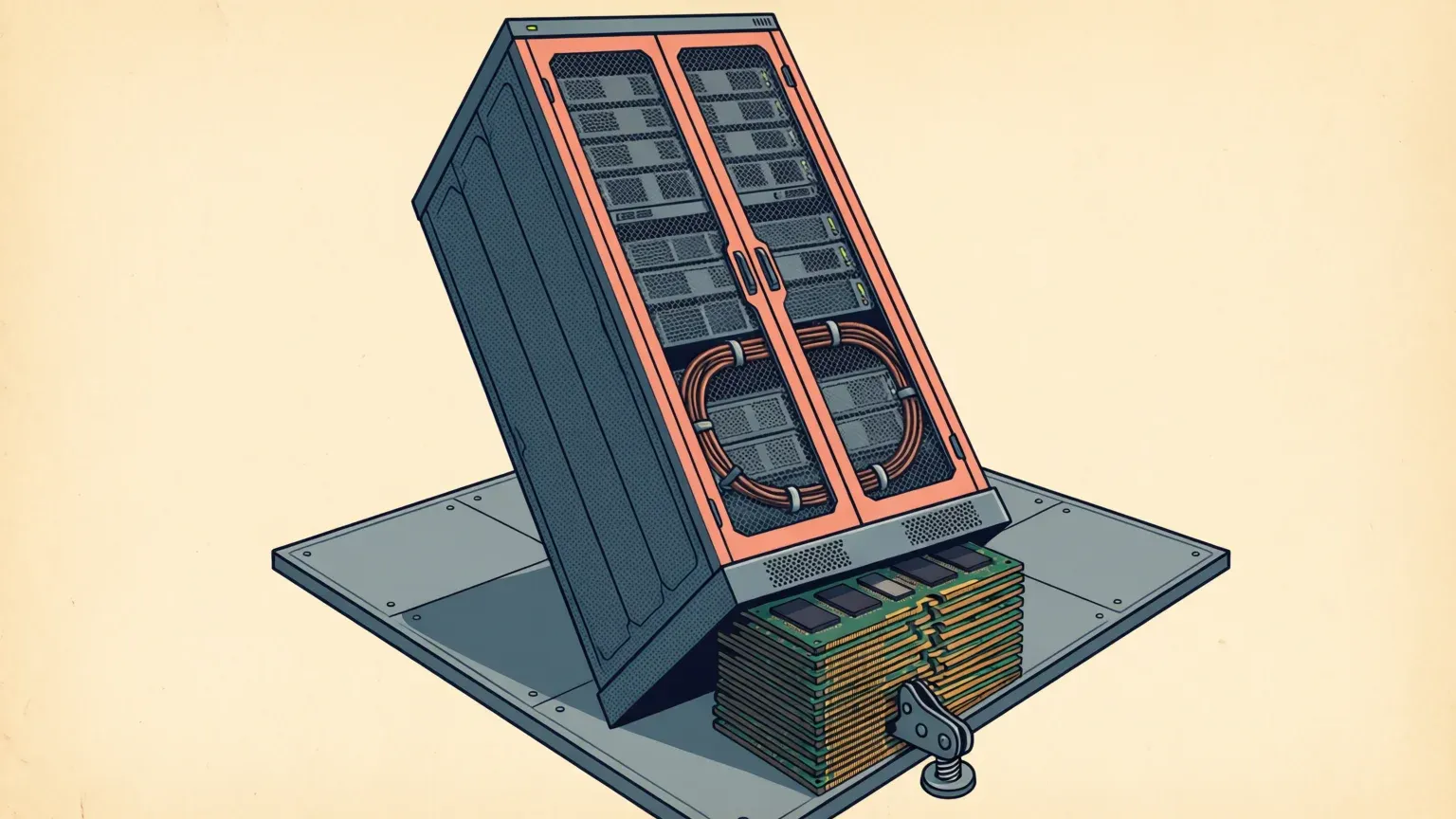
A wafer is the round sheet of silicon from which chips are cut. Think of it as a fixed baking tray. HBM consumes roughly three to four times the wafer area for each usable bit compared with ordinary DRAM, so filling the tray with HBM leaves less room for the memory inside a Kindle or an Echo. SK Hynix said in October 2025 that it had secured its entire 2026 HBM output. Micron closed its 29-year-old consumer memory brand in 2026.
Contract prices show the force of that allocation. NAND prices rose 55% to 60% from the fourth quarter of 2025 to the first quarter of 2026, then another 70% to 75% in the second quarter. TrendForce analyst Avril Wu called it the “craziest time ever” in the industry’s history. TrendForce expected conventional DRAM prices to rise another 13% to 18% in the third quarter of 2026.
The antitrust challenge
A lawsuit against the memory suppliers, not Amazon, asks whether the scarcity Amazon cites was manufactured. Amazon is not a party to the case.
Know someone who'd find this useful? ✉️ Email it to a friend in one click, or they can subscribe free here.
The class action, Garciaguirre v. Samsung Electronics, was filed June 25, 2026 in the U.S. District Court for the Northern District of California, and the named plaintiffs include 14 individuals and three small PC-building and repair businesses, among them Troy’s Computers and My Florida PC, represented by Bathaee Dunne LLP.
The complaint alleges that Samsung, SK Hynix and Micron used the HBM shift as a pretext to cut older DDR3 and DDR4 production farther than AI demand required, helping drive conventional DRAM prices up roughly 700% over four years. The three “have simultaneously cut production, coordinated a pivot to HBM and exit from DDR3 and DDR4 [memory], and otherwise decreased and locked up conventional DRAM supply while prices charged up with mind-blowing scale and rapidity,” the filing says.
The allegations are untested, and the defendants have not answered in court and are expected to seek dismissal.
The legal precedent
A similar class action filed in 2018 also treated parallel production cuts as evidence of an agreement. A district court dismissed it in 2020, and the Ninth Circuit affirmed in 2022, finding that the conduct was “more likely explained by lawful, unchoreographed free-market behavior” than an illegal agreement. Section 1 of the Sherman Act requires evidence of an actual agreement. Three suppliers making the same profitable choice without coordinating is not enough.
The earlier production record does not show a perfectly synchronized move. The cuts announced in late 2022 came during the worst memory downturn in more than a decade, when SK Hynix and Micron were posting operating losses. Samsung waited months longer than its rivals to cut. China’s CXMT is now expanding DDR5 production with state support, creating a potential source of new supply.
There is evidence pointing the other way. DRAM manufacturers did fix prices between 1998 and 2002. The Justice Department obtained guilty pleas and fines that included $300 million from Samsung in 2005 and $185 million from Hynix, while Micron avoided prosecution by cooperating first.
Amazon says it will offer promotions across its device lineup through the rest of 2026. Its next hardware event is expected after the Sept. 22 through Sept. 24 Accelerate conference. Jassy has already described the demand ahead: “In fact, the demand we already have for 2028 is striking.”
Frequently Asked Questions
How much did Amazon raise its device prices?
Increases reached 60%. The fifth-generation Echo Dot went to $79.99 from $49.99, the 16-gigabyte Kindle to $149.99 from $109.99, and the Fire TV Stick 4K Max to $84.99 from $59.99. The Fire TV Cube made the largest dollar move, climbing $60 to $199.99. Ring cameras and doorbells were not included, and Amazon gave no reason for that carve-out.
Why does AI demand make a smart speaker more expensive?
Samsung, SK Hynix and Micron make the overwhelming majority of the world's DRAM and are redirecting production toward high-bandwidth memory, which feeds data to AI accelerators. HBM consumes roughly three to four times the wafer area for each usable bit compared with ordinary DRAM, so capacity given to HBM leaves less room for the memory inside a Kindle or an Echo.
Is Amazon also a cause of the shortage it is citing?
Amazon is one of four large data-center builders bidding for the chips memory suppliers can make. Jassy named higher memory costs as a driver when he raised the 2026 capital spending estimate to $220 billion in late July. AWS produced $42.2 billion in second-quarter 2026 revenue, up 37% from $30.9 billion a year earlier.
Does the 60% increase match Amazon's actual cost increase?
There is no published figure that answers this. Amazon's statement gave no per-device component breakdown, so nothing shows how much of the Echo Dot's increase reflects the memory cost inside it and how much recovers margin the company was already losing.
What is the antitrust case about?
Garciaguirre v. Samsung Electronics, filed June 25, 2026, alleges Samsung, SK Hynix and Micron used the HBM shift as a pretext to cut DDR3 and DDR4 production farther than AI demand required, helping drive conventional DRAM prices up roughly 700% over four years. It targets the memory suppliers, not Amazon. The defendants have not answered and are expected to seek dismissal. A similar 2018 case was dismissed and the dismissal was affirmed in 2022.
AI-generated summary, reviewed by an editor. More on our AI guidelines.

Free AI briefing · Weekdays
The AI stories that matter, sourced and explained.
Join the Morning Briefing. It goes out every weekday at 4:45 a.m. Pacific, with later sends for the East Coast, Berlin and Tokyo.
Free when you sign up: The Paperclip Compendium, our tested guide to running AI agents.
Free. Unsubscribe in one click.

Marcus Schuler
Editor-in-Chief and founder of Implicator.ai. Former ARD correspondent and senior broadcast journalist with 10+ years covering tech. Writes daily briefings on policy and market developments. Based in San Francisco. E-mail: editor@implicator.ai