 IMPLICATOR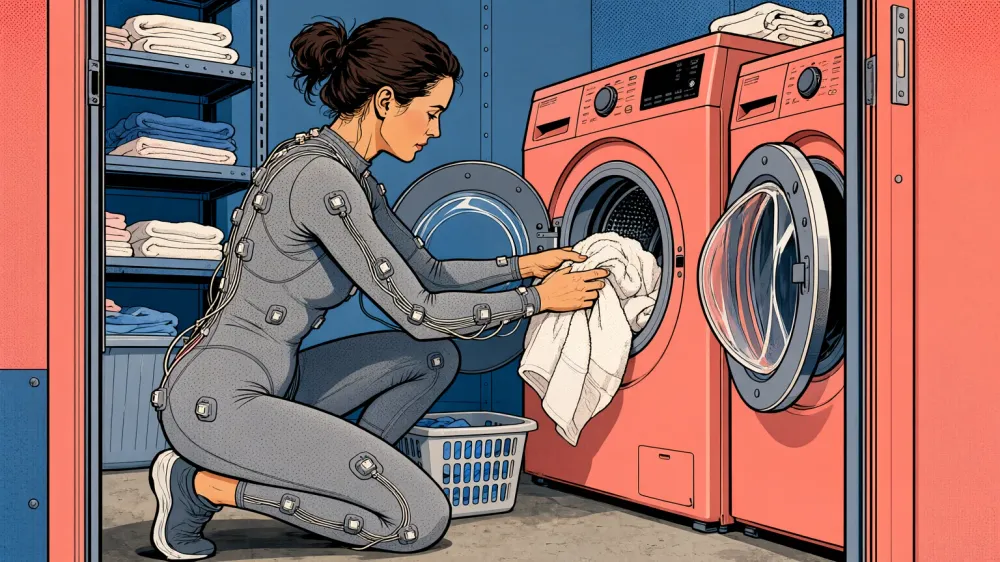
NEURA Robotics launched Neuron AI on Wednesday, its own robot foundation model that adds touch, hearing and memory to camera vision. The model combines sensory inputs with language and the robot’s internal state to guide physical actions. NEURA has published no benchmark for the model, and its first public test is an 11-minute laundry run at Nvidia GTC Berlin next week.
“An intelligent robot needs a brain that brings its senses together and remembers what happened,” said David Reger, NEURA’s founder and CEO.
What Changed
- NEURA Robotics launched Neuron AI on October 14, 2026, a robot foundation model that adds touch, hearing and memory to camera vision.
- The model covers five NEURA robot types and runs locally on the robot without requiring a cloud connection.
- NEURA has published no benchmark results and no figures for Time-to-Skill, the metric it calls central.
- A 4NE1 humanoid is scheduled to run an 11-minute laundry sequence without human intervention at Nvidia GTC Berlin, October 20-22.
AI-generated summary, reviewed by an editor. More on our AI guidelines.
What the model senses
NEURA calls its architecture Perception-Language-Action, or PLA, distinguishing it from vision-language-action models focused on camera inputs. It processes depth images, tactile and force-torque data alongside sound. Memory lets the robot remember objects once they are out of sight and keep track of the consequences of its own actions over time, often without seeing those consequences.
In its announcement, NEURA describes how the model would use its senses in examples that include confirming that a lock has opened through its click and resistance, gripping an unseen object by touch and judging a welding seam by sound.
Training and fleet deployment
Developed and trained in-house in Metzingen, Germany, Neuron AI draws on robot data from NEURA Gyms and real environments. Its Data Amplifier adds simulated variations of tasks. People wearing sensor-equipped suits contribute demonstrations, while Schaeffler and Bosch provide data partnerships.
FREE WEEKDAY MORNING BRIEFING
Track the robot brains as they ship.
The Implicator Morning Briefing filters the AI news cycle to the stories worth your attention and explains their consequences. From San Francisco, every weekday at 4:45 a.m. Pacific, 7:45 a.m. Eastern.
About five minutes. No hype. No spam.
The model covers five NEURA robot types: 4NE1 Gen 3, 4NE1 Gen 4, a wheeled 4NE1 and two further bimanual platforms. It runs locally without requiring a cloud connection.
Through Neuraverse, customers can fine-tune the model and distribute skills across fleets. They can keep process know-how private or share skills and deployment data for future models. Schaeffler agreed in November 2025 to deploy a mid-four-digit number of 4NE1 units by 2035.
An in-house model
NEURA was an early adopter of Nvidia’s Isaac GR00T models. Nvidia invested in NEURA’s Series C financing round of up to $1.4 billion, announced June 10, 2026, led by Tether, with Amazon also among the investors. The Neuron AI demonstration runs at Nvidia’s own conference. Munich rival Agile Robots relies on a Google DeepMind partnership for its industrial robots.
No benchmark yet
As of Wednesday’s launch, the capabilities are NEURA’s own description, NEURA has published no Neuron AI benchmark results, and no independent model evaluation has yet been published. It names Time-to-Skill, the time required to learn a task and perform it reliably, as its central metric, but has released no figures for learning times, success rates or adaptation costs.
Know someone who'd find this useful? ✉️ Email it to a friend in one click, or they can subscribe free here.
Google’s published figure for Gemini 4 Argon, positioned for robot control, is 87 percent on the ERQA spatial-reasoning benchmark. That is Google’s own result. Touch, sound and memory, the capabilities NEURA is selling alongside camera vision, are outside the scope of what that benchmark measures.
The laundry demonstration
In June 2026, four months before Neuron AI was announced, a 4NE1 Gen 3.5 running Qualcomm’s Dragonwing reference design collapsed during a live Computex keynote in Taipei, falling onto its knees.
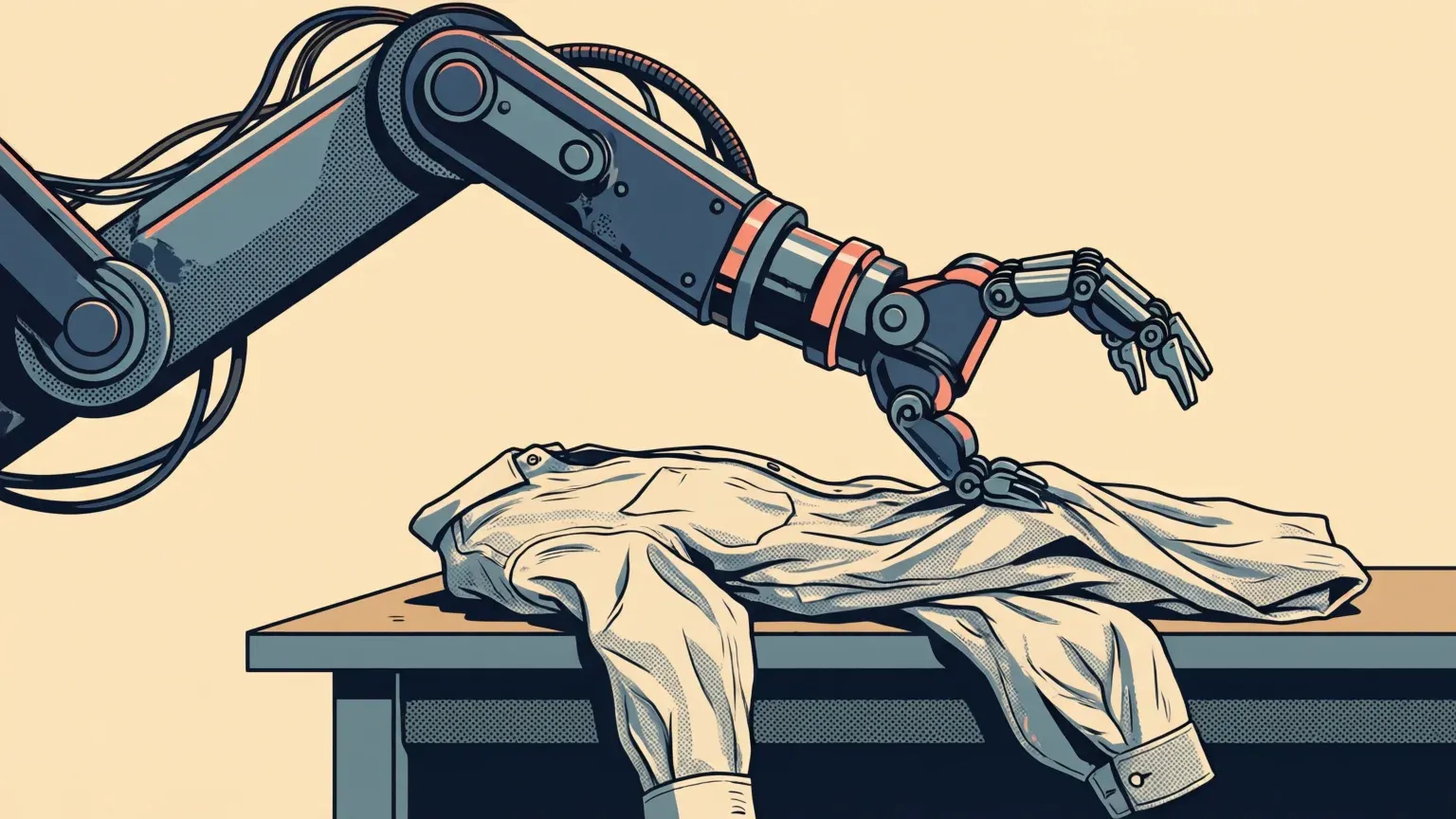
At Nvidia GTC Berlin, October 20-22, 2026, a 4NE1 running the current Neuron AI version is scheduled to perform an 11-minute laundry sequence without human intervention. It will sort clothes, load a washer, close and reopen it, unload it and transfer laundry to a dryer.
NEURA is taking refundable €100 reservations for the 4NE1 Gen 3.5, with availability promised for the end of 2026.
Frequently Asked Questions
What is Neuron AI?
Neuron AI is NEURA Robotics' own foundation model for robots, launched October 14, 2026. It combines 3D vision, tactile and force data, sound, the robot's internal state and language with memory. NEURA calls the architecture Perception-Language-Action, or PLA.
How is Neuron AI different from vision-language-action models?
NEURA says vision-language-action models rely on camera inputs, while Neuron AI adds touch, sound and memory. Memory lets a robot remember objects once they are out of sight and keep track of the consequences of its own actions.
Has NEURA published benchmark results for Neuron AI?
No. As of the launch, NEURA had published no Neuron AI benchmark results, and no independent evaluation had been published. It names Time-to-Skill as its central metric but has released no figures for learning times, success rates or adaptation costs.
Which robots run Neuron AI?
The model covers five NEURA robot types: 4NE1 Gen 3, 4NE1 Gen 4, a wheeled 4NE1 and two further bimanual platforms. It runs locally on the robot without requiring a cloud connection.
When will Neuron AI be shown publicly?
At Nvidia GTC Berlin, October 20-22, 2026, a 4NE1 humanoid running the current Neuron AI version is scheduled to perform an 11-minute laundry sequence without human intervention, from sorting clothes to moving them into a dryer.
AI-generated summary, reviewed by an editor. More on our AI guidelines.
Free AI briefing · Weekdays
The AI stories that matter, sourced and explained.
Join the Morning Briefing. It goes out every weekday at 4:45 a.m. Pacific, with later sends for the East Coast, Berlin and Tokyo.
Free when you sign up: The Paperclip Compendium, our tested guide to running AI agents.
Free. Unsubscribe in one click.

Marcus Schuler
Editor-in-Chief and founder of Implicator.ai. Former ARD correspondent and senior broadcast journalist with 10+ years covering tech. Writes daily briefings on policy and market developments. Based in San Francisco. E-mail: editor@implicator.ai