IMPLICATOR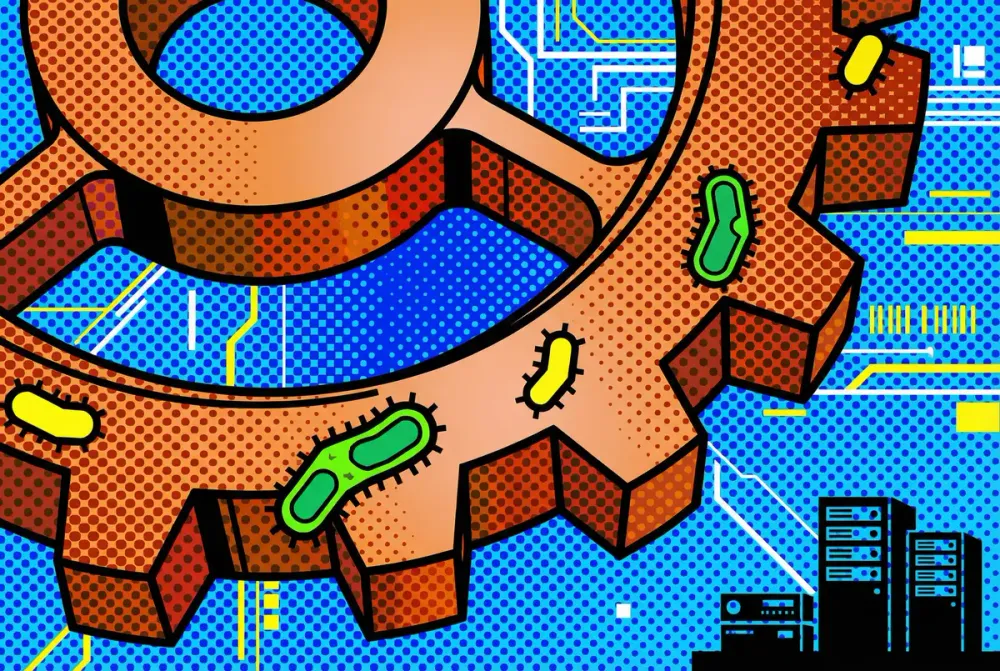
A heap of crushed rock sits in the Arizona sun. Bacteria live inside it. These organisms munch on sulfide ore and excrete copper, the same basic metabolic trick that makes your gut work, except the output here is metal. Not concentrate that ships to China for refining. Finished copper, 99.99% pure, ready to load onto a truck. No smelter. No refinery. No container ships hauling concentrate to Chinese processing plants.
Amazon Web Services signed a two-year deal to buy it all.
Rio Tinto made the announcement this morning. AWS becomes the first customer for copper pulled from the ground using Nuton's bioleaching technology at the Johnson Camp mine. The press releases talk about sustainability and carbon footprints and Amazon's Climate Pledge. All true. But the strategic logic runs deeper than any ESG report.
AI data centers are copper hogs. Every rack of GPUs training the next large language model needs busbars, cables, transformer windings, heat sinks, and circuit boards. A single megawatt of AI training capacity requires roughly 47 metric tonnes of the stuff. Nvidia's GB200 NVL72 server unit ships with over 5,000 copper cables totaling 3.2 kilometers. Multiply that across hundreds of billions of dollars in planned infrastructure, and you start to understand why Amazon is locking down supply before the price spikes hit.
The Breakdown
• AWS becomes first buyer of American-mined copper in over a decade using bacteria-based bioleaching technology
• AI data centers consume 47 tonnes of copper per megawatt, and supply will fall short by 10 million tonnes annually by 2040
• The deal validates Rio Tinto's Nuton technology as competitors BHP and Antofagasta race to develop their own bioleaching systems
• Hyperscalers are moving upstream, securing raw materials directly rather than buying on spot markets
The mine-to-model pipeline
Johnson Camp sits in Arizona's Cochise Mining District, a cluster of copper deposits that Gunnison Copper Corp. has been developing for years. Rio Tinto's Nuton venture funded the bioleaching deployment, which went live last month. The technology skips the traditional copper production chain entirely.
Conventional copper mining is a four-step process. Extract ore. Crush and grind it at a concentrator. Ship the concentrate to a smelter, often in China. Refine the output into cathode. Each step adds cost, carbon, and geopolitical exposure.
Nuton's approach uses naturally occurring bacteria to do the chemical work. The organisms break down sulfide bonds and release copper ions, which are then extracted through electrowinning. The entire process happens at the mine site. What would normally require three continents and six months now happens in Arizona.
For Amazon, this solves several problems at once. Domestic sourcing reduces tariff exposure. Lower carbon intensity helps with sustainability commitments. And direct relationships with producers bypass the spot market volatility that has rattled procurement teams across the tech industry.
Why the copper squeeze is real
If you've been tracking AI infrastructure buildouts, you've probably noticed that energy constraints get most of the attention. Power purchase agreements, nuclear restarts, natural gas peakers. Copper? Almost never in the conversation. It should be.
Stay ahead of the AI infrastructure curve
Strategic AI news from San Francisco. No hype, no "AI will change everything" throat clearing. Just what moved, who won, and why it matters. Daily at 6am PST.
No spam. Unsubscribe anytime.
Look at the procurement spreadsheets and you'll see the problem. We use 28 million tonnes of copper a year right now, for wiring, plumbing, chips, transformers, everything. S&P Global projects demand at 42 million tonnes by 2040. AI and defense contracts are eating the fastest-growing chunk. The mining industry cannot possibly dig that much out of the ground. The shortfall? Ten million tonnes annually. S&P Global calls it "systemic risk." Most people would call it a crisis.
The math gets worse when you zoom in on data centers specifically. A single hyperscale facility can swallow 50,000 tonnes of copper during construction, roughly triple what a traditional cloud site needs. Last year saw more than a hundred major data center projects break ground, nearly $61 billion worth, and most of them were built to train AI models.
Every hyperscaler is scrambling to lock down supply. Amazon moved first. The copper coming out of Johnson Camp carries a carbon footprint of 2.82 kgCO₂e per kilogram, roughly a third of what most mines produce. Good PR, sure. But the real value is the hedge against incoming carbon tariffs and ESG reporting requirements that could make high-emission copper prohibitively expensive for regulated buyers.
Rio Tinto's validation problem
Rio Tinto has been waiting for this moment. Nuton has been in development for years, burning R&D budget while competitors announced their own sulfide leaching programs. The technology works in controlled conditions. But scaling from pilot to industrial production requires proof points that academic papers cannot provide. Without a marquee customer, Nuton risked becoming another mining industry science project, technically impressive and commercially irrelevant.
AWS changes that calculus. A hyperscaler with deep pockets and public sustainability commitments creates credibility that smaller buyers cannot match. Rio Tinto's stock rose 1.2% in London trading this morning. That tick wasn't just optimism. It was relief. The market read the announcement and concluded: this thing actually works at scale.
The timing matters. Rio Tinto has resumed talks to acquire Glencore, largely for its copper assets. Traditional mining projects take a decade to permit and build. Bioleaching offers a shortcut. If Nuton can be deployed across multiple ore bodies, Rio Tinto can expand copper production faster than competitors stuck in permitting purgatory.
BHP Group and Antofagasta are racing to develop their own sulfide leaching technologies. The winner of this particular arms race will capture disproportionate value as copper prices climb and AI demand compounds.
The symbiotic trade
AWS gets copper. Rio Tinto gets cloud infrastructure to optimize Nuton's operations. The deal bundles procurement with technical services: AWS platforms will simulate heap-leach performance, feeding sensor data into machine learning models that predict copper recovery rates and minimize acid and water consumption.
This is the part of the announcement that reads like standard partnership boilerplate. It's actually the most revealing detail.
Mining companies have historically been slow to adopt digital tools. The industry runs on capital cycles measured in decades, not product sprints measured in months. Nuton's approach inverts that model. The bioleaching system is modular. New ore bodies can be brought online relatively quickly if the data models prove out. AWS trades compute for atoms. Rio Tinto trades atoms for analytics expertise that would take years to build in-house.
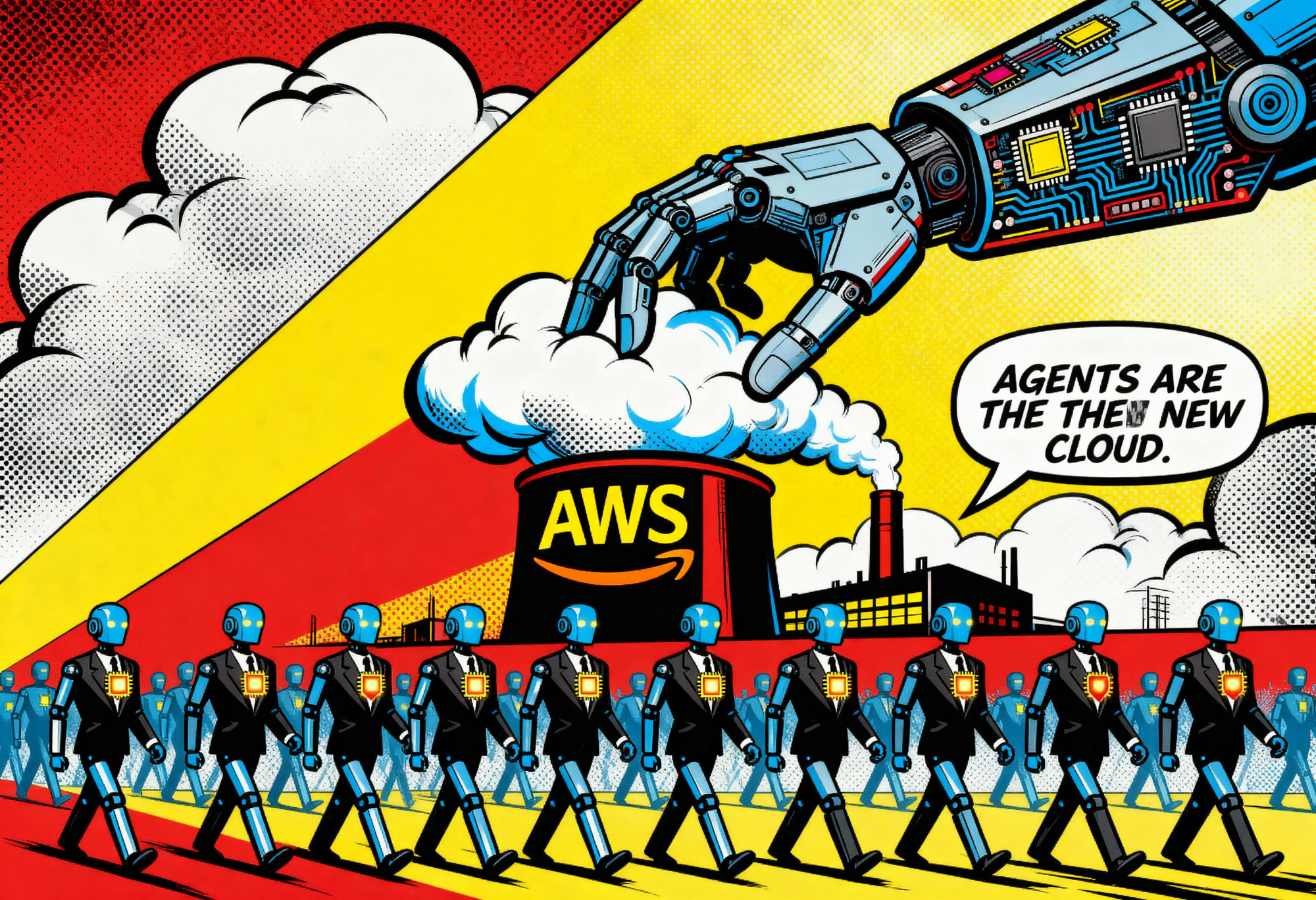
The arrangement confirms a shift in how AI infrastructure gets built. Hyperscalers are no longer content to buy components on the open market. They're moving upstream, forging direct relationships with the companies that extract the raw materials their data centers consume. Amazon already generates its own renewable energy. Now it's locking down copper. How long before Microsoft or Google follows suit?
What the numbers reveal
In Arizona, water rights are litigated more fiercely than mineral rights. Nuton's process uses 71 liters per kilogram of copper, roughly half the global industry average. That efficiency translates directly into permitting advantages. In a state where every acre-foot of water allocation is contested, a mine that drinks half as much faces half as many lawsuits.
Daily at 6am PST
Don't miss tomorrow's analysis
No breathless headlines. No "everything is changing" filler. Just who moved, what broke, and why it matters.
Free. No spam. Unsubscribe anytime.
Johnson Camp is targeting 30,000 tonnes of refined copper over a four-year demonstration period. That sounds modest. It is. A single hyperscale data center can burn through 50,000 tonnes during construction. But the deal is a proof of concept, not a production ramp. If Nuton performs as expected, Rio Tinto will deploy the technology at additional sites. Gunnison controls 12 copper deposits within an 8-kilometer radius in the Cochise district alone. The measured and indicated mineral resource totals over 831 million tons of ore.
The carbon math reinforces the water story. Johnson Camp's full-scope emissions of 2.82 kgCO₂e per kilogram compare favorably to a global range of 1.5 to 8.0. The low end represents best-in-class conventional operations. The high end includes aging smelters in China and Eastern Europe that face mounting regulatory pressure. As carbon border adjustments proliferate, the gap between clean copper and dirty copper will widen from a marketing distinction to a trade barrier.
The quiet constraint
Jensen Huang keeps getting asked when Nvidia will switch from copper to optical interconnects for GPU-to-GPU connections. His answer has been consistent: not yet. Copper remains "orders of magnitude" more reliable than photonics for the highest-bandwidth workloads. He's unwilling to sacrifice reliability when customers are deploying infrastructure worth hundreds of billions of dollars.
That decision has downstream consequences. If optical interconnects cannot replace copper inside AI clusters, then copper demand scales linearly with AI capacity. Every new training run, every expanded inference fleet, every additional data center compounds the pressure on supply.
The tech industry built its rise on the assumption that software would eat the world. For AI specifically, hardware is eating software's lunch. And copper is eating hardware's margins. Amazon's deal with Rio Tinto acknowledges a reality that most AI coverage ignores: physical constraints bind faster than algorithmic ones.
Bacteria in Arizona pits are now part of the AI supply chain. The future of artificial intelligence is being extracted one microorganism at a time.
Frequently Asked Questions
Q: What is bioleaching and how does it extract copper?
A: Bioleaching uses naturally occurring bacteria to break down sulfide ores. The microorganisms consume the ore and release copper ions, which are then extracted through electrowinning. The process produces 99.99% pure copper cathode at the mine site, eliminating the need for smelters and refineries.
Q: Why do AI data centers need so much copper?
A: Copper is used in electrical cables, busbars, transformer windings, circuit boards, and heat sinks. A single megawatt of AI training capacity requires roughly 47 metric tonnes of copper. Nvidia's GB200 server unit alone contains over 5,000 copper cables totaling 3.2 kilometers.
Q: How does Nuton copper compare to conventionally mined copper on carbon emissions?
A: Johnson Camp's Nuton copper has a carbon footprint of 2.82 kgCO₂e per kilogram, roughly one-third of the global average. The global range for primary copper spans 1.5 to 8.0 kgCO₂e/kg, with older smelters in China and Eastern Europe at the high end.
Q: How much copper will Johnson Camp produce under this deal?
A: The mine is targeting 30,000 tonnes of refined copper over a four-year demonstration period. For context, a single hyperscale data center can consume up to 50,000 tonnes during construction. Gunnison controls 12 deposits with over 831 million tons of ore in the district.
Q: Why can't optical interconnects replace copper in AI data centers?
A: Nvidia CEO Jensen Huang has stated that copper connections remain "orders of magnitude" more reliable than optical interconnects for high-bandwidth GPU-to-GPU connections. Until photonics can match copper's reliability, AI infrastructure will continue to scale copper demand linearly with compute capacity.

Marcus Schuler
Editor-in-Chief and founder of Implicator.ai. Former ARD correspondent and senior broadcast journalist with 10+ years covering tech. Writes daily briefings on policy and market developments. Based in San Francisco. E-mail: editor@implicator.ai