Implicator
Lisa Su went in front of reporters Tuesday morning. "Multi-year, multi-generation collaboration," she said. Zuckerberg weighed in with "an important step." AMD's own press release ran the phrase "expanded strategic partnership" three times before anyone got to the numbers.
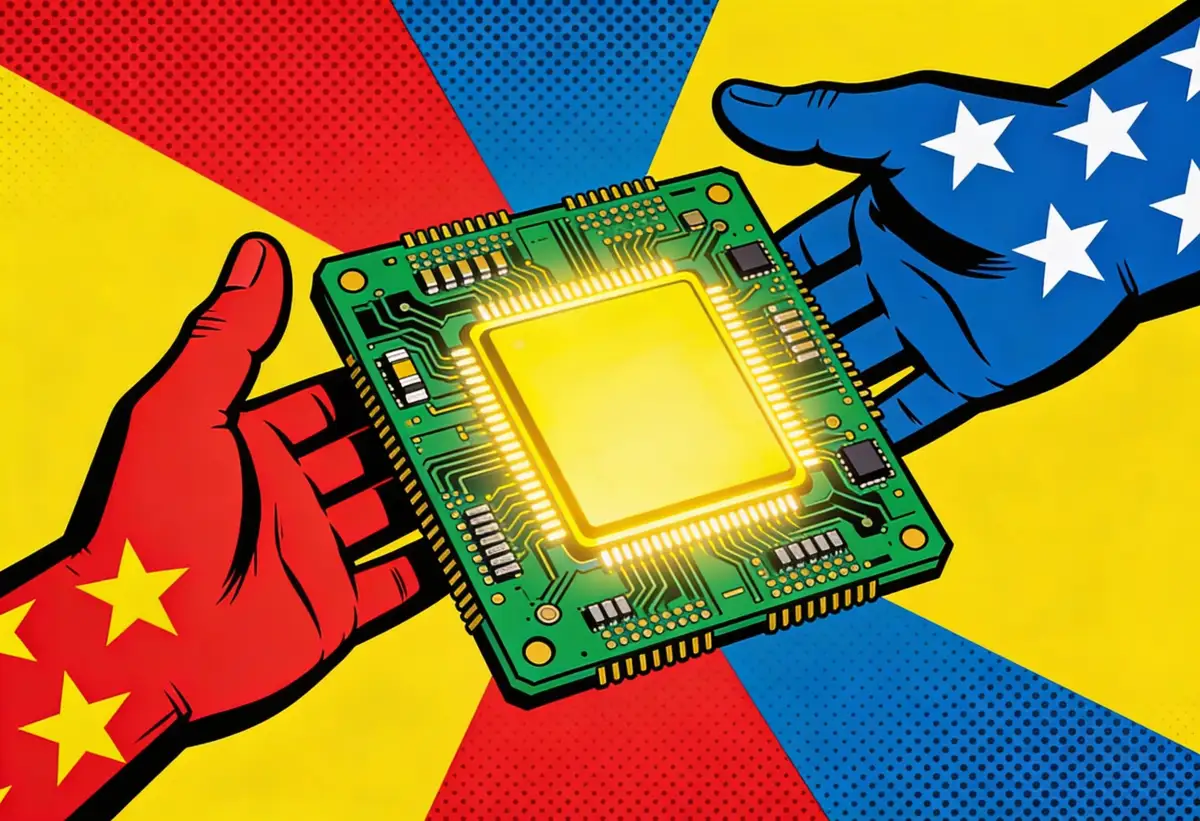
Then you read the numbers. AMD offered Meta warrants to buy 160 million shares of AMD stock at a penny apiece. Same warrants, same structure, same 10% of the company that AMD offered OpenAI four months ago. In total, AMD has now promised warrants for roughly 20% of its current shares outstanding to just two customers since October.
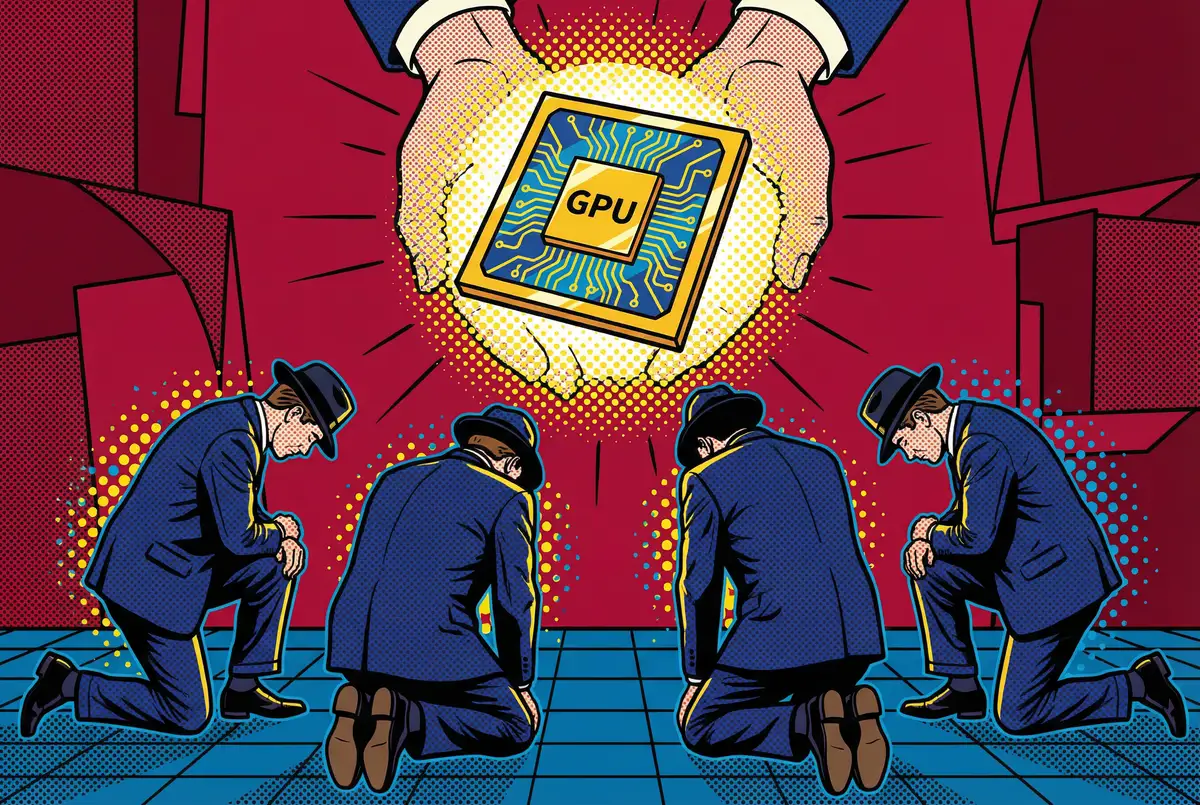
Nvidia does not do this. Nvidia sells its chips, books the revenue, moves on. When you control 90% of the AI accelerator market and customers are begging for allocation, you don't need to sweeten the deal with equity. You set the price.
AMD needs to sweeten. That single fact tells you more about the AI chip market than any $100 billion headline ever could. And the structure of these deals, the equity stakes and performance warrants and milestone-triggered vesting schedules, reveals something the press releases won't say directly. The chips are almost beside the point. What AMD is really moving is a financial instrument.
The Breakdown
- AMD offered Meta warrants for 10% of its stock in a $60 billion chip deal, matching what it gave OpenAI in October
- AMD's stock must triple to $600 for the full warrant package to vest, from Monday's close at $196.60
- Critics call the cross-ownership structure circular financing, where chip purchases boost AMD stock and make customer warrants more valuable
- The MI450 chiplet architecture, co-designed with Meta for inference, is AMD's strongest competitive card against Nvidia
The most expensive loyalty program in history
When a company with a differentiated product sells that product, it charges a price and collects cash. When a company with an undifferentiated product needs to lock in customers, it builds a loyalty program. Starbucks has one. iPhone doesn't need one.
What AMD built with Meta is a loyalty program at a scale nobody has attempted before. Buy $60 billion worth of MI450 chips over five years, get warrants for 10% of the company at a penny per share. Hit the milestones, and AMD's stock price does the rest.
But here is the math AMD shareholders should be running. The warrants vest in tranches tied to AMD's stock price, and the final tranche only unlocks if AMD hits $600 per share. It closed Monday at $196.60. That means AMD's stock needs to triple for Meta to receive the full equity package.
If the stock triples, AMD bulls will argue the dilution was worth it. Maybe.
If it doesn't, AMD gave away billions in potential equity anyway, because the earlier tranches vest at lower thresholds tied to gigawatt shipment milestones. Meta gets upside either way. AMD gets revenue, but only by giving up ownership.
Hargreaves Lansdown analyst Matt Britzman put it bluntly. "Having to give up a 10% stake suggests it could be struggling to generate organic demand," he told Reuters.
He wasn't wrong.
The money goes in circles
You need to understand these deals as a system. They sit inside a financial structure that critics call circular financing, and the label fits.
Meta pays AMD for chips. AMD gives Meta stock. Meta's purchase shows up as revenue on AMD's income statement, which boosts AMD's stock price, which makes Meta's warrants more valuable. The first gigawatt of hardware doesn't start deploying until the second half of this year. The financial engineering started months ago.
The October deal with OpenAI ran on the same logic, though the specifics should bother you more than the similarities. AMD agreed to supply the chips. OpenAI picked up warrants for another 160 million shares. Same number. Same 10%. As OpenAI deploys that AMD hardware, it validates the platform, draws more customers in, pushes AMD's stock higher, and makes OpenAI's own warrants pay off in the process.
And it fans outward. Meta last week separately agreed to buy millions of Nvidia's GPUs in a deal worth tens of billions. Nvidia has been eyeing investments in some of its largest customers, including OpenAI. So OpenAI holds potential stakes in its chip supplier. That chip supplier's rival invests in OpenAI. Meta owns pieces of everything.
Dan Coatsworth at AJ Bell named the anxiety directly. "The return of circular transactions in the industry gives investors something else to worry about," he said.
Capital expenditure from Alphabet, Microsoft, Amazon, and Meta is expected to exceed $630 billion this year according to Reuters calculations, with most flowing to data centers and AI chips. One gigawatt of compute, the unit these deals are denominated in, requires the output of a nuclear reactor. AMD says each gigawatt means "double-digit billions" in revenue.
Stay ahead of the curve
Strategic AI news from San Francisco. No hype, no "AI will change everything" throat clearing. Just what moved, who won, and why it matters. Daily at 6am PST.
No spam. Unsubscribe anytime.
That money circulates. It compounds. It creates its own gravity. And at some point you stop being able to tell where the value creation starts and the financial engineering takes over. The AI industry spent years promising it would generate real economic returns. What it has generated, so far, is an extraordinarily complex web of cross-ownership where everyone's success depends on everyone else's continued spending.
The one card AMD actually holds
AMD does have something real to play. The MI450 is not a generic chip. Meta helped design it, and the architecture is optimized specifically for inference, the process where trained AI models respond to user queries in real time.
Inference is where the growth lives. Industry analysts expect the inference hardware market to dwarf training hardware within a few years. Every chatbot query and AI agent action burns inference compute, and so does every real-time ad optimization running across Meta's platforms. The volume keeps climbing. And unlike training, which requires massive one-time bursts of compute to build a model, inference runs constantly. Every user interaction is a transaction. Meta serves billions of them daily across Facebook, Instagram, and WhatsApp.
If you believe inference will dominate AI workloads going forward, and the evidence says it will, then AMD selling custom inference silicon to the largest social media company on earth is not irrational. It might be the one move that justifies the equity giveaway.
Ben Bajarin at Creative Strategies, who was briefed on the agreement, flagged exactly this. What separates Meta's AMD deal from the Nvidia one is that AMD ships customized GPUs first. "We don't have any indication Nvidia is doing that," Bajarin told CNBC. "It's a good way for them to win some of these deals."
The MI450 doesn't work like a traditional GPU. It stitches together several small silicon chiplets instead of carving one massive die. That makes customization far easier. Nvidia doesn't offer anything comparable at this scale, and Meta knows it. Meta gets to influence the chip roadmap. Nvidia refuses to give big customers that kind of access. AMD handed it over willingly.
This is where the loyalty program metaphor starts to crack. AMD isn't only offering equity. It's offering architectural influence. If that influence produces genuinely superior inference hardware, the warrant structure might look prescient in two years.
Big if. But a real if.
Meta wins here. Obviously.
The winners are not hard to spot. Meta, emboldened by record quarterly revenue and a $135 billion capex budget for 2026, gets custom chips built to its specifications and warrants that profit from AMD's success. Zuckerberg's infrastructure team now runs three active chip relationships. Nvidia. AMD. An in-house effort. Plus ongoing talks with Google about tensor processing units. Calling this a partnership misses what Meta actually built. It's a procurement machine, and it is running with surgical precision.
"At the scale we're talking at, there's a place for all three," Meta infrastructure head Santosh Janardhan told Bloomberg. He reports directly to Zuckerberg now. That's how seriously Meta takes compute supply.
AMD gets guaranteed revenue. Multiple years, multiple gigawatts, multiple chip generations. For a company that reported $34.6 billion in sales last year while Nvidia commands a $4.66 trillion market capitalization, any deal that secures long-term volume matters. AMD's CFO Jean Hu called the partnership "accretive to our non-GAAP earnings per share." Finance-speak for "we needed this."
The losers are AMD's existing shareholders. Not because the deal is bad in isolation. Because the pattern it establishes is corrosive. You cannot promise 20% of your company to two customers in four months and call it confidence. You can call it survival. You can call it smart if the inference bet pays off. But confidence looks like setting a price and having customers pay it. Full stop.
Broadcom should feel defensive too. As the dominant force in custom AI silicon, it has the most to lose from AMD's new willingness to co-design chips with hyperscalers. If Meta gets custom inference hardware from AMD, that directly threatens Broadcom's position in the custom silicon market. Wedbush analyst Matt Bryson noted that the deal also addresses recent concerns about AMD's MI450 deployment timeline slipping. The timeline isn't slipping. But the price of keeping it on schedule turns out to be a fifth of the company.
The $600 question
AMD's stock needs to triple for the full warrant package to vest. From $197 to $600. Three hundred percent.
Maybe it gets there. AMD surged 77% in 2025 before giving back 8.2% so far this year. The AI infrastructure cycle keeps accelerating. Meta alone plans to spend up to $135 billion on data centers in 2026, nearly double the $72 billion it burned through last year. The inference market is real, expanding, and AMD now has two of the largest AI companies on earth contractually committed to deploying its hardware.
But if you're an AMD shareholder, the question worth asking isn't whether the stock hits $600. The question is why your company keeps building loyalty programs instead of letting its chips speak for themselves.
Nvidia reports earnings Wednesday. It will post revenue growth near 68%, to roughly $66 billion for the quarter. It will not announce deals involving penny warrants.
That's the tell.
Frequently Asked Questions
What are stock warrants and how do AMD's work?
Warrants give the holder the right to buy shares at a set price. AMD's let Meta and OpenAI each buy 160 million shares at one cent apiece. They vest in tranches tied to AMD's stock price and gigawatt shipment milestones.
Why does AMD need to offer equity to sell chips?
AMD holds roughly 10% of the AI accelerator market while Nvidia controls 90%. Customers don't need AMD the way they need Nvidia, so AMD sweetens deals with equity to lock in long-term commitments.
What is circular financing in the AI chip market?
Circular financing describes deals where chip purchases generate revenue that boosts a supplier's stock, increasing the value of warrants held by those same customers. The financial benefit loops between buyer and seller.
What is the MI450 and why does it matter?
AMD's MI450 is an inference-optimized chip using chiplet architecture, co-designed with Meta. Unlike monolithic dies, its modular design allows customization for specific workloads like ad targeting and chatbot responses.
How does this deal affect AMD shareholders?
AMD promised warrants for roughly 20% of its shares to two customers since October. Earlier tranches vest at lower stock price thresholds, meaning dilution occurs even if AMD never hits the $600 target.


Harkaram Grewal
Maps the India–Germany–U.S. AI triangle from New Delhi. Background in cross-market operations and business development. Writes about supply chains, enterprise adoption, and talent—the unsexy forces that actually move global AI.