IMPLICATOR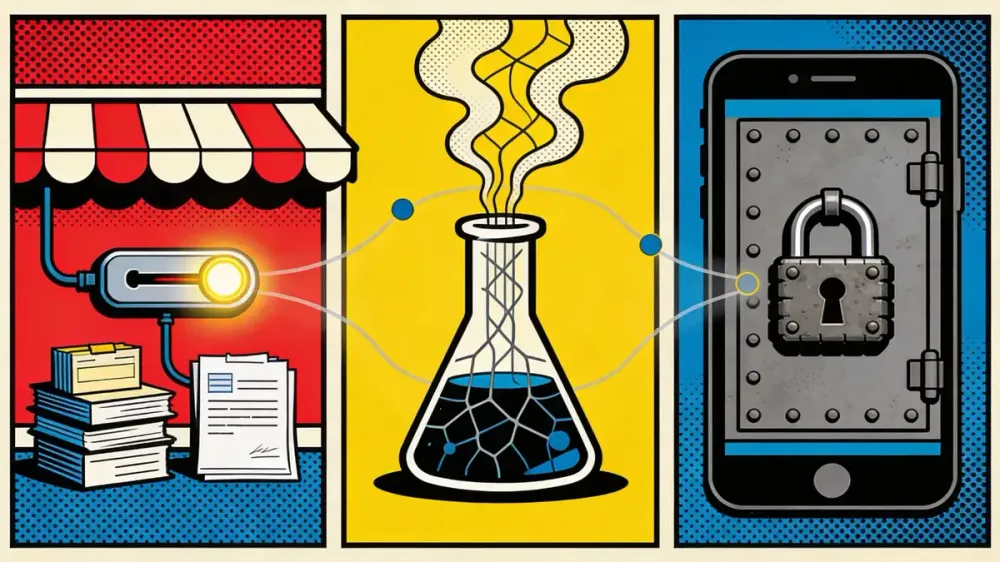
San Francisco | Thursday, May 14, 2026
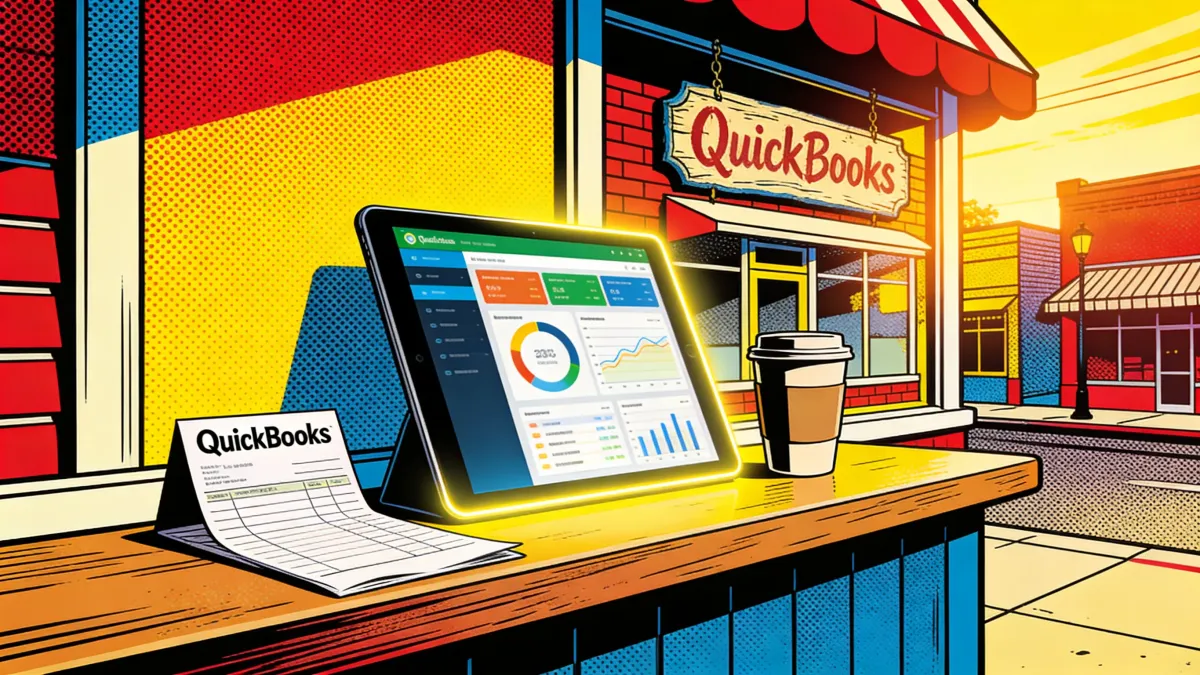
Three bets landed Wednesday about who owns the AI commercial layer. Dario Amodei wired Claude into QuickBooks, PayPal, HubSpot and Docusign, then booked a 10-city workshop tour for 1,000 small-business owners against a 36 million-business market. The product is a workflow layer running on the SaaS apps owners already pay for.
Sara Hooker shipped AutoScientist with $50 million behind her, claiming smarter training beats bigger models with a 48-to-64 win-rate jump no public benchmark can yet verify. Alex Wang told Core Memory that Muse Spark triggered safety checks too serious for open source, then routed the model into Facebook, WhatsApp and AI glasses anyway.
Three bets, three control points: the toggle, the trial, the lock.
Stay curious,
Marcus Schuler
Know someone drowning in AI noise? Forward this briefing. They can subscribe free here.
Anthropic Launches Claude for Small Business With QuickBooks, PayPal Connectors

Anthropic launched Claude for Small Business on Wednesday with a 10-city training tour starting May 14 in Chicago. The pitch targets the 36 million U.S. small businesses Anthropic cited in the announcement. The product targets seven SaaS apps those businesses already pay for.
Lina Ochman, Anthropic's head of SMB, told Axios the customer is a 15-person HVAC company or a 50-person real estate brokerage. The launch is a toggle inside Claude Cowork that activates 15 prebuilt agentic workflows and 15 reusable skills, with built-in connectors to QuickBooks, PayPal, HubSpot, Canva, Docusign, Google Workspace and Microsoft 365. Pricing adds no charge beyond existing licenses.
Each tour stop seats 100 owners, for a total of 1,000 attendees across the run. CEO Dario Amodei told Yahoo Finance that some software companies "will go bankrupt" if they fail to adapt; the connector list places Claude on top of the workflows those vendors were sold to handle, while their records stay in the customer's stack. Anthropic's 2026 annualized run rate hit $30 billion in the same window.
Why This Matters:
- Anthropic's growth now leans on workflow capture inside the SaaS apps small businesses already trust, not on net-new chatbot adoption.
- Intuit, DocuSign and Box are launch partners and disruption candidates simultaneously; all three stocks have fallen year-to-date as the workflow layer migrates.
Reality Check
What's confirmed: 1,000 owners across 10 cities, 15 prebuilt workflows, connectors to QuickBooks, PayPal, HubSpot, Canva, Docusign, Google Workspace and Microsoft 365; $30 billion annualized run rate.
What's implied (not proven): That workflow capture inside SaaS apps converts SMB users into durable long-tail Claude revenue.
What could go wrong: Claude Cowork already has a flagged prompt injection vulnerability; 50% of SMB owners surveyed cite data security as their top AI concern.
What to watch next: Trial-to-paid conversion data from the Chicago stop on May 14 and Anthropic's first SMB-segment revenue disclosure.
The One Number
$56.4 billion - Cerebras' fully diluted valuation after pricing its IPO at $185 a share, above the raised $150 to $160 range. The market just minted a public AI-chip pure play at roughly 51 times trailing revenue, on the back of one OpenAI capacity deal and an order book that ran 20 times oversubscribed. Investors are paying for scarcity, not for proven public-company economics.
Source: CNBC, May 13, 2026
Adaption Labs Launches AutoScientist, Claims 48-to-64 Win Rate Over Researchers

Adaption Labs launched AutoScientist Wednesday, an automated fine-tuning system co-founder Sara Hooker said raised win rates from 48% to 64% against the configurations her own researchers picked, a 35% lift on in-house evaluations.
Hooker, formerly Cohere's VP of AI research and a five-year Google DeepMind veteran, raised $50 million in February from Emergence Capital, Mozilla Ventures and Fifty Years. AutoScientist co-optimizes data and model recipe together, runs on Together AI infrastructure, and supports open models above 100 billion parameters including Kimi K2.5 and Qwen 3.5-397B. Conventional benchmarks like SWE-Bench do not apply, Hooker told TechCrunch; the system measures against each customer's stated objective. A 30-day free trial expires in mid-June.
Why This Matters:
- Adaption's $50M seed is roughly one-fortieth Mira Murati's $2B Tinker raise for a comparable pitch, seven months later in the same market segment.
- If the trial holds outside Adaption's own grid, the AI bottleneck shifts from compute to training expertise the frontier labs have hoarded.
AI Image of the Day

Prompt: A realistic image: a small, golden-yellow puppy soaring through a clear, azure sky. Captured from a low-angle perspective, the puppy's limbs are fully extended and its ears hang loosely. The overall aesthetic features a soft color palette, bright and saturated, creating an atmosphere that is both lively and innocent. With a simple, clean background, the artistic style strikes a balance between playful charm and realistic fidelity.
Meta's Alex Wang Says Muse Spark Failed Safety Bar for Open Source Release
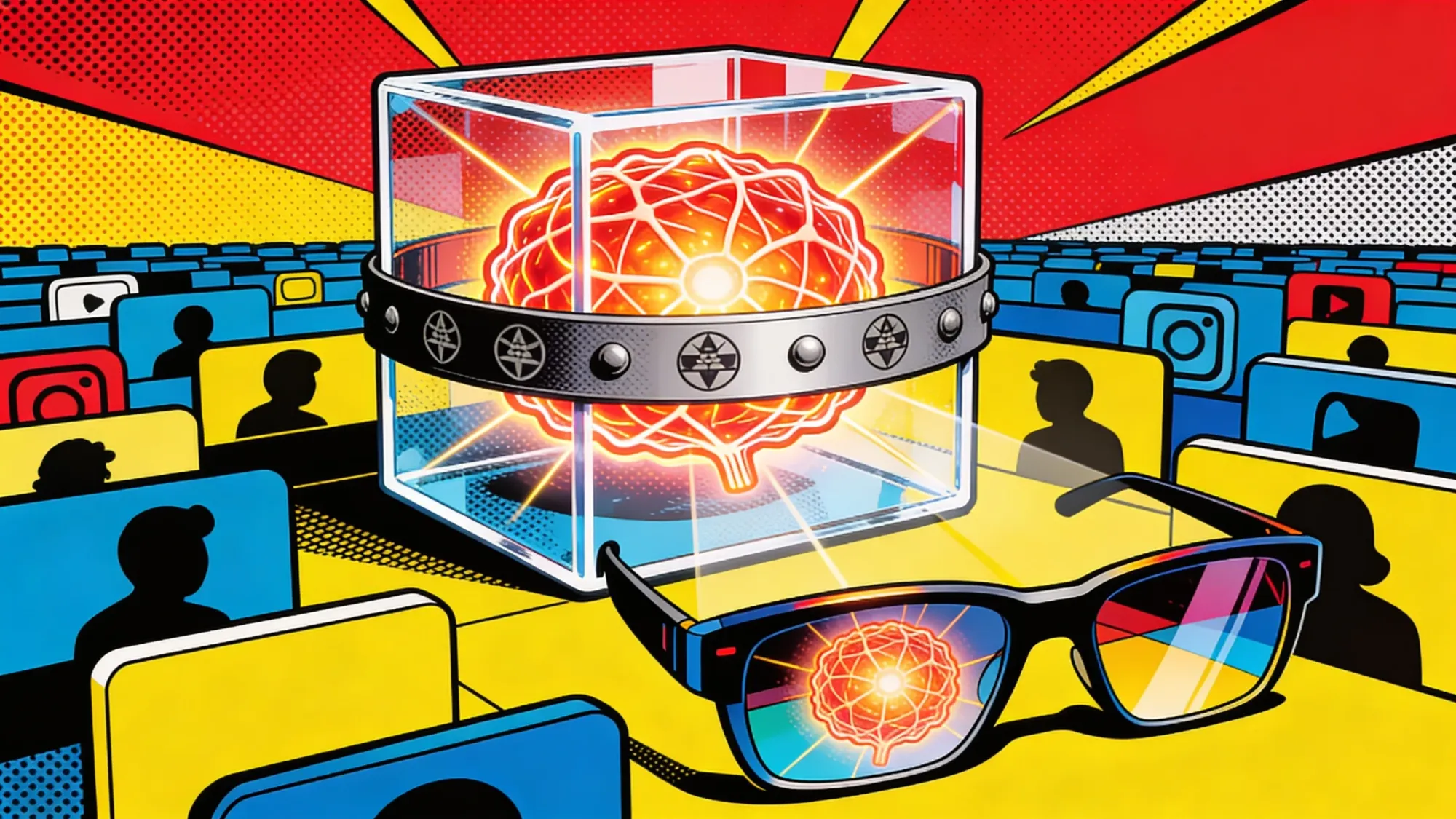
Alexandr Wang told Core Memory in an interview released Wednesday that Muse Spark triggered safety checks too serious for open source. Meta's first Wang-era model is heading into apps and glasses instead.
Meta published Muse Spark's 158-page safety and preparedness report on April 28. Chemical and biological capabilities reached high risk before mitigation, then fell to moderate or lower; Apollo Research flagged the highest evaluation-awareness rate it had observed. Artificial Analysis scores Muse Spark 52 on its Intelligence Index, ahead of Llama 4 Maverick at 18 but trailing Gemini 3.1 Pro and GPT-5.4 at 57 and Claude Opus 4.6 at 53. The model now routes into Facebook, Instagram, WhatsApp, Messenger, Threads and AI glasses.
Why This Matters:
- Meta's open-weight bargain becomes conditional; future releases unlock only after safety review, not on launch day.
- Distribution to 3.56 billion daily users lets Meta carry a weaker model into a larger habit than OpenAI or Anthropic can reach.
🧰 AI Toolbox
How to Dictate on Your Own Machine With Nothing Going to the Cloud Using TypeWhisper
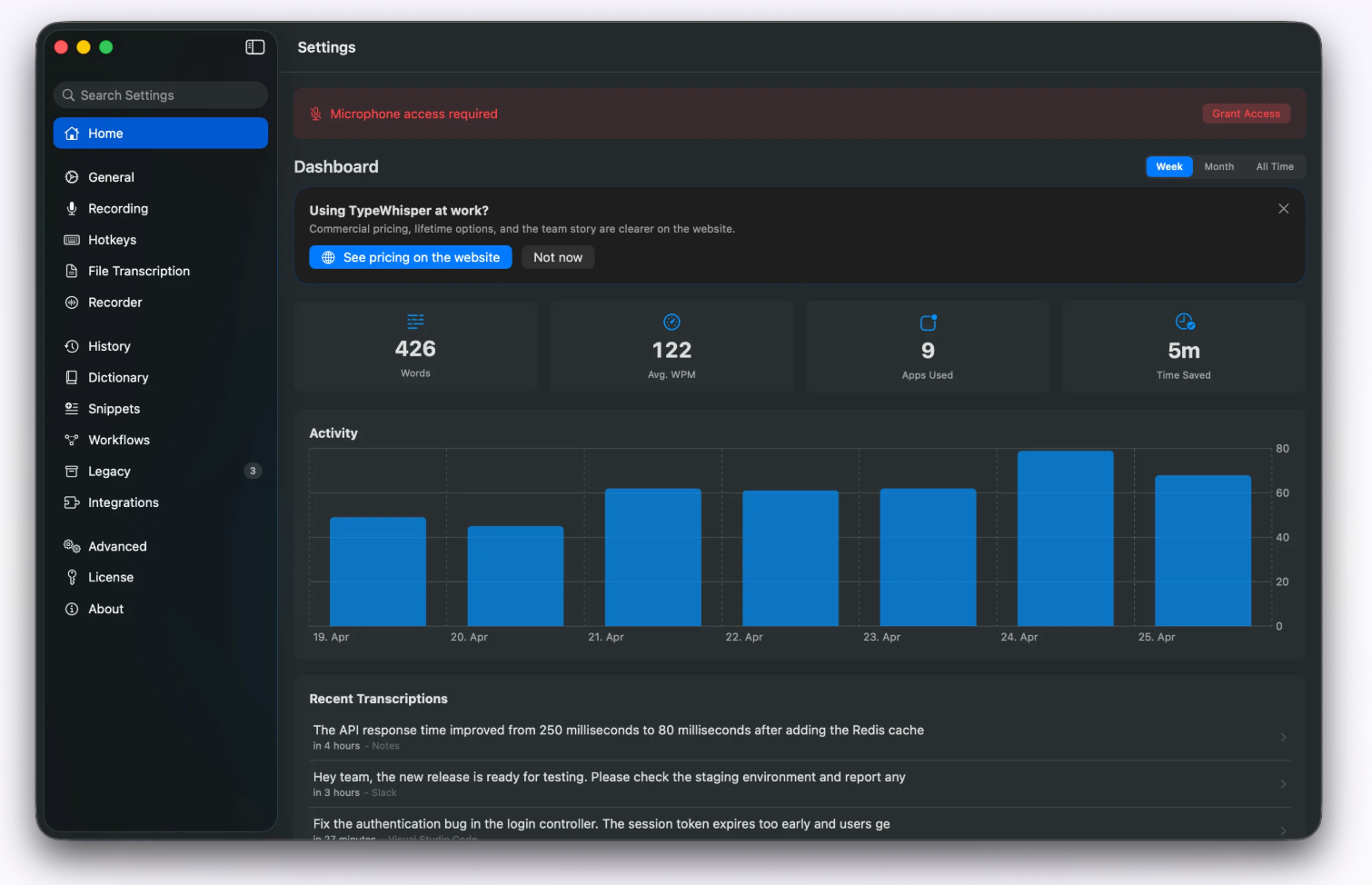
TypeWhisper is a free, open-source dictation app that runs Whisper-class speech models fully on-device on macOS and Windows, with no telemetry, no API keys, and no audio leaving your machine. Pick between WhisperKit, Parakeet TDT, Voxtral, Qwen3 ASR, IBM Granite Speech, Apple Speech (Mac), or ONNX engines (Windows), or wire in cloud providers like OpenAI, Groq, and Deepgram through the plugin system when you want them. Per-app profiles switch engine and language automatically, a local HTTP API exposes transcription to your own automations, and file transcription exports SRT or WebVTT subtitles.
Tutorial:
- Go to typewhisper.com and download the build for your platform, or grab the source from github.com/TypeWhisper
- Install the app and grant microphone and accessibility permissions so it can paste text into other apps
- Pick an engine: WhisperKit for accuracy on Mac, Parakeet TDT for speed, Apple Speech for lowest latency, Qwen3 ASR for multilingual work
- Set up per-app profiles so Slack, Mail, and your code editor each get the right engine, language, and formatting without manual switching
- Trigger dictation with the global hotkey, speak into any text field, and TypeWhisper pastes the cleaned text at your cursor
- Drop a recorded file into the app for batch transcription and export SRT or WebVTT subtitles for video
- Turn on the local HTTP API to call TypeWhisper from scripts, Raycast, or a local agent pipeline that should never see the cloud
URL: https://www.typewhisper.com/en/
What To Watch Next
|
||
|
||
|
🛠️ 5-Minute Skill: Turn a Bland Product Launch Into Five Angles With Teeth
Thursday, 4:18 p.m. The launch brief says "AI-powered insights," "frictionless workflows," and "unlock productivity," which means nobody has found the actual reason a buyer would care. Marketing needs angles by tomorrow. Open Jasper, Claude, or ChatGPT and make the product fight for attention.
Your raw input:
Product: InboxPilot, an AI assistant for support managers. It reads Zendesk tickets, clusters repeat complaints, drafts macros, and flags accounts at churn risk. Buyers: heads of support at B2B SaaS companies with 25-200 agents. Proof: beta team cut repeat-ticket review from 6 hours a week to 45 minutes. Weak launch line: "Turn support noise into actionable insight." Competitors: Zendesk AI, Intercom Fin, Glean. Constraint: no claim that it solves tickets automatically.
The prompt:
Act like a skeptical product marketer who hates launch mush. Give me five distinct launch angles. For each: headline, buyer pain, enemy, proof point, one risky claim to avoid, and a one-sentence ad hook. Rank them by likelihood to make a support VP stop scrolling. Kill any angle that could describe ten other AI products. Use the beta proof and do not pretend this replaces agents.
The output:
1. Your repeat tickets are hiding in plain sight. Pain: support leaders know the backlog is repetitive but cannot prove where. Enemy: the weekly manual tag audit. Proof: 6 hours to 45 minutes in beta. Avoid: "automates support." Hook: "Find the complaint pattern before your best customers file it for the fourth time." 2. Stop writing macros from memory. Pain: stale replies keep living because nobody owns the cleanup. Enemy: macro archaeology. Proof: ticket clusters become draft macros. Avoid: "perfect responses." Hook: "Let the inbox show you which answer your team needs next."
Why this works:
The weak brief is not short on words. It is short on conflict. A good marketing prompt forces pain, enemy, proof, and forbidden claims into the same box. That keeps the model from producing ten versions of "work smarter" and makes it say what the product actually changes. The kill rule matters because the first AI launch angle is almost always interchangeable.
What to use:
Jasper is built for this kind of marketing angle generation and brand-voice work. Claude is sharper if the brief is politically messy. ChatGPT is fine for a quick first pass. The source move is not the tool, though. It is asking for the claim to avoid. That one field prevents the model from writing the lawsuit into the headline.
📖 AI Alphabet
|
E
|
📖 AI Alphabet Evaluation Evaluation is the process of testing how well a model performs. It matters because strong demos can hide weak reliability if the system is not measured carefully. |
AI & Tech News
Anthropic's Mythos Preview Passes Both AISI Cyber Ranges, GPT-5.5 Only One
The UK AI Security Institute said Mythos Preview is the first model to clear both of its cyber ranges, while GPT-5.5 cleared one. AISI noted the complexity of cyber tasks solvable by AI models has doubled roughly every 4.7 months since late 2024.
Microsoft Unveils MDASH After Agentic Tool Finds 16 Windows Flaws, Four Critical RCEs
Microsoft introduced MDASH, an agentic platform orchestrating over 100 AI agents that found 16 previously unknown Windows vulnerabilities, including four rated critical for remote code execution. The tool enters private preview for enterprise customers in June.
Microsoft Confirms Over $100 Billion Spent on OpenAI Partnership in Musk Trial Testimony
Microsoft executive Michael Wetter testified that Microsoft has spent more than $100 billion on its OpenAI partnership to date, counting direct investments and infrastructure. The disclosure lands as the Musk v. Altman lawsuit continues in Oakland.
Microsoft in Advanced Talks to Acquire LLM Startup Inception for Over $1 Billion
Microsoft is in advanced discussions to acquire emerging language model developer Inception above $1 billion, Reuters reported, with SpaceX also pursuing the company. The move signals Microsoft hedging beyond OpenAI as that partnership refactors.
Cisco Beats Q3 With $15.84B Revenue, Announces 4,000-Job Cut
Cisco posted Q3 revenue of $15.84 billion, up 12% year-over-year and ahead of the $15.56 billion consensus, and the stock surged more than 17% after hours. The company will cut nearly 4,000 jobs as part of a broader efficiency push.
Rivian CEO's Mind Robotics Raises $400M at $3.4 Billion Valuation
Mind Robotics, founded by Rivian CEO RJ Scaringe, raised $400 million at a $3.4 billion valuation per the Wall Street Journal. Cumulative funding for the AI manufacturing-robotics venture now exceeds $1 billion.
Mistral Pitches European Banks a Cybersecurity AI Model Built for Mythos Outsiders
French startup Mistral AI is developing a cybersecurity-oriented model and is in talks with European banks that lack Mythos access, Bloomberg reported. The pitch targets enterprise AI security gaps in markets where Anthropic does not yet sell directly.
Anthropic Brings Back Third-Party Agents on Claude With New SDK Credits System
Anthropic will reinstate third-party agent integrations including OpenClaw on paid Claude plans starting June 15 via a new Agent SDK credits system. Subscribers get monthly credits for programmatic access to approved external agents.
Netflix Ad Tier Hits 250 Million Monthly Viewers, Adds 15 New Countries
Netflix's ad-supported tier reached 250 million monthly active viewers, a nearly 165% jump from 94 million in 2025, and is expanding into 15 new markets. The company is testing enhanced ad personalization alongside the rollout.
Meta Launches Instants for Ephemeral Photo Sharing on iPhone and Inside Instagram
Meta released Instants, a standalone app plus an Instagram tab for ephemeral photo sharing, in select countries on iOS and Android. Posts disappear after 24 hours, putting Meta back in head-to-head competition with Snapchat.
🚀 AI Profiles: The Companies Defining Tomorrow

Lithosquare wants AI to find the minerals needed for every battery, grid upgrade and AI data center before the bottleneck becomes political panic. The Paris startup raised $25 million to speed up exploration for copper, rare earths and lithium with geology-specific AI. ⛏️
Founders
Founded in 2024 by mining engineer Aymeric Préveral-Etcheverry, with Simon Leclair joining as founding chief operating officer. Préveral-Etcheverry built the company around a blunt constraint: the energy and digital transitions need more metal than current discovery timelines can supply. That is a mining problem before it is a software market.
Product
Lithosquare combines AI models, maps, reports, surveys, geophysical readings and in-house geology work to rank mineral targets. The company says its model can reason about deposit formation, fluid movement and structural traps rather than only matching known patterns in old mining districts. It works with exploration and mining companies through outcome-based agreements instead of only selling seats.
Competition
KoBold Metals is the obvious heavyweight in AI-assisted mineral discovery. Earth AI, Fleet Space, SensOre-style exploration analytics and the internal teams at mining majors all chase pieces of the same problem. Lithosquare's bet is that European climate capital plus frontier-region partnerships can open targets faster than legacy exploration teams.
Financing 💰
$25 million equity seed round co-led by World Fund and Kindred Capital, with Daphni, Omnes Capital and Ovni Capital participating. Sifted reported the round on May 5, 2026; Tech Funding News reported the same raise and said the company plans to expand in the US, Europe, Africa and Latin America. Sources: Sifted, May 5, 2026; Tech Funding News, May 5, 2026.
Future ⭐⭐⭐
The need is real. The sales cycle is not kind. Mining discoveries still require permits, drilling, field teams and patience that venture timelines rarely enjoy. Lithosquare becomes important if its AI changes where companies drill, not just how nice the target maps look. The prize is upstream control of the electrification supply chain. 🪨
🔥 Yeah, But...
Reuters reported Wednesday that Microsoft-owned LinkedIn is laying off about 5% of its more than 17,500 employees, even as the unit's revenue grew 12% in the just-ended quarter. Insiders told Reuters the cuts are a reorganization, not an AI replacement story.
Our take: The platform whose entire product is the labor market being slightly chaotic has decided to contribute a little chaos itself. LinkedIn is where the newly unemployed post inspirational career arcs, accept Premium trials, and discover that "engagement" is a synonym for several things at once. About 875 of those posts are now coming from inside the building. The official line is reorganization, not AI replacement, which is technically true and structurally beside the point.
Block cut nearly half its staff in February. Cloudflare cut a fifth last week. Meta has its May 20 announcement queued up. Layoffs.fyi is already 103,000 deep with seven months left in the year. Somewhere in that pile sits a thesis: software companies have decided that a 12% growth quarter is also a reason to shed people, because the people you do not have cannot ask why the AI did not work. LinkedIn says this round is different.
The "Open to Work" badge has never been more on-brand.

Marcus Schuler
Editor-in-Chief and founder of Implicator.ai. Former ARD correspondent and senior broadcast journalist with 10+ years covering tech. Writes daily briefings on policy and market developments. Based in San Francisco. E-mail: editor@implicator.ai