IMPLICATOR
San Francisco | Monday, May 11, 2026
AI note takers have moved from convenience feature to legal exposure. The same bot that records a sales check-in now wanders into board calls, M&A prep, and attorney advice, then leaves behind a transcript lawyers may have to hand over.
The consumer side is no quieter. Janitor AI says 2.5 million people show up daily for adult roleplay, which turns fantasy into an app-store, payments and age-check problem.
Meanwhile, Anthropic is buying its way into distribution and compute at once, with Wall Street partners on one side and SpaceX capacity on the other. The common thread is control: who owns the record, the relationship, and the machine time.
Stay curious,
Marcus Schuler
Know someone drowning in AI noise? Forward this briefing. They can subscribe free here.
AI Note Takers Face Privilege Warnings After Bar Opinion
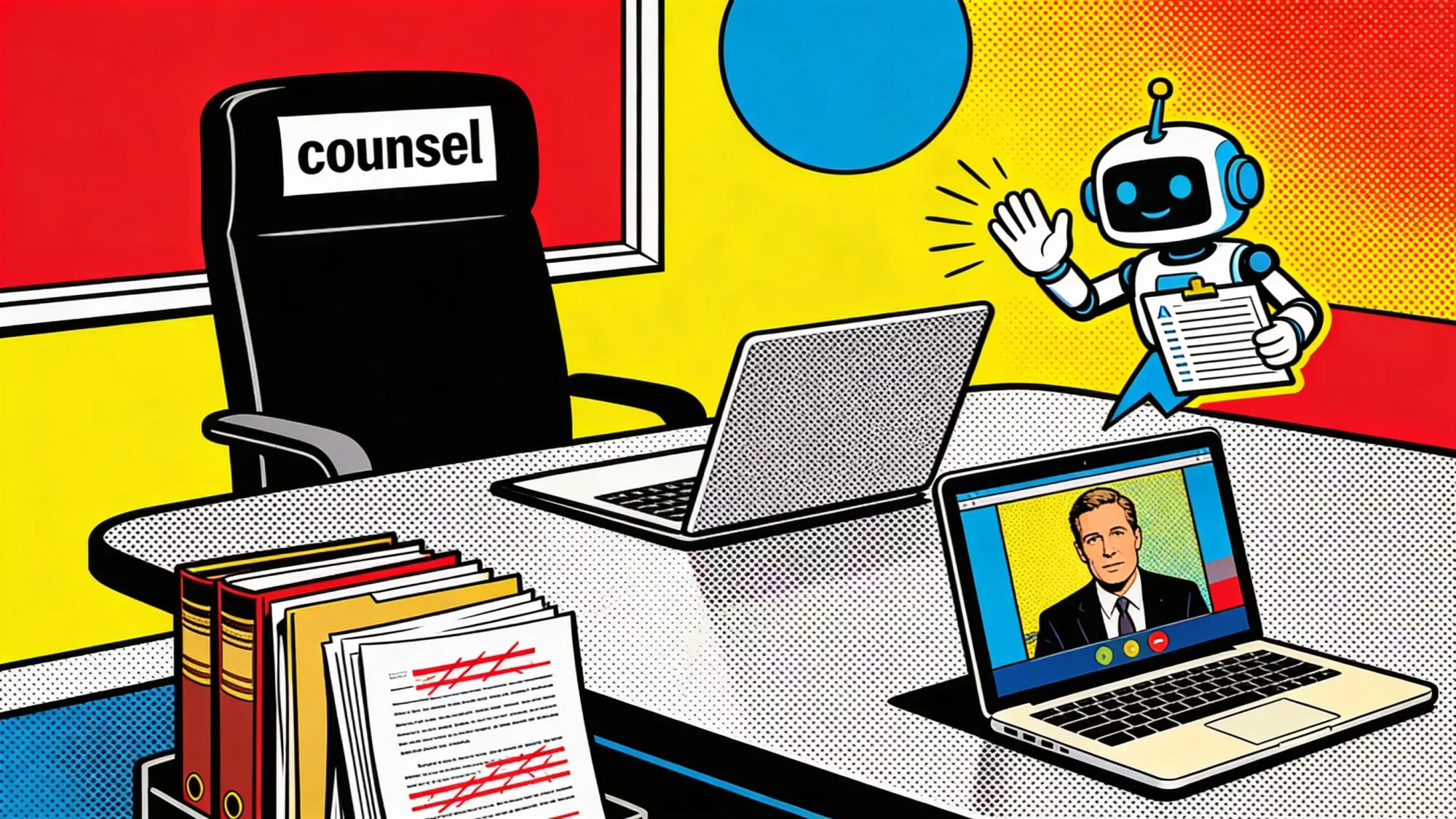
The meeting bot is no longer a harmless productivity guest. In legal calls, it can become a witness nobody meant to invite.
Corporate lawyers are warning companies to eject AI note takers from legal, board and deal calls after DealBook reported attorneys doing exactly that. Automated transcripts can preserve offhand remarks, create discoverable records and test attorney-client privilege when vendors process meeting data.
The New York City Bar's December 2025 opinion gives lawyers a checklist: client consent, confidentiality, privilege, accuracy and tool competence. That is a sharp turn from the early AI notetaker story, when the category looked mostly like faster meeting minutes and Granola funding rounds. The next policy question is simple: does the bot leave when counsel joins?
Why This Matters:
- Companies now need meeting-bot rules before the transcript becomes evidence in litigation.
- AI note takers shift from convenience software to information-governance risk when legal advice enters the room.
Reality Check
What's confirmed: Lawyers are removing note takers from sensitive calls, and the New York City Bar has issued AI recording guidance.
What's implied (not proven): Default transcription may become unacceptable for legal and board work.
What could go wrong: Companies keep bots on for convenience and discover the risk only after subpoenas arrive.
What to watch next: Whether vendors add legal-call modes, retention controls and stronger confidentiality terms.
The One Number
40% - The share of breach-response incidents Experian told Bloomberg involved AI-powered attacks. That turns AI security from a forecast into casework: fraud, identity spoofing and agent-driven attacks are already showing up in the files companies hand to investigators.
Source: Bloomberg, May 10, 2026
Janitor AI Draws 2.5 Million Daily Users to Adult Roleplay

Janitor AI is not selling office automation. It is selling interactive fantasy at a scale app stores and payment processors cannot ignore.
The company says it has 2.5 million daily users and more than 15 million total users, with Forbes reporting that 70% to 80% of users identify as women. The product sits where romantasy, fanfiction, adult roleplay and AI companions overlap.
That gives Janitor a cleaner story than enterprise AI and a harder operating problem. It has to convert traffic into subscriptions while enforcing age checks, image rules, moderation capacity and creator trust. AI companion lawsuits make that more than a community-management issue.
Why This Matters:
- Adult AI roleplay is already big enough to test app-store, payments and safety systems.
- The companion-AI category now has to prove growth without relying on loose moderation.

AI Image of the Day

Prompt: Black-and-white minimalist studio contact sheet portrait of a young woman with a sleek dark bob haircut tucked behind the ears, wearing a sleeveless black top and small silver hoop earrings. Four-frame composition in a clean grid layout, each frame showing a different playful facial expression: wink, funny fish-face expression while looking sideways, wide genuine smile with one eye closed, and serious side profile. Soft diffused studio lighting, high contrast monochrome tones, smooth skin texture, natural makeup, subtle film grain, 1990s fashion casting photo aesthetic, straight-on camera angle, neutral gray background, candid editorial mood, sharp focus, medium close-up framing, timeless minimalist style. --ar 9:16 --profile ianpu2b --v 8.1
Anthropic Widens LLM Meter Lead on Wall Street and SpaceX Deals
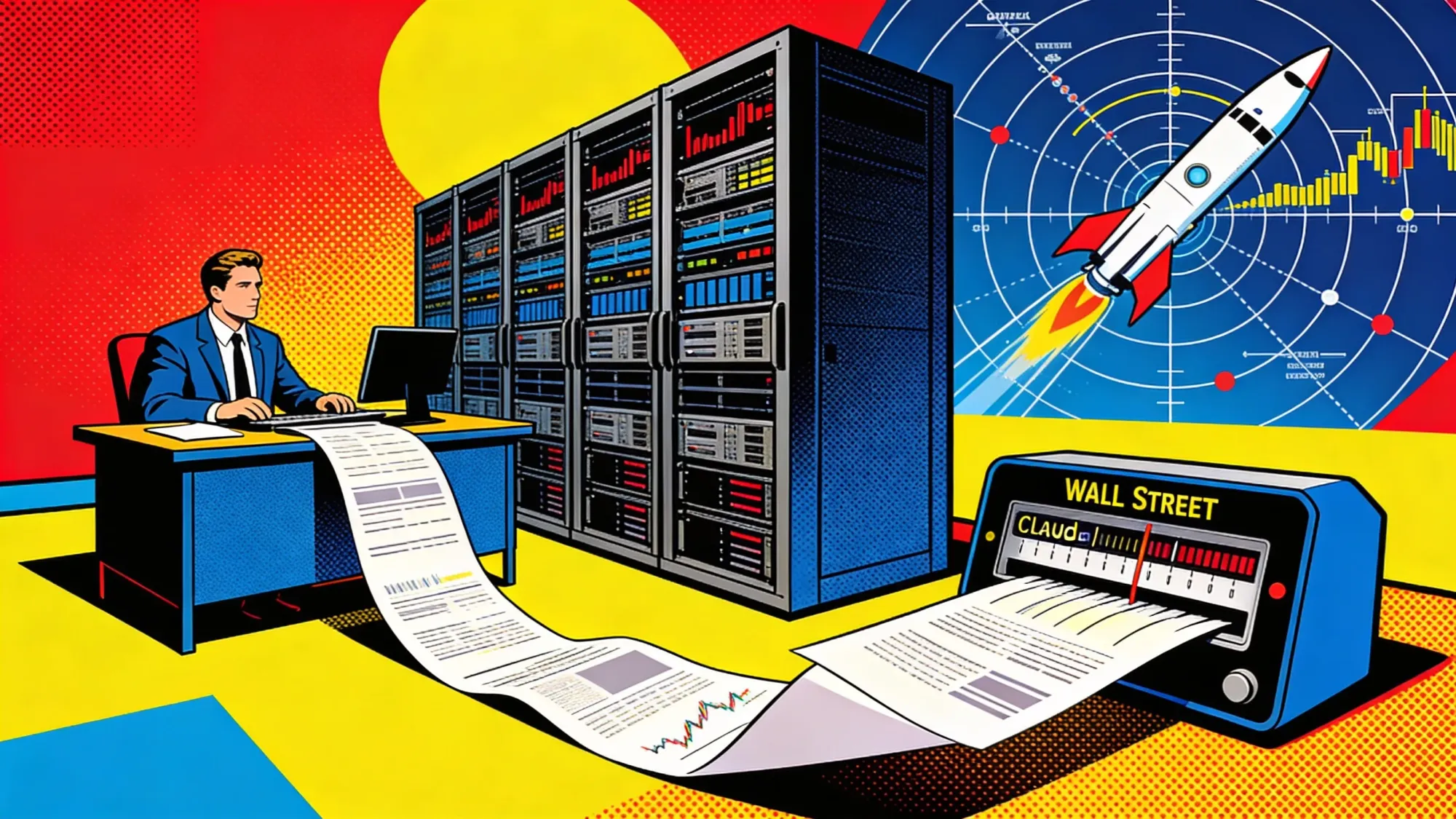
Anthropic did not win the week with a benchmark. It won by buying distribution and compute in the same news cycle.
The company rose to 89 in Implicator's LLM Meter after announcing a roughly $1.5 billion Wall Street venture with Blackstone, Hellman & Friedman and Goldman Sachs, ten finance-agent templates with Microsoft 365 integration, and a SpaceX deal for all AI capacity at Colossus 1 in Memphis.
OpenAI moved too, with its own $10 billion Deployment Company. The contrast is now less about model demos than routes to buyers, data, power and GPUs. Grok fell after Pentagon exclusion and the SpaceX-Anthropic deal put its sibling company's compute behind a direct rival.
Why This Matters:
- Model scores now move on distribution, compliance, power and capacity, not only benchmarks.
- Anthropic is turning Wall Street access and SpaceX compute into enterprise pull.
🧰 AI Toolbox
How to Turn a Single Photo into an Explorable 3D World with Nvidia Lyra 2.0

Nvidia Lyra 2.0 takes one image and generates a persistent 3D environment you can walk through, revisit and export as simulation-ready assets. Point the interactive explorer in any direction and Lyra generates video segments along your camera path, then lifts each segment into Gaussian splats and surface meshes that hold up under physics. Open-source on GitHub with weights on Hugging Face.
Tutorial:
- Clone the repo from GitHub and install dependencies with the included setup script.
- Download the Lyra 2.0 weights from Hugging Face with an access token.
- Feed a single image into the pipeline: a photo, a generated image or a Street View frame.
- Open the interactive 3D explorer and define a camera path through the scene.
- Export the result as Gaussian splats or surface meshes for Unreal, Unity, Blender or Isaac Sim.
URL: Nvidia Lyra 2.0
What To Watch Next
|
||
|
||
|
💡 5-Minute Skill
Monday, 9:13 a.m. You asked the chatbot to "help with a customer update" and it returned seven paragraphs of oatmeal with a subject line that sounds like a bank outage. The problem is not that AI cannot write. The problem is that you handed it fog and expected a landing strip.
Your raw input:
Bad prompt I used: "Help me write an update to customers about the dashboard delay." Real situation: 12 beta customers, dashboard export feature slipped from May 15 to May 22 because QA found duplicate rows in CSV exports. We can say quality issue, not bug. Tone should be direct and calm. Need under 150 words, from our product lead, with apology, new date, workaround, and no promise this will never happen again.
The prompt:
Act as a prompt editor. Rewrite my bad prompt into a stronger one using five slots: situation, audience, job, constraints, output format. Ask up to three missing questions only if they would change the answer. Then give me the final prompt and one example output. Keep the output practical, plain, and under 150 words. Do not add corporate filler.
The output:
Final prompt: You are the product lead writing to 12 beta customers. Draft a customer update under 150 words about a dashboard export delay from May 15 to May 22. Explain that QA found a quality issue with duplicate rows in CSV exports. Include a brief apology, the new date, a workaround for customers who need exports before May 22, and a calm direct tone. Do not call it a bug, overpromise, or use corporate filler.
Why this works:
The upgrade is problem definition. The prompt gives context, names the audience, states the job, sets constraints and demands a format. The missing-questions rule lets the chatbot pause when the answer actually depends on something, instead of spraying options like a person trying to look busy in a meeting.
What to use:
Claude or ChatGPT. Both are strong prompt editors if you make them repair the prompt before solving the task. Paste the bad prompt, paste the real situation and make the model rebuild the instruction from the ground up.
📖 AI Alphabet
|
C
|
📖 AI Alphabet Classification Classification means sorting something into a category, such as spam or not spam. Many AI systems use classification to make fast yes-or-no or label-based decisions. |
AI & Tech News
Experian Says AI Powered a Large Share of Breach Work
Experian told Bloomberg that AI-powered attacks showed up in 40% of the breach-response incidents it supported. Agentic systems are now part of the security forecast because attackers can automate identity spoofing, targeting and follow-up at lower cost.
SoftBank Bets on Batteries for AI Data Centers
SoftBank's mobile unit will begin gigawatt-hour battery production in Osaka with South Korean firms Cosmos Lab and DeltaX. The target is AI data centers, where power availability is becoming as strategic as chip access.
Microsoft and G42 Hit a Kenya Data-Center Financing Snag
Microsoft and G42's planned geothermal-powered Kenya data center has stalled over payment guarantees, Bloomberg reports. The dispute shows how AI infrastructure depends on credit risk, government backing and clean-power contracts, not only server orders.
OpenAI Employees Cash Out Billions
OpenAI enabled a large employee secondary sale after a long lock-up, according to the Journal. Liquidity at that scale makes the governance fight less abstract because employees, executives and early backers now hold real cash from the conversion.
Nvidia Becomes the AI Sector's Banker
Nvidia has pushed equity commitments above $40 billion, CNBC reports, including a reported OpenAI stake and investments tied to hardware, glass and power. The chip supplier is increasingly financing the demand stack that buys its chips.
Cerebras Raises IPO Price Range on Demand
Cerebras is lifting its expected IPO price range to $150 to $160 a share, Reuters reports. The new range would let the AI chipmaker tap public-market appetite after investors spent months looking for more direct Nvidia alternatives.
Anduril's CEO Tests the New Defense-Tech Model
Fortune profiles Anduril CEO Brian Schimpf as the company tries to scale a $31 billion defense startup without becoming the contractor it wants to replace. The Pentagon wants faster software and autonomous systems, but procurement habits die slowly.
Border Spending Pulls AI Surveillance Into the Spotlight
The Journal reports that border-security vendors are pitching autonomous and AI-powered systems into a friendlier federal spending cycle. The market signal is clear: immigration policy is becoming one of the fastest routes for surveillance AI to get budgets.
Qualcomm Says Agents Push Past the Phone
Qualcomm CEO Cristiano Amon told Fortune that 2026 is the year of agents and smart glasses may start replacing the smartphone as the primary computing surface. The chip story is no longer only handsets, but sensors, wearables and constant context.
Iran's Internet Shutdown Passes 70 Days
Iran's internet shutdown has passed 70 days, Bloomberg reports, with businesses warning of layoffs and closures. The longer the blackout runs, the more digital infrastructure becomes a direct economic pressure point rather than a background utility.
🚀 AI Profiles: The Companies Defining Tomorrow

Moonshot AI is the Beijing lab behind Kimi, the open-weight model family that turned cheap Chinese inference into a board-level problem for US labs. The company just raised about $2 billion at a $20 billion valuation, and its annual recurring revenue topped $200 million in April. 🌙
Founders
Founded in 2023 by Yang Zhilin, a former Meta AI and Google Brain researcher. Yang built Moonshot around long-context models first, then pushed Kimi into coding, multimodal work and agent-style use. The company sits in Beijing's "AI tiger" cohort with DeepSeek, MiniMax, Zhipu and the large platform labs.
Product
Kimi is both a consumer chatbot and an API model family. Kimi K2.5 made the company visible outside China by pairing open weights with coding, vision and long-context performance close enough to make buyers ask why they were paying frontier-lab prices. Kimi K2.6 is now one of OpenRouter's most-used models, according to TechCrunch's May 7 report.
Competition
Moonshot fights DeepSeek for open-weight mindshare, Zhipu and MiniMax for Chinese enterprise buyers, and Alibaba's Qwen and ByteDance's Doubao for platform distribution. Abroad, the comparison is blunt: OpenAI, Anthropic and Google still own the trust premium, while Moonshot sells the price-performance shock. The risk is not model quality. It is whether Western companies want a Chinese model in sensitive workflows.
Financing 💰
About $2 billion at a $20 billion valuation, led by Meituan's Long-Z Investments, with Tsinghua Capital, China Mobile and CPE Yuanfeng also participating. TechCrunch reported on May 7, 2026 that Moonshot raised $3.9 billion over the prior six months, up from a $4.3 billion valuation at the end of 2025. Source: TechCrunch, May 7, 2026.
Future ⭐⭐⭐
Moonshot has revenue, user pull and the open-weight story investors want. It also has the worst possible geopolitical wrapper for overseas enterprise growth. If Kimi keeps forcing price resets, Moonshot becomes China's clearest AI export threat. If procurement teams treat country risk as product risk, the $20 billion valuation stays mostly domestic. 🀄
🤨 Yeah, But...
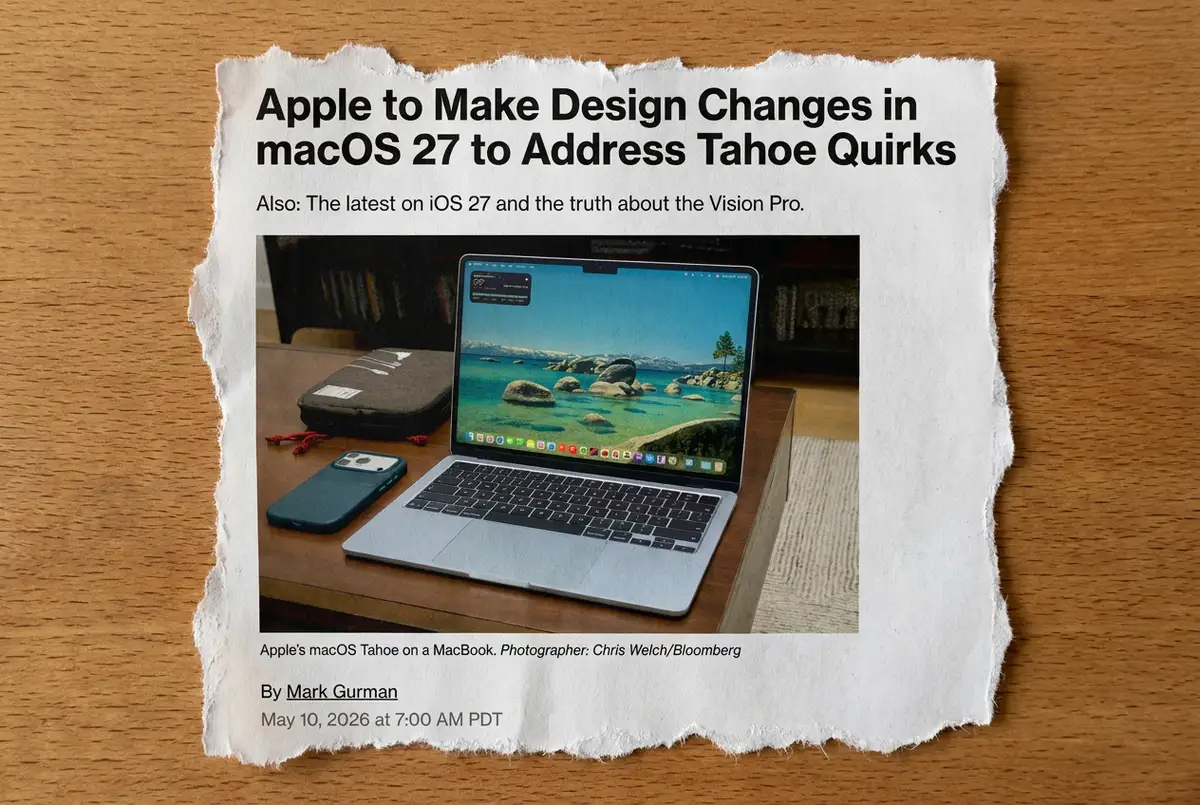
Bloomberg's Mark Gurman reported Sunday that Apple is preparing a "slight redesign" for macOS 27 after macOS 26 Tahoe's Liquid Glass interface made dense Mac areas harder to read on LCD-based desktops and laptops. The cleanup is meant to address shadows and transparency quirks; Liquid Glass stays, while Apple also tests automatic Safari tab grouping and lighter visionOS 27 work.
(Bloomberg, May 10, 2026)
Our take: Apple built an interface called Liquid Glass for devices whose screens are, in the Mac's case, mostly liquid crystal. This is not a scandal. It is simply what happens when design ambition outruns the hardware refresh cycle and lands on a Finder sidebar. Cupertino's solution is wonderfully Cupertino: not retreat, refinement. The glass was correct. The implementation was insufficiently blessed. By macOS 27, the shadows will be calmer, the transparency less chatty, and the text will hopefully stop playing hide-and-seek behind a tasteful haze. Somewhere inside Apple, a team is learning that "futuristic" reads differently when the user is trying to find a PDF. The future can be translucent. The invoice still needs to be legible.

Marcus Schuler
Editor-in-Chief and founder of Implicator.ai. Former ARD correspondent and senior broadcast journalist with 10+ years covering tech. Writes daily briefings on policy and market developments. Based in San Francisco. E-mail: editor@implicator.ai