



San Francisco | January 13, 2026
A student trains an AI exclusively on nineteenth-century London texts, asks it about 1834, and the model produces accurate descriptions of street protests and Lord Palmerston. Details the student never encoded. Details that turn out to be real. The quarantine strategy, they're calling it: seal off the future to see what the past leaves behind. Nobody expected the past to answer back.
Anthropic stripped the developer costume off Claude Code and called it Cowork. Same agent, friendlier interface, $100-200 a month. The sandbox keeps files safe. The prompt injection problem? Still unsolved. Good luck, regular users.
Meta's response to its AI scaling challenge: hire a Goldman Sachs banker with Trump administration credentials. $600 billion in infrastructure doesn't build itself. Neither do the relationships that approve it.
Stay curious,
Marcus Schuler
The Quarantine Strategy: To Make an AI Remember the Past, You Have to Protect It From the Future

A computer science student trained an AI model exclusively on texts from 1800-1875 London. When he asked about 1834, the model described street protests and Lord Palmerston. He hadn't encoded those details. They turned out to be historically accurate.
Hayk Grigorian's experiment started as a technical exercise. Quarantine an AI from modernity, strip away everything after 1875, and see what emerges. The model has no concept of electricity, automobiles, or telephones. Its world ends before the light bulb.
The surprise came when the AI began producing verifiable historical content that Grigorian hadn't deliberately included. The model referenced "streets of London filled with protest and petition" for events that actually occurred.
This accidental accuracy raises uncomfortable questions. If temporal isolation can surface real historical patterns, what else might these models encode without anyone noticing?
Why This Matters:
- Researchers may need to rethink how AI systems represent information, since quarantined training can reveal latent historical knowledge
- The technique opens possibilities for historical research but also raises questions about what modern models absorb unintentionally

Anthropic's Cowork Strips the Developer Costume Off Claude Code

Anthropic launched Cowork, repackaging Claude Code for mainstream users. Same agent capabilities. Friendlier interface. The safety burden now rests on people who don't know what prompt injection means.
Claude Code has been available to developers for eleven months. Cowork puts the same technology in front of regular users: file organization, data extraction, document drafting, web browsing through Chrome. Mac-only for now, $100-200 monthly subscription required.
Anthropic sandboxes file system access using Apple's Virtualization Framework. The agent runs in an isolated Linux container. That handles catastrophic risk. But the company explicitly warns users about prompt injection, attacks where malicious content hijacks the AI's behavior. Their defense? Hoping users notice when things go wrong.
The $183 billion valuation (potentially rising to $350 billion) and $500 million run-rate revenue suggest the consumer bet matters. Whether mainstream users can handle developer-grade risks is the open question.
Why This Matters:
- Consumer AI agents arrive with known, unsolved security vulnerabilities. The first major incident will test whether Anthropic's warnings provide legal cover
- Three years of failed consumer AI deployments created urgency to monetize tested technology, security gaps and all

AI Image of the Day

Prompt: Photograph of a real baby Netherland Dwarf rabbit (juvenile, not adult), a living animal, sitting on the floor and gently leaning its whole body against a modern interior wooden door. The rabbit has short, rounded ears, a small compact body, and natural juvenile proportions. Its head is softly touching the door surface, eyes closed, with a peaceful, content expression. The fur is fine, soft, and realistic, not plush or toy-like. The door is a modern, smooth matte wooden interior door in a light neutral color, minimalist and clean. Soft natural daylight, shallow depth of field, creating a warm, quiet, and comforting atmosphere, expressing softness and safety.
Meta Just Admitted Its AI Problem Isn't Technical

Meta hired Dina Powell McCormick as president. She's a Goldman Sachs banker and former Trump administration official. Her job: secure the relationships that make $600 billion in AI infrastructure possible.
Build. Deploy. Invest. Finance. Four verbs in Meta's announcement, and not one involves writing code. Powell McCormick's job description centers on handshakes in Riyadh and zoning hearings in Nevada. Diplomatic work. Regulatory work. Capital work.
Meta spent $72 billion on infrastructure last year. The company's Compute initiative targets "tens of gigawatts" this decade. That kind of power doesn't come from better algorithms. It comes from sovereign wealth funds, government approvals, and the political connections to secure both.
The appointment signals a shift in what AI competition actually requires. Technical capability is table stakes. The real constraint is capital and political access.
Why This Matters:
- AI infrastructure buildout now depends more on banking relationships and government access than engineering talent
- Powell McCormick's government experience positions Meta for regulatory battles that will determine who can build at scale

Better Prompting... Today: Research Deep Dives
Google gives you links. These prompts give you answers with receipts.
The Source Hunter
"I need to understand [topic]. Find me: the most-cited academic paper on this, the most contrarian credible take, and one primary source most people miss. For each, explain why it matters and what it gets wrong."
Best on: Perplexity (built for research with citations) or Gemini (real-time web access)
The Expert Disagreement Map
"On [topic], where do experts actually disagree? Not the fake controversies, the real ones. Give me three genuine points of contention among credible sources, who's on each side, and what evidence would settle the debate."
Best on: Perplexity (aggregates multiple sources) or Claude (strong at synthesizing nuance)
The Timeline Reconstructor
"Build me a timeline of [topic/company/technology] focusing on decisions that looked smart at the time but turned out wrong, and decisions that looked questionable but proved right. Include specific dates and the reasoning people used in the moment, not hindsight."
Best on: Perplexity (for current events) or Gemini (for historical research with web access)
Research isn't about finding information. It's about finding the information that changes your mind.
🧰 AI Toolbox

How to Create Studio-Quality Songs with Suno AI v4
Suno v4 generates full songs with vocals, instruments, and production from text descriptions. Describe a genre, mood, and lyrics idea, and it produces radio-ready tracks in minutes.
Tutorial:
- Go to suno.com and sign up for free credits
- Click "Create" and choose between custom lyrics or AI-generated
- Describe your song style (e.g., "upbeat 80s synth-pop about summer road trips")
- If writing custom lyrics, paste them into the lyrics field
- Hit generate and wait about 30 seconds for two song variations
- Listen, pick your favorite, and use "Extend" to add verses or outros
- Download as MP3 or share directly to social platforms
URL: https://suno.com
AI & Tech News
US House Passes Bipartisan Bill to Block Chinese Access to AI Chips Abroad
The House passed legislation expanding export controls to prevent Chinese companies from remotely accessing US-made AI chips in foreign data centers. The measure closes a loophole that allowed Chinese firms to use American chips through overseas cloud facilities.
AI Data Centers Push 13-State Power Grid Toward Capacity Limits
PJM, the nonprofit operating the power grid across 13 US states, projects 4.8% annual electricity demand growth over the next decade, driven by AI and data center expansion. The surge threatens generation capacity while rate increases frustrate consumers.
Proxima Raises $80 Million for AI Drug Discovery
New York biotech startup Proxima secured $80 million in seed funding for its AI platform designing drugs that control protein interactions. DCVC led the round with Nvidia participating.
AI Drug Discovery Startup Converge Bio Pulls In $25 Million
Boston and Tel Aviv-based Converge Bio raised $25 million in Series A for its AI-powered drug discovery platform. Bessemer led, with executives from Meta, OpenAI, and Wiz investing.
OpenAI to Air 60-Second Super Bowl Ad for Second Year
OpenAI plans a 60-second Super Bowl spot, marking its second consecutive appearance at the premier advertising event. With 30-second slots costing over $8 million, the full-minute ad represents a major investment in consumer trust.
Spotify Founder Daniel Ek Steps Down as CEO
Daniel Ek handed leadership to co-CEOs Gustav Söderström and Alex Norström, who face algorithmic fatigue among users and ongoing artist tensions. The new leaders are looking to AI as a potential solution.
Google to Develop and Manufacture Premium Pixels in Vietnam
Google will begin full development and manufacturing of Pixel Pro and Fold models in Vietnam starting 2026. The budget A series stays in China as Google diversifies away from geopolitical risk.
Games Workshop Bans Staff from Using AI in Creative Work
The Warhammer maker announced a ban on AI in content and design creation, citing intellectual property protection. The company says it will "respect our human creators" amid industry concerns over generative AI.
AI Researchers Study Large Language Models Like Living Organisms
Scientists at OpenAI and Anthropic are treating LLMs like biological organisms rather than traditional software. The approach is revealing secrets about how these systems function that conventional analysis missed.
Salesforce Rolls Out AI-Powered Slackbot to All Users
Salesforce launched its upgraded AI Slackbot for general availability, handling workflow questions, document drafting, and meeting scheduling. The release extends Salesforce's AI push into collaboration tools.
Netflix Says It Has "Cracked the Code" on Live Streaming
After 200+ live events and several high-profile glitches, Netflix executives say they've solved live streaming technology. CTO Elizabeth Stone addressed the challenges of broadcasting to the platform's massive global audience.
Global PC Shipments Surge Nearly 10% in Q4 2025
IDC reports PC shipments reached 76.4 million units, up nearly 10% year-over-year. Windows 10 end-of-support and tariff concerns drove manufacturers to accelerate inventory shipments.
Pebble Founder Returns with Sustainable Hardware Venture
Eric Migicovsky launched Core Devices, a five-person company developing new Pebble watches and an AI ring. He's explicitly rejecting startup culture, prioritizing sustainability over rapid growth.
New Yorker Examines WhatsApp's Rise to Global Dominance
A comprehensive feature by Sam Knight explores how WhatsApp became essential global infrastructure, used by governments and families as the default platform for everyday conversation worldwide.
🚀 AI Profiles: The Companies Defining Tomorrow
EvenUp
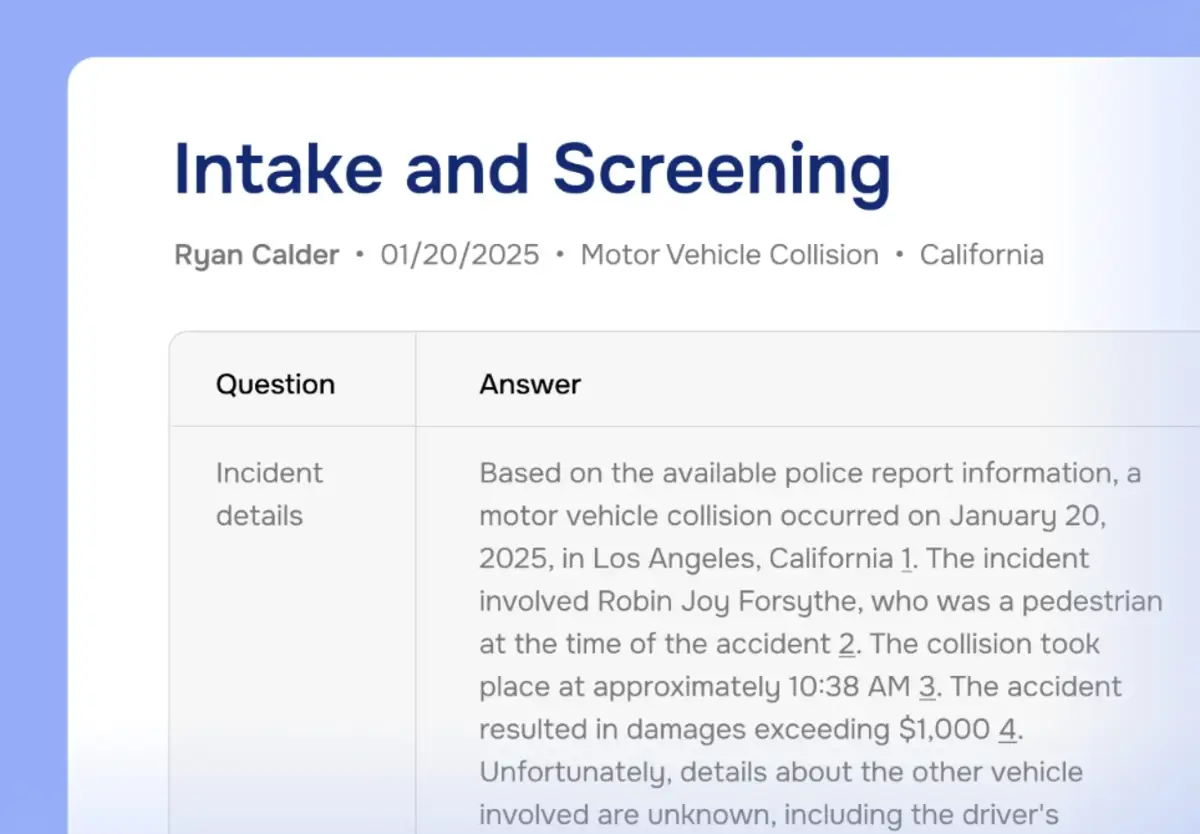
EvenUp turns personal injury chaos into structured settlements. The San Francisco company builds AI that reads medical records, drafts demand letters, and tracks case value. ⚖️
Founders
Rami Karabibar, Raymond Mieszaniec, and Saam Mashhad launched EvenUp in 2019. They saw plaintiff firms drowning in documentation. Medical records pile up. Deadlines stack. Demand packages decide money and time. EvenUp framed that paperwork as both repetitive and high-stakes, then built AI to industrialize it.
Product
A claims intelligence platform built around a model trained on injury cases and medical records. It ingests case files, extracts key facts, drafts demands, and maintains consistency across sections. The system also tracks settlement outcomes and benchmarks, creating a feedback loop that can improve prioritization. Traceability matters: every statement links back to source documents.
Competition
Crowded. Supio and Eve chase the same plaintiff-side opportunity. Filevine adds AI to case management. LexisNexis and Thomson Reuters offer drafting tools. The real threat: if case management vendors bundle a "good enough" scribe, they can undercut pricing. EvenUp bets specialization in personal injury beats generic legal AI.
Financing 💰
Raised $150M Series E in October 2025 at over $2B valuation. Bessemer Venture Partners led. Total capital raised now sits at $385M. Reuters framed the round in the context of investor appetite for plaintiff-side legal AI.
Future ⭐⭐⭐⭐
EvenUp has momentum in a category where documents equal money. The risk is accuracy. One wrong number can torpedo credibility with insurers. The witty irony sits in the name: EvenUp promises to level an uneven playing field. It may do so by turning knowledge into throughput. ⚡


