



San Francisco | Friday, February 27, 2026
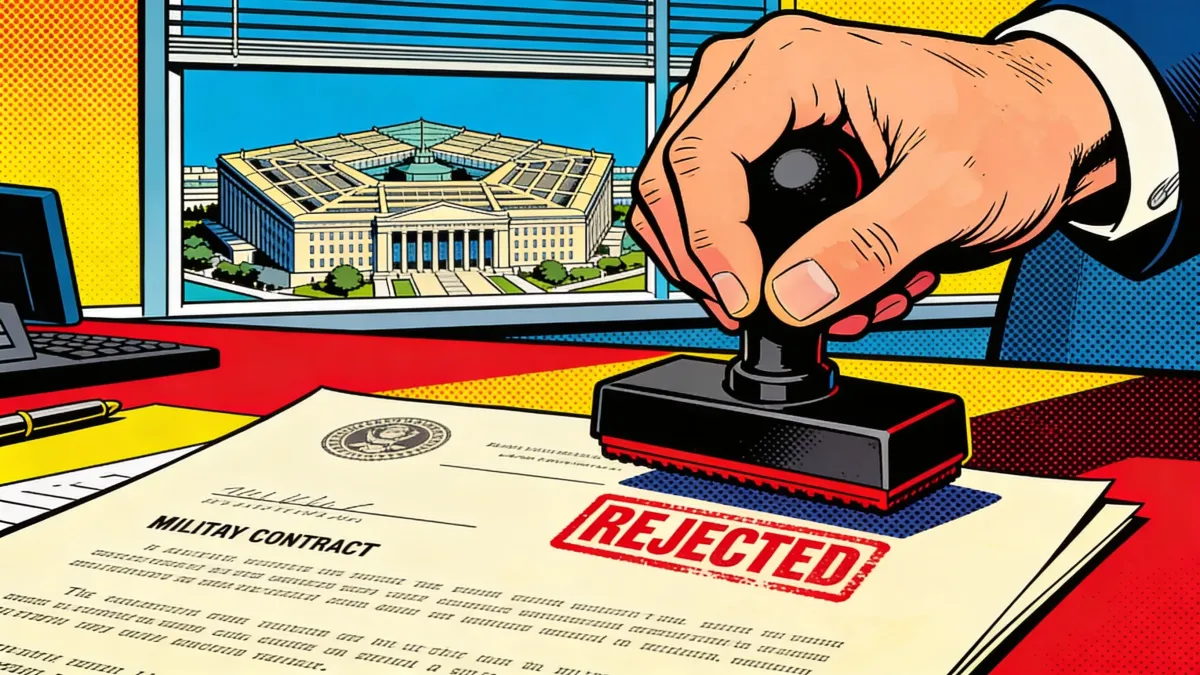
The Pentagon sent its best and final offer on Claude military use. Dario Amodei's answer: no. Anthropic will lose $200 million in defense contracts and access to classified networks rather than lift its ban on mass surveillance and autonomous weapons without human oversight.
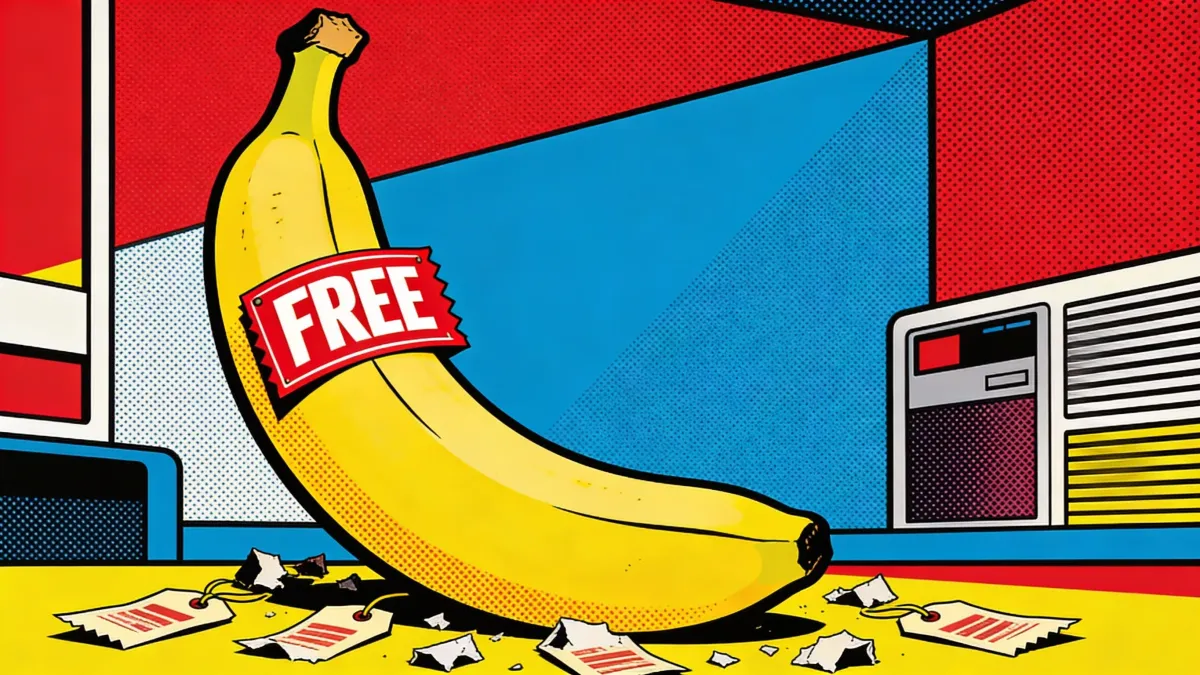
While Anthropic draws the line, Google erases one. It embedded Nano Banana 2 into Search and made pro-tier image generation free for anyone with a Google account. Midjourney charges up to $120 a month for what Google now bundles with a browser tab.
Nobody asks Congress. One company writes the rules itself.
Stay curious,
Marcus Schuler
Anthropic Walks From $200M Pentagon Deal, Calls Safeguard Terms 'Escape Hatches'

Dario Amodei rejected the Pentagon's best and final offer on Claude military use, calling the proposed safeguard language designed to sound like concessions while functioning as loopholes. The rejection triggers a Friday 5:01 PM deadline that will cost Anthropic its $200 million defense contract.
The dispute centers on two provisions Anthropic demands as binding: no mass surveillance of Americans and no fully autonomous weapons deployment without human oversight. The Pentagon refuses both, insisting on blanket "all lawful purposes" language.
"These threats do not change our position," Amodei said. "We cannot in good conscience accede to their request." Defense Secretary Pete Hegseth escalated over the past two weeks with contradictory threats: designating Anthropic a supply chain risk, the label Washington reserves for entities like Huawei, or invoking the Defense Production Act to compel Claude's provision to the military.
Pentagon CTO Emil Michael offered a simpler argument: "At some level, you have to trust your military to do the right thing." Dean Ball, co-author of the White House AI Action Plan, called the dual strategy "incoherent."
xAI, OpenAI, and Google are signing Pentagon agreements without comparable restrictions. None disclosed whether their deals permit surveillance or autonomous weapons.
Why This Matters:
- One company draws ethical boundaries no legislation requires, setting a precedent competitors can undercut by saying yes
- If the Defense Production Act is invoked for AI software, it marks the first time the Cold War statute compels access to a tech company's products
Reality Check
What's confirmed: Anthropic rejected the Pentagon's final offer. The $200M contract ends at Friday 5:01 PM. Three competitors are signing without comparable restrictions.
What's implied (not proven): That the Defense Production Act or supply chain risk designation will actually be invoked. Both carry legal complications the Pentagon hasn't addressed publicly.
What could go wrong: Compelling an AI company to remove safeguards sets a precedent for forcing technology handovers across the industry.
What to watch next: Whether the Pentagon files the designation or DPA order after Friday, or pivots to quiet renegotiation.
The One Number
1% — North American data center vacancy rate for the second consecutive year, according to JLL's 2026 report, despite record construction to support AI demand. Ninety-two percent of capacity under development is already pre-leased or owner-occupied. The industry is building at historic speed and still cannot keep up.
No Federal Law Governs Military AI. Anthropic Wrote the Only Rules.
When Anthropic rejected the Pentagon's final offer, it did something Congress has never attempted: set binding limits on how the U.S. military uses AI. No federal statute restricts mass surveillance by AI systems. No law requires human oversight of autonomous weapons. The restrictions Dario Amodei demanded exist nowhere in the U.S. legal code.
The precedent for exactly this kind of legislation is 80 years old. In 1946, Congress passed the Atomic Energy Act within a year of Hiroshima, stripping the military's monopoly over nuclear technology and establishing civilian oversight. Eighty years later, no equivalent framework governs AI. Amodei himself warned the technology could enable "billions of AI-controlled drones" and convert "scattered data into complete life portraits," precisely the capabilities the Pentagon demands access to.
The vacuum rewards compliance. xAI, OpenAI, and Google await Pentagon contracts without Anthropic's restrictions. None disclosed their positions on surveillance or autonomous weapons. The company that says no loses $200 million. The companies that say nothing win contracts. The Pentagon insists on "all lawful purposes" language because almost everything is lawful when nothing is written down.
Why This Matters:
- A private company's acceptable-use policy is the only binding restriction on military AI because 535 legislators have declined to act
- The 1946 Atomic Energy Act took one year after the first nuclear weapon. AI has no equivalent starting gun and no equivalent urgency
AI Image of the Day

Prompt: ultra high-fashion female character, platinum blonde hair in intricate sculptural cornrow braids forming a braided crown and extending into a long thick braided ponytail, sharp cheekbones, defined jawline, porcelain skin, calm icy expression, futuristic white couture dress with raised bead and micro-texture detailing, minimalist luxury aesthetic, editorial runway presence, soft natural daylight, shallow depth of field, hyper-realistic skin texture, Vogue editorial quality, Leica 85mm look --ar 9:16 --raw
Google Stops Selling Image Generation, Bundles It Free in Search Instead
Google embedded its latest image generator directly into Search, Lens, Ads, and Flow without a keynote or press event. Just a Thursday blog post. Features that required paid subscriptions, including text rendering, 4K resolution, and character consistency across five subjects, ship free to anyone with a Google account.
The math is straightforward for standalone players. API pricing dropped 50% in three months, from $0.134 to $0.067 per image at 1K resolution. Inside Google's Flow creative studio, Nano Banana 2 costs zero credits. Midjourney charges $10 to $120 a month for its core product. Google distributes a comparable alternative free across a platform with 750 million users.
The timing was not accidental. Alibaba released Qwen-Image-2.0 on February 10, a 7-billion-parameter model that matches Google's paid tier on quality benchmarks. If released under Apache 2.0 licensing, organizations can self-host without per-image fees. Google moved 16 days later.
Nano Banana 2 ships with SynthID watermarking and C2PA Content Credentials built in. Google says SynthID verification has been used over 20 million times since November. For regulated industries, that native content provenance is becoming a requirement, not a feature.
Why This Matters:
- Standalone image generators face an existential pricing squeeze when their core product becomes a free feature inside the world's largest search engine
- Google ran this play before: it killed MapQuest, eliminated standalone email providers, and turned browsers into platform features
🧰 AI Toolbox
How to Design and Code User Interfaces from a Text Prompt with Google Stitch
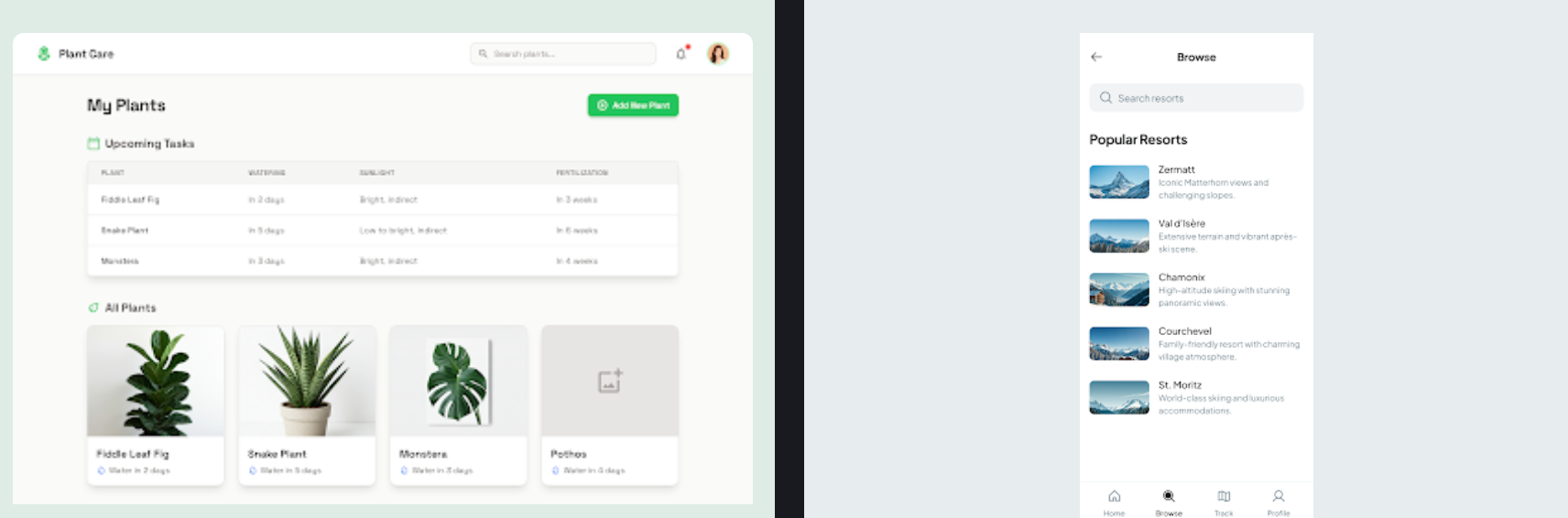
Google Stitch is an experimental tool from Google Labs that generates UI designs and working frontend code from text descriptions or reference images. Describe a screen, upload a sketch, and Stitch produces a design you can export to Figma with proper Auto Layout or download as clean code. Powered by Gemini. Free while in experimental access.
Tutorial:
- Visit stitch.withgoogle.com and sign in with your Google account
- Choose your starting point: type a text description or upload a reference image of the interface you want
- Review the generated UI design in the live preview panel
- Click individual components to adjust spacing, colors, typography, and layout
- Switch to Code View to see the generated HTML and CSS alongside the visual design
- Export to Figma with Auto Layout preserved, so your design team can iterate natively
- Download the frontend code directly or copy components into your existing project
URL: https://stitch.withgoogle.com
What To Watch Next (24-72 hours)
- MWC Barcelona: Mobile World Congress opens Monday in Spain with on-device AI dominating the agenda. Samsung, Qualcomm, and Huawei keynotes will signal how fast inference moves from cloud to pocket. The show runs through Thursday.
- Apple "Special Experience": Apple holds a media event Tuesday in New York. Rumors point to new MacBook Air and iPad models with M4 chips. Whether Apple Intelligence gets a meaningful update will determine if the "Apple is behind on AI" narrative sticks through spring.
- CrowdStrike Earnings: George Kurtz reports Monday after close. After the July 2024 outage that wiped $30 billion off its market cap, CrowdStrike has been rebuilding trust quarter by quarter. Customer retention numbers will show whether the damage is permanent.
🛠️ 5-Minute Skill: Turn Customer Support Tickets Into a Knowledge Base Article
Your support team closes 30 tickets a week about the same three problems. Nobody has written the help article that would prevent them. You exported last month's tickets into a spreadsheet. Time to turn recurring questions into self-service content.
Your raw input:
Support ticket export — "Calendar sync" tag, last 30 days (23 tickets)

Ticket #4201: "My Google Calendar events aren't showing up. I connected it
yesterday."
Resolution: Agent told user to disconnect and reconnect. Worked.

Ticket #4218: "Calendar sync stopped working after I changed my Google
password."
Resolution: OAuth token expired. User needed to reauthorize in Settings >
Integrations.

Ticket #4225: "I see duplicate events on my calendar since turning on
two-way sync."
Resolution: User had both one-way and two-way sync enabled. Disabled
one-way. Fixed.

Ticket #4231: "Calendar shows events from my personal Gmail, not my work
account."
Resolution: User connected personal account. Needed to disconnect and
reconnect with workspace email.

Ticket #4244: "Sync works but there's a 30-minute delay."
Resolution: Known behavior. Sync runs every 30 minutes, not real-time.
No fix, set expectations.

Ticket #4256: "Events I delete in the app still show on Google Calendar."
Resolution: One-way sync only pushes from Google to app. Deletions don't
sync back. Expected behavior.

Ticket #4260: "Calendar sync option is greyed out."
Resolution: Feature only available on Pro plan. User was on Free tier.
The prompt:
You are a senior technical writer creating a knowledge base article from raw
support ticket data.

From these tickets, produce:
1. A clear title that matches what users would search for
2. A one-paragraph overview of what calendar sync does and doesn't do
3. A troubleshooting section with the top 5 issues, each formatted as:
   - Problem (what the user sees)
   - Cause (what's actually happening)
   - Fix (step-by-step, numbered)
4. A "Good to know" section with expectations (sync frequency, plan
   requirements)

Support tickets:
[paste tickets here]

Rules:
- Write for the user, not the support agent. No jargon.
- Each fix should be 3 steps or fewer.
- If the "fix" is that it's expected behavior, say so clearly. Don't
  apologize.
- Order issues by frequency, not severity.
- Title should include the product name placeholder [Product] for
  flexibility.
What you get back:
[Product] Calendar Sync: Setup, Troubleshooting, and What to Expect
Calendar sync connects your Google Calendar to [Product] so events appear in both places. Depending on your settings, sync can run one-way (Google to [Product]) or two-way. Sync updates run every 30 minutes, not in real time. Calendar sync is available on Pro plans and above.
Troubleshooting
Events aren't showing up after connecting
Cause: The initial sync can take up to 30 minutes to populate.
Fix:
1. Wait 30 minutes and refresh your dashboard.
2. If events still don't appear, go to Settings > Integrations > Google Calendar and click Disconnect.
3. Reconnect and wait for the next sync cycle.
Calendar sync stopped working after changing your Google password
Cause: Changing your Google password invalidates the connection token.
Fix:
1. Go to Settings > Integrations > Google Calendar.
2. Click Reauthorize.
3. Sign in with your updated Google credentials.
Duplicate events appearing
Cause: Both one-way and two-way sync are enabled, creating two copies of each event.
Fix:
1. Go to Settings > Integrations > Google Calendar.
2. Choose either one-way or two-way sync. Disable the other.
Events showing from wrong Google account
Cause: You connected your personal Gmail instead of your work account.
Fix:
1. Go to Settings > Integrations > Google Calendar and disconnect.
2. Reconnect using your work email address.
Calendar sync option is greyed out
Cause: Calendar sync requires a Pro plan or higher.
Fix:
1. Upgrade to Pro under Settings > Billing.
Good to Know
- Sync runs every 30 minutes. This is not adjustable.
- Deletions in [Product] do not sync back to Google Calendar on one-way sync.
- Two-way sync handles deletions in both directions.
- Only one Google account can be connected at a time.
Why this works
The prompt groups tickets by pattern, not by individual case. Requiring "cause + fix" structure prevents the article from reading like a FAQ of answers without context. Ordering by frequency puts the most common problem first, which is where 60% of readers will stop scrolling.
Where people get it wrong: Pasting tickets and asking for "a help article about calendar sync." The AI will write a feature description, not a troubleshooting guide. Support tickets tell you what breaks. The article should answer those breaks, not explain how the feature works when everything goes right.
What to use
Claude (claude.ai): Best at pattern recognition across messy ticket data. Groups related issues naturally. Watch out for: May add too many caveats. Users want fixes, not disclaimers.
Gemini 3: Fast at structured formatting and numbered steps. Good when you need many articles quickly. Watch out for: Can oversimplify root causes. Review the "Cause" lines for accuracy.
AI & Tech News
Google DeepMind Employees Demand Company Block Pentagon AI Contracts
More than 100 Google DeepMind researchers signed a letter to chief scientist Jeff Dean urging the company to refuse military contracts deploying Gemini for mass surveillance or autonomous weapons. The protest echoes the 2018 backlash against Project Maven that forced Google to abandon a Pentagon drone imagery contract.
Pentagon Explores AI Tools to Map China's Power Grid and Critical Infrastructure
The U.S. Department of Defense is in discussions with AI companies about building automated reconnaissance tools targeting Chinese power grids and sensitive networks, according to the Financial Times. The initiative would feed vulnerability data into war planning efforts as tensions between Washington and Beijing escalate.
ManoMano Data Breach Exposes 38 Million Customer Records
French e-commerce marketplace ManoMano began notifying customers after hackers compromised a third-party subcontractor linked to the company. The breach affects approximately 38 million users and highlights persistent supply chain cybersecurity risks.
Equinix and Canada Pension Board Strike $4 Billion Deal for Nordic Data Centers
Equinix and CPPIB agreed to acquire pan-Nordic data center operator atNorth from Partners Group in a deal valued at $4 billion including debt. Cold climates and abundant renewable energy make the Nordic region a growing hub for AI compute workloads.
Bezos' Project Prometheus Seeks Tens of Billions to Buy Companies Disrupted by AI
Jeff Bezos' investment vehicle is in advanced talks with Abu Dhabi sovereign wealth funds and JPMorgan to raise tens of billions for acquiring businesses hurt by AI disruption. Project Prometheus was valued at $30 billion after securing $6.2 billion in November 2025.
Japan Commits $1.6 Billion to Rapidus for 2nm Chip Manufacturing
The Japanese government pledged 267.6 billion yen to Rapidus Corp. over the next two fiscal years to support mass production of cutting-edge 2nm semiconductors. The investment positions Japan as a potential challenger to TSMC in next-generation chip manufacturing.
Block Posts 24% Gross Profit Growth, Then Cuts Nearly Half Its Workforce
Block reported Q4 revenue of $6.25 billion with Cash App surging 33%, but simultaneously announced more than 4,000 job cuts representing nearly half its workforce. The company projects first-quarter gross profit to rise 22% to $2.8 billion.
xAI Co-Founder Toby Pohlen Becomes Seventh of 12 Original Executives to Leave
Pohlen departed Elon Musk's AI startup weeks after being named head of Macrohard, Bloomberg reports. Seven of xAI's 12 co-founders have now left the company.
OpenAI Pledges Safety Overhaul After Failing to Alert Canadian Police About Suspect
OpenAI will establish direct communication with Canadian law enforcement after the company failed to alert authorities about a suspect connected to the Tumbler Ridge incident. The announcement followed meetings with Canadian and British Columbia government officials.
Tesla Has Not Logged a Single Autonomous Test Mile in California Since 2019
DMV records reveal zero autonomous test miles by Tesla despite CEO Elon Musk's repeated claims that a driverless robotaxi launch in the state is months away. Obtaining testing permits and accumulating verified miles are prerequisites for California's driverless vehicle approval.
🚀 AI Profiles: The Companies Defining Tomorrow
SambaNova Systems
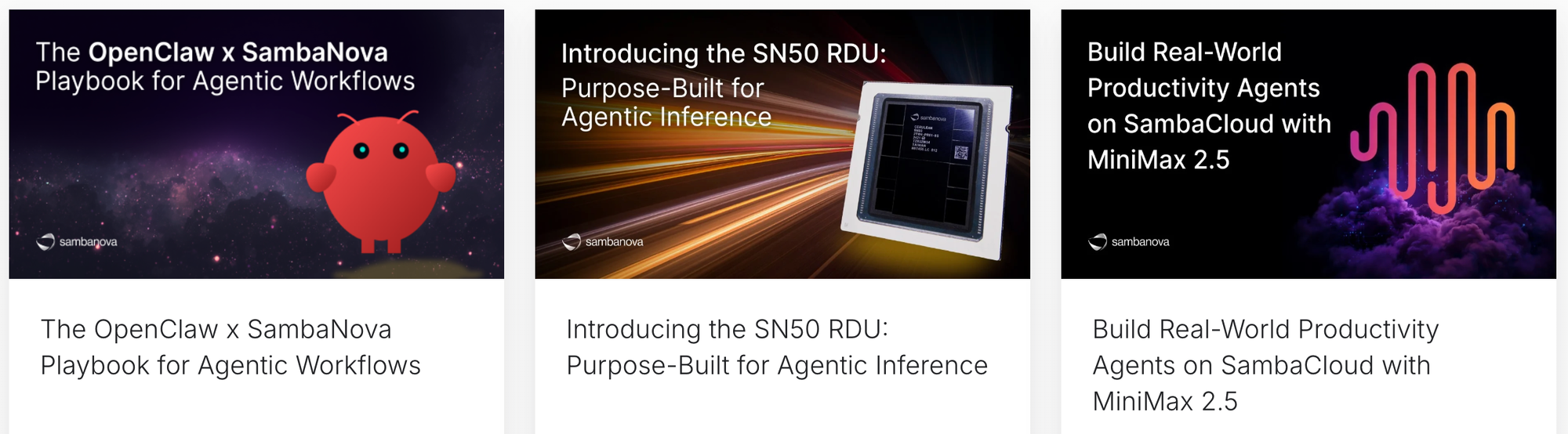
SambaNova builds AI inference chips designed to process tokens faster and cheaper than Nvidia GPUs. The San Jose startup just raised $350 million and landed Intel as a co-selling partner after the two companies failed to agree on an acquisition. ⚡
Founders
Rodrigo Liang, Kunle Olukotun, and Christopher Re founded SambaNova in 2017. Liang spent two decades at Sun Microsystems and Oracle running SPARC processor development. Olukotun and Re are Stanford professors who built the underlying dataflow architecture in their labs. The company has roughly 400 employees after layoffs in mid-2025.
Product
The Reconfigurable Dataflow Unit moves data through processing stages sequentially rather than executing instructions in parallel like GPUs. The result: faster inference at lower power consumption. The new SN50 chip delivers 3.2 petaflops of FP8 compute and supports models up to 10 trillion parameters. SambaCloud sells hosted inference by the token. Enterprise customers buy on-premises hardware by subscription.
Competition
Nvidia owns roughly 80 percent of the AI accelerator market and locks customers in through CUDA software. Cerebras filed for an IPO after raising $750 million. Groq runs its own inference cloud. AWS and Google build proprietary chips for their platforms. SambaNova's edge: Intel's enterprise sales channel. Its weakness: raw specs trail Nvidia's Blackwell on paper.
Financing 💰
$350M Series E led by Vista Equity Partners, Cambium Capital, and Intel Capital, with Battery Ventures, Mayfield, T. Rowe Price, and BlackRock participating. Valued above $2 billion, down from $5.1 billion in 2021. Total raised: approximately $1.5 billion.
Future ⭐⭐⭐
SambaNova has the chip. Intel has the Rolodex. SoftBank will deploy SN50 in Japan later this year, the first real test of whether inference-optimized silicon can take share from Nvidia at scale. The risk: Intel's CEO also chairs SambaNova, the acquisition talks that preceded this partnership collapsed, and the valuation dropped 60 percent in four years. If the SoftBank deployment delivers the cost savings SambaNova promises, more orders follow. If it doesn't, $350 million buys about four years of runway and not much else. ⚡
🔥 Yeah, But...
Citrini Research, a little-known firm founded by a 33-year-old former paramedic, published a hypothetical scenario on Substack on Sunday imagining AI-driven economic collapse by 2028. By Monday close, IBM had its worst single-day drop in 25 years, software and payments stocks shed billions in market value, and the Dow fell 800 points. The author told Bloomberg he was "shocked" by the market reaction.
Sources: Bloomberg, February 24, 2026 | The Guardian, February 24, 2026
Our take: Wall Street spent two years bidding up AI stocks based on hypothetical scenarios about AI making everything better. Then a different hypothetical scenario, about AI making everything worse, published for free on Substack, knocked IBM back to 2001 in a single session. The post was labeled "a scenario, not a prediction." It received 4.5 million views. The author studied pre-medicine in Connecticut and worked as a paramedic before becoming an equity researcher. His qualifications were not questioned when the stocks were going up. IBM's 13% drop means a Substack post moved more market value in one afternoon than most quarterly earnings reports manage in a year.


