IMPLICATOR
Anthropic's most aggressive product launch is also its most conspicuous act of restraint. On Tuesday the company released Claude Fable 5, its most capable public model, while reserving Claude Mythos 5, the same underlying system with some safeguards lifted, for vetted cyberdefenders, infrastructure providers and, eventually, selected biology researchers. The public gets the power. The chosen few get fewer brakes.
That is not merely a safety policy. It is a competitive strategy.
The capability claim.
Stripe tested Fable 5 on a 50-million-line Ruby codebase and, according to Anthropic, watched it complete in a day a migration its engineers had expected would take a team more than two months. Anthropic also says Fable 5 is state of the art on nearly all tested benchmarks, especially on long, complex tasks in coding, analysis, vision and scientific work. The usual caveat applies: vendor benchmarks and customer anecdotes are marketing until the market reproduces them. But the launch still marked a shift. A company founded in 2021 is now setting the pace to which older, richer rivals must respond.
The details matter. Fable 5 and Mythos 5 are priced at $10 per million input tokens and $50 per million output tokens. Fable 5 was available at launch through Anthropic's API and AWS, and GitHub made it available in Copilot the same day. This was not a research demo tossed over the wall. It was a planned deployment across the channels developers already use.
Productized control.
At first glance, the two-tier release looks like compromise. It is better understood as productized control. Anthropic says Fable 5 sends requests involving cybersecurity, biology and chemistry, or model distillation to the older Claude Opus 4.8 instead. It also says more than 95% of Fable sessions involve no fallback at all. Mythos 5, meanwhile, goes first to Project Glasswing partners and other trusted users. Anthropic is not simply deciding what to release. It is deciding who gets the dangerous version, under what conditions, and on what timetable.
A lesson from Moltke.
That is why the military analogy fits. Under Helmuth von Moltke, Prussia's general staff made war less a matter of inspiration than of preparation: rail schedules, mobilization tables, war games, repetition. At Königgrätz in 1866 and Sedan in 1870, Prussia forced larger or older powers to fight on a timetable Prussia had already rehearsed. The point was not romance. It was tempo.
Stay ahead of the curve
Strategic AI news from San Francisco. No hype, no "AI will change everything" throat clearing. Just what moved, who won, and why it matters. Daily at 6am PST.
No spam. Unsubscribe anytime.
Anthropic is applying that lesson to model release. Preview with trusted partners. Measure the danger. Build the fallback. Launch broadly. Withhold the sharper edge. Expand access case by case. Each step makes rivals react to Anthropic's sequence rather than their own.
Clausewitz supplies the warning. An advancing army can pass the culminating point of victory, the moment its momentum outruns its supply lines. Anthropic's supply lines are not railroads and ammunition. They are safeguards, compute, cash, legal tolerance and public trust. If Fable 5's safeguards fail in the wild, selectivity will look less like discipline than theater. If trusted access becomes a club for favored institutions, restraint will look like gatekeeping. If rivals match the capability without the restrictions, caution may look like hesitation.
The Pentagon fight.
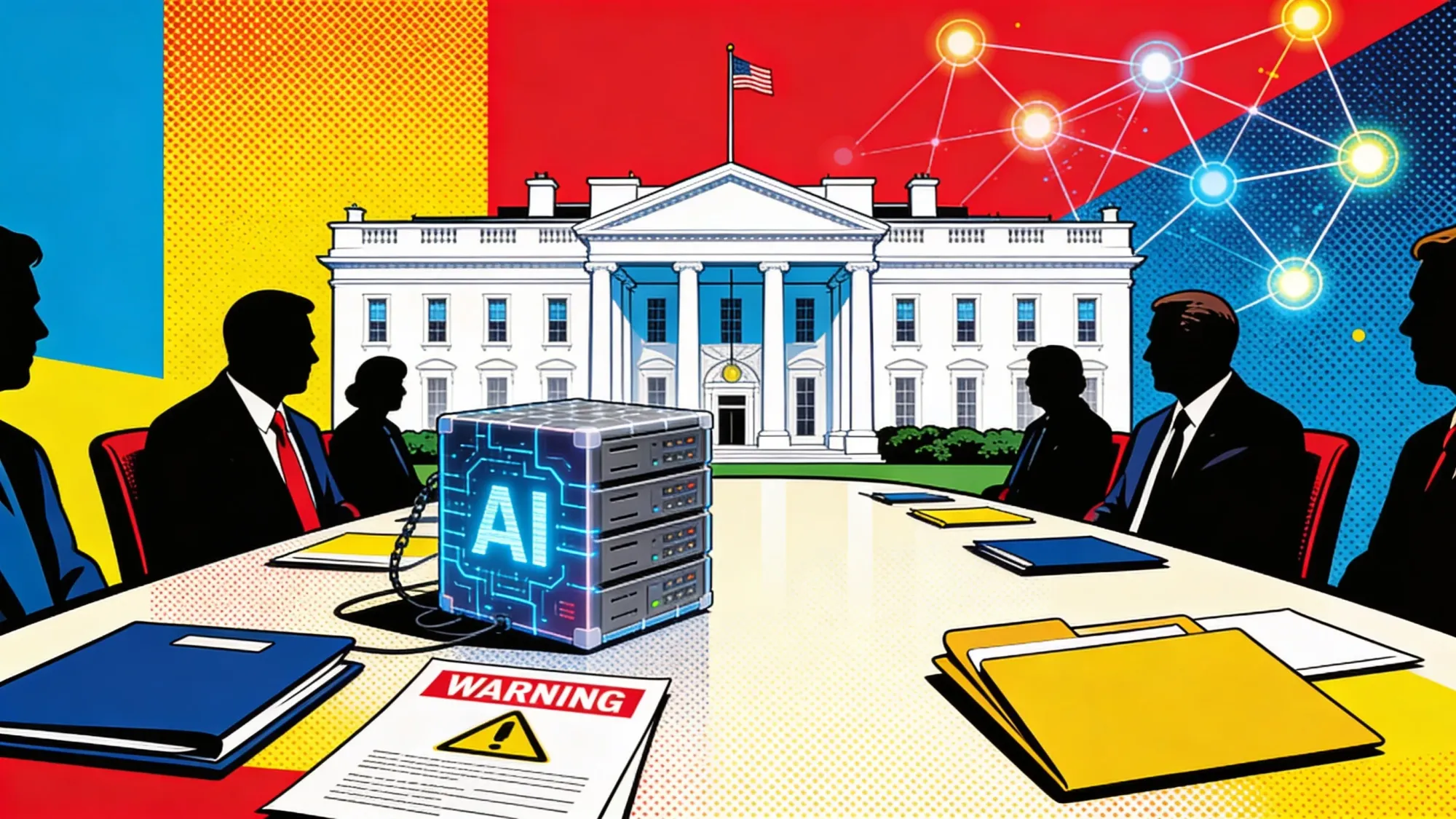
The Pentagon dispute makes the stakes plain. Anthropic's fight with Defense Secretary Pete Hegseth centered on whether Claude could be used without the company's restrictions on fully autonomous weapons and mass domestic surveillance. The Pentagon designated Anthropic a supply-chain risk, limiting use of Claude in military contracts; Anthropic said it would challenge the designation in court. Reuters reported this week that the Justice Department is now contesting Anthropic's lawsuit on procedural grounds, while acknowledging that U.S. agencies moved against the company after it resisted Pentagon demands over military uses.
OpenAI then took a Pentagon agreement of its own. But this is where the original cartoon version of the story breaks down. OpenAI says its deal preserves red lines against mass domestic surveillance, autonomous weapons direction and high-stakes automated decisions, and that it retains control over its safety stack. That does not erase the contrast. It sharpens it. The contest is no longer between "safety" and "the military." It is between different models of who controls AI capability once the state wants it: the government, the vendor, or a negotiated stack of contracts, classifiers and human oversight.
Anthropic's wager is that saying no can increase power. It turned refusal into brand, brand into distribution, and distribution into leverage. Customers now understand that the strongest Claude may not be the Claude they can buy. Washington understands that Anthropic's red lines are not merely website copy. Rivals understand that every launch will be judged against Anthropic's mixture of capability and control.
That may prove to be a formidable position. It may also prove brittle. A company that appoints itself gatekeeper for frontier capability invites scrutiny from customers, competitors and governments. The more valuable Mythos-class systems become, the more pressure Anthropic will face to explain why one hospital, bank, lab or agency gets access and another does not. Safety discretion can become market power. Market power can become a political target.
For now, Anthropic has done what every strategist hopes to do. It has made others move on its schedule. It shipped the strongest public model it was willing to release, kept the sharper version for vetted hands, and forced the Pentagon fight onto terrain it had already chosen.
The next test is whether that discipline holds when the terrain is no longer Anthropic's to choose. The court fight over the supply-chain-risk designation, the rollout of trusted access, and the next Mythos-class model will show whether restraint can remain a weapon once everyone else starts firing back.
Frequently Asked Questions
What is the difference between Claude Fable 5 and Claude Mythos 5?
They are the same underlying model. Fable 5 is the public version, carrying guardrails that reroute certain requests to an older model, Claude Opus 4.8. Mythos 5 has some of those safeguards lifted and goes first to Project Glasswing partners and other trusted users, with selected biology researchers added over time.
What does Claude Fable 5 block, and how often?
Its classifiers route requests involving cybersecurity, biology and chemistry, or model distillation to Claude Opus 4.8 instead of answering directly. Anthropic says the safeguards are tuned conservatively and sometimes catch benign requests, but that more than 95% of Fable sessions involve no fallback at all.
Why did the Pentagon designate Anthropic a 'supply chain risk'?
The fight with Defense Secretary Pete Hegseth centered on using Claude without Anthropic's limits on fully autonomous weapons and mass domestic surveillance. The Pentagon then restricted Claude in military contracts. Anthropic says it will challenge the designation in court, and Reuters reports the Justice Department is now contesting the suit on procedural grounds.
Did OpenAI take Anthropic's place on defense work?
OpenAI struck its own Pentagon agreement. OpenAI says the deal preserves red lines against mass domestic surveillance, autonomous weapons direction, and high-stakes automated decisions, and that it retains control over its safety stack. The contrast is less about safety versus the military than about who controls AI capability once the state wants it.
How much does Claude Fable 5 cost and where can I use it?
Fable 5 and Mythos 5 are priced at $10 per million input tokens and $50 per million output tokens. Fable 5 was available at launch through Anthropic's API and AWS, and GitHub made it available in Copilot the same day.
AI-generated summary, reviewed by an editor. More on our AI guidelines.

Free AI briefing · Weekdays
The AI stories that matter, sourced and explained.
Join the Morning Briefing. It goes out every weekday at 4:45 a.m. Pacific, with later sends for the East Coast, Berlin and Tokyo.
Free when you sign up: The Paperclip Compendium, our tested guide to running AI agents.
Free. Unsubscribe in one click.

Marcus Schuler
Editor-in-Chief and founder of Implicator.ai. Former ARD correspondent and senior broadcast journalist with 10+ years covering tech. Writes daily briefings on policy and market developments. Based in San Francisco. E-mail: editor@implicator.ai