IMPLICATOR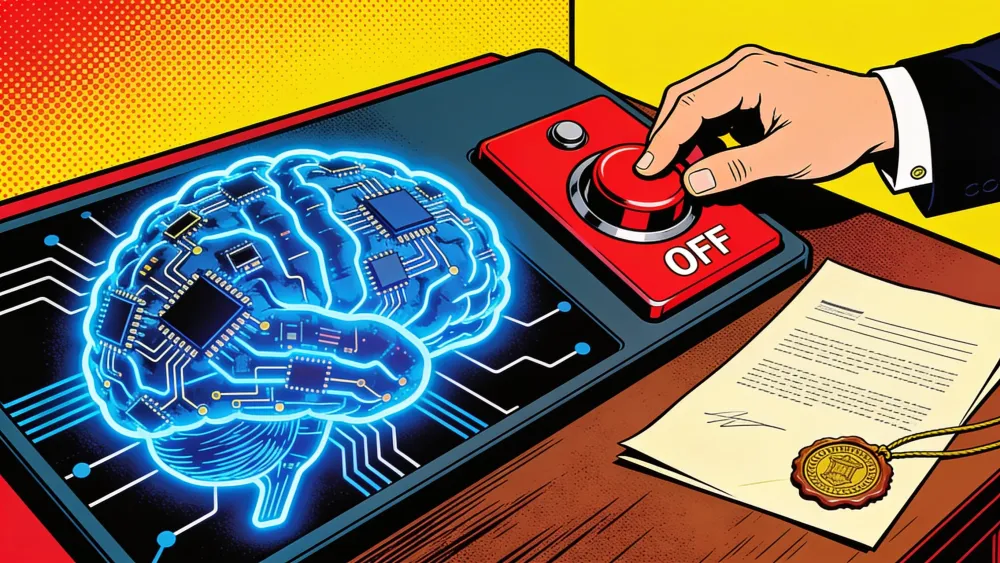
"It's a complete overreaction," Katie Moussouris said of the order that pulled Anthropic's two most capable AI models off the market on Friday. Moussouris, chief executive of the security firm Luta Security, had read the report the government acted on. Citing national security, the United States told Anthropic to cut off Fable 5 and Mythos 5 to every foreign national on earth, including the company's own foreign-born engineers, and to comply the company shut the models off for everyone.
The triggering finding is narrow. A researcher prompted Fable to read a codebase and patch its software flaws, the daily work of the people who defend networks for a living. Moussouris told the Wall Street Journal that the model's output would be of more use to defenders than to attackers, "exactly the kind of prompting that defenders would do." Anthropic says rival public models, OpenAI's GPT-5.5 among them, surface the same minor bugs with no jailbreak at all.
The quarrel behind the order is not new. The Pentagon branded Anthropic a supply-chain risk in March, advisers including David Sacks accused the company of "fear-mongering" and regulatory capture, and officials had pressed it to delay these very models. Commerce Secretary Howard Lutnick's letter arrived on a Friday evening, days before an expected public offering that values Anthropic at $965 billion. Dean Ball, who advised the previous Trump White House on AI, called the order "baffling" and warned that "you should expect to have to prove your citizenship to use Anthropic models."
ITAR and the PGP years.
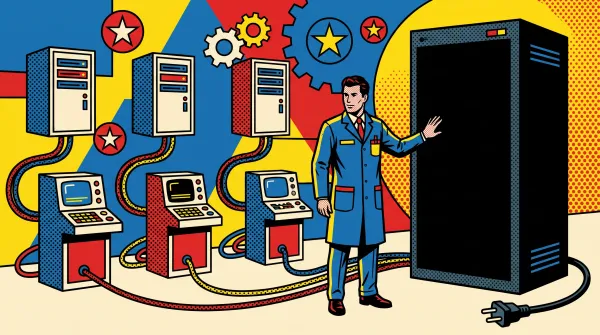
We have run this experiment before. In the 1990s the government classified strong encryption as a munition under the International Traffic in Arms Regulations and investigated the programmer Phil Zimmermann for letting PGP loose on the internet. The export rules treated mathematics as ordnance, and they failed for a plain reason: the math was already abroad, so the controls handicapped American firms while the capability spread anyway. In 1999 a federal appeals court ruled in Bernstein v. United States that source code is protected speech, and the munitions theory of cryptography collapsed within a year. Peter Girnus, a threat researcher at the Zero Day Initiative, drew the same line to Business Insider, noting that this time "the munition is in the building and the people who made it are not allowed to look at it."
The rule Anthropic asked for.
Anthropic spent the spring arguing for the exact power Washington just used, with one condition on it. In its Policy on the AI Exponential, the company wrote that government should be able to block unsafe deployments through a process that is "transparent, fair, clear, and grounded in technical facts." A letter that withholds its evidence, offers only verbal proof of a narrow jailbreak, and locks out a company's own engineers meets none of those conditions. Recalling a model "deployed to hundreds of millions of people" over a finding this thin, Anthropic argued, "would essentially halt all new model deployments for all frontier model providers."
Make them show their work.
The honest position is not that models are harmless. Some may not be, and the state should be able to halt a genuinely dangerous one. The open question is who decides, and on what evidence. The Pentagon's chief information officer, Kirsten Davies, gave her answer on X: "Some things are simply more important than revenue cycles, clickbait, and pre-IPO valuation. America First. Always." That is a political standard, set by an antagonist in an ongoing fight.
A standing board would answer on different ground.
Seat AI researchers, security scientists, ethicists, and constitutional lawyers on it, wall it off from the administration of the day, and swear its members to the Constitution rather than to any Secretary. Give it the evidence in writing and let it rule in the open, on the technical record, with reasons a court could read. A body like that could still have pulled Fable, had the facts demanded it. The country would know why.
The government may take a tool away from the world. It should at least have to show its work.

Marcus Schuler
Editor-in-Chief and founder of Implicator.ai. Former ARD correspondent and senior broadcast journalist with 10+ years covering tech. Writes daily briefings on policy and market developments. Based in San Francisco. E-mail: editor@implicator.ai