IMPLICATOR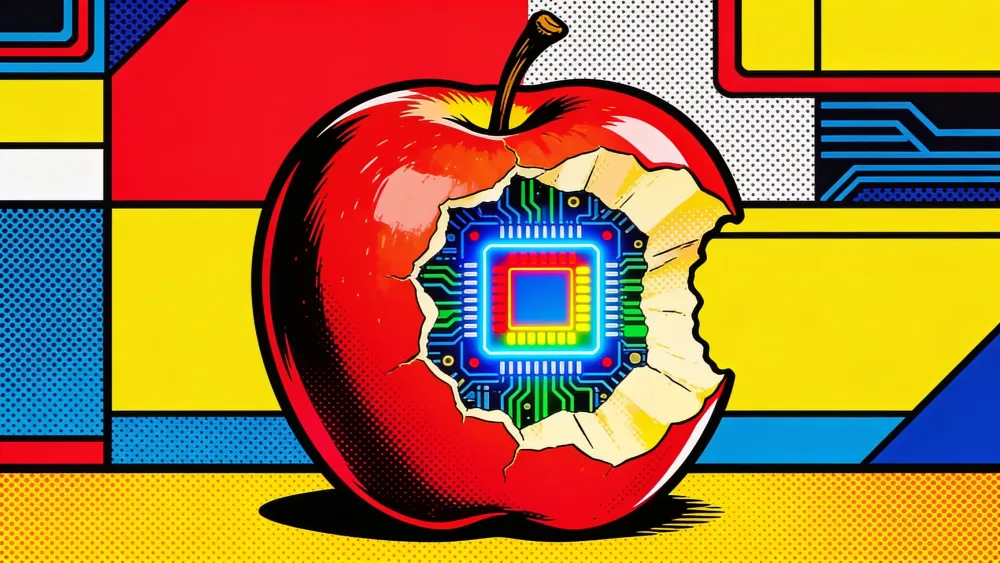
Apple rebuilt Siri on Foundation Models it co-developed with Google's Gemini, and said its most demanding requests will run on Google's cloud servers and Nvidia chips. The privacy company now depends on its chief rival for the intelligence it sells.
"Some appear to be racing forward... without clear regard for the people," Craig Federighi told the WWDC audience on Monday, in a swipe at rival AI developers. Minutes later, Apple said the new Apple Intelligence and the rebuilt Siri AI run on Foundation Models it co-developed with Google, one of those rivals.
Apple describes the arrangement as a "deep collaboration" that draws on the technologies behind Gemini. For a company that has spent more than a decade marketing itself as the privacy alternative to Google, that is an unusual source for the intelligence it now puts on every device.
The timing points to Apple's own delay rather than Google's generosity. Apple promised a more personal Siri at WWDC 2024, shipped what The Information later called an elaborate concept video, and last month paid $250 million to settle a lawsuit from buyers who said the company had misled them. The Gemini deal, struck in January, supplied the assistant Apple had not finished building on its own.
Macworld Boston, 1997.
Apple has accepted a rival's hand before. In August 1997, a near-bankrupt Apple took $150 million from Microsoft, and Steve Jobs presented the deal at Macworld Expo in Boston while Bill Gates appeared on a screen above the stage and part of the audience booed. Apple called it a partnership. The terms set Internet Explorer as the Mac's default browser and committed Microsoft to keep building Office for the platform. Those conditions were written by the company extending the money, not the one receiving it.
The 2010 privacy line.
Jobs also defined what privacy would mean for Apple. At the D8 conference in 2010, he said privacy means people know what they are signing up for, in plain English, and repeatedly: "Ask them. Ask them every time." Apple later built that principle into a premium brand, one that rested on processing data on the device and keeping the data path short.
The new Siri lengthens that path. To answer questions about what is on a user's screen and to draw context from messages, photos and mail, the assistant needs standing access to a user's digital life. "That creates an inevitable tension between convenience and privacy," PP Foresight analyst Paolo Pescatore said after the keynote. Apple's answer is Private Cloud Compute, which it says outside experts can inspect "at any time," while the heaviest requests, the AFM Cloud Pro tier, run on Google's cloud servers and Nvidia chips.
Apple's engineers say the shipping models contain "not a drop of Gemini," with the weights distilled into Apple code. By Apple's own account, the models were still trained with Gemini's help, and the AFM Cloud Pro tier runs on Google's cloud servers and Nvidia chips. The privacy pitch Apple has run since Jobs framed it in 2010 rested on the company controlling that path end to end.
Monday's keynote was Tim Cook's last as chief executive. John Ternus takes over on September 1, inheriting a Siri that finally works after two years of delays and a privacy claim that now depends on a competitor's model and servers. Apple stock closed down 1.9 percent at $301.54 the same day, and Siri AI is due in beta later this year.
Know someone who'd find this useful? ✉️ Email it to a friend in one click, or they can subscribe free here.
Frequently Asked Questions
Does Apple's new Siri actually use Google's Gemini?
The new Apple Intelligence and Siri AI run on Apple Foundation Models that Apple says it co-developed using "the technologies behind" Google's Gemini. Apple's engineers say the shipping models contain "not a drop of Gemini," with the weights distilled into Apple code. But the models were trained with Gemini's help, and the AFM Cloud Pro tier runs on Google's cloud servers and Nvidia chips.
Why is the Gemini partnership a privacy concern?
To answer questions about a user's screen and pull context from messages, photos and mail, Siri AI needs standing access to a user's digital life. PP Foresight analyst Paolo Pescatore called it "an inevitable tension between convenience and privacy." Apple's answer is Private Cloud Compute, which it says outside experts can inspect "at any time."
What happened with Apple's 2024 Siri promise?
Apple promised a more personal Siri at WWDC 2024, then shipped what The Information called an elaborate concept video. The upgrade was delayed, and last month Apple paid $250 million to settle a lawsuit from buyers who said the company misled them. The Gemini-powered Siri AI revealed June 8 is the delivery on that promise.
Where and when will Siri AI be available?
Apple said Siri AI launches in beta later this year, in English first, for users on supported devices. It will not be available initially in the European Union or China while Apple works through regulatory requirements, including the EU's Digital Markets Act. Developer testing began June 8.
What is AFM Cloud Pro?
AFM Cloud Pro is the tier of Apple's Foundation Models reserved for the most demanding agentic tasks. According to AppleInsider, it runs on infrastructure provided by Google's cloud servers and Nvidia GPUs while remaining Private Cloud Compute certified, meaning outside parties can verify how Apple handles the data.
AI-generated summary, reviewed by an editor. More on our AI guidelines.
Free AI briefing · Weekdays
The AI stories that matter, sourced and explained.
Join the Morning Briefing. It goes out every weekday at 4:45 a.m. Pacific, with later sends for the East Coast, Berlin and Tokyo.
Free when you sign up: The Paperclip Compendium, our tested guide to running AI agents.
Free. Unsubscribe in one click.

Marcus Schuler
Editor-in-Chief and founder of Implicator.ai. Former ARD correspondent and senior broadcast journalist with 10+ years covering tech. Writes daily briefings on policy and market developments. Based in San Francisco. E-mail: editor@implicator.ai