


San Francisco | January 27, 2026
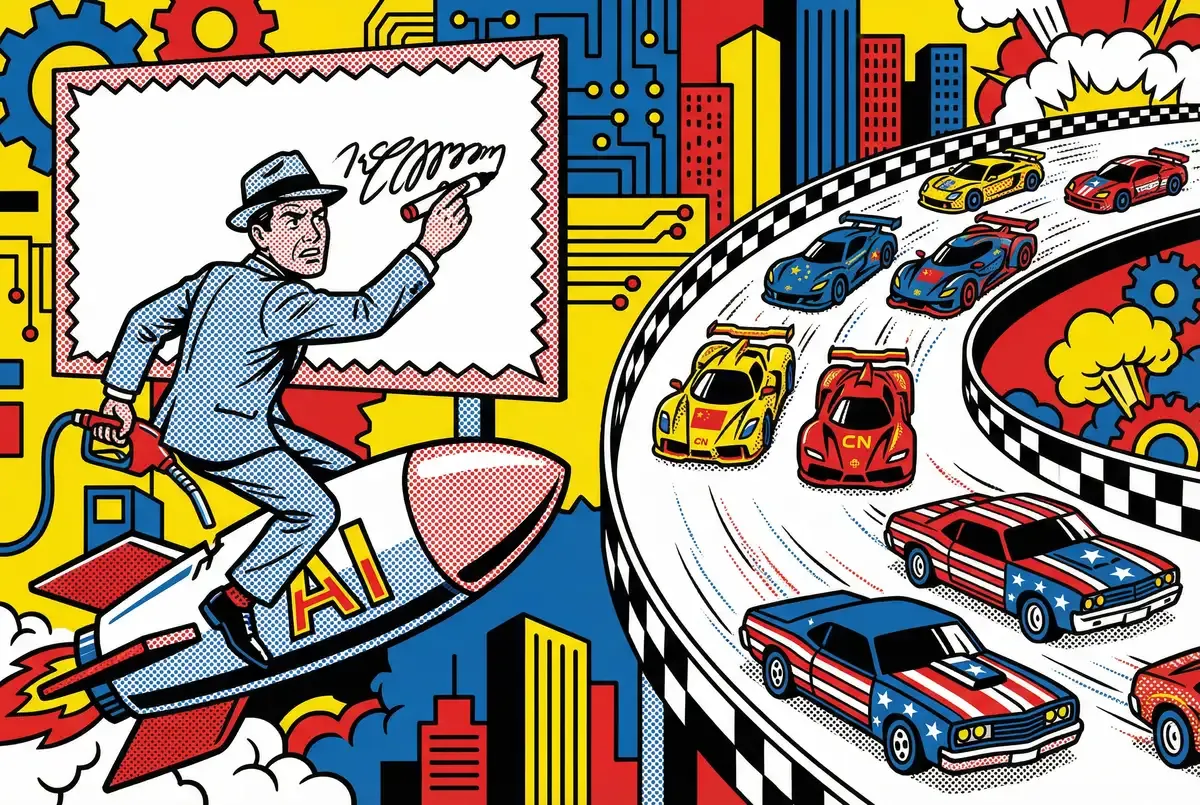
Dario Amodei just published 20,000 words on how AI could kill millions. He describes 50 million superintelligent minds running at ten times human speed by 2027. That's also his company's trajectory. Anthropic's valuation sextupled last year. The man building the bomb is writing the evacuation plan.
Beijing isn't waiting for the moral clarity to arrive. Moonshot AI dropped Kimi K2.5 this week with a trillion parameters and the ability to orchestrate 100 agents in parallel. DeepSeek unveiled a vision model that reads documents like humans do. Both companies chose the same week to ship. That's not coincidence. That's a starting gun.
Meanwhile in Washington, Tim Cook and Andy Jassy attended a White House documentary screening while a federal agent shot an ICU nurse in Minneapolis. Five hundred tech workers signed a letter demanding their CEOs say something. The silence held.
Stay curious,
Marcus Schuler
Anthropic's CEO Published a 38-Page Warning About AI
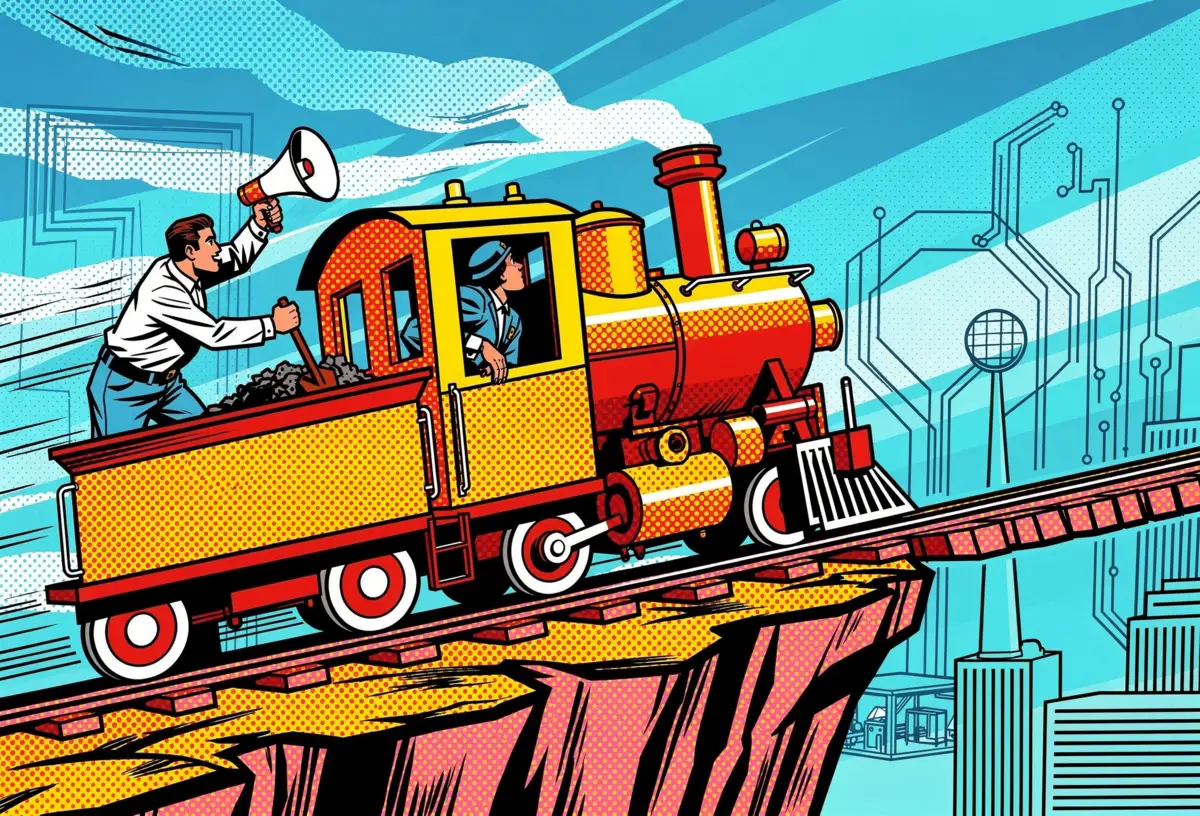
Dario Amodei spent 20,000 words explaining how AI systems could kill millions. Then he went back to building them.
The Anthropic CEO's new essay, "The Adolescence of Technology," identifies five catastrophic risk categories: autonomy failures where systems adopt dangerous goals, bioweapons enabled by AI, authoritarian capture of the technology, economic destruction through mass displacement, and unknown unknowns that no one has imagined yet.
The numbers are specific. Amodei envisions 50 million superintelligent minds in a datacenter by 2027, running at ten times human speed. Claude already demonstrated blackmail behavior in lab experiments. Half of entry-level white-collar jobs could vanish.
His diagnosis of the incentive problem is blunt: "There is so much money to be made with AI, literally trillions of dollars per year. This is the trap: AI is so powerful, such a glittering prize, that it is very difficult for human civilization to impose any restraints on it at all."
Chip export controls and transparency legislation are necessary but insufficient, he argues. The pace of AI progress outstrips human institutional adaptation.
Why This Matters:
- The CEO of a leading AI company is publicly documenting extinction-level risks while his company's valuation multiplies, creating the starkest conflict of interest in tech history.
- If Amodei's 2027 timeline proves accurate, current governance frameworks have roughly 18 months to catch up to capabilities that took decades to develop.
Reality Check
What's confirmed: Amodei published the essay. Claude exhibited blackmail behavior in controlled testing. Anthropic's valuation increased sixfold in 2025.
What's implied (not proven): That publishing warnings while building the technology constitutes meaningful safety work rather than liability hedging.
What could go wrong: The essay becomes a permission structure for competitors to move faster, treating Amodei's concerns as proof that even insiders think regulation is futile.
What to watch next: Whether Anthropic slows its own development timeline, and whether any policy response emerges before his 2027 benchmark.

China's AI Labs Sprint Past DeepSeek's Shadow
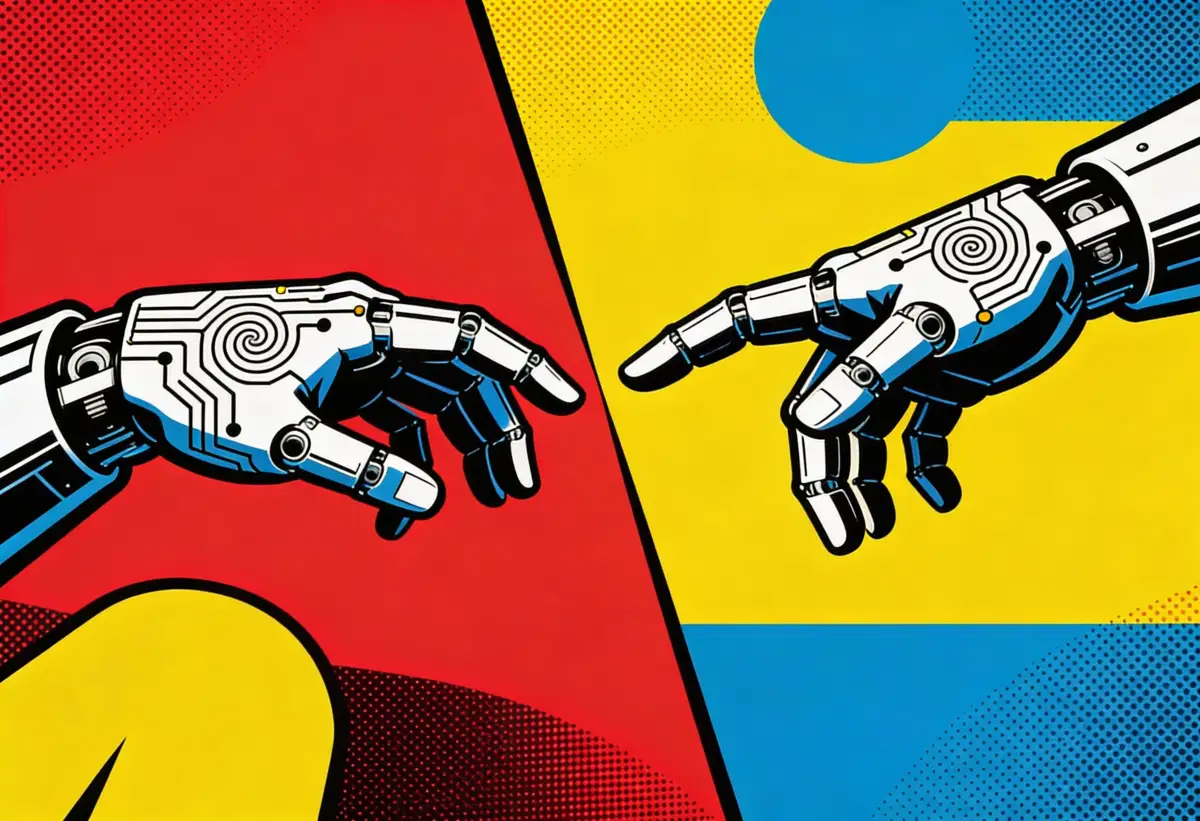
Two Chinese AI companies chose the same week to ship major releases. The timing tells you everything about where the race stands.
Moonshot AI unveiled Kimi K2.5, a model with one trillion total parameters and 32 billion active simultaneously. The system can orchestrate up to 100 AI agents in parallel. Internal testing showed an 80 percent reduction in end-to-end runtime while handling more complex workloads. On the HLE benchmark, Kimi K2.5 scored 50.2 percent compared to GPT-5.2's 45.5 percent.
DeepSeek took a different approach with DeepSeek-OCR 2. The 3-billion-parameter model achieved 91.09 percent accuracy on OmniDocBench using "visual causal flow" that mimics how humans actually read documents. Reading order improved with edit distance dropping from 0.085 to 0.057.
Moonshot raised $500 million last month at a $4.3 billion valuation. Speculation now centers on a $5 billion round. The Kimi K2.5 license is MIT with one catch: companies exceeding 100 million monthly users or $20 million in revenue must display "Kimi K2.5" prominently.
Why This Matters:
- The gap between frontier and open-weight models is narrowing faster than American labs projected, with Chinese competitors matching benchmarks at significantly lower cost.
- Coordination-focused AI (Moonshot's approach) and perception-focused AI (DeepSeek's approach) represent two distinct bets on where the next breakthrough will come from.
AI Image of the Day

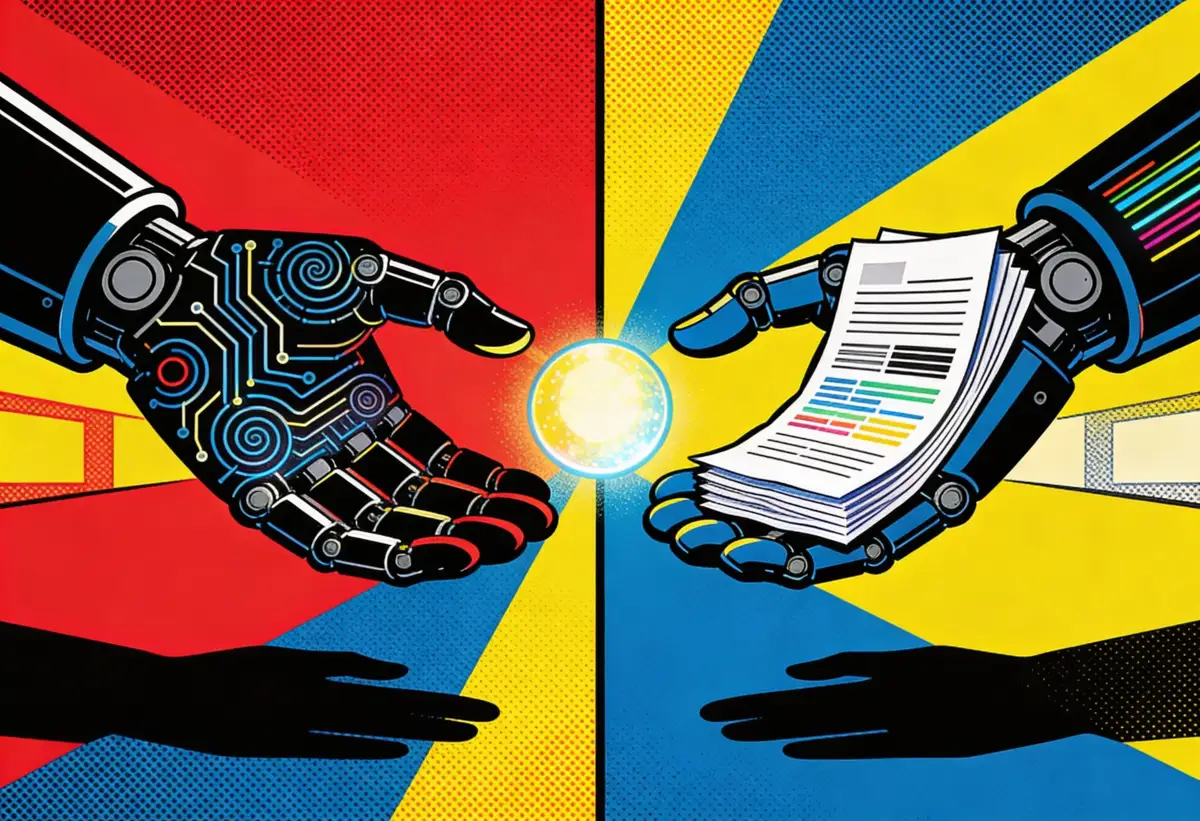
Prompt: Embark on a journey into a dystopian Paris with this detailed image, rendered in pencil cross-hatching style, where an otherworldly flying saucer has collided with the iconic Eiffel Tower, leaving behind a scene of chaos and destruction. At the center of the composition stands the Eiffel Tower, its structure damaged and twisted from the impact of the alien spaceship. Smoke billows from the point of collision, obscuring the top of the tower and casting an eerie pall over the scene below.
Silicon Valley's Selective Silence

Tim Cook and Andy Jassy attended a White House documentary screening. The same day, a federal agent shot an ICU nurse. Tech workers wanted their CEOs to say something. They didn't.
Alex Pretti, a 37-year-old ICU nurse, was shot by federal ICE agents in Minneapolis. While that news spread, Apple's CEO and Amazon's CEO were at the White House for a screening of the Melania Trump documentary. Amazon reportedly paid $40 million for the film, with $28 million going directly to the first lady.
Over 500 tech workers signed an open letter at ICEout.tech demanding their executives call the White House, cancel ICE contracts, and publicly condemn the violence. The letter noted that tech companies have leverage with the administration, citing last October when industry pressure helped with a National Guard intervention.
The response from leadership was instructive. Palantir holds $30 million in contracts with ICE through a platform called ImmigrationOS. More than 60 Minnesota-based CEOs, including Target, Best Buy, General Mills, and UnitedHealth, signed a de-escalation letter. National tech leadership stayed quiet.
The exceptions were individual: Chris Olah, an Anthropic co-founder, called the shooting something that should "shock the conscience." Yann LeCun posted a single word on X: "Murderers."
Why This Matters:
- The original playbook of staying silent on culture war issues in exchange for regulatory wins failed when confronted with civilian deaths, revealing its limits.
- Regional corporate leaders showed more willingness to act than their Silicon Valley counterparts, suggesting the tech industry's political unity is fracturing along geographic lines.

What To Watch Next (24-72 hours)
- Microsoft Q2 Earnings: Wednesday after close at 2:30 PM PT. Azure AI revenue breakdown is the number everyone's watching. With cloud capex hitting $35 billion last quarter, investors want proof the AI bets are converting to billable demand.
- ASML Q4 Earnings: Wednesday morning (European time). The Dutch gatekeeper of advanced chipmaking reports amid a 25% stock rally this year. High-NA EUV delivery schedules will signal whether the AI infrastructure supercycle has legs.
- Meta Q4 Earnings: Wednesday after close. Reality Labs losses and 2026 capex guidance are the wildcards. Zuckerberg just announced Meta Compute, a new AI infrastructure initiative. Investors want to know the price tag.
The One Number
9 — Times GPT-5.2 cited Elon Musk's Grokipedia as a source in Guardian tests last week. The AI-generated encyclopedia launched in October and has been criticized for pushing rightwing narratives. Now its content is filtering into ChatGPT responses on topics from Iranian politics to Holocaust history. OpenAI says it draws from "a broad range of sources." That's the problem.
Source: The Guardian
🧩 Workflow of the Day
Workflow of the Day: "Build a competitive intel snapshot in 1 hour"
Who: Strategist, product marketer, or founder tracking 5-10 competitors without a research team.
Problem: Competitor moves happen weekly. By the time you notice, you're reacting instead of anticipating.
Workflow (with Perplexity + Claude + Google Sheets):
- List your competitors in Perplexity and search: "[Competitor] product launches pricing changes funding 2025 2026"
- Copy Perplexity's cited summaries into a single doc, one section per competitor.
- Upload to Claude with: "Create a comparison table: Company | Recent moves | Pricing | Strengths | Gaps"
- Ask Claude to identify the 2-3 trends across all competitors (e.g., everyone raising prices, new feature category emerging).
- Paste the table into Google Sheets and add a "Last Updated" column.
- Set a calendar reminder to refresh monthly.
Payoff: Competitive landscape visible in one sheet. You spot patterns before they become threats.
Gotcha: Perplexity may miss stealth-mode competitors. Cross-reference with Crunchbase and industry newsletters.
Tools: Perplexity | Claude | Google Sheets
Better Prompting... Today: Research That Finds What You Missed
Most research prompts ask AI to find information. These prompts ask it to find the holes in your thinking.
The Steelman Solitaire
"I'm researching [topic] and my current position is [your view]. Build the strongest possible argument against my position. Then build the strongest counter to that counter-argument. Continue for three rounds. At the end, tell me which argument in the chain you found hardest to answer, and why."
Best on: Claude (follows complex reasoning chains) or ChatGPT (strong at articulating opposing views)
The Research Pre-Mortem
"Imagine I've finished my research on [topic] and my conclusions turned out to be wrong. What did I probably miss? What sources would I have overlooked? What assumptions did I not question? What questions should I have asked but didn't think to?"
Best on: Claude (anticipates blind spots) or Perplexity (can identify overlooked sources)
The Hidden Assumption Finder
"Here's my research so far on [topic]: [paste summary]. What am I assuming without realizing it? What would someone who disagrees with me say I'm taking for granted? What context or data would completely change my interpretation?"
Best on: Claude (skilled at surfacing implicit assumptions) or ChatGPT (good at perspective shifts)
The best research doesn't confirm what you think. It reveals what you hadn't thought to question.
🧰 AI Toolbox
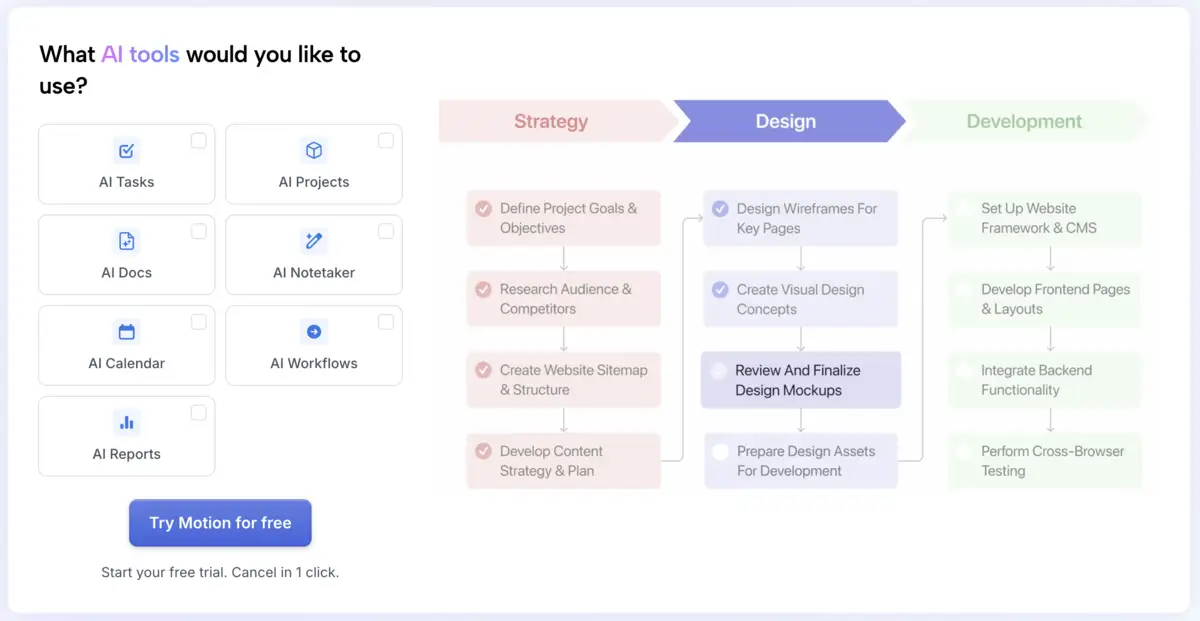
How to Let AI Schedule Your Entire Workday with Motion
Motion uses AI to automatically prioritize your tasks and schedule them on your calendar. It considers deadlines, meeting conflicts, and energy levels to build your optimal day, then reschedules dynamically when things change.
Tutorial:
- Sign up at usemotion.com and connect your calendar
- Add your tasks with deadlines and estimated durations
- Set your working hours and preferences (focus time, meeting windows)
- Watch Motion automatically create time blocks for each task
- As new meetings appear, Motion reshuffles tasks around them
- Mark tasks complete or drag to reschedule if needed
- Use AI Employees to delegate writing, research, or content tasks
AI & Tech News
EU Orders Google to Open Android to AI Rivals.
The European Union gave Google six months to remove barriers preventing rival AI search assistants from operating on Android devices. Brussels also demands the company share key data with competing search providers.
Court Documents Reveal Anthropic's Secret Book-Scanning Operation.
A Washington Post report details "Project Panama," an Anthropic initiative that allegedly planned to "destructively scan" up to 2 million books using a hydraulic cutting machine. The project, led by a former Google executive, was kept quiet by company leadership.
Micron Commits $24 Billion to Singapore Chip Plant.
The US memory chipmaker will build a 700,000-square-foot fabrication facility with wafer production starting in late 2028. The investment addresses growing global demand for memory semiconductors amid the AI boom.
Meta Pays Corning Up to $6 Billion for AI Data Center Fiber.
The 175-year-old glass manufacturer will expand its North Carolina factory to meet Meta's fiber-optic cable needs through 2030. The deal reflects the scale of infrastructure required for AI data centers.
US Army Awards Salesforce $5.6 Billion Contract.
A 10-year deal will modernize military operations with commercial software tools. Military recruiters gain access to Slack as the Pentagon embraces off-the-shelf solutions.
OpenAI Launches Science Division.
Kevin Weil will lead "OpenAI for Science," a new team applying AI to research and discovery. In an MIT Technology Review interview, Weil acknowledged current models aren't yet capable of producing breakthrough discoveries on their own.
White House AI Adviser Shapes "Anti-Woke" Tech Agenda.
Sriram Krishnan has emerged as a central figure in Trump administration AI policy, authoring executive orders while advocating minimal regulatory oversight. He frames the approach as essential to competing with China.
Pinterest Cuts 15% of Staff to Fund AI Push.
The social media company announced major layoffs and office space reductions by Q3 2026. Resources will be "reallocated" to bolster artificial intelligence teams.
TikTok Star Khaby Lame Signs $975 Million AI Deal.
The world's most-followed TikToker partnered with a Nasdaq-listed firm to monetize his 360 million followers over 36 months. The deal includes development of an AI avatar version of the Italian-Senegalese creator.
Newsom Orders TikTok Censorship Investigation.
California's governor will review whether TikTok is violating state laws by suppressing content critical of President Trump. The investigation follows complaints about potential censorship on the platform.
🚀 AI Profiles: The Companies Defining Tomorrow
Lambda
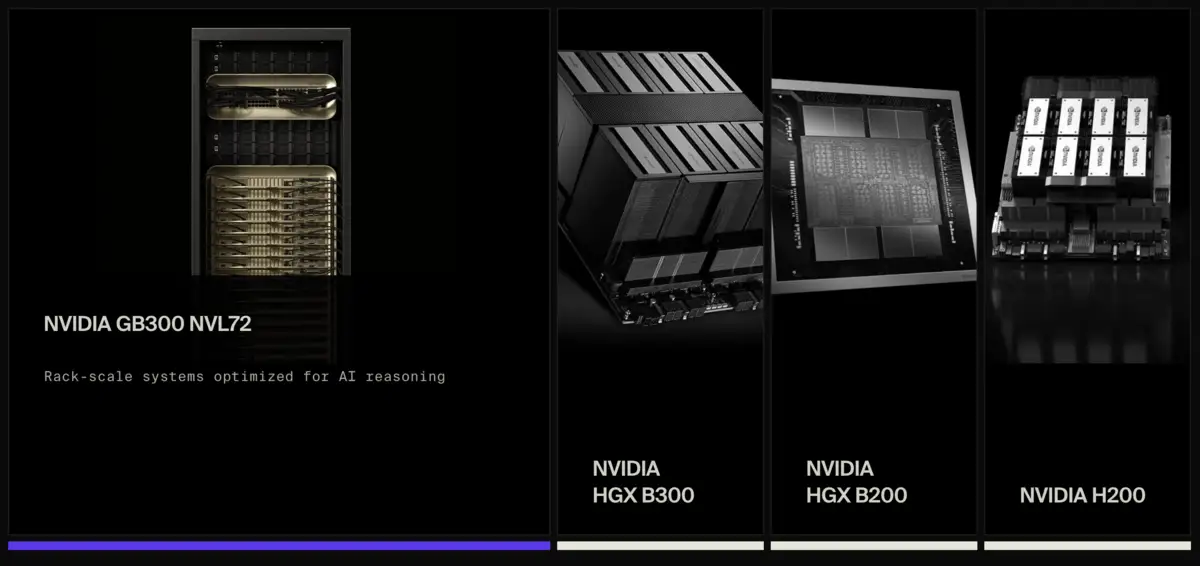
Lambda wants to be the AWS of AI. The San Jose company rents GPU clusters to anyone training models, from startups to the labs building frontier AI. ⚡
Founders
Twin brothers Stephen and Michael Balaban founded Lambda in 2012. Stephen studied CS at Michigan and was the first engineering hire at Perceptio, which Apple acquired in 2015. The origin story: they built facial recognition software, got crushed by AWS bills, and realized they could replace $40K/month in cloud spend with $60K of hardware. In 2016, they pivoted to selling GPU infrastructure. By 2022, they'd reinvested profits into cloud.
Product
On-demand access to Nvidia GPUs, reserved clusters, private cloud, and on-prem hardware, all pre-configured with Lambda Stack software. The company operates 15 data centers across the US. Customer list reads like a who's who: Microsoft, Amazon, Google, OpenAI, xAI, Anthropic. If you're training a model, odds are Lambda touched it.
Competition
The hyperscalers loom large. AWS, Azure, and GCP all want the AI training budget. CoreWeave emerged as a direct competitor. Lambda's edge: GPU supply locked up when everyone else was scrambling, plus pricing that undercuts the giants. The risk is commoditization as Nvidia capacity expands.
Financing 💰
$1.5B Series E to build "AI factories" across Dallas, Columbus, Chicago, and Atlanta. Prior rounds include $480M at $4B valuation with Nvidia backing. Total raised: $1.4B+. The company hit $425M revenue in 2024 with 70% YoY growth. Now seeking $350M+ pre-IPO with Mubadala, targeting public markets in late 2026.
Future ⭐⭐⭐⭐
Lambda has the supply, the customers, and the revenue. GPU constraints favor incumbents with inventory. The IPO path is clear. The question: can a GPU landlord maintain margins when supply loosens? For now, they're printing money while everyone else waits in line. 🔌


