IMPLICATOR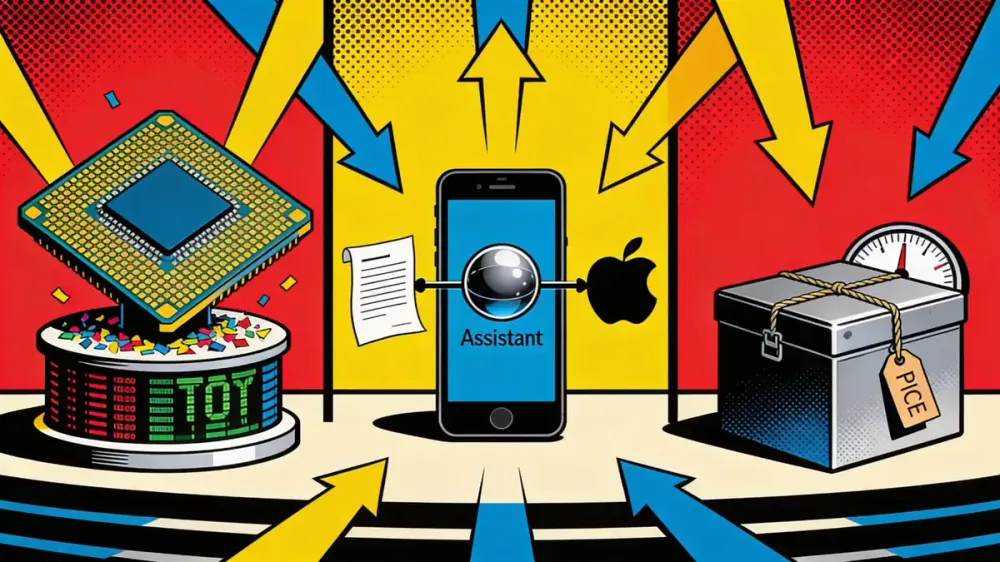
San Francisco | May 15, 2026
Cerebras rang the Nasdaq bell Thursday and closed near a $95 billion valuation. The price was set by $510 million of 2025 revenue. The pop was financed by a $20 billion OpenAI capacity promise that has not shipped. Investors bought the second number.
OpenAI hired outside lawyers to weigh a breach-of-contract notice against Apple. The Siri integration never produced the paid signups OpenAI expected, and iOS 27 will open the same surface to Claude and Gemini in three weeks.
Anthropic raised Claude Code's weekly limit by 50 percent. The token size of that limit was not published, as no Claude Code limit has been. The company is exact about prices and silent about what they buy.
Stay curious,
Marcus Schuler
Know someone drowning in AI noise? Forward this briefing. They can subscribe free here.
Cerebras Closes First Trading Day Near $95 Billion Valuation
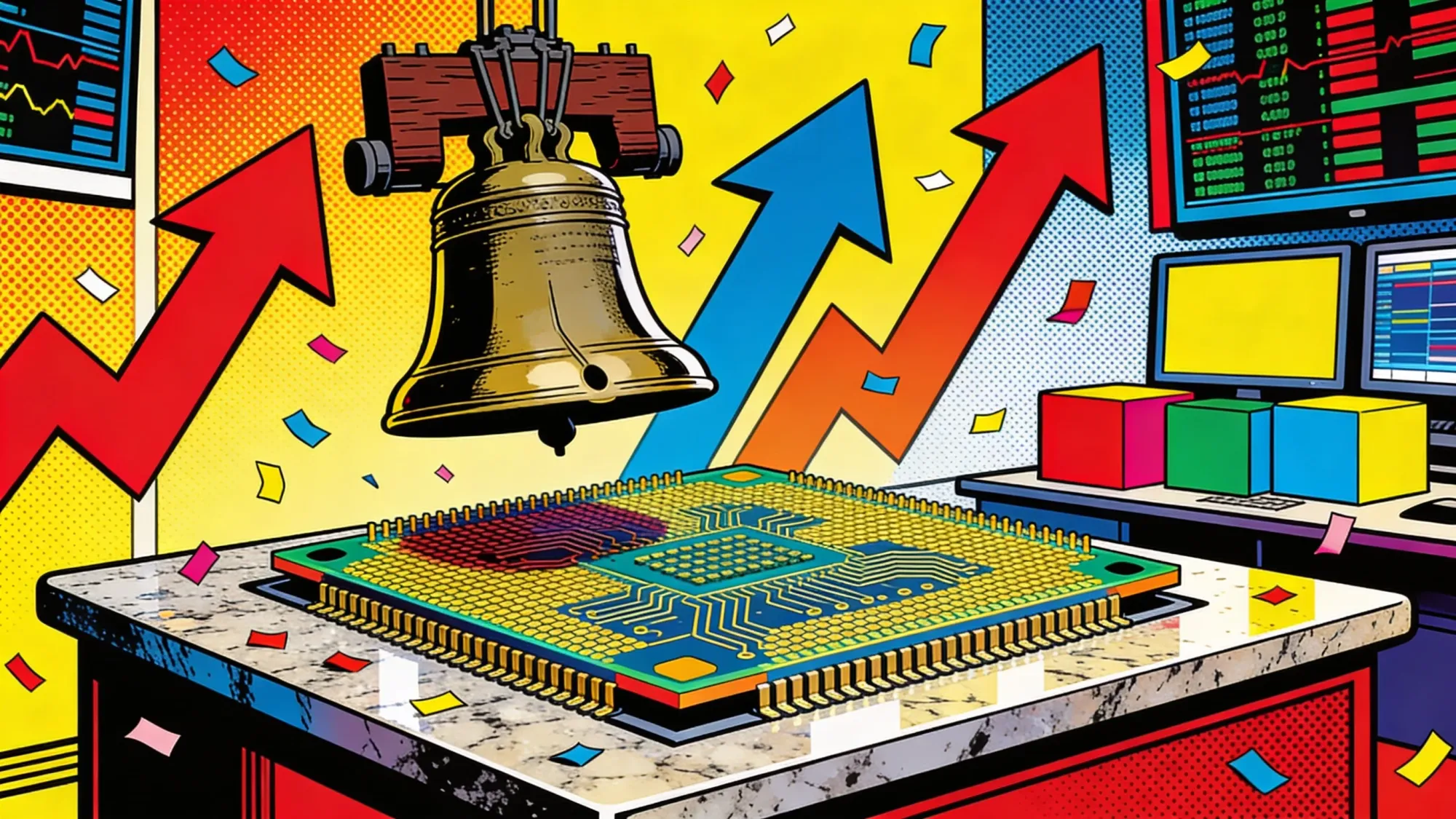
Andrew Feldman rang the Nasdaq bell Thursday. Cerebras sold 30 million shares at $185, opened at $350, and closed at $311.07. The fully diluted valuation came in near $95 billion.
That number is set against $510 million of 2025 revenue. CNBC's comparison was harsh: Alibaba ended its first day above $231 billion on $5.5 billion of sales; Facebook ended near $104 billion on $3.7 billion. Cerebras priced 68 percent below its open and still ended its first session far above the $56.4 billion IPO valuation. One PitchBook source said orders were 20x oversubscribed.
The pop was financed by an OpenAI agreement worth more than $20 billion in contracted compute, a $1.0 billion working-capital loan, 750 megawatts of planned capacity, and warrants for up to 33.4 million Class N shares. AWS added a binding term sheet and a separate warrant commitment. None of that has shown up in recognized revenue yet. G42 fell to 24 percent of 2025 revenue, but MBZUAI accounted for 62, putting the UAE share at 86.
Why This Matters:
- Cerebras priced a customer pipeline, not a P&L. The first quarterly filing has to show OpenAI capacity converting to revenue or the $95 billion looks like a 2028 bet.
- The warrant overhang is real. OpenAI and AWS can dilute Class N supply as deals advance, which sets the public float against shareholders who paid retail prices on day one.
Reality Check
What's confirmed: $185 IPO price, $311.07 close, $510 million of 2025 revenue, OpenAI $20 billion compute deal with warrants, UAE customer share at 86 percent.
What's implied (not proven): That OpenAI and AWS demand will translate into recognized revenue at a pace that supports a $95 billion valuation by 2028.
What could go wrong: The AWS definitive agreements have not been negotiated, and warrant dilution could reset the share count before OpenAI capacity comes online.
What to watch next: The first 10-Q, due in mid-August, with OpenAI and AWS revenue lines, warrant accounting, and any update on the final AWS contract.
The One Number
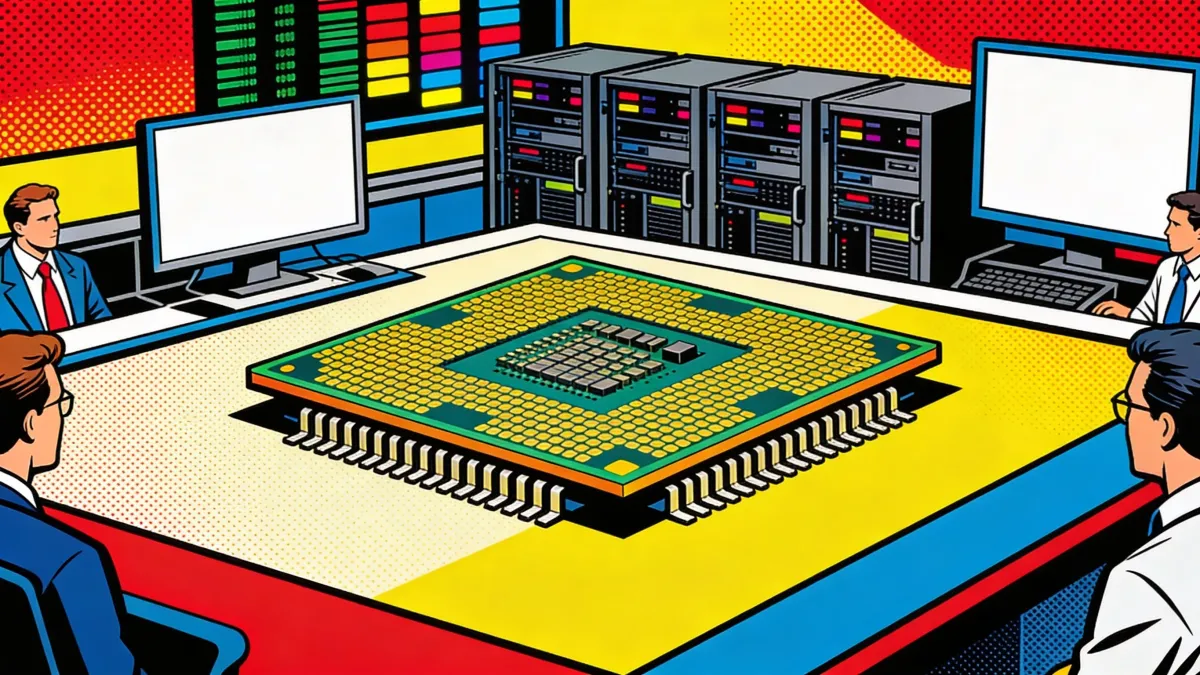
$2.85 billion — SMIC's Q2 2026 revenue guidance midpoint, up 15% sequentially from Q1's $2.5 billion and well above the $2.68 billion analyst consensus. The mainland Chinese foundry ran 93.1% utilization in Q1 with blended wafer prices rising $9 per piece. U.S. export controls have not throttled China-side AI chip demand. They have rerouted it.
Source: Digitimes, May 15, 2026
OpenAI Hires Outside Lawyers Over Stalled Apple Siri ChatGPT Deal

OpenAI has hired an outside law firm to prepare options against Apple over the ChatGPT integration in Siri, Bloomberg reported Thursday. One option under review is a breach-of-contract notice.
The dispute centers on the 2024 WWDC deal that put ChatGPT inside Siri, Visual Intelligence and Writing Tools, with Apple taking a portion of any iOS ChatGPT subscription revenue. OpenAI initially believed the placement could generate billions a year. Internal user studies, described to Bloomberg, found Apple customers stuck with the standalone ChatGPT app, often forced to say "ChatGPT" before Siri would hand off the request. An OpenAI executive said Apple had not made an "honest effort" to promote the integration.
iOS 27, expected at WWDC on June 8, will widen the surface to Claude and Gemini through a new Extensions system. Apple is also paying Google about $1 billion a year for AI tech to power the next Siri. Any formal notice would likely wait until OpenAI's Musk trial in Oakland concludes; closing arguments wrapped Thursday.
Why This Matters:
- Once Apple owns the assistant surface, AI labs trade product control for placement they cannot tune. The Siri channel converted neither subscribers nor habits for OpenAI.
- A breach notice would be the first public test of whether Apple's 2024 promises created real obligations or left Apple with full design discretion.

AI Image of the Day

Prompt: At the bottom center, in small, perfectly legible characters, is the inscription "Manuelo Diferto" consistent with the style of the work. A vibrant and playful stencil-style street art mural on a rough, textured white brick wall. The artwork features a Lego-like minifigure character with a yellow head, wearing a black baseball cap, a black scarf, and black gloves. The figure is holding a boombox with buttons and speakers, and has the text 'LOVE' written on its torso. In one hand, the figure holds a black string attached to a bright red heart-shaped balloon floating above. The background is a weathered, off-white brick wall with visible cracks, mortar lines, and subtle grunge textures. The style is bold, urban, and inspired by pop art and Banksy-like stencil graffiti, with clean black outlines and flat, solid colors. The red heart balloon stands out vividly against the monochrome figure and background. Ultra-detailed, gritty wall texture, visible spray paint layers, and a handcrafted feel. 8K resolution.
Anthropic Raises Claude Code Weekly Limit by 50 Percent, Still Withholds the Number
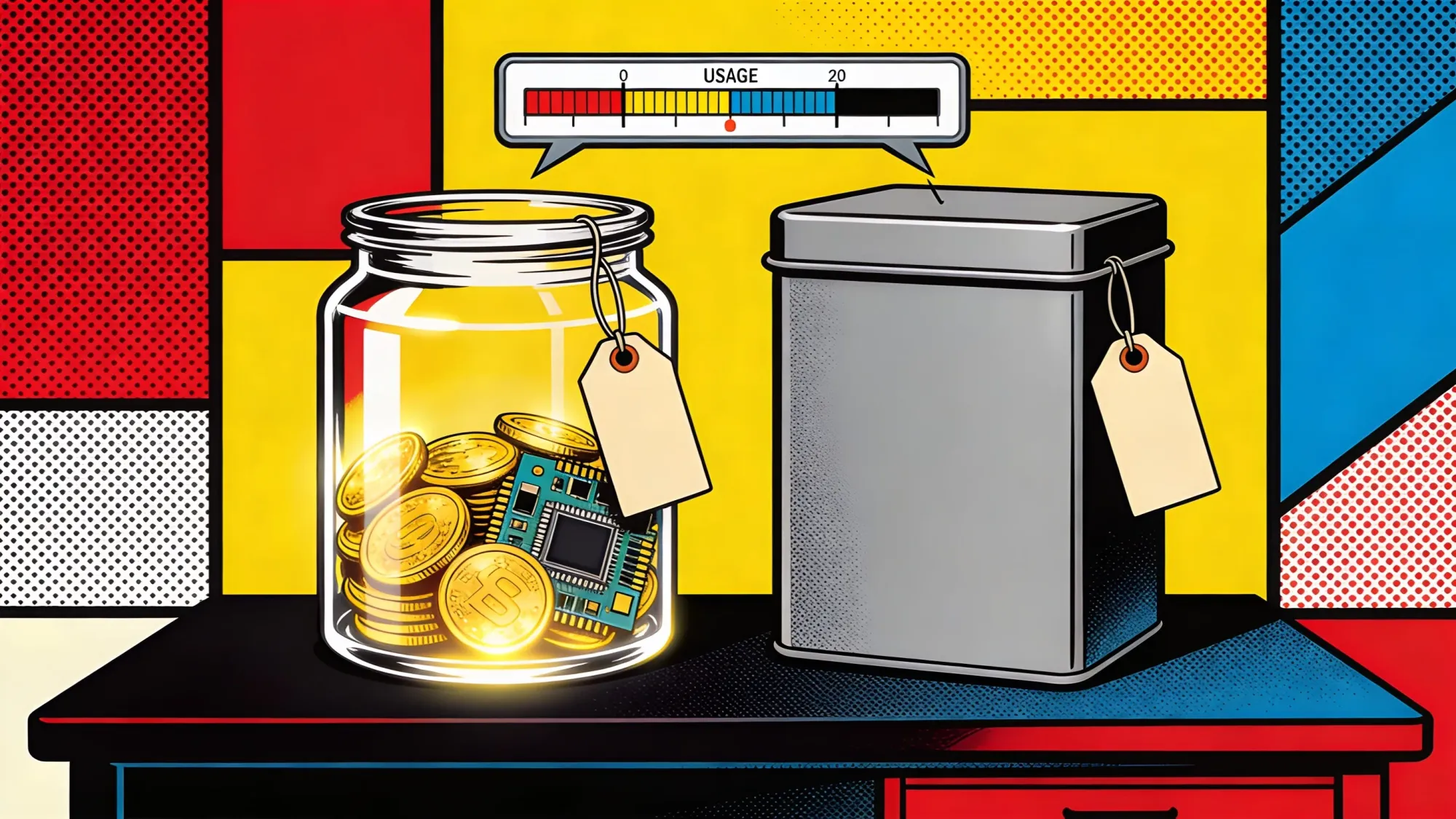
Anthropic raised Claude Code's weekly usage limit by 50 percent on May 13, running through July 13. The token size of that limit was not published, as no Claude Code limit ever has been.
The pattern is consistent. Anthropic publishes exact per-token API rates for Opus 4.7, Sonnet 4.6 and Haiku 4.5. It publishes exact monthly plan prices: $20 Pro, $100 Max 5x, $200 Max 20x. Higher tiers are listed only as multipliers of Pro, with Max 5x at five times Pro and Team Premium at 6.25 times. The widely cited 40-to-80 hours of Sonnet per week figure traces back to a July 2025 statement and has not been updated since, though the limits behind it have moved repeatedly.
The May 13 increase followed a May 6 announcement that doubled Claude Code's five-hour session limits and removed the weekday peak-hours throttle, paired with news that Anthropic had leased SpaceX's Colossus 1 data center in Memphis. The subscription limit and the compute lease arrived in a single post.
Why This Matters:
- The economics underneath are real: a $20 Pro subscriber running Claude Code intensively costs Anthropic close to $60 in compute. Vague limits are the lever Anthropic re-tunes as capacity arrives or runs out.
- July 13 is the next checkpoint. Subscribers will learn whether the increase lapses or sticks the same way they learned of every change before, through an announcement and no published denominator.

🧰 AI Toolbox
How to Search, Summarize, and Write Across All Your Tabs with Dia Browser
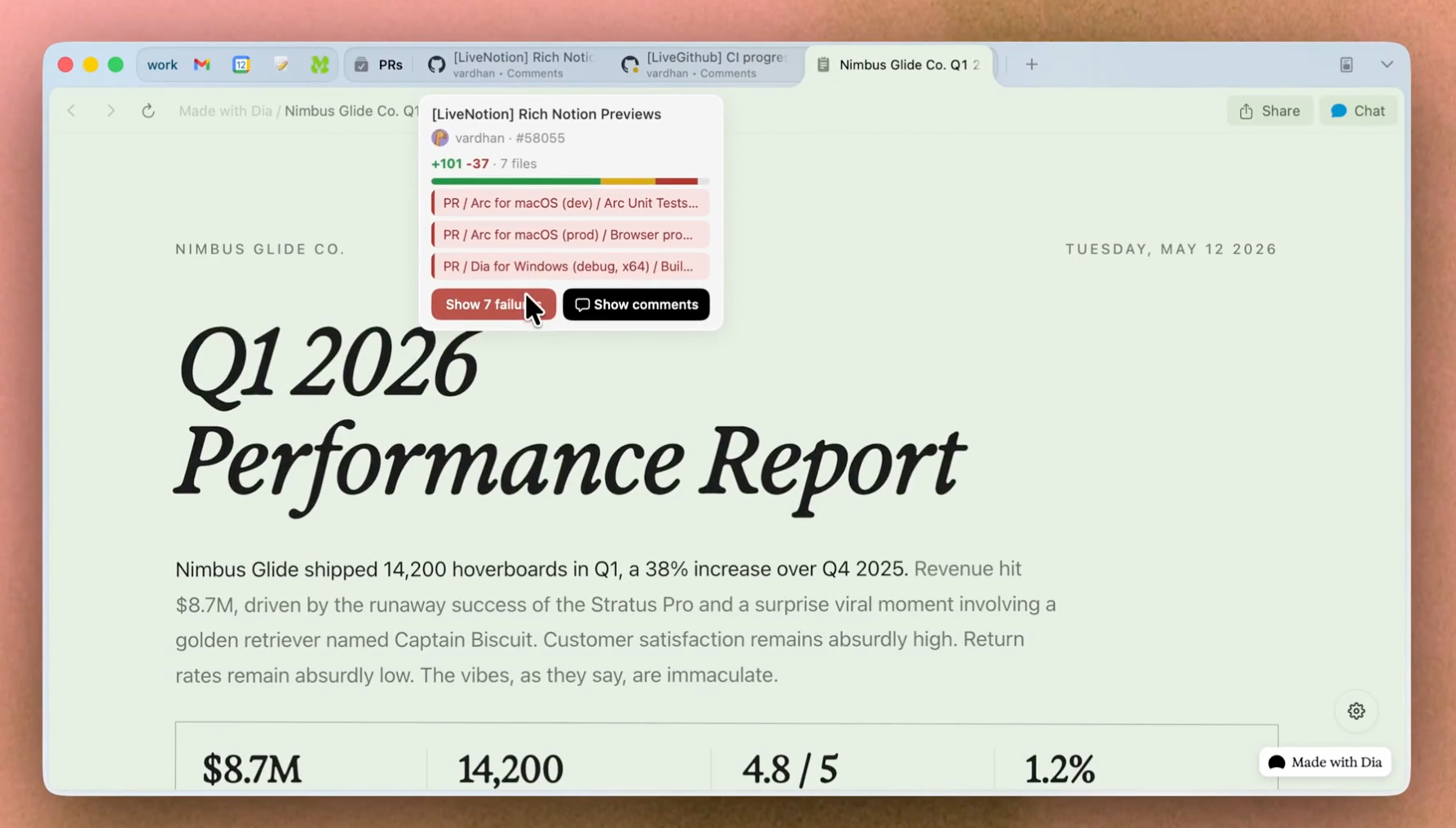
Dia is an AI-native web browser from the team behind Arc. The address bar doubles as an AI chat, so typing a question returns a direct answer instead of a list of links. Open any page and ask the sidebar to summarize it, compare it with another tab, or draft a reply based on what you are reading. Built-in Skills handle writing and coding tasks without copy-pasting into a separate tool. Free to use on Mac with optional Pro tier for heavy AI usage.
Tutorial:
- Download Dia from diabrowser.com and open it (Mac with Apple Silicon required, Windows waitlist available)
- Type a question into the address bar instead of a URL: "What are the key differences between S Corp and LLC?" and get a direct AI answer
- Open a long article or PDF, then click the AI sidebar and ask "Summarize the main arguments on this page"
- Open a second tab and mention both in a query: "Compare the pricing on these two pages and tell me which offers more for under $50/month"
- Try the built-in Write skill to draft text in your own voice directly inside a web form or document
- Create a custom Skill for a workflow you repeat often, such as "Extract all company names and funding amounts from this page into a table"
- Connect Slack, Notion, or Google Calendar so the AI can pull context from your tools when answering questions
URL: https://www.diabrowser.com
What To Watch Next (24-72 hours)
|
||
|
||
|
🛠️ 5-Minute Skill: Turn "I Studied All Week" Into a Test Plan That Shows What's Missing
Friday, 8:36 p.m. Your statistics exam is Monday. You have reread the chapter, highlighted the slides, and watched three videos at 1.25x speed, which is what people do when they are studying and also avoiding the part where studying has to produce proof. Open ChatGPT and make it diagnose the gap.
Your raw input:
Exam: intro statistics, Monday 10 a.m. Topics: confidence intervals, p-values, t-tests, chi-square, interpreting regression output. Format: 20 multiple choice, 4 worked problems, one short explanation. What I did: reread chapters, highlighted slides, watched videos, made 36 flashcards. What scares me: I recognize formulas but freeze when choosing which test to use. Time left: Friday night 90 minutes, Saturday 3 hours, Sunday 2 hours. Calculator allowed. I have old homework and answer keys.
The prompt:
Act like a blunt learning strategist, not a motivational coach. Diagnose the mismatch between how I studied and how this exam will test me. Then give me a Friday-Sunday plan with exact drills, time blocks, and progress checks. Separate memorization, choosing the right method, doing the calculation, and explaining the result in words. Include one self-test for Sunday night that tells me whether I am ready enough. No generic study tips.
The output:
Your current method trains recognition. The exam requires selection, execution, and explanation. Stop rereading. Friday: build a one-page "which test?" decision tree from old homework, then do six mixed problems without looking at topic labels. Saturday: 90 minutes mixed old problems, 30 minutes error log, 45 minutes rewriting explanations in plain English, 15 minutes formula check. Sunday: one timed mini-exam: 10 mixed multiple choice, two worked problems, one regression interpretation. Ready enough means you choose the correct method on 80% of mixed problems before touching the calculator.
Why this works:
Most panic studying confuses familiarity with readiness. The prompt makes the model identify the real cognitive job: not "know statistics," but choose the right tool under pressure, run it, and explain it. The progress check is the whole trick. If you cannot pick the method from an unlabeled problem, another hour of highlighting will only make the highlighter feel useful.
What to use:
ChatGPT. It is fast at turning class notes into drills and old homework into practice tests. Claude is better if you paste a long syllabus or rubric. The important move is the phrase "diagnose the mismatch." That keeps the model from handing you a pastel study calendar and forces it to explain why your current plan is failing.
📖 AI Alphabet
|
F
|
📖 AI Alphabet Feature A feature is a measurable input a model can use to make a prediction. In simple systems, features are hand-picked; in deep learning, the model often learns them on its own. |
AI & Tech News
Anthropic Strikes Deal for $30 Billion Round at $900 Billion Valuation
Anthropic has agreed to terms on a $30 billion fundraising round at a $900 billion valuation, the Financial Times reported, with Sequoia Capital, Dragoneer, Greenoaks and Altimeter co-leading. The round would make Anthropic one of the most valuable private tech companies in history, two days after it leased SpaceX's Colossus 1.
xAI Co-Founder Babuschkin in Talks for $1 Billion at $5 Billion Valuation
xAI co-founder Igor Babuschkin is in advanced talks to raise up to $1 billion for a new AI research venture at a $5 billion valuation, with General Catalyst likely to lead. The "neolab" is structured to run without a commercial product or revenue stream, matching the recent pattern of research-only AI startups attracting top-dollar checks.
Anthropic Policy Paper Pushes for Stricter U.S. Export Controls Through 2028
Anthropic released a policy paper urging coordinated U.S. and allied action to maintain a technological edge over China through 2028, including stricter export controls, defenses against distillation attacks, and proactive AI export strategy. The paper argues that without intervention, China could narrow or surpass U.S. capabilities in key AI areas within four years.
Alphabet Sells $3.6 Billion of Yen Bonds, Largest Non-Japan Issuer on Record
Alphabet raised ¥576.5 billion ($3.6 billion) in its first yen-denominated bond, the largest such sale by a non-Japanese company on record. The proceeds extend Alphabet's AI capex push as global competitors stretch balance sheets to fund data centers and accelerators.
Anthropic's Mythos AI Used to Bypass Apple Memory Integrity Enforcement
Security research firm Calif used Anthropic's Mythos AI platform to construct a macOS kernel memory corruption exploit that bypassed Apple's Memory Integrity Enforcement, the Wall Street Journal reported. The team found the vulnerabilities during April testing, demonstrating AI-assisted research can accelerate discovery of complex flaws in widely deployed consumer operating systems.
Figma Reports 46% Revenue Surge in Q1, Raises Full-Year Guidance on AI Demand
Figma posted Q1 revenue of $333.4 million, up 46 percent year over year and well above the $313.2 million analyst consensus, on stronger adoption of its AI design tools. Shares rose more than 8 percent in after-hours trading as the company lifted full-year guidance and issued an optimistic Q2 outlook.
OpenAI Brings Remote Codex Control to ChatGPT Mobile
OpenAI added remote Codex session control to the ChatGPT mobile app, letting users edit, run and debug code on a connected desktop directly from iOS or Android. The launch extends OpenAI's developer-tools push and tightens the loop between web chat and the desktop Codex agent.
California's Newsom Pitches 7.25% Tax on Cloud Software Sales
Governor Gavin Newsom proposed a 7.25 percent tax on web-based software sales, including cloud and subscription services, projecting $1.1 billion in new annual revenue. The 2026-27 budget plan would modernize state tax treatment of digital goods and land directly on enterprise SaaS bills.
London Edtech Multiverse Raises $70M at $2.1B Valuation for AI Training Push
Euan Blair's Multiverse raised $70 million in a round led by Index Ventures at a $2.1 billion valuation, its first capital since 2022. The proceeds fund expansion into AI workforce training, building on January's acquisition of UK AI startup StackFuel.
Iceotope Secures $26M to Scale Liquid Cooling for AI Data Centers
UK-based Iceotope raised $26 million in Series B funding co-led by Two Seas Capital and Barclays Climate Ventures to scale liquid cooling for AI data centers. The capital supports product scaling and international expansion as high-density GPU clusters push air cooling past its thermal envelope.
🚀 AI Profiles: The Companies Defining Tomorrow
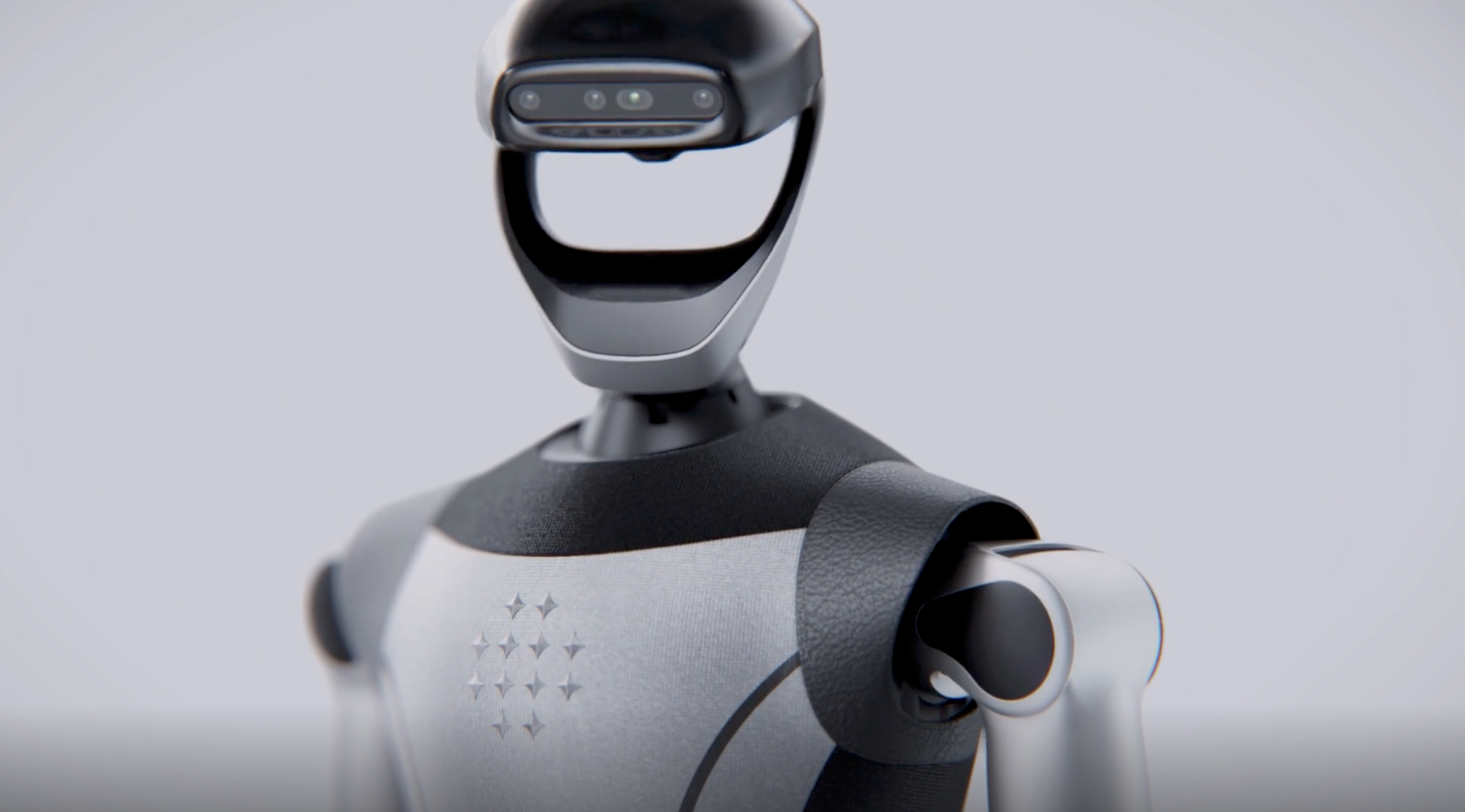
Robotera is the Beijing humanoid robotics company turning warehouse sorting into the first commercial test for embodied AI at scale. It raised more than $200 million after putting robots into logistics centers with China Post and SF Group. 🤖
Founders
Robotera, formally Beijing Robot Era Technology, was established in August 2023 and incubated by Tsinghua University's Institute for Interdisciplinary Information Sciences. Founder Chen Jianyu is a Tsinghua assistant professor and doctoral supervisor with robotics and AI research roots at UC Berkeley. The pitch is full-stack: hardware, control, manipulation and deployment feedback under one roof.
Product
Robotera builds humanoid robots and dexterous hands for logistics and industrial work. Its L7 humanoid pairs a full-body biped platform with the ERA-42 vision-language-action model; its XHAND1 dexterous hand targets high-precision manipulation. The company says it develops more than 95 percent of core components in-house and started thousand-unit deliveries in the second quarter of 2026.
Competition
China's humanoid field is crowded: Unitree, UBTech, AgiBot and other domestic players all want factory and logistics contracts. The global comparison set includes Figure, Apptronik, Tesla Optimus and Hyundai's Atlas team. Robotera's advantage is not a stage demo. It has logistics backers that can hand it real sorting floors.
Financing 💰
More than $200 million led by SF Group, with HSG, IDG Capital, Hillhouse Investment, CICC Capital, KENGIC, Dongfeng Asset Investment, ICBC Capital, China Unicom-affiliated funds and others participating. The round followed a RMB 1 billion strategic financing in March and exceeded the original target, according to Robotera's May 8, 2026 announcement. Source: PRNewswire, May 8, 2026.
Future ⭐⭐⭐⭐
Humanoids usually trade on promise. Robotera is closer to the uncomfortable question: can they sort parcels long enough to justify their cost? Logistics is repetitive, labor-heavy and measurable, which makes it a better proving ground than dancing on a conference stage. If deployments keep expanding, Robotera becomes one of the few humanoid companies with usage data instead of theater. 📦
🔥 Yeah, But...
A London-based startup called Recursive Superintelligence emerged from stealth Wednesday with $650 million at a $4.65 billion valuation, led by GV and Greycroft with AMD Ventures and Nvidia participating. Founders Richard Socher (formerly Salesforce) and Tim Rocktäschel (formerly Google DeepMind) say the system will "recursively improve itself" via "open-ended algorithms" and begin by automating AI research with "the capabilities of 50,000 doctors." Public launch targeted for mid-2026.
Source: Tech.eu, May 13, 2026
Our take: The company is called Recursive Superintelligence. It has not shipped a product. It has raised $650 million. The deck appears to deliver on all three premises at once. The founding thesis is that the path to artificial superintelligence runs through software that rewrites itself, and the only thing standing between Socher and that thesis was a check. Now there is a check. The first model, we are told, will arrive with the capabilities of 50,000 doctors and then autonomously identify its own weaknesses, which is a touching description of professional self-improvement that no actual doctor has ever managed. Nvidia and AMD both wrote checks, which means the firms selling the picks are financing the prospectors who promise to dig autonomously. The word "recursive" is doing acrobatic work on the slide deck. The London office is real. The valuation is committed. The product is forthcoming.

Marcus Schuler
Editor-in-Chief and founder of Implicator.ai. Former ARD correspondent and senior broadcast journalist with 10+ years covering tech. Writes daily briefings on policy and market developments. Based in San Francisco. E-mail: editor@implicator.ai