IMPLICATOR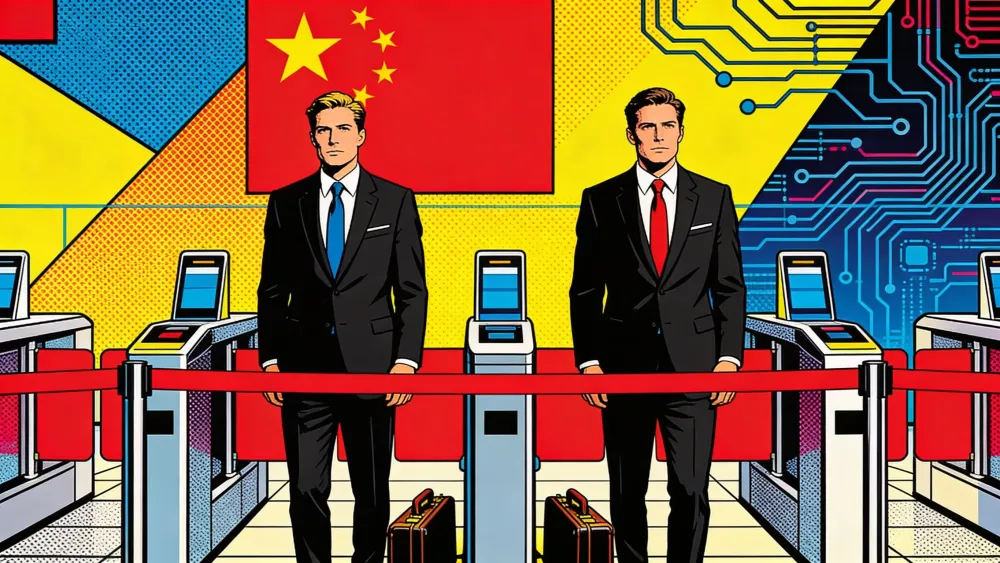
China has barred the two co-founders of AI startup Manus from leaving the country while regulators review whether Meta's $2 billion acquisition violates Beijing's investment rules, the Financial Times reported. CEO Xiao Hong and chief scientist Ji Yichao were summoned to a meeting in Beijing with the National Development and Reform Commission this month and questioned about potential foreign direct investment violations tied to the company's onshore Chinese entities. The exit bans mark the sharpest escalation yet in a regulatory battle over whether Chinese AI startups can shed their domestic obligations by relocating overseas.
Key Takeaways
- China barred Manus CEO Xiao Hong and chief scientist Ji Yichao from leaving the country after NDRC questioning on FDI violations
- Exit bans escalate Beijing's January review of Meta's $2 billion acquisition from administrative scrutiny to personal restriction
- Regulators examining whether AI intellectual property transferred to Singapore without required government approval
- A forced unwinding of the completed deal remains possible, though Meta has already begun integrating Manus technology
A meeting in Beijing
Xiao and Ji traveled to the Chinese capital for what became a regulatory interrogation. The NDRC, China's most powerful economic planning body, focused its questioning on how Manus restructured its ownership ahead of the Meta acquisition and whether the company met its reporting obligations under foreign direct investment rules.
Both executives are based in Singapore. After the meeting, they were told they could not leave China. Domestic travel remains permitted. International departure does not. No formal investigation. No charges. But no freedom to leave, either.
Manus sells AI agents that work without supervision. Hand one a research task or a coding job and it runs start to finish, no hand-holding required. Meta bought the company in December 2025. The product had already hit commercial traction faster than most competitors in the space.
Manus is now searching for law firms and consultancies to help resolve the situation, according to people familiar with the matter. Its legal exposure on FDI reporting violations alone would carry modest penalties under Chinese law. Regulators appear less interested in fines than in assembling a broader case for intervention in the deal itself.
The New York Times first reported on March 17 that Manus executives were likely restricted from leaving China, linking the increased scrutiny to the broader political climate around technology transfers. The FT's reporting confirmed the exit bans and identified the specific NDRC meeting that triggered them.
From administrative review to personal restriction
Beijing's scrutiny of the Manus deal surfaced publicly in January, when China's Ministry of Commerce announced it would assess whether the acquisition complied with Chinese laws on "export control, technology import and export, and overseas investment." At the time, the probe looked administrative. The kind of slow-moving bureaucratic process that might delay a deal without killing it.
Exit bans changed the math entirely. Restricting a founder's movement is an entirely different tool from reviewing corporate filings. It moves enforcement from paper to people, from administrative friction to personal restriction. And it signals that regulators found enough during questioning to justify escalation, even without filing formal charges.
The scope has widened in parallel. Investigators have started pulling at cross-border currency flows, tax records, overseas investments connected to the restructuring. Each one gives regulators another angle. What began as a technology-export question has become a multi-lane review of how Manus left China, who benefited, and whether anyone cut corners along the way.
This reflects a broader anxiety among Chinese officials, who have described companies like Manus as "selling young crops" to foreign buyers. The phrase captures Beijing's frustration at watching promising AI ventures exit the country, particularly to American acquirers. Manus had reached $100 million in annualized recurring revenue before the sale. That kind of commercial traction leaving the country stings.
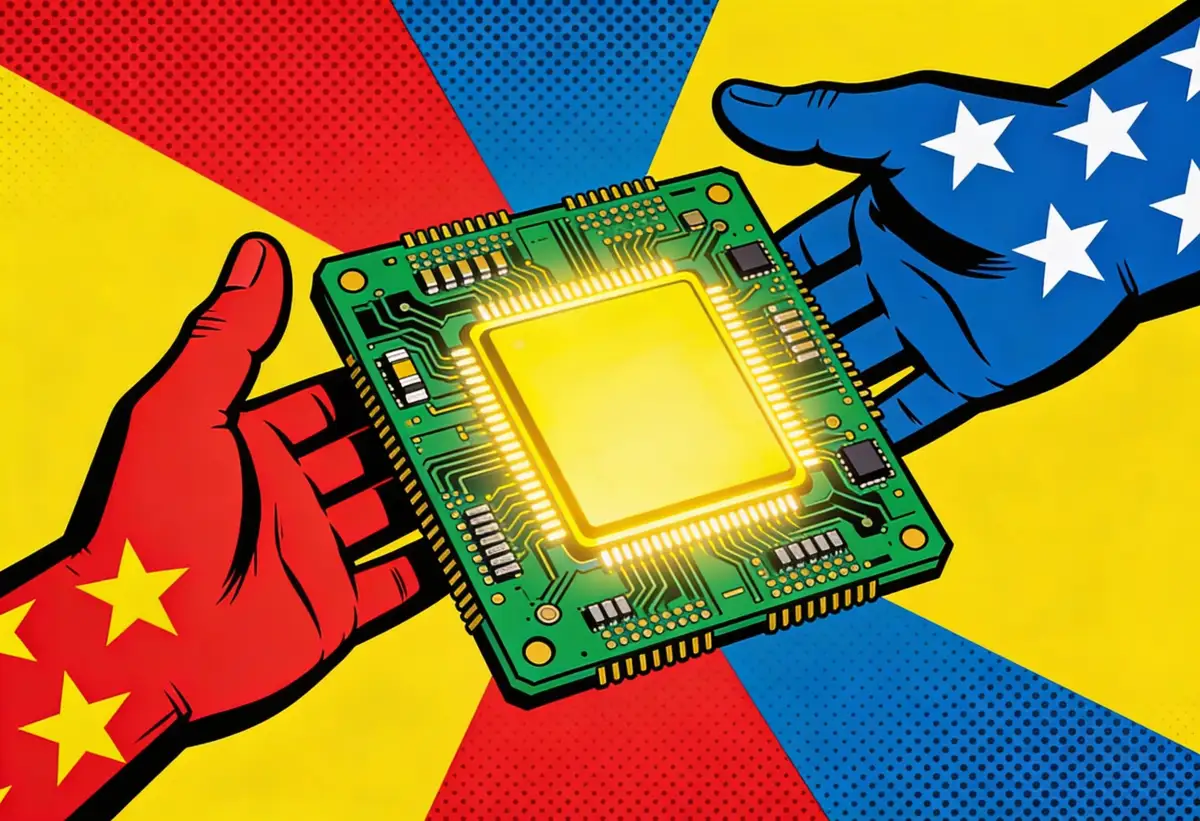
The timing makes it worse. Both governments have been fighting over AI for years. Washington tightened chip export controls. Beijing subsidized domestic alternatives and told companies to stop relying on American technology. Now a Chinese-origin AI company sits in American hands, and both capitals say the underlying technology falls under their rules.
The Singapore question
Xiao Hong started Manus in China in 2022, building the early product under a company called Beijing Butterfly Effect Technology. Early investors included HongShan, Tencent, and Zhen Fund, a roster that anchored the startup firmly in China's technology sector.
Then the pivot. A financing round led by Silicon Valley venture firm Benchmark Capital pushed Manus to relocate its headquarters and core team of roughly 100 people to Singapore. The move simultaneously drew inquiries from the US Treasury about rules restricting American investment in Chinese AI. And it drew suspicion from Beijing.
The corporate structure that resulted tells a story Chinese regulators do not accept at face value. Singapore-based Butterfly Effect Pte now operates Manus. But the original Chinese entity retains its onshore registration. So does its sister company, Beijing Red Butterfly Technology. So do subsidiaries in Wuhan. A company that left on paper. Its roots stayed planted.
Chinese regulators are examining whether core AI agent intellectual property was transferred to the Singapore entity without government approval. The regulation governing this area, the Regulations on Technology Import and Export Administration, mandates government sign-off for moving certain categories of domestically developed technology abroad. Advanced AI agents appear to qualify.
Get Implicator.ai in your inbox
Strategic AI news from San Francisco. No hype, no "AI will change everything" throat clearing. Just what moved, who won, and why it matters. Daily at 6am PST.
No spam. Unsubscribe anytime.
If you have followed Beijing's approach to TikTok, this dynamic looks familiar. Chinese officials view offshore relocation of domestically founded tech companies as regulatory evasion, not genuine corporate restructuring. They call it "Singapore-washing." And Manus is not alone. HeyGen relocated to Los Angeles. WIZ.AI moved to Singapore. Tabcut followed. Same playbook. Beijing wants to demonstrate that the playbook now carries consequences.
The mechanism being tested goes beyond one company. If Chinese authorities establish that technology developed onshore cannot be transferred through a corporate restructuring without explicit government approval, the entire pipeline of Chinese AI startups repositioning overseas faces retroactive risk. Companies that already relocated may find their moves challenged. Companies still planning to leave may decide against it.
The unwinding problem
Here is where it gets complicated. The deal is done. Meta completed the acquisition at the end of 2025. Chief AI officer Alexandr Wang described Manus's team as a boost to Meta's expanding AI ambitions in Singapore and touted the "amazing" products they would build together, the FT reported. The company has already begun integrating Manus's agent software into its platform.
Meta did not write a $2 billion check for a regulatory dispute. It paid for a product and the people who built it. Sources pegged the final valuation between $2 billion and $3 billion. Manus's AI agents handle tasks ranging from screening resumes to analyzing financial data to automating enterprise workflows, functionality already woven into Meta's product roadmap.
Pulling that apart would require separating integrated technology, transferring back intellectual property Meta has deployed in production, and deciding which members of Manus's 100-strong team stay where. One person close to the process called the prospect of unwinding "messy." An understatement. Chinese regulators have not committed to demanding a reversal. They have not ruled it out.
Meta's public posture remains carefully calibrated. "The transaction complied fully with applicable law," a spokesperson told Reuters. "We anticipate an appropriate resolution to the inquiry." The language is defensive, shaped for a legal environment where the company controls almost nothing about the timeline or outcome. The practical reality: a $2 billion bet could produce years of regulatory limbo instead of the rapid integration Zuckerberg envisioned when he announced the deal.
For Xiao and Ji, the situation is more physical than legal. Both are separated from Meta's offices and the engineering teams they would need to work alongside. You cannot run product integration across a regulatory wall. Sprint planning requires proximity. Technical handoffs require trust and physical presence. Neither is possible when the founders cannot board a plane. Enterprise customers who already showed discomfort during the January review are watching the exit bans and recalculating their own exposure to Manus technology.
What this signals
The Manus case will not stay contained to two founders and two companies. Chinese AI entrepreneurs weighing offshore relocations watched this story break. Venture capital firms evaluating "Singapore-first" structures for Chinese-origin startups are repricing the risk as of this week.
Beijing's message is blunt. Moving your legal address does not move you beyond our reach. Your technology started here. You started here. We get a say in where it goes. The tools to enforce that position, exit bans, multi-agency reviews, FDI reporting audits, are now deployed.
But the real test is resolution. A forced unwinding would freeze cross-border AI dealmaking for years, establishing that completed acquisitions can be reversed when Beijing decides the underlying technology matters enough. A negotiated settlement, some form of technology-sharing arrangement or ongoing oversight, would create a framework that future deals can price in. Painful, but workable.
For venture capital, the precedent introduces a variable that no term sheet can fully absorb. Benchmark's investment in Manus was supposed to connect Chinese AI innovation with American capital. If Beijing can reach back and ground the founders after the check clears, every fund evaluating similar bets faces a question about what "closed" actually means.
The immediate watchpoint is scope. The current exit bans target two people. Beijing has signaled it may extend restrictions to others connected to the acquisition. If that circle widens, the deal's commercial viability shrinks with it.
For now, two founders sit in China. Free to move anywhere inside the country but nowhere beyond its borders. The $2 billion exit that was supposed to launch their next chapter has instead become the reason they cannot leave. Their next meeting will not be at Meta headquarters. It will be with lawyers in Beijing.
Frequently Asked Questions
Why did China bar Manus co-founders from leaving?
The NDRC questioned CEO Xiao Hong and chief scientist Ji Yichao about potential foreign direct investment violations tied to how Manus restructured its Chinese entities before Meta's acquisition. They cannot leave China while the review continues, though no formal charges have been filed.
How much did Meta pay for Manus?
The Financial Times reported the acquisition at $2 billion. Other sources put the valuation between $2 billion and $3 billion. Manus had reached $100 million in annualized recurring revenue before the sale.
What is Singapore-washing?
Chinese officials use the term for tech companies founded in China that relocate to Singapore to escape domestic regulatory oversight. Manus moved its headquarters and core team after a Benchmark Capital financing round, but its original Chinese entities remain registered.
Could China unwind Meta's acquisition of Manus?
Possible but extremely complicated. Meta has already begun integrating Manus's AI agent software into its platform. One person close to the deal called the prospect 'messy.' Regulators have not committed to that outcome but have not ruled it out.
What does this mean for other Chinese AI startups?
The case tests Beijing's ability to assert jurisdiction over Chinese-origin technology even after companies relocate overseas. Other startups that followed similar relocation paths, including HeyGen and WIZ.AI, face increased scrutiny if the Manus enforcement holds.


Marcus Schuler
Editor-in-Chief and founder of Implicator.ai. Former ARD correspondent and senior broadcast journalist with 10+ years covering tech. Writes daily briefings on policy and market developments. Based in San Francisco. E-mail: editor@implicator.ai