IMPLICATOR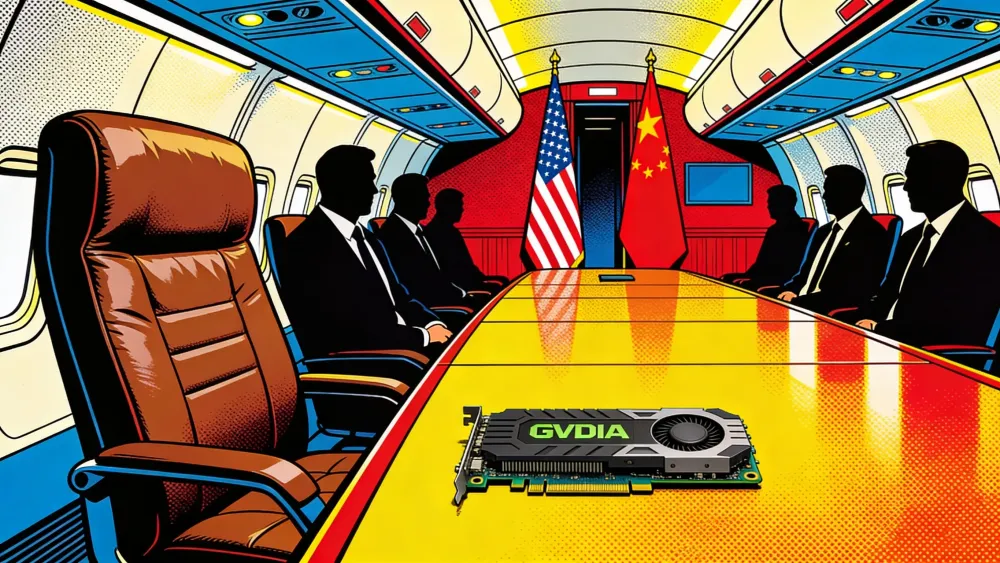
On Thursday evening, May 7, Jensen Huang told CNBC's Jim Cramer that the decision on the Beijing trip was the president's alone, but that if the invitation arrived, it would be "a privilege" and "a great honor" to represent the United States. Four days later, Bloomberg and Reuters had the delegation list for the May 14-15 Beijing summit, and more than a dozen executives were on it: Apple's Tim Cook, Tesla's Elon Musk, Boeing's Kelly Ortberg, Qualcomm's Cristiano Amon, Micron's Sanjay Mehrotra. Huang was not.
The absence sets the summit's agenda. Trump is bringing executives whose companies can sign visible commercial deals with Xi Jinping: airplanes, agriculture, energy and an extension of the October rare-earth truce. AI chip diplomacy is not on the manifest. Huang had called China a $50 billion opportunity, and CNBC reported the market once supplied at least a fifth of Nvidia's data-center revenue. By April 22, Commerce Secretary Howard Lutnick was telling senators that Beijing had allowed zero H200 shipments.
Key Takeaways
- Trump's May 14-15 Beijing delegation includes Cook, Musk, Ortberg, Amon and Mehrotra; Nvidia's Jensen Huang was not invited.
- Lutnick told senators April 22 that zero H200 chips have shipped to China despite Commerce Department licenses.
- The AI Overwatch Act advanced from HFAC January 21, with industry analysts reading it as a statutory two-year lock on Blackwell.
- Stanford's 2026 AI Index says the US-China model performance gap has 'effectively closed.'
AI-generated summary, reviewed by an editor. More on our AI guidelines.
Proximity stopped being policy
Huang had spent the previous year trying to make himself hard to exclude. Per Huang's own March interview with Time, summarized by Bloomberg, the Nvidia chief and Trump had been on the phone regularly since early 2025, often late at night, and Huang had been to China multiple times in the last 18 months, per CNBC. The photo record matches: on April 30, 2025, he stood in the Cross Hall of the White House for an "Investing in America" event, and in September at an event in London, the president pointed him out of the crowd and joked, "You're taking over the world, Jensen."
The small detail is the text message. Last month, during King Charles III's stay in Washington, Bloomberg reported, a senior White House official personally texted Huang an invitation to the state dinner. That is not a policy concession, but it explains why Huang could plausibly treat the Beijing trip as the next rung. The invitation never came.
Reuters reported a different guest list and a different agenda. The White House was taking Cook, Musk, Ortberg, GE Aerospace's Larry Culp, BlackRock's Larry Fink, Blackstone's Stephen Schwarzman, Mastercard's Michael Miebach, Visa's Ryan McInerney and others tied to sectors with deliverables. Huang's courtship produced proximity, not passage.
The H200 toll has no traffic
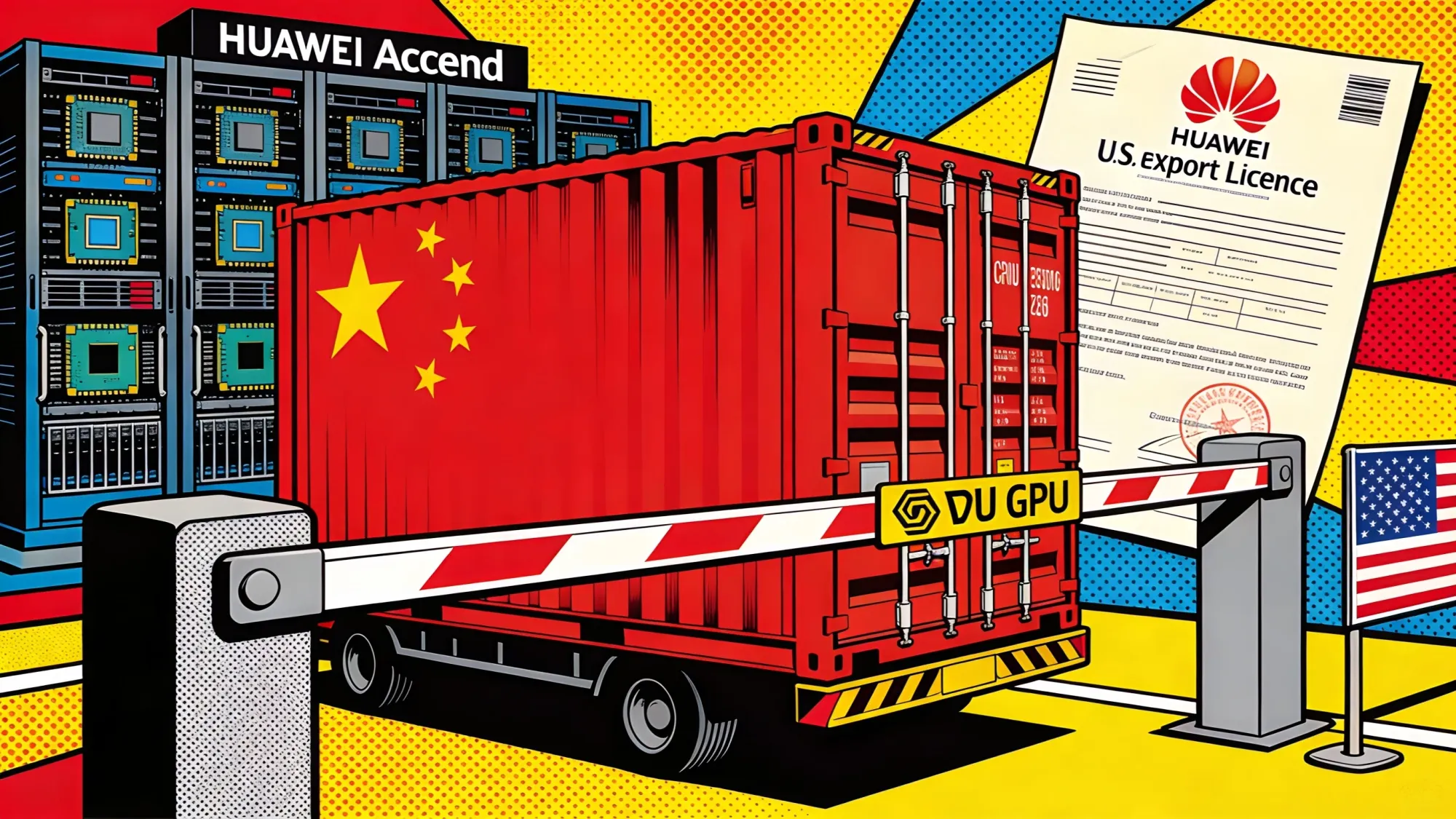
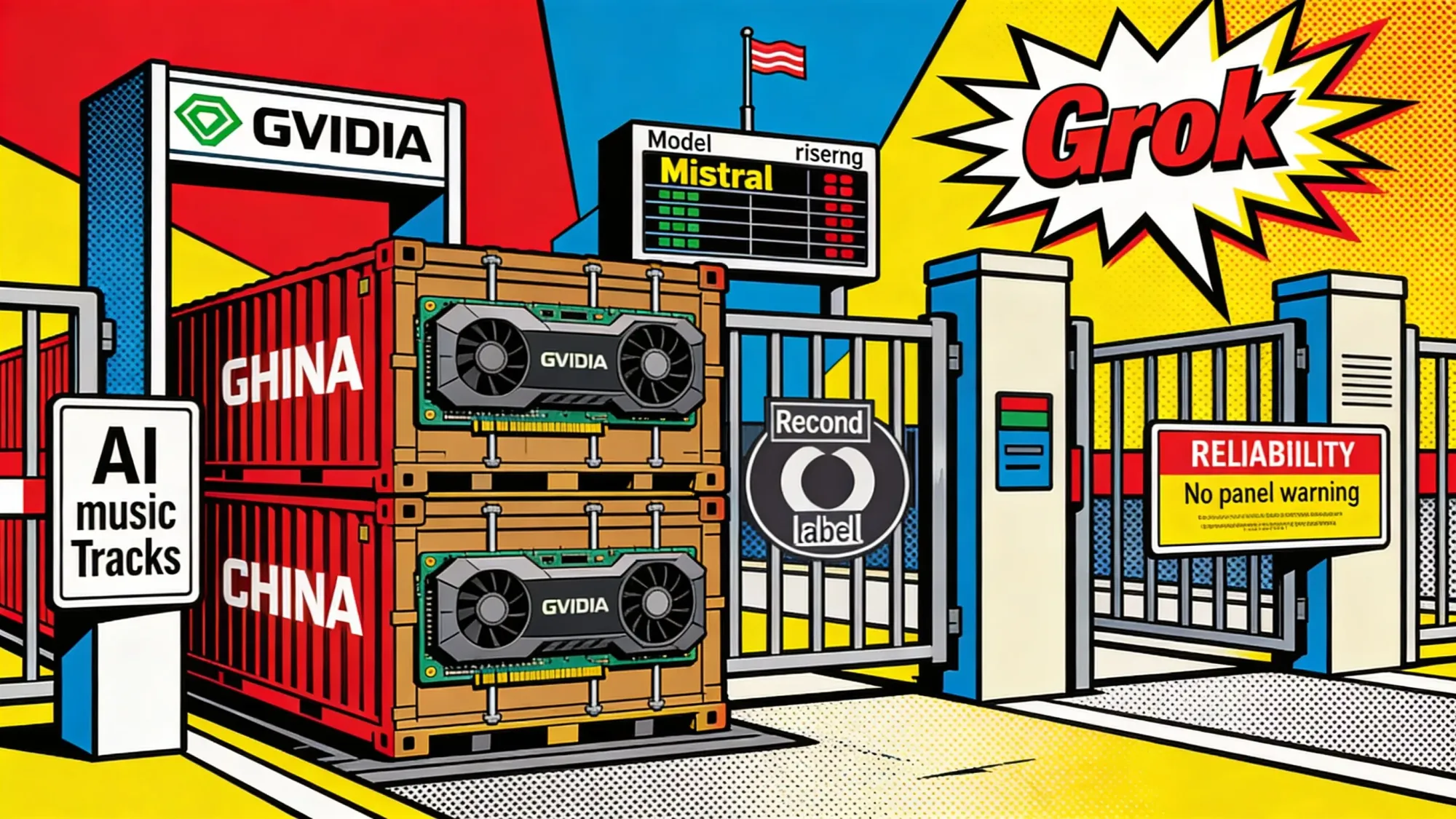
The bargain looked sellable in December. Trump allowed H200 shipments to China, Bloomberg reported, and Nvidia killed a chip-export provision in must-pass defense legislation the same month. The structure paired revenue for Nvidia with revenue for Washington, since the US government would collect 25% on any H200 sale to China.
Huang told reporters on March 17 that the Commerce Department had licensed "many customers" in China and that approvals from both governments were in hand.
On April 22, Lutnick told the Senate Appropriations Subcommittee on Commerce, Justice, Science, and Related Agencies, "We have not sold them any chips as of yet." He said Beijing had not let Chinese companies buy the chips because it wanted investment focused on domestic suppliers. CNBC reported on May 1 that Senator Chris Coons followed with a letter asking Lutnick for the license count, the planned license volume and any communications that contradicted Huang's March account.
Tom's Hardware summarized the same testimony as licenses issued and zero shipments cleared by Beijing. Industry analysts said Nvidia was booking H200 production capacity it could not fulfill into the Chinese market. The toll bought nothing. DeepSeek and Huawei get time. Nvidia gets inventory risk and a fee structure with no fee.
Congress is closing the workaround
The H200 deadlock changed the audience for Huang's lobbying. On January 21, 2026, the House Foreign Affairs Committee advanced H.R. 6875, the AI Overwatch Act. The companion Remote Access Security Act passed the full House 369-22, putting the same anti-China-chip posture on cloud GPU access and physical exports.
Get Implicator.ai in your inbox
Strategic AI news from San Francisco. No hype, no "AI will change everything" throat clearing. Just what moved, who won, and why it matters. Daily at 6am PST.
No spam. Unsubscribe anytime.
The bill creates a covered-integrated-circuit licensing, certification and temporary-denial framework that industry analysts and committee staff have described as a statutory two-year lock on Blackwell-class systems, including the Nvidia B200, GB200 and GB300. The House Foreign Affairs Committee said it would codify national-security requirements from Commerce's H200 rule and give Congress oversight of covered-chip license applications. Lawfare described the broader licensing regime as a trade "bargaining chip" that Congress was trying to take back from the Executive Branch.
The timing matters because it turns Huang's absence from etiquette into institutional alignment. On January 15, BIS rule 2026-00789 shifted H200 review to case-by-case treatment; six days later the committee advanced a bill to keep Blackwell out of that same discretionary channel. Huang could lobby the White House for an exception when the fight was inside Commerce. The next fight is over whether Commerce should have the exception to sell.
AI arrives as risk, not deal
Reuters reported that the United States and China were expected to agree to forums for mutual trade and investment, while China was expected to announce purchases tied to Boeing airplanes, American agriculture and energy. Boeing's talks could include 500 737 MAX jets plus dozens of widebody aircraft, Reuters reported, which would be China's first major Boeing order since 2017.
Ryan Fedasiuk of the American Enterprise Institute gave Bloomberg the chip version of that agenda. "There just isn't much for American chip companies to talk about with the Chinese government." Hao Hong of Lotus Asset Management told CNBC there would be "very little" for Nvidia to gain from Huang joining the delegation because advanced Nvidia chips were unlikely to win US approval for sale to China.
The New York Times reported that a Chinese think-tank representative approached Anthropic officials on the sidelines of a Carnegie Endowment for International Peace meeting in Singapore last month and asked for access to Mythos, its cyber-focused AI model. Anthropic had made Mythos available in April to the US government and more than 40 organizations because it can find unknown software vulnerabilities. Anthropic refused the Chinese request.
Senior US officials told reporters they were willing to explore "channels of deconfliction."
Anthropic refused the Singapore request.
Some US government and industry officials told the New York Times that OpenAI's ChatGPT 5.5 and Anthropic's Mythos may have stretched the American lead from roughly six months to nine months or a year; other officials cautioned that China has caught up quickly before. Stanford researchers wrote in the AI Index that "the U.S.-China AI model performance gap has effectively closed." CNBC's Evelyn Cheng added the street-level contrast from Hangzhou, where a robotic voice warned at an intersection that a scooter rider lacked a helmet even though she saw the rider wearing one. Chinese cities are testing AI control in traffic. Washington is deciding which models and chips never become traffic.
Trump can still take executives who sell airplanes, payment rails, phones and electric cars. He can still seek agriculture, energy and rare-earth concessions from Xi. The AI chip lane has a 25% toll, zero shipments and a Congress trying to remove the gate from the president's hands. Huang asked to "represent the United States." This week, his empty seat represents the policy.
Frequently Asked Questions
Why was Nvidia CEO Jensen Huang left off Trump's China delegation?
The White House focused the trip on commercial deliverables — Boeing aircraft, agriculture, energy, and an extension of the October rare-earth truce — rather than AI chips. Huang has spent 14 months building proximity to Trump, but Commerce Secretary Howard Lutnick's April 22 Senate testimony confirmed zero H200 chips have shipped to China despite licensing.
What is the AI Overwatch Act?
H.R. 6875, advanced by the House Foreign Affairs Committee on January 21, 2026. It creates a covered-integrated-circuit licensing framework that industry analysts describe as a statutory two-year lock on Blackwell-class systems (B200, GB200, GB300), and gives Congress oversight of H200 license applications.
Why hasn't Nvidia shipped any H200 chips to China?
Commerce licensed the H200 for export in December, but Beijing has not permitted Chinese tech firms to buy them. Lutnick told senators the Chinese government wants investment focused on domestic suppliers like Huawei and DeepSeek. The 25% US fee structure on H200 sales currently generates zero revenue.
Which executives are going to China with Trump?
Apple's Tim Cook, Tesla's Elon Musk, Boeing's Kelly Ortberg, Qualcomm's Cristiano Amon, Micron's Sanjay Mehrotra, GE Aerospace's Larry Culp, BlackRock's Larry Fink, Blackstone's Stephen Schwarzman, Meta's Dina Powell McCormick, Mastercard's Michael Miebach, Visa's Ryan McInerney, plus executives from Cargill, Coherent and Illumina.
What is at stake for AI cooperation at the summit?
Senior US officials told reporters they were willing to explore 'channels of deconfliction' on AI risks. Anthropic's Mythos model, which finds unknown software vulnerabilities, was kept from Chinese labs after a Singapore approach last month. Stanford researchers wrote the US-China model performance gap has 'effectively closed.'
AI-generated summary, reviewed by an editor. More on our AI guidelines.

Marcus Schuler
Editor-in-Chief and founder of Implicator.ai. Former ARD correspondent and senior broadcast journalist with 10+ years covering tech. Writes daily briefings on policy and market developments. Based in San Francisco. E-mail: editor@implicator.ai