IMPLICATOR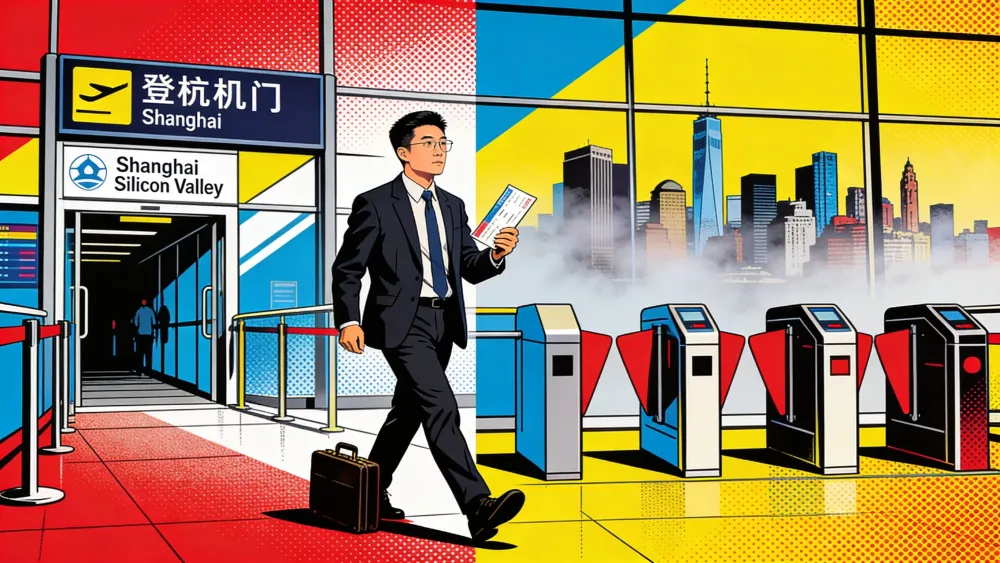
Shorts and flip-flops, in a Shenzhen conference room, in November. Not exactly the dress code at Tencent. But Yao Shunyu was 27, had arrived on a plane out of San Francisco a few weeks earlier with an OpenAI email address still in his signature, and apparently decided he'd earned the wardrobe. His first job in the building, reportedly, was to sit across from Martin Lau, the Tencent president, and explain why Hunyuan, the company's flagship large language model, was essentially lying to its own scorecard.
Not exactly a fraud. Yao was more specific. Benchmarks, contaminated. Test data, bleeding into the training set. The team, optimizing for the scoreboard instead of the game. Stop chasing leaderboards. Rebuild the evaluation layer from the floor up.
Two years ago, Tencent couldn't have recruited him. Two years ago, nobody at Tencent was picking up. Now the kid in flip-flops was the one handing down the verdict, at an employer that had just written him a package worth a reported 100 million yuan. Call it $14 million at the current rate, give or take a tariff scare.
You know the English-language version of what happened next. Top Chinese researchers are leaving Silicon Valley. Wu Yonghui walked out of a senior role at Google DeepMind to run ByteDance's Seed lab. Three AI headhunters told the Financial Times they'd moved more than thirty US-based researchers back across the Pacific in twelve months, up from a single-digit count the year before. At least 85 established scientists joined Chinese research institutions from the US during 2025. Lizzi Lee of the Asia Society Policy Institute calls the trend a "slow acceleration," which is a polite way of describing planes leaving SFO with empty middle seats.
A real story. Just not the whole one, and not even the important one.
Key Takeaways
- Three AI headhunters relocated more than 30 US-based researchers to China in the past twelve months, up from a single-digit count a year earlier.
- Tsinghua engineering graduates applying to US PhD programs have dropped from roughly 50 percent before Covid to about 20 percent today.
- Tencent is reportedly doubling salaries inside China to poach ByteDance's Seed researchers, matching Meta's 2024 US talent-war playbook.
- Alibaba's Qwen, ByteDance's Seedance 2.0, Tencent's Hunyuan, and Kuaishou's Kling have all shifted closed-source as talent density rises.
AI-generated summary, reviewed by an editor. More on our AI guidelines.
The 50 percent number
The Financial Times quotes one figure that most readers will skim past. About 20 percent of Tsinghua University's engineering graduates still apply for PhDs in the US. Before Covid, it was 50 percent.
That sentence is a closure event.
Tsinghua is the factory floor. Its engineering graduates trained the diaspora that went on to build most of what people think of as "American" AI: Google Brain, Meta AI, OpenAI, DeepMind, and the rest of the frontier-lab roster in the Bay Area. That pipeline flowed one direction for two decades. Entire careers on both sides of the Pacific were built around it, and the assumption that it would keep flowing was so routine nobody bothered to write it down. Now it's running at something under half capacity, and the drop happened inside one political cycle. Returnees hog the press. Wu Yonghui gets an English headline. Yao Shunyu gets a Bloomberg profile. Those thirty relocated researchers? Individuals, important ones, interesting on their own. But they're thirty. The other number is thousands.
The Tsinghua number is structural. It is the first measurable sign that China's next AI generation will not apprentice in California at all. And once that pipeline narrows, it is very hard to widen again. Seventy-two percent of Alibaba, Huawei and Tencent researchers publishing at elite AI conferences trained in North America, by one count. The current wave of Chinese AI firms is the product of that pipeline's last full decade. The next wave will not be.
The infrastructure pivot
Here is what Wu Yonghui was actually hired to do.
"ByteDance's current infrastructure is already stronger than any domestic company," a person close to ByteDance senior management told RecodeChinaAI. "But compared globally, the biggest problem is the lack of people like those at OpenAI who can propose directions and conduct frontier exploration." Then the sentence Silicon Valley should read twice: "China hasn't had real corporate research institutes in the past because private enterprises were too poor. Now we can finally try."
That is not a returnee story. It is a balance-sheet story.
For twenty years, Chinese tech firms could recruit engineers and product managers, but the scientists who ran open-ended, multi-year frontier research programs stayed at Google Brain or OpenAI. The pay was different. The culture was different. The infrastructure around a single researcher was something only Mountain View could afford: compute budgets, tolerance for failed directions, a decade of runway with no obligation to ship.
Not anymore. Tencent's reorganized AI Lab operates on a "researcher-centered" model with no hard assessment indicators, according to an employee who spoke to RecodeChinaAI. Individual scientists lead teams on multi-year AGI and ASI questions. Research does not need to be bound to Hunyuan or any Tencent product. That is a direct organizational copy of the DeepMind template, pasted into Shenzhen with a Chinese salary scale and a Chinese calendar. Wu Yonghui's first move at ByteDance Seed was telling his team to explore "longer-cycle, uncertain, and bold topics." You can recognize the accent. It is the same language Demis Hassabis used at DeepMind a decade ago, when the Valley still had a monopoly on it.
Get Implicator.ai in your inbox
Strategic AI news from San Francisco. No hype, no "AI will change everything" throat clearing. Just what moved, who won, and why it matters. Daily at 6am PST.
No spam. Unsubscribe anytime.
The second sign the balance sheet has flipped is domestic. Tencent isn't only hunting ex-OpenAI staff. It's also raiding ByteDance, reportedly doubling salaries to pry engineers off ByteDance's Seed research team, per The Information. Several core Seed engineers have already defected. Eighteen months back, Tencent's AI recruiting was defensive, even a little apologetic, the kind of operation that loses interviews to better-funded rivals. What you see now? Something closer to Meta's 2024 playbook, reshot on location in Shenzhen with a yuan denomination. Different currency, same blunt instrument. Jiang Jie, Tencent's vice president in charge of the Hunyuan LLM, reportedly gave his people a directive in late 2024: catch Doubao inside six months. Tencent has been running on that clock ever since, and the clock sets the hiring budget. Here's what that means: once a Chinese employer can double salaries inside its own domestic market just to pull scientists off a domestic competitor, the Bay Area isn't the ceiling anymore. It's a reference price. And even the reference price is slipping.
The closed-source turn
You can also read the shift in what China's labs stopped releasing.
A year ago, the story was DeepSeek. Open weights, open papers, a reasoning model that wiped roughly a trillion dollars off US tech valuations in a single January 2025 selloff and forced every American lab to discount its own mystique. Chinese AI, the Western narrative went, had chosen to compete on transparency. It was a generous read. It was also temporary.
In the past two months, Alibaba's Qwen3.6-Plus and Qwen3.5-Omni have launched as closed hosted offerings on Alibaba Cloud. Z.ai's GLM-5-Turbo is closed. ByteDance's Seedance 2.0 video model is proprietary. So is Kuaishou's Kling 3.0. Tencent's flagship Hunyuan models are delivered closed-source through Tencent Cloud's API. ChinaTalk calls the shift deliberate, and the timing is not an accident.
You open-source when you cannot charge for frontier work. You close when you can. Wu Yonghui's arrival and the Qwen paywall are the same story, told from two sides: the Chinese labs now believe they have enough talent density to treat their frontier models as commercial assets, not goodwill exhibits for the global research community. Open source was a bridge. The bridge is coming up.
The push is still a push
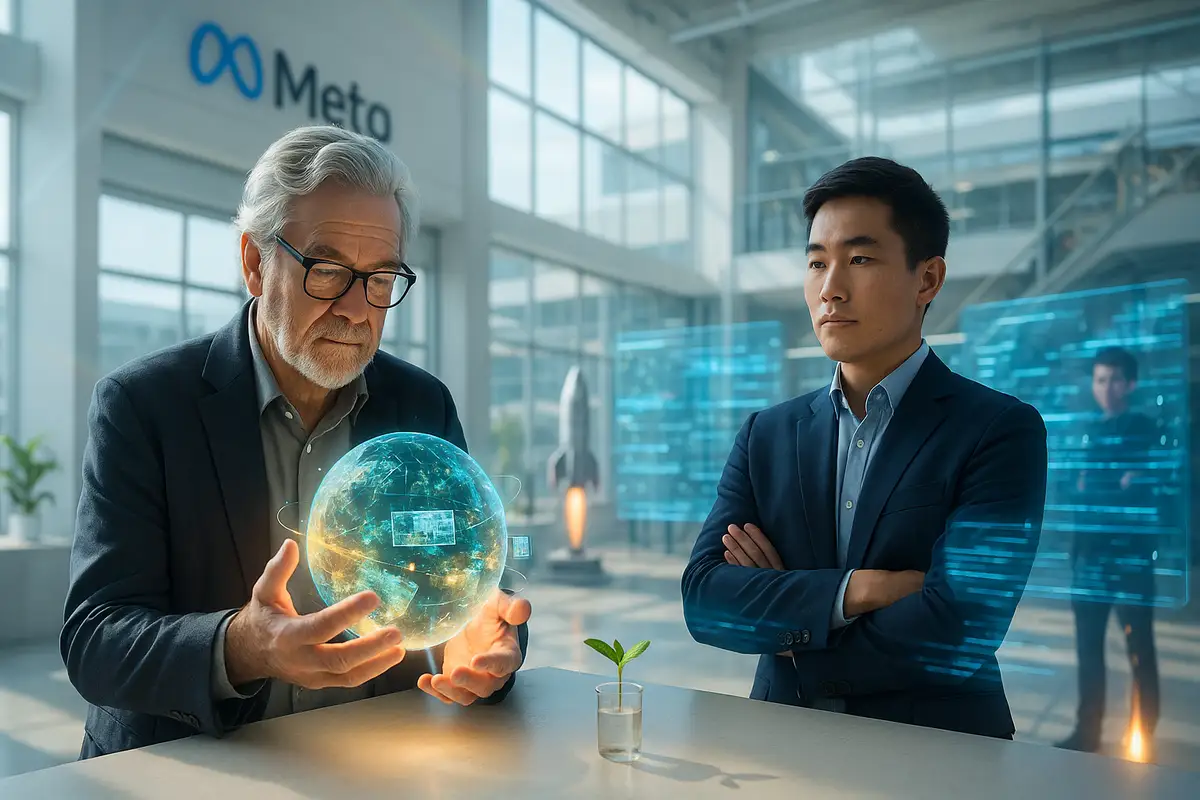
None of this means Silicon Valley has lost its grip on every researcher. The magnetic pull runs both ways. Meta recently poached a set of Alibaba AI engineers as part of the same superintelligence spending spree that has pulled OpenAI, Apple, and DeepMind researchers into Menlo Park on eight-figure packages. Some of them will stay. Some will burn out on Meta's compensation structure, as a visible group already has.
Beijing is exposed by the two-way flow in ways that would have been unimaginable three years ago. In March, Chinese authorities began urging top AI scientists to skip international conferences, partly in response to Meta's acquisition of Manus, a Chinese-founded AI agent startup that Beijing had treated as a strategic asset. The restriction is a tell. A government that believed it had won the talent war would not be quietly policing airport departures.
But the asymmetry is the point. The Chinese state is tightening its exits while the United States is tightening its entrances. One of these is a short-term reflex from a cornered bureaucracy. The other is a multi-year visa regime, with rising H-1B fees, a climate of suspicion that outlived the formal end of the China Initiative in 2022, and federal research-funding cuts that have made American universities a less appealing pipeline even for Americans. One Modern Diplomacy survey cited by Chinese-origin researchers reported that more than 70 percent felt academically insecure while working in the US. Channel News Asia's Lizzi Lee framed it more diplomatically: visa restrictions, rising H-1B costs, and funding cuts "have made the environment less welcoming." Either way, the push is still a push. Silicon Valley is just not the one doing the pulling anymore.
What it means for the next cycle
Three things follow from this, and none of them are what you read in the launch-day coverage.
One. The capital advantage holds. Lu Zhang of Fusion Fund is not wrong about the Bay Area. You still cannot replicate its early-stage ecosystem, its exit market, its concentration of willing-to-fail risk capital. For the next two years, American startups will still be where a new model architecture gets turned into a twelve-billion-dollar valuation in eighteen months. That is an edge. It is also a shrinking one.
Two. The frontier-research advantage is closing faster than the venture advantage. Corporate research institutes are not funded by Sequoia. They are funded by the cash flows of profitable platforms: Doubao's 100 million daily active users, WeChat's 1.4 billion, Alibaba Cloud's enterprise book. Those cash flows exist now. They did not exist when the last generation of Chinese engineers left for Stanford. The returnee story is really a story about who can finally afford to buy back the time their scientists need to think.
Three. The pipeline is the leading indicator, not the returnees. Watch what share of Tsinghua's 2026 engineering class actually files applications to US PhD programs this fall. Hold the 20 percent and Silicon Valley gets roughly a decade to adjust. Drop to fifteen and the closure hardens, and the next Wu Yonghui won't need a return ticket at all, because the one-way ticket out was never booked in the first place.
Returnees are the part of this story that travels well. Symbolic, legible, slide-deck friendly. Yao Shunyu in flip-flops? Great scene. I don't blame anyone for writing it. But scenes aren't trends, and this trend lives outside the frame altogether. Think of the Tuesday-morning SFO flight with empty middle seats. The Tsinghua senior who looks at Nanjing and shrugs and says, yeah, that works. The graduate student whose advisor, for the first time in either of their careers, doesn't insist she get a US PhD first. That's the Valley hemorrhage nobody's written up yet. By the time someone does, the admissions cycles it describes will already be two years gone.
Frequently Asked Questions
Who are Wu Yonghui and Yao Shunyu?
Wu Yonghui is a former vice president of research at Google DeepMind who left in early 2025 to run ByteDance's Seed AI lab. Yao Shunyu is a 27-year-old former OpenAI researcher, best known for proposing the ReAct paradigm, who joined Tencent in late 2025 reporting directly to president Martin Lau for a package reportedly worth 100 million yuan.
How large is the reverse brain drain from Silicon Valley to China?
Three AI headhunters told the Financial Times they relocated more than 30 US-based researchers to China over the past twelve months, up from a low single-digit count a year earlier. Separately, Modern Diplomacy reports at least 85 established scientists joined Chinese research institutions from the US since the start of 2025.
Why does the Tsinghua University statistic matter?
About 20 percent of Tsinghua's engineering graduates now apply for PhD programs in the US, down from roughly 50 percent before Covid. Tsinghua historically supplied the researcher pipeline that staffed major US AI labs. A shrinking pipeline means fewer future recruits entering the US ecosystem in the first place, which is a structural shift rather than a one-year headline.
Why are Chinese AI labs going closed-source?
After DeepSeek's open-weights moment in early 2025, most Chinese frontier labs have shifted toward proprietary releases. Alibaba's Qwen3.6-Plus, Z.ai's GLM-5-Turbo, ByteDance's Seedance 2.0, Kuaishou's Kling 3.0, and Tencent's Hunyuan are all closed. The simple read: you open-source when you cannot yet charge for frontier work, and you close when you can.
Is Silicon Valley still winning the talent war?
Silicon Valley still holds the capital, the exit market, and the risk-tolerant venture ecosystem. Meta continues to pull Alibaba engineers west on eight-figure packages. But US visa restrictions, H-1B fee increases, and research funding cuts have made American labs a less attractive pipeline for Chinese-origin researchers, and the frontier-research advantage is closing faster than the venture advantage.
AI-generated summary, reviewed by an editor. More on our AI guidelines.

Marcus Schuler
Editor-in-Chief and founder of Implicator.ai. Former ARD correspondent and senior broadcast journalist with 10+ years covering tech. Writes daily briefings on policy and market developments. Based in San Francisco. E-mail: editor@implicator.ai