 IMPLICATOR

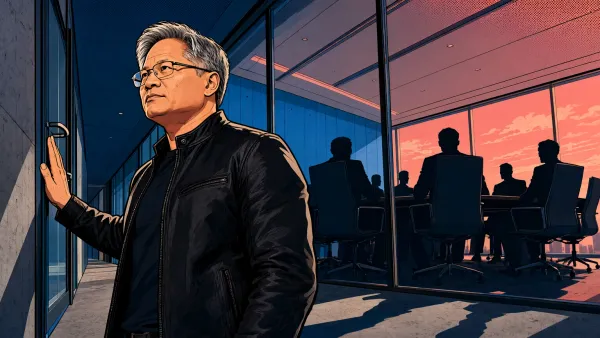
Jensen Huang’s letter to Nvidia employees on Nov. 8 included an apology to his family and the people who worked for him. “I was unfaithful to my wife,” he wrote. “There is no excuse for what I did.” Nvidia’s board opened an independent investigation, saying it had no reason to believe national security or company secrets had been compromised.
U.S. intelligence had concluded that Alice Huang, an executive linked to Nvidia customer Megaspeed and unrelated to Jensen Huang, was recruited by China’s Ministry of State Security, according to reporting based on anonymous officials, first published by The New York Times.
Jensen Huang’s case involves the kind of intelligence targeting the FBI has described publicly for more than a decade; the research behind this piece found no earlier public case of this kind involving the sitting chief executive of a leading U.S. technology company. Its warnings have followed Chinese collection efforts through Bay Area political offices and industrial companies into the businesses building artificial intelligence.
The Breakdown
- Nvidia chief Jensen Huang admitted an affair on Nov. 8. U.S. intelligence reportedly concluded the woman, Alice Huang, was recruited by China's Ministry of State Security. She has not been charged, and Beijing calls the allegation a smear.
- The FBI has warned in public for more than a decade. In July 2020 its director said the bureau was opening a new China-related counterintelligence case about every 10 hours.
- Five people familiar with the FBI said in October 2026 that counterintelligence squads in many of its 56 field offices had only 50 to 60 percent of positions filled. The bureau calls that account false.
- The court record is narrower than the warnings. A judge threw out the economic espionage counts against former Google engineer Linwei Ding, and the Justice Department is appealing.
AI-generated summary, reviewed by an editor. More on our AI guidelines.
A decade of warnings
In July 2015, the FBI said the economic espionage cases it had handled over the preceding year had risen 53 percent from the previous year. China was the biggest offender.
By 2018, a former intelligence official said spies “are very much part of the everyday environment” in the Bay Area. Another former intelligence official estimated that, at one point, a fifth of the FBI’s active counterintelligence cases involving intellectual property had originated in the Bay Area. Their accounts described recruitment through business relationships and pressure on employees with relatives in China.
Christopher Wray, then the FBI’s director, supplied a national count in a public speech on July 7, 2020. “We’ve now reached the point where the FBI is opening a new China-related counterintelligence case about every 10 hours,” he said. Almost half the bureau’s nearly 5,000 active counterintelligence cases nationwide concerned China.
In October 2023, intelligence chiefs from the United States, Britain, Canada, Australia and New Zealand met privately with 15 senior Silicon Valley executives and Stanford University. Wray said the bureau had “somewhere in the order of 2,000 active investigations that are just related to the Chinese government’s effort to steal information.”
Washington built enforcement programs alongside those warnings. The Justice and Commerce departments launched the Disruptive Technology Strike Force in February 2023, including San Jose among its original regions. The allied services issued security guidance for startups and investors.
A joint bulletin on June 3, 2026 described Chinese military intelligence recruiting through professional networking and job sites. In late October, a U.S. counterintelligence bulletin told business leaders to “conduct thorough vetting” when dealing with foreign entities.
How the collection works
Mark Trott, a former FBI special agent now working as a program manager at Concentric Advisors, describes approaches that start in familiar professional settings. Intelligence officers “tend towards something less risky at first, like a social media message or hitting you up on some sort of platform at a conference,” he said.
A court-tested example came from the aviation industry. Yanjun Xu joined the Ministry of State Security in 2003 and became a deputy division director. Beginning at least in December 2013, he targeted aviation companies, inviting employees to China to give university presentations. Travel expenses and stipends made the invitations easier to accept.
Silicon Valley's biggest spy cases
- 2000s: A staffer in Sen. Dianne Feinstein’s San Francisco office allegedly reported to the Ministry of State Security about local politics. The staffer was fired after the FBI alerted Feinstein and was never charged.
- 2011-2015: Christine Fang allegedly cultivated Bay Area politicians through fundraising and personal relationships for Chinese intelligence. She left the United States during an FBI investigation and was never charged; Eric Swalwell received a defensive briefing and has not been accused of wrongdoing.
- 2014: Walter Liew was convicted of stealing DuPont’s titanium dioxide production secrets and selling them to Chinese state-owned companies. He received a 15-year prison sentence.
- 2015-2020: Hao Zhang was charged over stolen Avago and Skyworks radio-frequency filter technology and convicted of economic espionage benefiting Chinese state institutions, including Tianjin University. He was sentenced to 18 months in prison in 2020.
- 2018-2024: Prosecutors charged Fujian Jinhua and Taiwan’s UMC over Micron memory-chip secrets. UMC pleaded guilty to trade secret theft; Fujian Jinhua was acquitted in 2024.
- 2022: Former Apple engineer Xiaolang Zhang pleaded guilty to stealing trade secrets from the company’s car project and later received 120 days in prison. The public record did not establish Chinese government direction.
- 2024-2026: Former Google engineer Linwei Ding was charged and convicted over stolen AI supercomputing secrets. A judge acquitted him of economic espionage while leaving the theft convictions intact; he received about 12 months in prison, and the government is appealing.
- October 2026: OpenAI engineer Abdulrahman Alfozan, a Saudi national, was charged after a hidden recorder was discovered in an executive conference room. He has pleaded not guilty; this is not a China case.
- November 2026: Jensen Huang acknowledged infidelity after reports that Alice Huang had been recruited by Chinese intelligence. Nvidia opened an independent investigation, its board reportedly prepared to remove him, and Alice Huang remained uncharged.
While visitors went to dinner, intelligence personnel copied computers in hotel rooms. A GE Aviation employee in Cincinnati accepted an invitation in 2017. After that trip, the FBI took over communications with Xu, posing as the employee. Xu was arrested in Belgium and became the first Chinese intelligence officer extradited to the United States for trial. A Cincinnati court sentenced him to 20 years in November 2022.
Walter Liew, an Oakland consulting-company president who lived in Walnut Creek, assembled former DuPont employees to obtain the company’s titanium dioxide production secrets. The material is a white pigment used in products including paint and paper.
Liew signed contracts worth nearly $28 million with state-owned Pangang Group companies for projects using the stolen process. A jury convicted him on all 20 counts in March 2014. He received a 15-year prison sentence that July.
Political access followed another route. Christine Fang enrolled at California State University East Bay in 2011 and became a student association president. U.S. officials later described her as a suspected Chinese operative who used fundraising and personal relationships to approach rising politicians through 2015. She was never charged.
Rep. Eric Swalwell received a defensive briefing around 2015 and cut ties with Fang. Such a briefing tells a potential target that someone approaching them may be working for a foreign intelligence service. Swalwell has not been accused of wrongdoing.
FREE WEEKDAY MORNING BRIEFING
Follow the spy cases shaking the AI industry.
The Implicator Morning Briefing filters the AI news cycle to the stories worth your attention and explains their consequences. From San Francisco, every weekday at 4:45 a.m. Pacific, 7:45 a.m. Eastern.
About five minutes. No hype. No spam.
AI labs and chip companies
Chris McGuire, a former White House technology official now at the Council on Foreign Relations, identifies where intelligence services would seek access. “If you want insight into what’s happening in the most sensitive U.S. technology areas, you don’t go infiltrate the Department of Commerce. You infiltrate Nvidia and OpenAI.”
The potential value extends beyond engineering files. William Evanina, the former director of the National Counterintelligence and Security Center, said access to an executive’s private conversations with world leaders “is going to be humongous for China.” Holden Triplett, a former National Security Council counterintelligence director, said: “It’s all the small details she was likely able to collect about partners, suppliers, how sanctions work in practice, and potential workarounds.” Those are assessments of potential exposure. Public evidence has not established such collection in the current affair.
At Google, the theft itself has been proved. Linwei Ding, a software engineer aged 38 when convicted in January 2026, secretly associated with Chinese technology businesses while working for Google and founded an AI company there. He told prospective investors he could copy and modify Google’s technology to build an AI supercomputer.
The stolen information covered Google’s custom chips and the software that makes large groups of processors work together. The files described how Google’s supercomputing data centers train and run large AI models. While still employed there, Ding was discussing a chief technology officer’s job at a Chinese startup before setting up his own company.
OpenAI’s security training reportedly already warns employees about sexual approaches, bribes and people listening to conversations in cafes. Google and Anthropic staff have reportedly received similar warnings. Anthropic’s published ASL-3 security standard explicitly excludes nation-state attackers and sophisticated or state-compromised insiders from its scope.
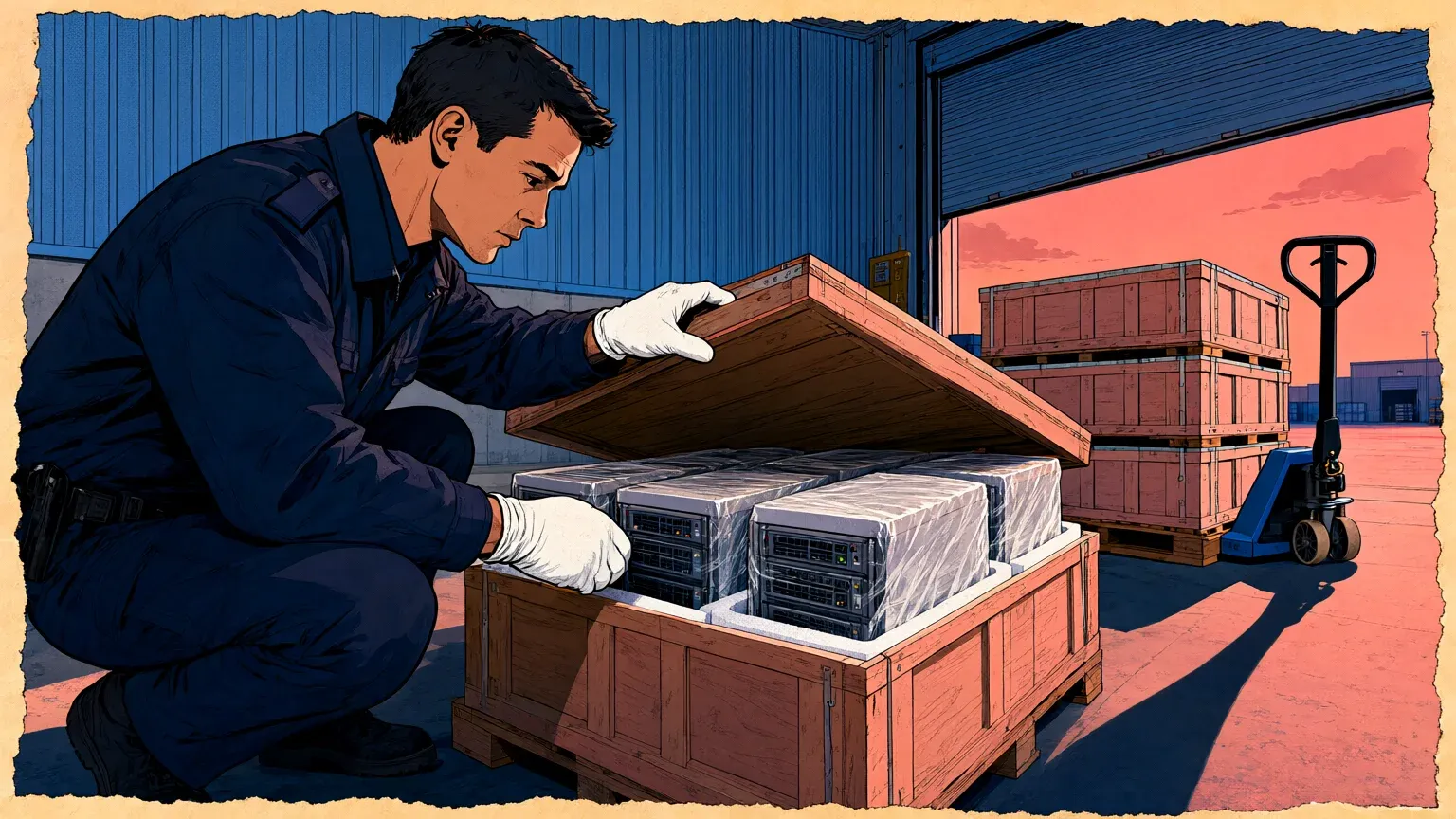
Hardware has its own enforcement record. In October 2025, Alan Hao Hsu and his Houston company pleaded guilty in Operation Gatekeeper over exports and attempted exports of at least $160 million in restricted Nvidia processors between October 2024 and May 2025. In March 2026, Supermicro co-founder Yih-Shyan Liaw and others were charged over an alleged diversion of $2.5 billion in Nvidia-equipped servers to China. Export violations alone do not establish an intelligence operation.
The bureau and the companies
Counterintelligence squads identify foreign intelligence networks, track their approaches to people with sensitive access and try to stop information reaching adversaries.
By October 6, five people familiar with the FBI’s operations described staffing shortages across many of its 56 field offices. Counterintelligence squads had only 50 to 60 percent of positions filled in many offices, they said. In multiple offices, the number of squads had been halved. Field-office chiefs were moving personnel toward violent crime and immigration work without replacing them.
“It’s terrifying, honestly,” one person said. “Threats are growing and we’re facing it with less and less.”
The FBI had lost more than 1,500 special agents since President Trump returned to office in January 2025, two people familiar with the matter said. Overall, the bureau was down more than 650 agents from January 2025 levels.
The FBI disputes that account. “This is false, the FBI maintains a robust counterintelligence operation across the enterprise,” a spokesperson said. The bureau said its counterintelligence task forces had expanded to more than 1,500 personnel, including partner agencies and state and local officers, a different measure from the special agents who had left.
Companies describe uneven assistance. An unnamed technology executive familiar with U.S. counterintelligence strategies said officials respond collaboratively when approached, but the executive had not seen proactive outreach. The executive said “corporations are pretty much left to fend for themselves, and even the more mature ones are still hard at work to keep pace.”
Military investigators provide some help. Agents and analysts from the Air Force Office of Special Investigations have briefed executives and security teams at commercial AI and quantum firms, including companies that are not cleared to handle classified information; the office does not vet personnel for companies’ insider-threat programs. A current U.S. official said firings of FBI counterintelligence personnel this year had reduced the government’s ability to track technology espionage. The FBI declined to answer questions about that posture.
The warning process itself is disputed in Huang’s case. Federal agents reportedly told some lawmakers roughly a year ago that they suspected he was the target of a foreign intelligence effort. Two former senior FBI intelligence officials questioned the decision not to give him a defensive briefing. Alice Huang has not been charged; public sources do not establish what, if anything, she passed to Beijing. China’s Foreign Ministry calls the allegation unsubstantiated and a smear. Megaspeed says U.S. authorities found no evidence of violations. By Wednesday, Nvidia’s board was reportedly preparing to remove its chief executive, though no decision had been announced.
As of Wednesday, no public announcement of new vetting or insider-threat measures since Huang’s admission had been found from OpenAI, Anthropic, Google, Meta or Nvidia. Three days is a short window. Absence of an announcement does not establish absence of action.
What the court record proves
Ding’s case shows why the legal categories matter. The San Francisco jury convicted him in January on seven economic espionage counts and seven trade secret theft counts. The FBI called it the first conviction on AI-related economic espionage charges.
Know someone who'd find this useful? ✉️ Email it to a friend in one click, or they can subscribe free here.
Judge Vince Chhabria subsequently acquitted him of the espionage counts, finding insufficient evidence that he intended or knew his conduct would benefit the Chinese government. The trade secret convictions stood. Ding received a prison term of about 12 months.
Economic espionage under Section 1831 requires proof that the defendant intended or knew the theft would benefit a foreign government or its agents. Trade secret theft under Section 1832 does not require that government beneficiary. Evidence that an engineer stole for a Chinese startup can support a theft conviction without proving the intended government benefit.
The Micron prosecution produced a similar distinction. Taiwan’s UMC pleaded guilty to trade secret theft. Fujian Jinhua, the Chinese state-owned company indicted in 2018 over Micron’s memory-chip technology, was acquitted in 2024.
The Justice Department’s China Initiative also expanded into academics’ disclosures of foreign affiliations. A December 2021 accounting identified 148 people charged under the program, of whom 130, or 88 percent, were of Chinese heritage. Only 40 had pleaded or been found guilty at that point, often on lesser charges. Many cases remained pending.
Anming Hu, a University of Tennessee nanotechnology professor accused of fraud involving NASA funding, was acquitted after a mistrial. Andrew Lelling, the former Massachusetts U.S. attorney and a founding member of the initiative’s steering committee, said in 2021: “There’s no need to prosecute another 23 academics.” The program ended in February 2022.
The damage from failed cases outlasted the charges. Sherry Chen, a National Weather Service hydrologist, had all charges dropped in 2015 but lost her job. Her November 2022 settlement provided $550,000 from the Commerce Department and an annuity valued at $1.25 million over ten years.
The Justice Department is appealing the dismissal of Ding’s economic espionage counts.
Frequently Asked Questions
What has Jensen Huang admitted, and what is only reported?
Huang told Nvidia employees on Nov. 8 that he was unfaithful to his wife, and the board opened an independent investigation. The claim that Alice Huang was recruited by China's Ministry of State Security comes from reporting based on anonymous officials. She has not been charged, and public sources do not establish what, if anything, she passed to Beijing.
How long has the FBI warned about Chinese espionage in Silicon Valley?
For more than a decade. In July 2015 the FBI said economic espionage cases had risen 53 percent in a year, with China the biggest offender. In July 2020, then-Director Christopher Wray said almost half of nearly 5,000 active counterintelligence cases concerned China. In October 2023, allied intelligence chiefs met privately with 15 senior Silicon Valley executives.
Is the FBI short of counterintelligence staff?
Five people familiar with the bureau said in October 2026 that counterintelligence squads in many of its 56 field offices had only 50 to 60 percent of positions filled, and that some offices had halved the number of squads. The FBI calls the account false and says its counterintelligence task forces now exceed 1,500 personnel.
What is the difference between economic espionage and trade secret theft?
Economic espionage, under Section 1831, requires proof that the defendant intended or knew the theft would benefit a foreign government or its agents. Trade secret theft, under Section 1832, does not. That distinction decided the Linwei Ding case: the theft convictions stood, and the judge acquitted him of the espionage counts.
Have AI companies changed their security since the Huang affair?
As of Nov. 11, no public announcement of new vetting or insider-threat measures since Huang's admission had been found from OpenAI, Anthropic, Google, Meta or Nvidia. Three days is a short window, and the absence of an announcement does not establish the absence of action.
AI-generated summary, reviewed by an editor. More on our AI guidelines.


Free AI briefing · Weekdays
The AI stories that matter, sourced and explained.
Join the Morning Briefing. It goes out every weekday at 4:45 a.m. Pacific, with later sends for the East Coast, Berlin and Tokyo.
Free when you sign up: The Paperclip Compendium, our tested guide to running AI agents.
Free. Unsubscribe in one click.
Marcus Schuler
Editor-in-Chief and founder of Implicator.ai. Former ARD correspondent and senior broadcast journalist with 10+ years covering tech. Writes daily briefings on policy and market developments. Based in San Francisco. E-mail: editor@implicator.ai