IMPLICATOR
San Francisco | Wednesday, July 1, 2026
Washington blinked. Eighteen days after ordering Anthropic's two most capable models offline over a jailbreak, the Commerce Department withdrew the controls, and Fable 5 returns today. Anthropic shipped a classifier it says blocks the flagged technique over 99 percent of the time, and sent co-founder Tom Brown, not Dario Amodei, to close the deal.
The precedent is what lingers. Frontier launches now clear an informal government checkpoint, and agencies have until August to make that review a written rule. OpenAI already held GPT-5.6 back to approved partners.
Microsoft readies more job cuts even as its AI and cloud bill clears $100 billion. Google hands 750 million people a Gemini tool that paints their portrait from their Gmail and Photos.
Stay curious,
Marcus Schuler
Commerce Withdraws Export Controls on Anthropic's Fable 5 and Mythos 5
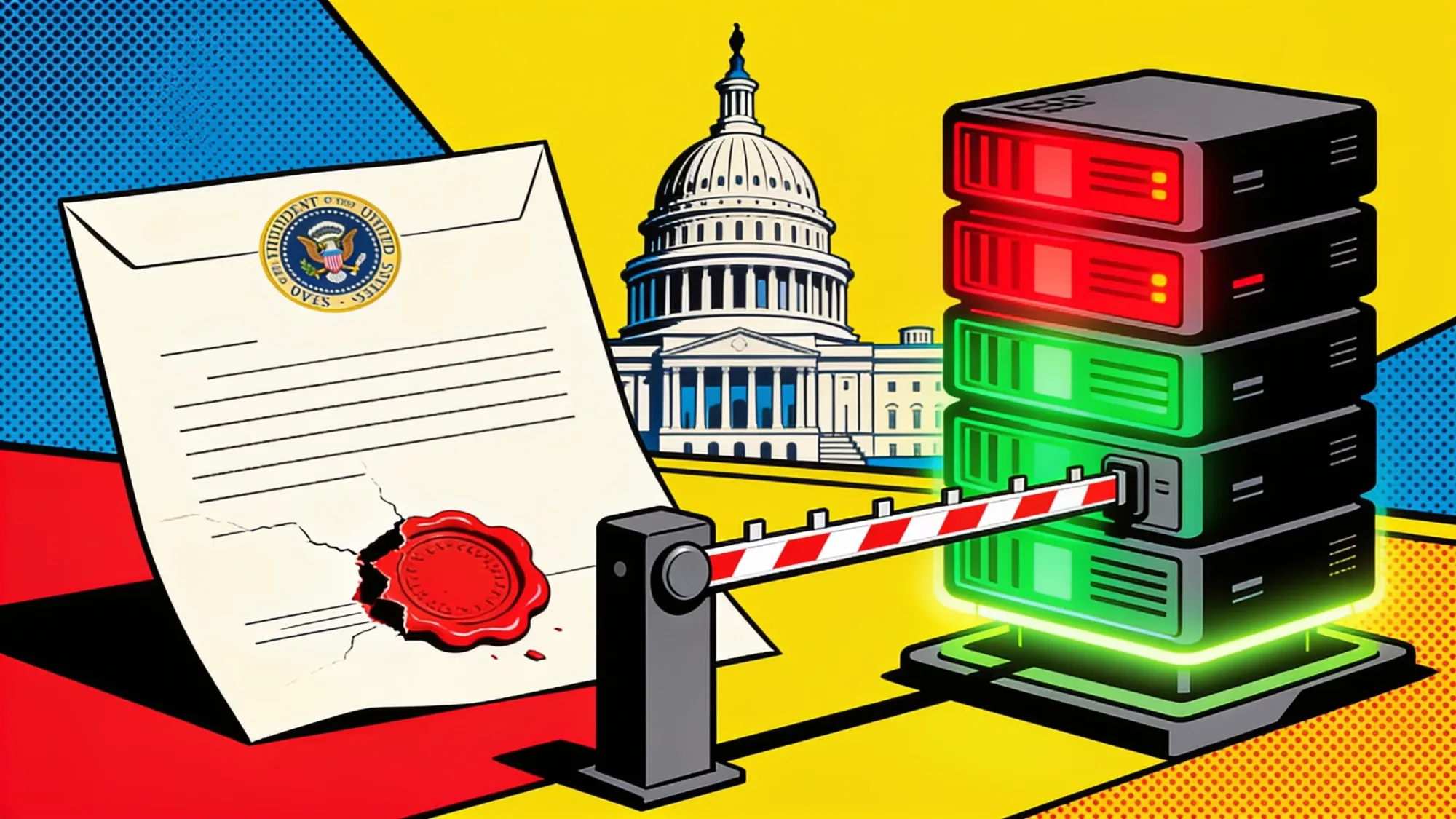
The Commerce Department withdrew its June 12 export controls on Anthropic's Fable 5 and Mythos 5, ending an 18-day worldwide suspension. Fable 5 returns today, and a license is no longer required to export either model.
Commerce Secretary Howard Lutnick told co-founder Tom Brown, not CEO Dario Amodei, that the controls were lifted after regulators reassessed the diversion risk. Anthropic says a new classifier blocks the flagged jailbreak in more than 99 percent of cases, tested by the government's AI standards center.
The company agreed to report security risks and coordinate on future releases, and it clears the obstacle weeks after filing a confidential S-1.
Why This Matters:
- The episode sets an ad hoc precedent: frontier launches now pass an informal federal checkpoint, and an August deadline will decide whether that hardens into policy.
- OpenAI already held GPT-5.6 to approved partners, a sign the review is spreading past a single company.
Reality Check
What's confirmed: Commerce withdrew the June 12 controls on June 30; Anthropic restores Fable 5 today and says a new classifier blocks the flagged technique in over 99 percent of cases, tested by the government's AI standards center.
What's implied (not proven): That a technical fix, rather than political pressure, drove the reversal.
What could go wrong: The stricter guardrail may over-block benign prompts, and neither side has detailed what else changed.
What to watch next: The August deadline for federal agencies to set model-security review standards.

The One Number
50% - the cost at which OpenRouter says its Fusion panel matched frontier deep-research performance on Perplexity's DRACO benchmark. The cheaper stack matters because it turns model choice from brand loyalty into procurement math. Frontier quality is starting to look configurable, not fixed.
Source: OpenRouter, June 11, 2026
💰 Fresh Funding
💰 Fresh Funding
Reveals $500M: Etched adds $1B of AI chip orders
TechCrunch reported Tuesday that Etched disclosed $800 million in total funding, including a previously unannounced $500 million round led by Stripes at a $5 billion post-money valuation, alongside $1 billion in contract orders for its Sohu inference systems. The Cupertino startup is selling transformer-specific AI chip clusters, a direct bet that inference workloads can move off general-purpose Nvidia GPUs when speed, power and cost become the bottleneck.
Visit Etched →Raises $64M: Straiker locks down enterprise AI agents
TechStartups reported Monday that Straiker raised a $64 million Series A led by Marathon Management Partners, Citi Ventures, Illuminate Financial and Workday Ventures, bringing total funding to $85 million. The company discovers, tests and monitors enterprise AI agents so prompt injection, tool misuse and silent data exfiltration are treated as runtime security problems rather than model-evaluation footnotes.
Visit Straiker →Raises $30M: 1001 builds sovereign AI for GCC infrastructure
Wamda reported Monday that 1001 raised a $30 million Series A led by Lux Capital, with Sanabil Investments, Hanabi, 9Yards, General Catalyst, CIV and Chris Ré also participating. The GCC-and-London startup builds sovereign AI operating systems for aviation, ports, energy and industrial operators that need local ownership over models making high-stakes physical-infrastructure decisions.
Visit 1001 →Microsoft Plans to Cut Thousands of Jobs While AI Spending Tops $100 Billion

Microsoft plans to cut thousands of jobs as soon as next week across sales, consulting and Xbox, less than 2.5 percent of its workforce, Business Insider reported. The layoffs land as its AI and cloud bill tops $100 billion.
The round is smaller than last year's 15,000-plus, softened by a first-ever buyout that about a third of 9,000 eligible U.S. staff took. Xbox carries the deepest strain, with a June 10 "reset" memo citing $20 billion spent over five years and a margin near 3 percent. The Communications Workers of America wants bargaining, arguing "the money is there." Microsoft shares sit near a 52-week low, down 19 percent on the month.

AI Image of the Day

Prompt: Two full body fashion models side by side, high fashion editorial, fully visible head to toe, bright direct summer sunlight, polished campaign photography. Left: striking brunette, dark glossy hair, cobalt blue t shirt tucked into crisp white short shorts, red knee socks, pale blue tabi shoes, one foot on a classic black and white football, strong grounded posture, calm confident victorious expression, looking straight at camera. Right: sweet young blonde, soft supportive expression, white headscarf tied under chin, white and pale blue small gingham vichy spaghetti strap dress, white lace apron tied at waist, red knee socks, glossy red Mary Jane shoes, holding small woven wicker basket, stance gentle and slightly turned toward brunette. No mixed clothing, no duplicated accessories, realistic hands, elegant proportions, editorial precision, subtle cinematic texture, harmonious blue, white and red color palette.
Google Makes Gemini's Personalized Image Generation Free for U.S. Users
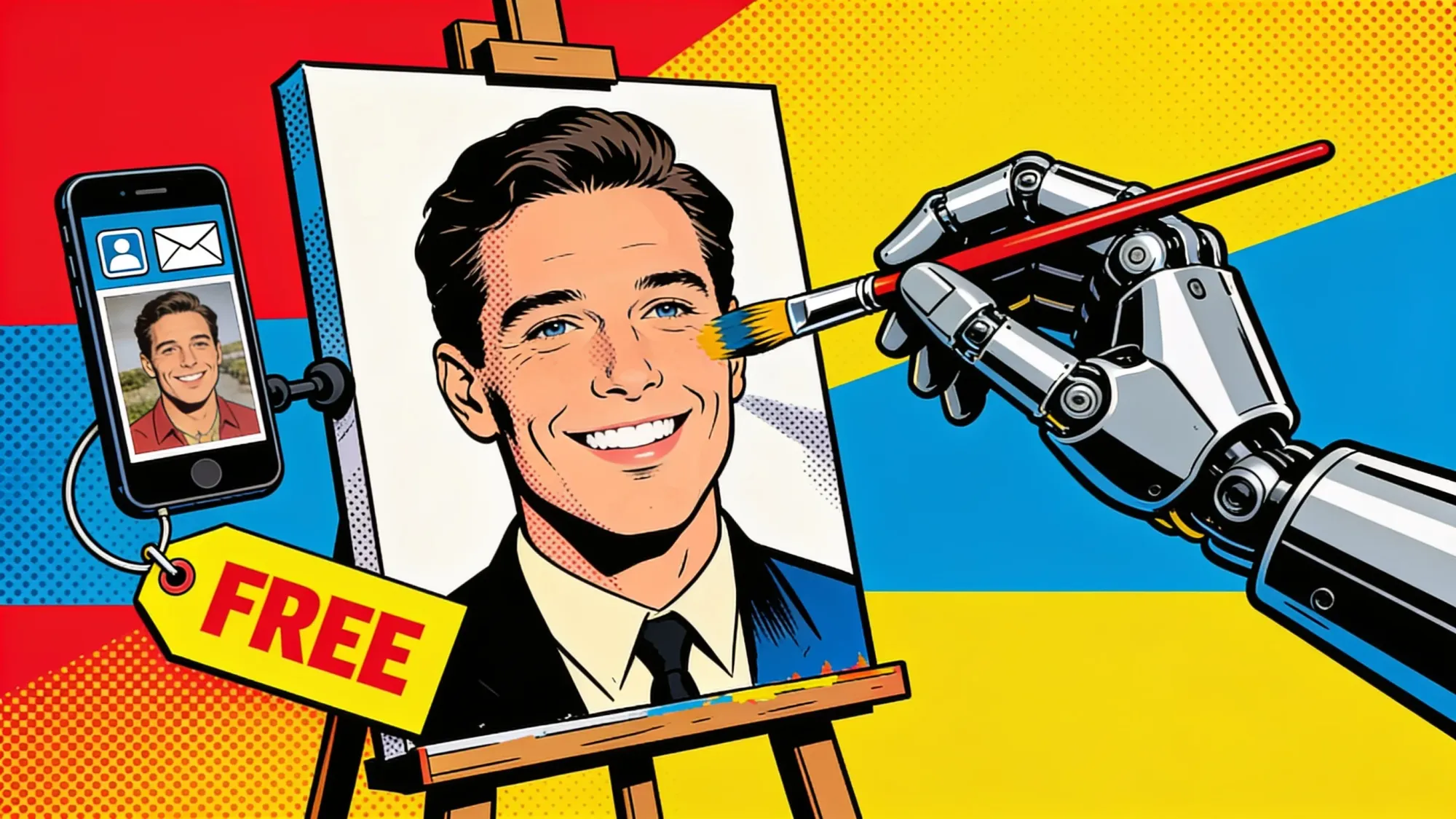
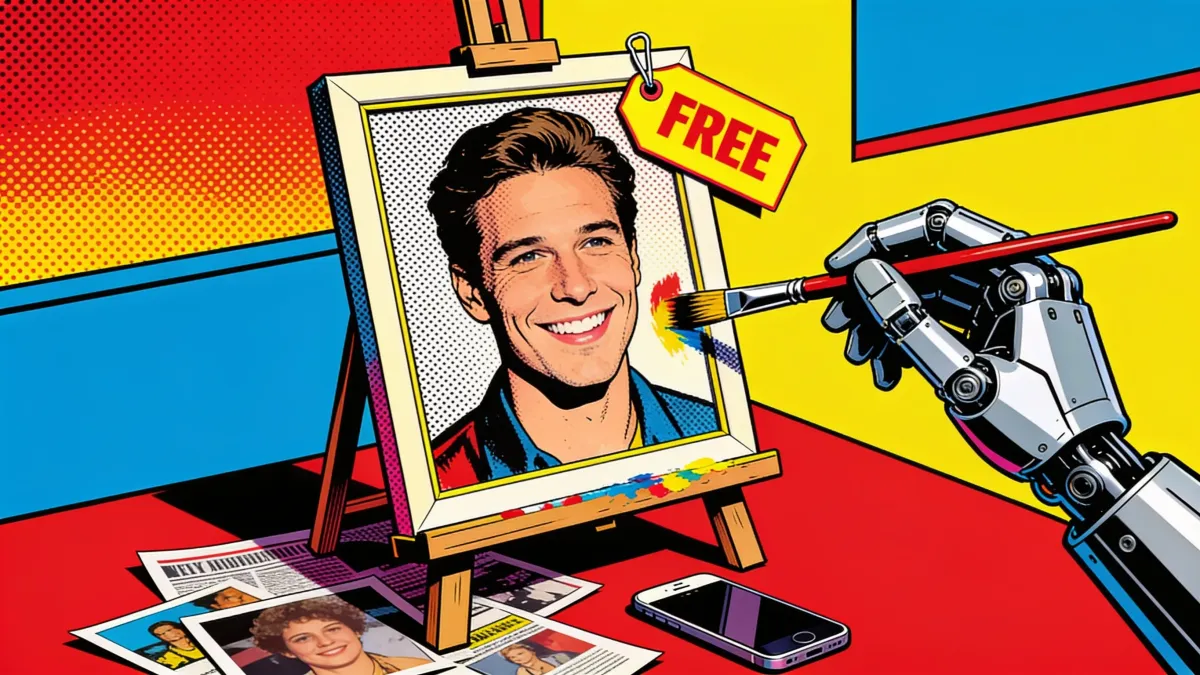
Google made Gemini's personalized image generator free for U.S. users on Monday, ending a paid-only run. It builds pictures from what Gemini knows about you, and can pull your real face from Google Photos.
Powered by the Nano Banana model, the tool reads across connected accounts, Gmail, Photos, YouTube and Search, so a prompt like "create an illustration of me and my favorite things" fills itself in. Personal Intelligence is opt-in, but once enabled it runs by default, with a Tools-menu toggle to switch it off per request. Google has put that reach in front of 750 million monthly users, with no word on free access outside the U.S.
🧰 AI Toolbox
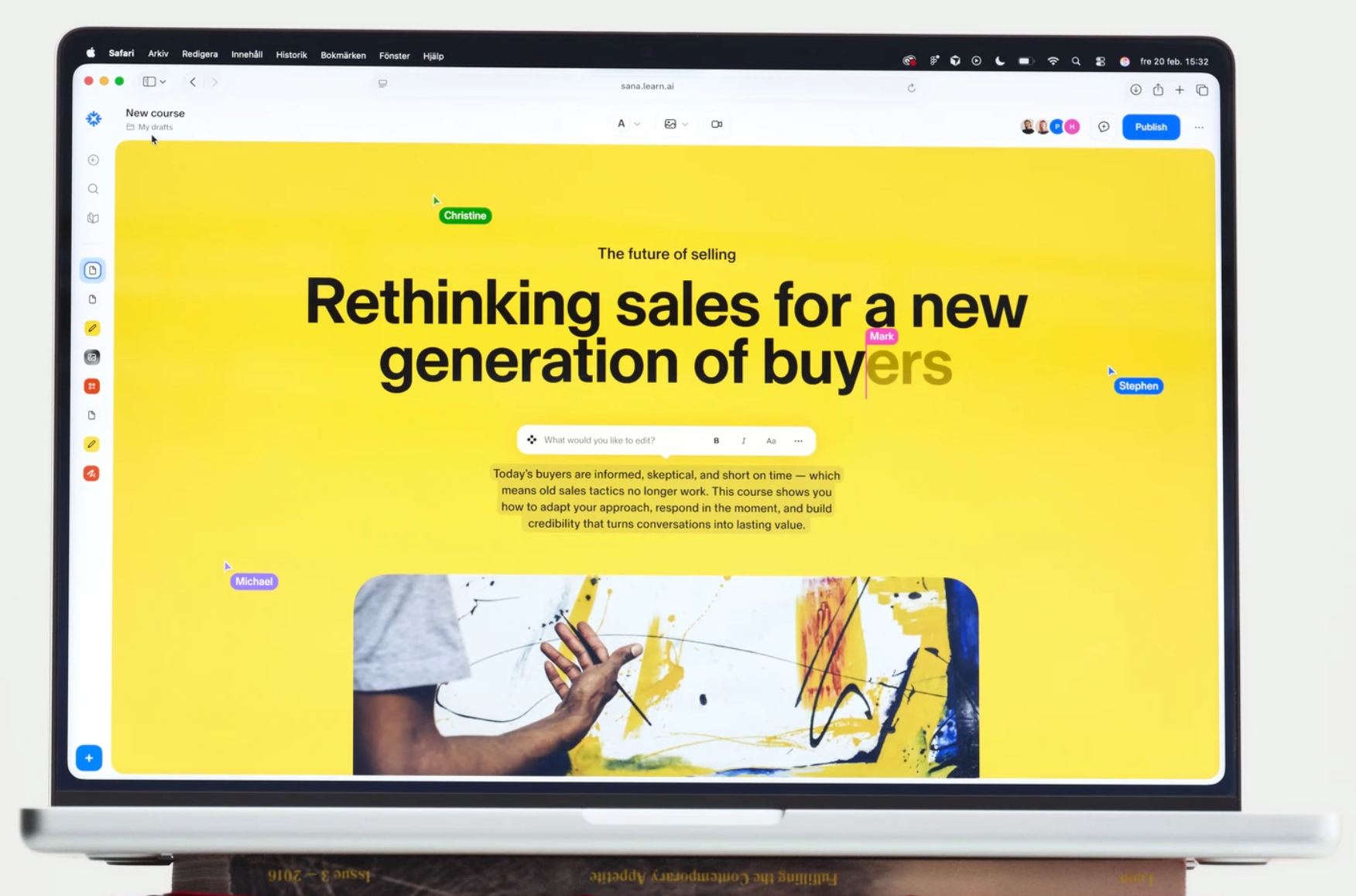
Sana puts one AI assistant across a company's knowledge, learning, and workflow automation.
URL: sanalabs.com
Sana connects to the apps your team already uses, indexes the documents, conversations, and recordings inside them, and serves up answers, briefings, and agents that act on your behalf. Used by Polestar, Merck, and Svenska Spel, with enterprise pricing and a guided trial through sales.
How to make your company's knowledge searchable:
- Request a demo at sanalabs.com and connect your first data sources during onboarding (Google Drive, Slack, Notion, Salesforce, Confluence).
- Ask a cross-app question: "Summarize the last three customer calls about onboarding friction and link to the relevant tickets."
- Use Sana Learn to turn any document, video, or recording into an interactive course with quizzes and progress tracking.
- Build a custom agent in the no-code workbench: "Every Friday, scan new product docs, draft a release-notes summary, and post to #product-launches."
- Set role-based access so employees only see and ask about the data they should.
- Connect Sana to your CRM and let agents create deals, update contacts, and send follow-ups from natural language.
- Use the analytics dashboard to see which knowledge gaps employees ask about most and prioritize what to document next.
What To Watch Next
|
||
|
||
|
||
|
||
|
💡 5-Minute Skill: Turn a New AI Model Launch Into an Upgrade Test Your Team Can Trust
Wednesday, 8:40 a.m. A stronger model just landed and half the team wants to flip the default before lunch. Before the changelog becomes a production decision, make the model write the test it has to pass.
Your raw input:
Current default: Claude Sonnet 4.6 for support triage. New model: Claude Sonnet 5, cheaper and stronger on agent tasks. Workflow: classify tickets, draft replies, route refunds, update Zendesk. Risks: wrong refund promise, hallucinated policy, slow handoff. Need: upgrade test before switching default.
The prompt:
Act like an AI operations lead responsible for production risk. Turn this model launch into a 48-hour upgrade test. Output: use cases, comparison set, pass/fail metrics, sample size, human reviewer, rollout rule, and rollback trigger. Separate vendor claims from what our data must prove. Keep it short enough for Slack.
The output:
Test three workflows: classification, draft reply, refund routing. Run 100 historical tickets through both models and 25 live tickets in shadow mode. Pass requires equal or better accuracy, no policy hallucinations, median latency under the current model, and reviewer edits below 10%. Roll out to 10% of traffic for one day. Roll back if refund errors or policy fabrications appear twice.
Why this works:
New model launches create pressure before your own workflow has evidence. This prompt turns the announcement into a small controlled trial with a rollback trigger, so the team upgrades on observed reliability instead of benchmark mood.
What to use:
Claude is best when you paste policy docs, past tickets, and evaluation notes. ChatGPT is fine for turning the test plan into a tracker. Keep the phrase "rollback trigger," or the model writes a launch plan that assumes success.
📖 AI Alphabet
|
N
|
📖 AI Alphabet Negative Prompt A negative prompt tells an image or media model what to avoid in its output. It is often used to reduce unwanted artifacts, styles, or visual mistakes. |
AI & Tech News
Japan Commits $6.16 Billion to a SoftBank-Led Sovereign AI Model
Japan will spend up to 1 trillion yen over five years on Noetra, a SoftBank-led consortium with Honda, NEC and Sony, to build a domestically controlled foundation model by 2027. The bet is a hedge against dependence on U.S. and Chinese AI as governments race to own the stack.
White House Officials Kept Using Signal's Auto-Delete After Trump's Ban
FOIA documents show senior White House aides kept using Signal's disappearing messages for work long after Trump advised against the app in April 2025. Records experts say the practice collides with the Presidential Records Act, which requires official communications to be preserved.
Tim Cook Meets EU Digital Chief to Unblock Siri's AI in Europe
Apple CEO Tim Cook and EU digital-policy chief Henna Virkkunen held talks the FT called "constructive" over launching Siri's generative AI features in the bloc. The sticking points are data privacy and Digital Markets Act compliance, with fines on the table if the deadlock holds.
Getty Walks Away From Shutterstock Merger Over UK Divestiture Demand
Getty Images scrapped its $2 billion merger with Shutterstock after the UK Competition and Markets Authority conditioned approval on selling Shutterstock's editorial business. Getty concluded the forced divestiture would gut the strategic value of the deal.
Bending Spoons Raises $1.68 Billion in the Year's Biggest US Listing by a European Firm
Vimeo owner Bending Spoons priced its IPO at $29 a share, above range, for a roughly $18.4 billion valuation and $1.68 billion raised. The 58 million-share sale is one of 2026's largest European listings in the U.S.
Lime Prices IPO at $25, Valuing the Scooter Firm at $1.6 Billion
Electric-scooter company Lime raised $174 million, pricing 6.68 million shares at the midpoint of its range for a $1.6 billion market cap. It debuts on Nasdaq under the ticker LIME.
SpaceX Cuts Memphis Starlink Prices in Half Amid Data-Center Backlash
SpaceX halved monthly Starlink fees for Memphis customers as opposition mounts to its Colossus data-center buildout. The discount lands amid legal challenges and questions over land use, energy demand and transparency.
Ex-Toast Engineers Raise $19.5M to Optimize Small Businesses for AI Search
Pie, founded by two former Toast engineers, emerged from stealth with a $19.5 million Series A led by Lightspeed. The startup helps brick-and-mortar shops tune their marketing for AI-powered search and voice assistants, the way early Google optimization once worked.
Vint Cerf Retires From Google After 21 Years as Chief Internet Evangelist
Internet co-inventor Vint Cerf will retire next week from Google, where he has served as vice president and chief internet evangelist since 2005. The TCP/IP pioneer's exit closes one of the defining careers in the network's history.
Kalshi Lands a World Cup Sponsorship for $20M, Down From $150M
Prediction market Kalshi secured FIFA World Cup knockout-stage branding for $20 million, far below the $150 million asking price. The discount puts the startup's ads alongside Coca-Cola, Visa and Adidas starting Sunday.
🚀 AI Profiles: The Companies Defining Tomorrow
Lotus Health AI is an AI-powered primary care practice that pairs autonomous AI clinicians with physician oversight from Stanford, Harvard, and UCSF. The company raised a $35 million Series A to scale a model that promises a doctor-quality first touch without the wait, with humans in the loop where the call gets harder. 🩺
Founders
KJ Dhaliwal, who sold the South Asian dating app Dil Mil for $50 million in 2019, launched Lotus in May 2024 after years of thinking about U.S. healthcare friction from childhood medical translation for his parents, TechCrunch reported. The clinical model is built around AI intake and treatment plans with board-certified physicians from Stanford, Harvard, and UCSF reviewing final diagnoses, lab orders, and prescriptions.
Product
The product offers AI-driven primary care intake, triage, follow-up, and routine prescription work, with a licensed physician reviewing and signing off on any clinical recommendation that exceeds defined autonomy thresholds. Patients interact through a chat or voice interface; the AI captures structured history, runs decision-support models, and either resolves the visit or hands off to a clinician within minutes rather than days.
Competition
The primary-care AI space is crowded: Forward (now shut down) tried the high-touch version, Omada and Lark focus on chronic care, and incumbents like One Medical and Tia bundle AI on top of in-person clinics. Lotus's wedge is the explicit AI-clinician hybrid, sold as a faster alternative for routine care rather than a replacement for complex care.
Financing 💰
$35 million Series A co-led by CRV and Kleiner Perkins, bringing total funding to $41 million. CRV general partner Saar Gur joined the board. The money buys infrastructure, clinical staffing, and patient acquisition while the company keeps visits free and tests future revenue through subscriptions or sponsored content. Source: TechCrunch, February 3, 2026.
Future ⭐⭐⭐
Primary care is where AI can move the needle if the unit economics close, because triage is repetitive and access is the binding constraint for most patients. Lotus wins if the AI-plus-physician model proves equally safe at lower cost; it stalls if either side of that equation breaks down. Insurance contracts will decide whether this becomes the new front door or a high-end concierge service. 🏥
🤨 Yeah, But...
Bloomberg reported June 25 that Ford has rehired 350 veteran "gray beard" engineers after automated AI quality systems fell short, using them to train younger staff and reprogram the tools. TechCrunch and Slashdot picked up Ford executive Charles Poon's line that the company mistakenly thought ingesting design requirements into AI would produce a high-quality product.
(Bloomberg, June 25, 2026; TechCrunch, June 28, 2026; Slashdot, June 30, 2026)
Our take: The future needed a retiree badge and someone who remembers why a bracket fails in February. The machine is not being fired. It is being sent to night school, with the institutional knowledge management spent a decade calling expensive. Ford has discovered that "tribal knowledge" is documentation with a pension. The gray beards now teach the young staff and the software, which makes them workforce development and middleware at the same time. Somewhere a consultant is turning this into a slide called Human-Centered Automation. In Detroit it has a simpler name: call Bob back.

Marcus Schuler
Editor-in-Chief and founder of Implicator.ai. Former ARD correspondent and senior broadcast journalist with 10+ years covering tech. Writes daily briefings on policy and market developments. Based in San Francisco. E-mail: editor@implicator.ai