IMPLICATOR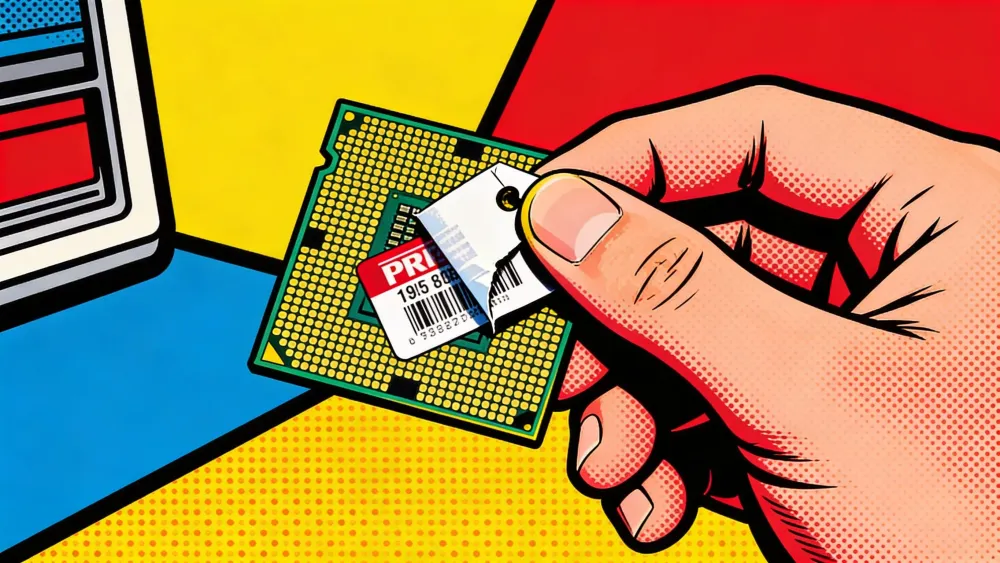
Cursor, the AI coding platform valued at $29.3 billion, publicly acknowledged on March 20 that its new Composer 2 model started from Moonshot AI's open-weight Kimi K2.5. The acknowledgment came less than 24 hours after the company launched Composer 2 without disclosing the base model, and only after a developer intercepted the model ID kimi-k2p5-rl-0317-s515-fast in API traffic. Moonshot AI's head of pretraining questioned Cursor's license compliance and payment of fees in a post he later deleted. Hours later, Moonshot's official account issued a congratulatory statement confirming an "authorized commercial partnership."
The 24-hour arc from launch to exposure to resolution played out almost entirely through social media posts and deleted tweets. It became the week's sharpest test of how open-weight AI licensing holds up when real money is on the table.
The Breakdown
- Cursor's Composer 2 runs on Moonshot AI's Kimi K2.5, disclosed only after a developer found the model ID in API traffic.
- At $0.50 per million input tokens, Composer 2 is 86% cheaper than its predecessor and undercuts Claude Opus 4.6 and GPT-5.4.
- Kimi K2.5's license requires attribution above $20M monthly revenue; Cursor's estimated $167M monthly is 8x over the threshold.
- Moonshot initially questioned compliance, then confirmed an authorized commercial partnership through Fireworks AI within 24 hours.
What Composer 2 does and what it costs
Cursor shipped Composer 2 on March 19 as a code-only model tuned for long-horizon agentic tasks inside its editor. The company said the model can solve coding problems that require hundreds of individual actions, staying coherent across extended sessions where earlier models lost the thread. Anysphere described the work in a blog post as the product of "continued pretraining" and "scaled reinforcement learning." No base model was named.
Benchmarks showed real improvement. On CursorBench, Composer 2 jumped to 61.3, up from 44.2 in February. A 39% gain. Terminal-Bench 2.0 told a messier story, with a 61.7 score that beat Claude Opus 4.6 at 58.0 but trailed GPT-5.4's 75.1 by a wide margin. SWE-bench Multilingual landed at 73.7, up from 65.9.
Pricing dropped hard. Fifty cents per million input tokens and $2.50 per million output tokens for Composer 2 Standard, which works out to 86% cheaper than Composer 1.5. The faster variant that ships as the default costs triple that, $1.50 and $7.50, and still undercuts Claude Opus 4.6 and GPT-5.4 by wide margins.
Co-founder Aman Sanger told Bloomberg the model was trained exclusively on code data. "It won't help you do your taxes. It won't be able to write poems," Sanger said. That narrow focus explains the cost advantage. It also explains why Kimi K2.5, Moonshot AI's trillion-parameter mixture-of-experts model with 32 billion activated parameters, could serve as a viable starting point.
How a model ID blew the cover
The blog post had been live for less than two hours when developer @fynnso, debugging Cursor's OpenAI-compatible API endpoint, caught something in the response payload. The model identifier read: accounts/anysphere/models/kimi-k2p5-rl-0317-s515-fast.
Break it apart. Cursor's parent company is "anysphere." The rest spells it out: "kimi-k2p5" for the base model, "rl" for reinforcement learning, "0317" possibly March 17, two days before launch, and "fast" for the serving variant.
Yulun Du, Moonshot AI's head of pretraining, responded within hours. He confirmed on X that his team tested Composer 2's tokenizer and found it "completely identical to our Kimi tokenizer." He tagged Cursor co-founder Michael Truell directly and asked why Cursor wasn't respecting the license or paying fees. Multiple Moonshot employees posted corroborating statements.
Then something shifted. Du's post disappeared. The corroborating posts came down too. And Moonshot's official account, @Kimi_Moonshot, published a carefully worded statement that read nothing like Du's earlier accusation. "Congrats to the @cursor_ai team on the launch of Composer 2!" it began. "We are proud to see Kimi-k2.5 provide the foundation."
One critical detail followed. Cursor accesses Kimi K2.5 through Fireworks AI's hosted inference and reinforcement learning platform "as part of an authorized commercial partnership."
The license that anticipated exactly this
Kimi K2.5 ships under a modified MIT license. Most of it looks standard. One clause does not. For any commercial product exceeding 100 million monthly active users or $20 million in monthly revenue, the license requires two things: prominent display of "Kimi K2.5" in the user interface and payment of licensing fees.
Cursor's annualized revenue reached a billion dollars by November 2025, according to reports. Bloomberg reported it doubled to two billion by February. You do the monthly math and land at roughly $167 million. Eight times the threshold Moonshot wrote into the license.
Composer 2's launch announcement contained no attribution. The user interface displayed "Composer 2." Kimi appeared nowhere a customer could see it.
Moonshot AI wrote that clause because they anticipated this scenario. A Beijing-based lab releasing one of the most capable open-weight models on the market understands how Silicon Valley operates with free weights. The license was a bet that attribution and fees could be enforced through contract law and public pressure, not through access controls on the weights themselves.
For about 18 hours, it looked like that bet had failed. Then social media did the enforcement.
Stay ahead of the curve
Strategic AI news from San Francisco. No hype, no "AI will change everything" throat clearing. Just what moved, who won, and why it matters. Daily at 6am PST.
No spam. Unsubscribe anytime.
What Cursor said, and what it didn't
After the model ID went public, Lee Robinson from Cursor's team posted on X. "Yep, Composer 2 started from an open-source base!" He added that roughly 25% of the compute in the final model came from the base, with Cursor contributing the remaining 75% through its own training. Robinson also stated that Cursor was "following the license through our inference partner terms," a reference to Fireworks AI.
Neither point settles the question. Not cleanly. Open-source licenses don't typically measure derivative works by compute ratios. A model fine-tuned on Kimi K2.5's weights derives from Kimi K2.5, whether additional training consumed a quarter of the budget or nearly all of it. If the base weights aren't there, you can't run the continued pretraining Cursor described.
The inference partner argument is harder to evaluate from the outside. Fireworks AI provides hosted compute and inference. Its terms of service govern the commercial relationship between Fireworks and its customers. Whether those terms also satisfy Moonshot's license obligations, or whether those obligations attach to Cursor as the company distributing the derivative product, depends on the private commercial arrangement between the parties. What's visible is the gap. Cursor's UI displayed "Composer 2" with no mention of Kimi, and the license calls for prominent attribution from products above the revenue threshold.
Sanger, to his credit, was more direct. "It was a miss to not mention the Kimi base in our blog from the start," he posted. "We will fix that for the next model."
The gap between accusation and congratulation
The most revealing part of this story sits in the hours between Du's deleted posts and Moonshot's official statement. Two explanations fit the available evidence. The commercial partnership was already in place and Du, the head of pretraining, didn't know about it. Or a deal got struck under public pressure while the accusations were still circulating. Moonshot has not clarified which.
Either way, someone got blindsided. If Du wasn't informed of a partnership with a $29 billion customer running his team's model, that's a coordination failure inside Moonshot. If the deal materialized after the public accusation, then the license enforcement only worked because a developer happened to inspect an API response and the internet amplified the finding.
You can read the official statement generously. Moonshot confirmed the partnership, praised the collaboration, moved on. Or you can notice what the statement left out. It doesn't address whether Cursor's UI now displays "Kimi K2.5" as the license requires. It doesn't say when the commercial agreement was signed. It doesn't mention Du by name or explain why his posts were deleted.
The congratulatory tone is the tell. Companies celebrating genuine partnerships don't typically get there through a sequence of deleted accusations and hasty clarifications.
What this means for the open-weight compact
Strip away the Cursor-Moonshot specifics and a structural question remains. Open-weight AI licensing works on trust. Labs release powerful models because they believe open development benefits everyone. They attach conditions, usually around attribution and commercial use, because they need some protection against companies large enough to extract billions in value from free weights.
Moonshot's modified MIT license was well-designed for this. The thresholds were clear. The requirements were specific. And they triggered exactly as intended when a company eight times over the revenue limit shipped a derivative product without attribution.
But the enforcement mechanism was a developer poking at an API endpoint. Not a compliance audit. Not a contractual review. Not even a deliberate check by Moonshot's own team. A developer noticed the model ID that Cursor forgot to rename, and the internet did the rest.
For Cursor, the episode exposes a strategic vulnerability that goes beyond one licensing dispute. The company competes with Anthropic and OpenAI while simultaneously depending on their models for its platform. Consumer subscriptions reportedly run at negative margins. Enterprise contracts carry the business. Building an in-house model was supposed to change that equation, giving Cursor pricing power and reducing its dependence on competitors who are also building their own coding tools.
Composer 2 delivers on the cost story. At fifty cents per million input tokens, it costs a fraction of what Opus 4.6 or GPT-5.4 charge. But the acknowledgment that Kimi K2.5 supplied the base, even if Cursor says 75% of the compute came from its own training, complicates the narrative of technical independence. Cursor's real strength is its editor, its tool integrations, its agentic workflow. Sanger's concession, that Cursor will do "full pretraining in the future," reveals the gap between where the company is and where it wants to be.
Moonshot got the outcome it wanted. A $29 billion customer acknowledged the base model, an authorized commercial arrangement is on record, and Kimi K2.5 now has a very public proof point as the foundation of a competitive coding product. Cloudflare said in a blog post the same week that it deployed Kimi K2.5 on Workers AI. An internal security review agent processes over seven billion tokens daily on the model, the company reported, cutting inference costs by 77% compared to a mid-tier proprietary alternative.
Open-weight licensing worked this time. Barely, and only because someone forgot to rename a model ID.
Frequently Asked Questions
What is Kimi K2.5?
Kimi K2.5 is a trillion-parameter mixture-of-experts model with 32 billion activated parameters, developed by Beijing-based Moonshot AI. It ships under a modified MIT license that allows free use but requires prominent attribution and licensing fees from commercial products exceeding 100 million monthly active users or $20 million in monthly revenue.
How was the connection between Composer 2 and Kimi K2.5 discovered?
Developer @fynnso was debugging Cursor's OpenAI-compatible API endpoint and found the model identifier accounts/anysphere/models/kimi-k2p5-rl-0317-s515-fast in the response payload. The string directly references Kimi K2.5 with reinforcement learning fine-tuning, revealing the base model Cursor had not disclosed at launch.
What benchmarks does Composer 2 hit?
Composer 2 scores 61.3 on CursorBench (up 39% from Composer 1.5), 61.7 on Terminal-Bench 2.0 (ahead of Claude Opus 4.6 at 58.0 but behind GPT-5.4 at 75.1), and 73.7 on SWE-bench Multilingual. It is trained exclusively on code data for long-horizon agentic coding tasks.
What does the Kimi K2.5 license actually require?
The modified MIT license requires commercial products with more than 100 million monthly active users or $20 million in monthly revenue to prominently display "Kimi K2.5" in the user interface and pay licensing fees. Cursor's estimated monthly revenue of $167 million puts it roughly eight times over the revenue threshold.
What role does Fireworks AI play?
Fireworks AI provides the hosted inference and reinforcement learning platform through which Cursor accesses Kimi K2.5. Moonshot's official statement described the arrangement as an authorized commercial partnership. Whether a hosting provider's terms satisfy the model creator's license obligations remains an open question.


Marcus Schuler
Editor-in-Chief and founder of Implicator.ai. Former ARD correspondent and senior broadcast journalist with 10+ years covering tech. Writes daily briefings on policy and market developments. Based in San Francisco. E-mail: editor@implicator.ai